
Sometimes It Pays to Be Clumsy
35 inventions discovered by mistake. How many do you know?
Many times being clumsy, can create big problems. But on rare occasions, they can be a stroke of luck and generate great fortunes.
This is the case of the 35 inventions listed here, which could be a funny accident or an anecdote to tell your friends.
But instead, these famous people looked outside the box and discovered a way to transform a series of unfortunate events into some products we use in our lives today.
Here is the list in alphabetical order, containing the Name of the inventor, what happened, and the lesson they learned to create something revolutionary and very profitable.
Anesthesia
Inventor: Dentist Horace Wells, 1844. How: Nitrous oxide was used for fun, strictly as a party toy. One day, a dentist’s friend used too much and hurt his leg, but he didn’t realize it since he felt no pain. Results: Dr. Wells took note of this and started using it on his patients to reduce pain, making Nitrous oxide an early form of anesthesia.
Artificial Sweetener
Inventor: Constantin Fahlberg, 1879. How: After a long day working with the coal tar derivative benzoic sulfimide at Johns Hopkins University (Baltimore). He noticed a sweet taste on his hand. Results: Remembering the compound he was using, he synthesized it and called it Saccharin.
Bakelite
Inventor: Leo Hendrik Baekeland, 1905. How: Looking for a substitute for shellac, which is created using a substance secreted by the female lac bug living on trees in India and Thailand, he discovered applying pressure and adding woof flour or slate dust; the result was a moldable, resistant, and non-conductive substance. Results: Baekeland created the first synthetic plastic and named it bake-lite or Bakelite, used in thousands of articles to this date.
Botox Treatment
Inventor: Eye MD. Alan Scott, 1980s. How: Injecting the nerve of his patients suffering from strabismus (eye misalignment) with a substance extracted from the botulism toxin, he discovered they experienced face-lifting side effects. Results: Botox treatment for dermatology and esthetic use.
Bubble Wrap
Inventor: Engineers Alfred Fielding and Marc Chavannes, 1960. How: Both engineers developed bubble wrap as wallpaper, but it didn’t work, so they decided to use it as insulation and later as a packing material. Results: The packing material we love to use and pop.
Champagne
Inventor: Dom Pierre Perignon, 1868. How: The monks near Champagne in France had the best grapes, but in the colder months, the fermentation process stopped because of the low temperatures, and in spring, it restarted again, generating an excess of carbon dioxide inside the wine bottles. They called monk Perignon to resolve the problem, which gave the wine unwanted carbonation. But the people already enjoyed the bubbly drink, so instead of eliminating the carbonation, the monk increased the bubbles. Results: The French Method for making champagne called, and the title of the inventor for monk Dom Perignon.
Chewing Gum
Inventor: Thomas Adams Sr. 1800s. How: Adams, while working with Mexican President Antonio de Santa Anna’s secretary, tried a piece of the gum from a Mexican tree called chicle, attempted to develop a rubber for tires using this gum, but failed, so he covered little pieces of the chicle gum with candy. Result: A chewing gum called Chiclets.
Chocolate-chip cookies
Inventor: Ruth Wakefield, 1938. How Mrs. Wakefield owned the Toll House Inn. One day, she wanted to make a batch of chocolate cookies but ran out of baker’s chocolate for the mix. So, she broke a bar of the candy into tiny pieces, thinking that it would melt into chocolate cookies, but the pieces stuck and melted inside the dough. Results: Chocolate-chip cookies recipe. During World War II, large quantities of cookies went to The 6888th Central Postal Directory Battalion, an all-female black military unit in charge of hand-processing mail to countless American soldiers.
Corn Flakes
Inventor: John and Will Kellogg, 1894. How: Both brothers ran the Battle Creek Sanitarium, a modern facility with several techniques to teach better health principles. One day, they left a pot of boiled grain on the stove for several days. Turning dry and thick, later, they pressed the confection. Result: Corn Flakes and the Kellogg’s Company.
Dry Cleaning
Inventor: Jean Baptiste Jolly, 1825. How: One day, his maid knocked a kerosene lamp over onto a tablecloth. Later, Mr. Baptiste observed the cloth look clearer where the liquid fell. Results: The idea for the very first dry cleaner.
Dynamite
Inventor: Alfred Nobel, 1867. How: Nobel tried to reduce the danger of using nitroglycerin, combining a fine white powder from a sedimentary rock called diatomite or kieselguhr with the explosive substance. Forming a moldable clay that could ignite with a fuse and was easy to carry. Results: Dynamite, years later feeling remorse for all the deaths caused by his invention, including his Brother Emil, established the Nobel Prize.
Fireworks
Inventor: Unknown cook in China, 2000 years ago. How: According to legend, a Chinese cook working in a kitchen mixed charcoal, sulfur, and saltpeter (everyday kitchen items at the time) and accidentally spelled some over a fire creating an enormous cloud. He later filed bamboo sticks or rolls of paper that exploded under the fire. Results: Fireworks.
Friction Matches
Inventor: John Walker. 1836. How: Though on written texts dated in 366 A.D., describing small sticks of pinewood impregnated with sulfur, or what could be the ancestor of the match. In some early versions, they ignited through the friction produced by rubbing two rough surfaces together. Walker was experimenting with several mixtures, one day, he accidentally friction one on his heart, and the match caught fire. Results: Walker’s “Friction Lights,” what we now know as friction Matches.
Ice Cream Cone
Inventor: Ernest Hamwi, 1904. How: At the World Fair at St. Louis, Missouri, on a hot day, the ice cream vendors were doing a substantial business, not so the hot waffle stands. When Arnold Fornachou, an ice cream vendor, ran out of paper cups and was about to close, Mr. Hamwi, the man in the booth next to him, rescued him by rolling up one of his waffles into a funnel to put ice cream in. Result: The first edible ice cream cone.
Ink-jet Printer
Inventor: Ichiro Endo, 1950s. How: Working at Canon in Japan, an engineer rested a hot iron on his pen by accident. The ink boiled, and it was expelled from the pen’s point. Results: The principle of the ink-jet printer.
LSD as a drug
Inventor: Albert Hofmann, 1938. How: Researching for a drug to get a respiratory and circulatory stimulant for the analeptic central nervous system with no effects on the uterus. By accident absorbed a small amount of the drug through his fingertips, describing being affected by a remarkable restlessness, combined with a slight dizziness. Results: Lysergic acid dimethylamine (LSD) and the first acid trip in history.
Pacemaker
Inventor: Wilson Greatbatch, 1956. How: Working at the University of Buffalo, building a piece of equipment to record heart sounds, he used the wrong transistor, which instead of recording sounds, emitted an electrical pulse, mimicking the heart. Greatbatch worked with a surgeon at Buffalo’s Veterans Administration Hospital named William Chardack; they successfully control a dog’s heartbeat. Result: After testing the device in a human, he created the first Pacemaker.
Pap Smear
Inventor: Dr. George Nicholas Papanicolaou, 1940. How: Trying to observe the cellular changes during the menstrual cycle, on a slide of cells taken from a woman’s uterus, he discovered that her patient had uterine cancer, and he could view the cells under a microscope. Result: Pap Smear, or Papanicolaou test.
Penicillin
Inventor: Sir Alexander Fleming, 1928. How: Searching for a drug to cure many diseases, Dr. Fleming discarded a Petri dish. After a few days, he noticed the dish contained mold, dissolving the surrounding bacteria. Results: He discovered it contained Penicillin moulds, a powerful antibiotic, hence penicillin.
Popsicles
Inventor: Frank Epperson, 1905. Frank was a normal 11-year-old boy who forgot a glass of soda with the stirrer still in by accident on a frosty night after playing with his friend. The next day he licked the frozen soda and liked the taste. He shared his idea with his friends, who also loved it. Result: He declared this concoction as the Epsicle (combining the word icicle with his name), but in 1923 Frank patented the term “Pop’s ‘Sicle” as his children called the invention.
Post-it notes
Inventor: Spencer Silver, 1968. How: Trying to create a super-strong adhesive, he developed the opposite. When applied to paper, the notes could stick and be removed without leaving a mark, Later with the help of a friend, using a batch of wasted yellow paper, they created adhesive note pads. Result: Post-it Notes.
Potato chips
Inventor: George Crum, 1832. How: Working on a restaurant as a chef at the Carey Moon Lake House in Saratoga Springs. One day, a customer complained the potatoes weren’t crisp or thin enough. After sending the order in and out several times, the chef tried to prank the customer by cutting the potatoes paper-thin and fried them till crisp. The customer loved them and asked for more. Result: Potato chips.
Safety Glass
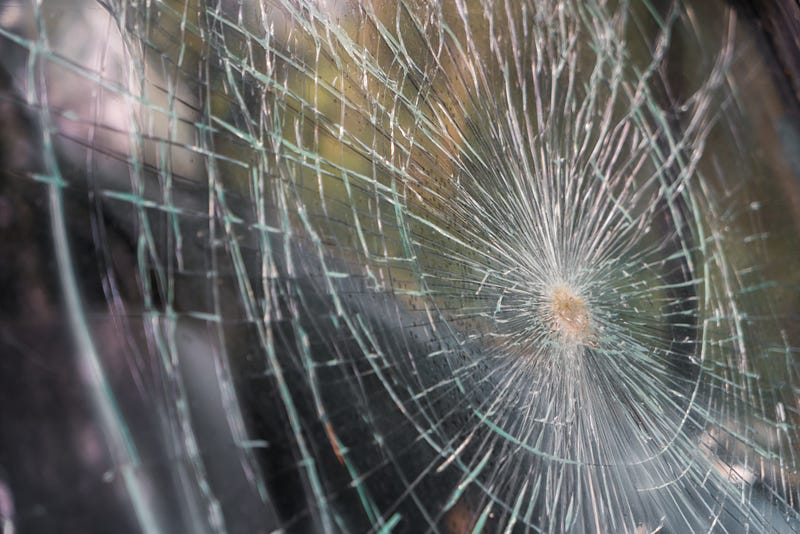
Inventor: Edward Benedictus, 1903. How: One day, as he was working with a cellulose nitrate compound to use as a coating, he accidentally knocked the flask, but instead of breaking into pieces, it stayed together, with only minor cracks maintaining the form. Results: Safety glass.
Safety Pin
Inventor: Walter Hunt, 1849. How: Trying to figure how to pay his debts, Hunt started playing with a piece of wire. He noticed that the little thing could clasp and unclasp itself. Result: Hunt patented his idea for the safety pin and later sold it for 400 dollars.
Scotchgard
Inventor: Patsy Sherman, How: The chemist working for 3M was trying to develop protection against aircraft fuels. She dropped it into her shoe. Later, when she came home after a rainy day, she noticed that her shoes were dirty except for a spot. Remembering what happened, she identified the substance. Result: Scotchgard protection.
Silly Putty
Inventor: James Wright,1943. How: The United States, during World War II, needed new rubber airplane tires, gas masks, and boots and asked several government contractors to research for new compounds. Wright added boric acid to the mixture using silicon as a base which created a substance easy to mold, highly stretchable, and with a high melting temperature. But none of the properties they were looking for. Results: A fun toy called Silly Putty.
Slinky
Inventor: Richard Jones, 1943. How: Working on a device to monitor power on a battleship, Jones worked with coils and springs when accidentally one of them fell to the floor and kept bouncing. Result: The Slinky, his wife, came with the name.
Super Glue
Inventor: Harry Coover, 1942. How: Trying to build plastic gun sights, Coover developed an adhesive so string that stuck to anything that got in contact, but his invention was rejected, arguing that no one needed such formula. Years later, in 1951, when together with someone working at Eastman Kodak, they renamed the formula as “Alcohol-Catalyzed Cyanoacrylate Adhesive Compositions/Superglue,” Result: Super Glue, an adhesive so strong that soldiers in Vietnam used it to patch wounds.
Tea Bags
Inventor: Thomas Sullivan, 1908. How: To measure the right amount of tea for a cup to put on an infuser, Sullivan thought of making tiny bags with the correct measure, but when the bags arrived, people used to put them on a cup with hot water and loved the idea. Result: The modern tea bag.
Teflon
Inventor: Roy J. Plunkett, 1938. How: During his work at the DuPont Company’s Jackson Laboratory, looking for refrigerant substances to help supply air conditioning and refrigeration. Plunkett noticed that some white powder had formed by some gas he sprayed. He found out that the substance was heat-resistant and with low friction. Result: Teflon.
Vaseline
Inventor: Robert Augustus Chesebrough, 1859. How: Looking for a substitute for whale oil, he went to Pennsylvania to see what use he could find for petroleum (Crude oil) extracted there. He observed the workers used semi-soft paraffin formed in the machinery while extracting oil and used it for protection and healing on their hands. The workers called it “rod wax.” Chesebrough took the substance to his laboratory and refined it, and create a light-colored gel he called “Petrolatum Jelly.” Result: On June 4, 1872, he patented Vaseline.
Velcro
Inventor: George de Mestral, 1955. How: Returning home after a walk in the woods with his dog, he noticed burdock seeds stuck in his jacket and on his dog. He removed and analyzed them and under a microscope and found that thousands of tiny hooks were responsible for the seeds to attach to hairy surfaces. He created a two-sided fastener: “One side with stiff hooks like the burrs, and the other side with soft loops like the fabric of my pants,” he said. Using nylon to create little crochet-like hooks that would attach to some velvety surface. Result: Forming the name with the combination of ‘velvet’ and ‘crochet,’ he patented Velcro.
Viagra
Inventor: Pfizer Laboratories, 1989. How: Looking for a treatment for angina, a condition that causes heart-related chest pain, they developed a substance called Sildenafil. When this medicine was on trials, researchers found out that one of the secondary effects was increasing the frequency of erections. Result: Viagra, the most sold erectile dysfunction pill.
Vulcanized Rubber
Inventor: Charles Goodyear, 1839. How: Searching to create weatherproof rubber, Goodyear dropped by accident some rubber mixed with sulfur onto a hot stove and found that it still maintained its structure. Result: Vulcanized Rubber.