
Something I Learned About The Right and Wrong Way To Tag Other Writers
I am making a public amends for a mistake that I made in a story.
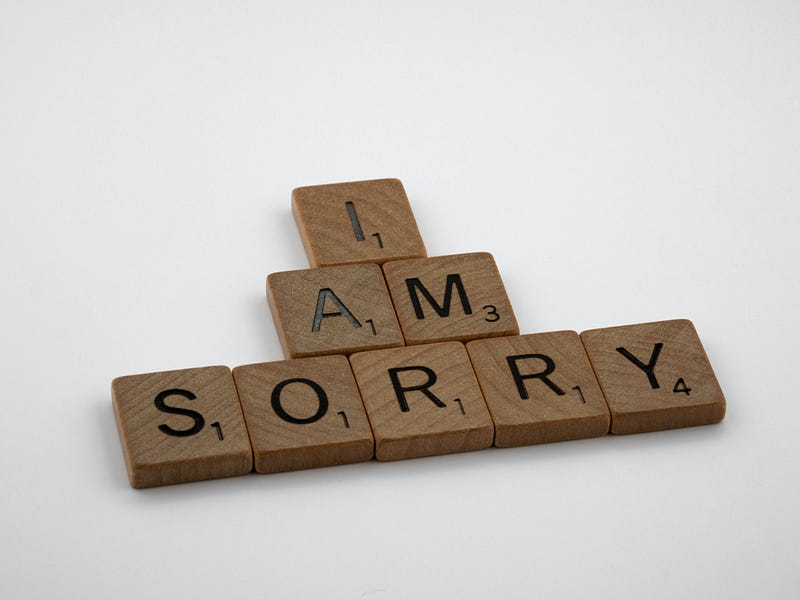
A wrong done in public on a blog post deserves to have a right correction.
And done in public in a blog post. That’s the reason I am writing this story.
There is a right and wrong way to tag other writers in a story on Medium, and yesterday I learned about the right protocol and socially acceptable way to tag other writers by making a mistake in my story “Seven Things I Wish I Knew Sooner When I Joined Medium,” published in the Coffee Times.
Mistakes are the best way to learn anything because they leave an imprint in your mind, and I’m writing this story to apologize to Keira Fulton-Lees and to clarify what I have learned about tagging and quoting other writers in a story.
A correction to my story
My story was originally titled, “Eight Thing I Wish I Knew Sooner When I Joined Medium,” and I deleted one tip when I learned I quoted information from a comment by Fulton-Lees to a story written a few years ago in which she said writers get paid partly based on the number of claps a story receives.
You can read more about how members of the medium partner program are paying by reading the following article from The Medium Help Center and, yes, by the way, you can (and should) edit and fix errors after a story is published — this is something I didn’t know as Medium newbie until recently.
That information in my story was true at one point (until October 2019) and if I’d followed the correct protocol in requesting another writer’s permission to tag-and-quote information attributed to them I wouldn’t have made this mistake and I should have taken time to ask her permission before publishing my story.
I deleted the paragraph from my article as soon as I learned from Fulton-Lees the information was incorrect. She shared her thoughts with me via email on the right protocol for tagging other writers since I’ve written for her Medium publication Artfully Autistic, and by the way, I want to say this is the correct way to handle a situation when someone does something that harms you.
When someone does something to hurt or harm you, you have to let them know what they have done to hurt or harm you, so that the other person can make amends. I’m glad Keira did this with me so I could do make amends in private, but since my story was on a public blog I want to also do this publicly and apologize for not asking her permission to tag/quote her in my story.
The right protocol
The right protocol to follow on Medium to tag other writers is to first ask their permission — that’s the lesson I learned on the socially acceptable way to tag other writers. That’s the main takeaway to this story.
Like everything else on Medium, we have to learn most things by trial and error because there is no video or printed info explaining this to writers or there is, maybe, on Medium’s Creator’s Hub that most writers are too busy writing or reading to absorb — so we (or I) make a mistake as I’ve done.
(Creator’s Hub, if you happen to read this, you have my permission to share this with my fellow Medium writers to educate on proper tagging/quoting.)
But this is the lesson I’m passing on to you: Ask before you tag other writers, especially if you are attributing information to other writers. We all paraphrase and quote other writers in our stories and this can let other writers know about a writer and a story they might like to read. I think it’s good to go so far as to ask them if you can quote their story, but definitely ask permission to tag-and-quote if the information is sensitive. Like in my case tagging and quoting a comment by Keira to a writer’s story.
I’m not sure if this applies to tagging writers in a story without attributing information to them. You know, to let them know you’ve written a story about something you think as a Medium friend they’d find interesting (full disclosure: and to increase the number of reads to your story). This as you know this sends them a notification they’ve been mentioned in a story.
That is another issue for a different story, but I welcome your comments or thoughts on that issue since I am a newbie to Medium who joined in late October, and I’m writing about Medium while still learning my way around.
The original quote
I looked back to find Keira’s comment to another story by a writer that I quoted to include it in this story, but since I wrote my story over multiple drafts in the past week I could not find the story I read with the comment by Fulton-Lee where I quoted her on writer’s getting paid by the number of claps.
I feel it’s important when writing on a story on incorrect information in a story you’ve written to reference the actual information in this story, but unfortunately, I couldn’t find the comment by Fulton-Lees to another story — and I deleted it from my story as soon as I learned it was inaccurate info.
Making amends is important
However, since I feel it’s important to make amends for any wrong-doing (intended or not intended) on my part and failing to do this is what causes an end to so many relationships in life, I want to say this publicly to Keira (I’m still confused by my journalism training whether to use Keira’s last name, but I want to use her first name to make this be me personal amends):
I apologize for the hurt my story caused you in wasted time to have to deal with it — as well as any unintended harm it may have caused your reputation as writer and owner of the publication Artfully Autistic. No one likes to have personal information (like a comment shared an article) shared with others, even if was done with the best intentions on my part, and I understand how it made you feel (I don’t want to speculate here, though) without making any assumptions here.
A hour, maybe, an hour fifteen minutes passed between the time my story was published and I deleted the information — enough time for other writers to comment on the article (who I tagged at the end of this article) or for other readers to read the incorrect or outdated information in my story — for which I didn’t follow social protocol and ask your permission to tag and quote you.
Therefore, since it’s my practice as a Christian (and a graduate of the 12-step recovery program) to make amends for any wrongs I’ve done to another person — whether intentionally or, in this case, unintentionally. (Usually, nothing I do is intentionally harmful; I am not that kind of person.)
For all non-recovery people
For all non-recovery people reading this article, making amends is Step Four in the 12 steps — and it’s the most important step in a person’s recovery. It is the step where many people quit the 12-step program because you have to make a list of all the people you’ve harmed during your addiction and to take full responsibility for the hurt and harm you’ve caused in the lives of others.
Especially significant others and family members hurt by your actions.
When I wrote my story yesterday, I never imagined I would be making public amends in a story, but an amends is an amends and, maybe, this will help someone else make an amends to someone they’ve unintentionally caused harm, and I believe that a person should have humility when they’re wrong and take ownership for their actions, so I’d like to say one last thing to Keira:
I am a writer, reader, and admirer of Artfully Autistic because it promotes the creativity and perspectives of autistic writers — and thus I would never want to do anything to harm your reputation, the reputation of your publication, and all the writers I’ve come to know reading and writing for Artfully Autistic.
I am glad to be a part of a publication that spreads the voices of neurodiverse people. This is something I believe is so important in our society. Neurotypical (non-autistic) people need to hear the perspectives on autistic people and autistic writers need to have a tribe like you’ve built to support one another; and I wouldn’t want to harm these larger issues represented by my actions.
(I added a link at the end of this story to show how I couldn’t have written my story without first reading the collective voices of neurodiverse writers.)
Thus I hope you receive this awkward public amends during which my mom called and my wife saw my neighbor with Alzheimer’s outside walking and wanted me to check on him — so I hope this is written with enough coherence and sincerity to respond in a timely manner to those who ready my article.
Thank you for reading, Medium Family.
I hope you find this valuable as a writer.
I’m tagging the people I originally tagged to let you know about the incorrect information in my story and to let you know what I’ve learned about tagging and quoting others:
Lisa's Desk Chat, Alexandra Christensen, Jeff Peirish, Maria H. Khan, Rebecca Morton, Pam Winter, Lu Skerdoo, Lorrae G., Jo-Anne Oliveri, Janet Meisel, Alison Acheson, Richard Armstrong, Hope, Shanice Lawton, Alan Simpson, Danielle Hestand, Rain Aizle, J.R. Spiers, Jimmy Misner Jr., Madison Sasser, Scott Ninneman, John Walter Raney 1st, Doa Demir, Jan Sebastian, D Geiger, Katt Kennedy, Alison McBain, Alex Frederickson, Sue Stroud-Speyers, Nicole Hilbig, Harold Zeitung, Bonnie Joy Sludikoff, Dawn Bevier, Sally Prag, Amanda Payne, Don Sabado