
Some of us have been in lockdown for years
COVID-19 is an opportunity to shelve the ableism and develop some empathy towards the people who have lived like this for years.
You’re finding this difficult, aren’t you? You’re not used to being alone for so long. You miss your friends. Maybe there’s a partner you’ve not seen for months. As time goes on you begin to long for the simple things like nipping out for bread, hanging out at the gym before work, going for a drink on Friday night. You realise just how important those ostensibly meaningless interactions were to you now that you can’t engage in them anymore.
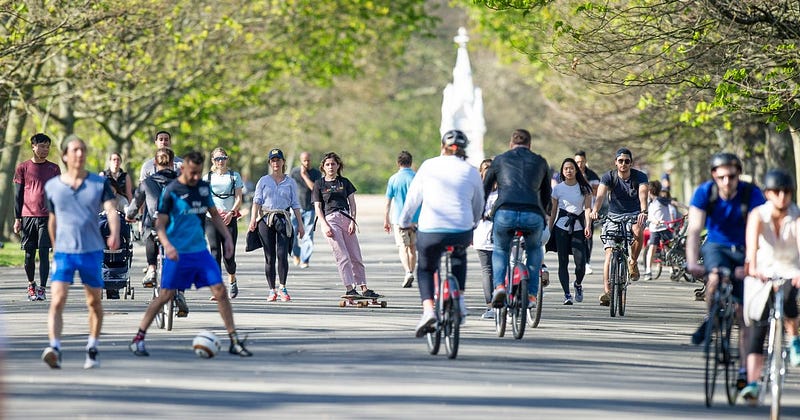
Outside the sun is beaming but your single unit of exercise is done for the day. You might go out anyway — to hell with the guidelines, one more run won’t hurt anybody. No one should be stuck indoors on a day like this. It’s not as if you’re at risk, anyway. Nobody you know is even sick; no one you know has died. Besides, the government kept saying it was really only old and disabled people who were in any real danger. The whole thing feels so far away, so why should it affect you so much?
You really thought it was going to be like having a holiday. But as more companies furlough their staff and begin to fold; as billionaires seek publicly funded bailouts to protect their wealth (often at the expense of their employees), you have to worry about whether you’ll have a job to go back to when it’s all over. You’re starting to appreciate that staying at home all the time isn’t as fun as you thought. It’s surprisingly tiring, it’s monotonous and isolating. You’re beginning to grieve for your old life.
In the evening you’ll go out and clap for the NHS, you might even bang a pot or two — despite the fact you voted Conservative in the last three elections and intend to at the next. Starved for attention, instead of retreating indoors you’ll linger and chat with your neighbours. You commiserate with each other on your shared irritation at being kept indoors and wonder when it’s going to end. At no point do you stop to consider whether you’re truly six-feet apart. As another day wanes you’ll head to Twitter and plead with the government to lift the lockdown before spending an hour reading through threads detailing that 5G is the real problem — like COVID-19, it’s from China and that can’t be a coincidence, can it?
You watch coverage of small protests against lockdowns in America — minor events validated by an abundance of undeserved reportage — as people publicly decry the injustice of not being allowed to visit the hairdresser. You find yourself sympathising with them. Seeing all those people huddled together with their guns and pickets makes you envious.
You start to think those folks might have the right idea. Why should we be stuck indoors, you think, just to protect people who probably don’t go out anyway? You Tweet again demanding the end to lockdown and jokingly suggesting we storm Parliament. You want to go to the gym, get a coffee from Starbucks — at this point, even taking the train to work sounds fun. There are so many things that have been taken away from you, through no fault of your own, and you want to take them back.
You think about that time in 2016 when, in the pub with friends, you said you genuinely believed you’d do well in an apocalypse — you would basically be Rick from The Walking Dead. You’re a survivor. Well, here we are and you’ve barely managed two months. It all looks easier on TV, doesn’t it?
So, you’re miserable — you’re tired — you’re lonely. But most of all, you’re angry. How could this happen? We’re so smart. You’ve never been truly unwell so you know, for a fact, that modern medicine is infallible. You build an imaginary community online in which you all cling to each other’s rage as validation of your own. This shouldn’t be happening. You don’t deserve it.
It isn’t fair.
Hard, isn’t it? I get it. It’s new, it’s abrupt, and — though you may not want to admit it — it’s terrifying. And you’ve only been at it a couple of months; some of us have been doing this for years. Welcome to the world of a disabled person. Though, to be honest, it’s unfair to compare what you’re going through with what we live with, “because the experience of healthy people self-isolating for a few weeks is not comparable to the abuse, disbelief and financial punishment many chronically ill people face.”
Your lockdown will come to an end one day. But while you’re in it you are being granted an opportunity to experience, albeit in a limited way, how we have lived every day for years. You have a chance to develop some real empathy towards those of us who would give anything to be in the position to feel as entitled as you do about this crisis. But, so far, you’re electing not to.
Instead, you flout distancing guidelines, you hang out with friends, you don’t wash your hands or clean as much as you should. You help spread the disease. And when you’re admonished, you fume — you call it a police state. You want to take to the streets just like a handful of idiots in America, you want to scream across the Internet that it’s hard and unjust. But where was your outrage when the government labelled us as expendable? Why haven’t we heard anything from you as they rig the system and strip us of our human rights? Where were you every time we’ve tried to advocate for ourselves and speak out against neglect and abuse and apathy only to be met with able-bodied people informing us how wrong we are, how lazy we are, how weak we are? If you’re finding this so hard, imagine how we feel knowing our lockdown has no end.
The truth is, it’s easy to ignore something when it doesn’t affect you. If we’ve been abandoned by an overburdened medical system and left housebound and in poverty by a benefits structure designed to fail, then how is that your problem? You don’t want to pay attention because the moment you confront the truths of the injustices disabled people face every day you have to admit that it could happen to you. It would force you to recognise that your health isn’t in your control; that all the running and healthy eating in the world isn’t a certain safeguard against disaster. By branding us as lazy — by dehumanising us — by acting as if we’re not trying hard enough, you’re protecting yourself from the fact that we worked just as hard as you and got sick anyway. Deep down, you don’t want to think how you might cope in the same situation. Well, guess what? Now you do. You are experiencing an iota of what we go through daily and you are not handling it well.
And if you’re holding onto governmental notices of just how many of those that have died had “existing conditions” as reassurance, you need to remember that distancing measures are in place for you too. It doesn’t matter how many days you spend at the gym, no one is safe from this virus. The virus doesn’t care how much pride you have in yourself or your body and, despite what inept world leaders are telling you, this isn’t a battle; we’re not at war with the virus — we’re hiding from it. And no amount of bluster will change that.
When this ends, and it will end, a lot of things are going to change. We may never shake hands again or cram ourselves into cinemas. Pubs, bars, shops, and cafés might fundamentally change how they operate. But until then nothing gives you the right to put us and others around you in peril just because you’re bored. Remember, we’re here too; we’re in the same lockdown. And though years of neglect by the systems in place to help us — systems you have supported — have made us accustomed to being housebound, it doesn’t make it any less terrifying for us.
This is hard. But instead of getting upset because you miss the pub or the gym, direct your outrage at the fact that fellow human beings have been forced to live like this for years — put here by a medical system that doesn’t care about us, by a government that would rather see us dead than supported, and by peers who simply view us as a strange abstract rather than real people. Don’t tell us about kale or yoga and pat yourselves on the back, we’re not Boo Radleys that you need to coax out. We are human beings living with life-altering diseases and limitations. And as the government continues to withhold support, the least you could do is offer your own.
We have spent years living under the effects of your ableism and if the price of our surviving this pandemic is you staying indoors then you owe it to us to pay it. COVID-19 is a horrible situation but it is also an opportunity to develop some empathy — don’t waste it.
Cover image source: Daily Sabah