
Some differences to expect when you travel in Europe
Especially useful for first-timers on the continent
We are by and large an insular lot in this country. The USA is so large that it is possible to travel for hundreds or thousands of miles and continue to stay in the same country and speak the same language.
Though most of us are aware that there are regional differences from one part of the country to another, there are some practices, such as free coffee refills and free soda refills, that tend to be widespread around the country and, therefore, have become expectations from many people.
If you are heading to Europe for the first time, here are some useful bits of information that may be helpful to know about ahead of time.
1. Higher dependence on public transportation than on car ownership
Most of us are used to getting around on our own by driving wherever we go. European cities are generally served by intricate and well-developed networks of trains, subways, trams/streetcars, and buses. You would do well to embrace the system and learn how to navigate it. If you are going to be staying in a city for any length of time, investigate the purchase of a transit card, which can help to smooth your use of the system. There is a bonus for you if you are going anywhere in the Netherlands: you can use all the public transport in the entire country with the same card! Ask how to purchase an ov-chipkaart when you arrive.
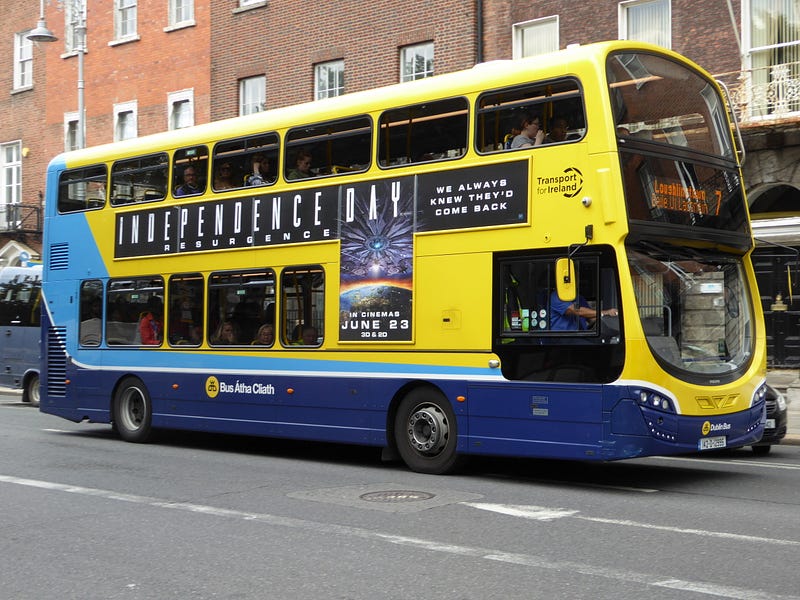
Because public transportation is so integral to life in Europe, the major bus and train stations frequently serve as shopping hubs, with lots of stores and restaurants in them or nearby. Furthermore, they are centrally located, as opposed to being relegated to the outskirts, as they are in many cities in the USA.
2. Breathing lots of tobacco smoke
The percentage of smokers in this part of the world is huge — much higher than in the USA — and it seems to be allowed almost everywhere. It’s at its worse in restaurants, where smokers are allowed to smoke in outdoor eating areas, right next to people who are eating. Gag me!
Even on the streets, it can be overwhelming. In the USA, once you enter most train stations, the platforms are smoke-free, but that is not the case here.
It’s hard to escape the smoke!
3. Overwhelming amount of graffiti
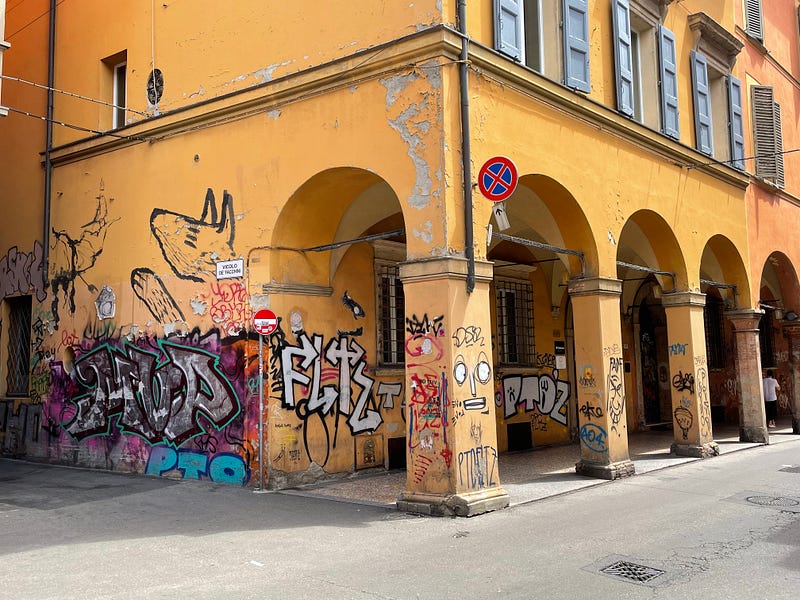
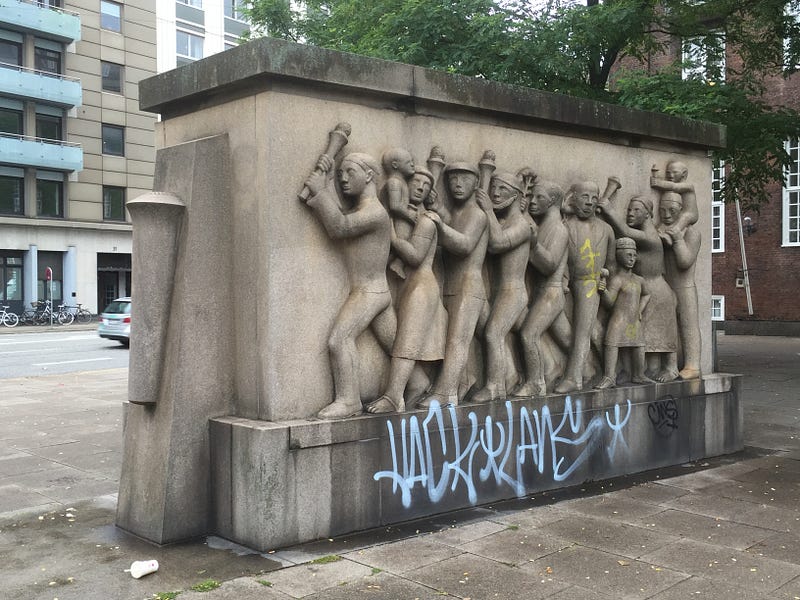
It seems that building owners and public officials have given up trying to remove or paint over the blight of spray paint that the feeble-minded have used to cover so many buildings, public places, and monuments. There’s hardly an untouched spot in some neighborhoods.
4. Most drivers are respectful to pedestrians.
By and large, the motorists were extremely respectful to pedestrians. They typically wait patiently as I cross at marked crosswalks. It’s rare to see that everywhere in the USA.
There are some notable exceptions to this principle, however. As there are a lot of immigrants who learned to drive in their countries of origin, where the driver/pedestrian relationship is different, they have brought with them a different attitude about pedestrian rights. These drivers operate their vehicles as if they own the road. Always be on guard.
5. Pay toilets
There is rarely a free public toilet. You pay for these. They generally cost between the equivalent of $.50 to $1.50, so they are not cheap. The upside to these toilets, however, is that they are usually maintained by a guardian who collects your money and who is responsible for keeping them clean.
Take the opportunity to use them in restaurants if you are eating there. Men can sometimes find free public urinals, so that is a small difference.
6. Bicyclists everywhere
The Netherlands has lanes dedicated to cyclists. It’s not easy, as a foreign pedestrian, to remember that they have their own lane between the sidewalk and the cars. Be vigilant!
I didn’t quite understand the bike lanes until I was visiting my Dutch friend Nancy in Den Bosch. Once I was on the bike, I had a new awareness of the way that the bike lanes were well set up for cyclists, and how they are protected from vehicle traffic.
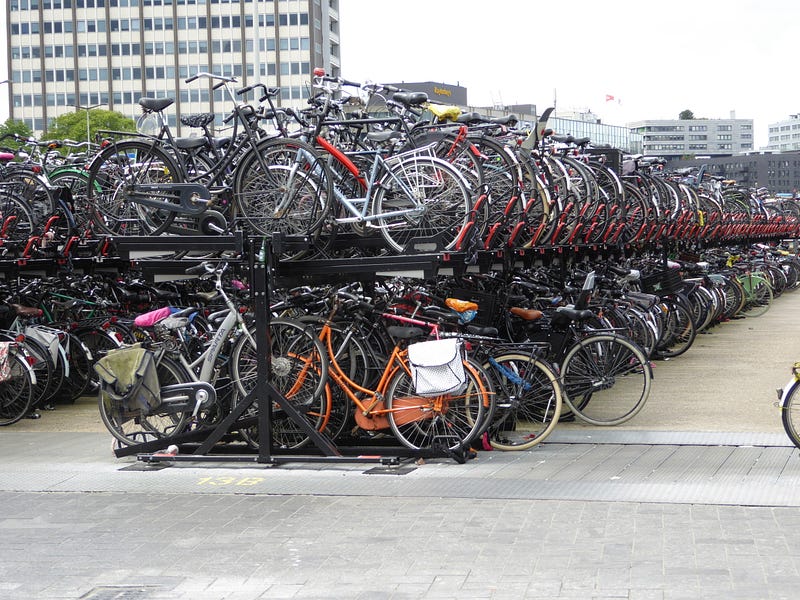
Some of the friendliest places for bicycles that I have seen are Netherlands, Denmark, and Germany.
7. Paying for bags and bagging your own groceries
Grocery stores have their bags available on the customer side of the counter. Take as many as you want, put them on the conveyor belt with your groceries, and the cashier scans the bar code along with your groceries.
Once you pay for your purchase, your items are at the end of the conveyor belt, ready for you to put into the bags you have purchased. The cashier is now ringing up the items belonging to the person who followed you.
You would do well to plan ahead by having a reusable shopping bag or backpack with you when you go to the market.
8. Veg*n food is becoming popular.
Take heart if you are a vegan or vegetarian (abbreviated as “veg*n”). There are some places that have signs indicating to prospective customers that they have veg*n food.
Use an app such as HappyCow to find food as you travel.
9. The market hall experience
We don’t have a lot of market halls in the USA. You will find in them a variety of food and drink where people can make purchases at several different vendors and then sit together at large tables so that they can socialize.
They tend to be an urban phenomenon. While many of them are repurposed older buildings, some of them can be newer. The fare tends to appeal to the higher end customer, so they are not necessarily cheap.
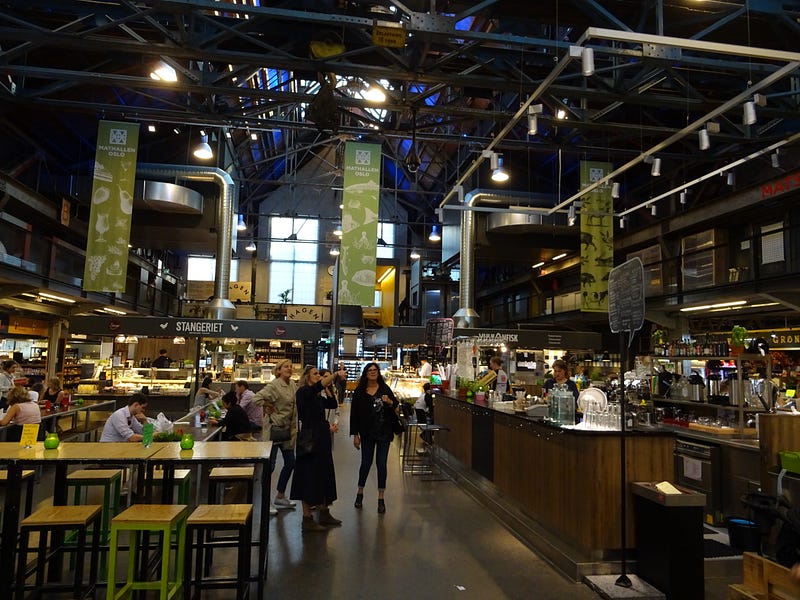
I have enjoyed experiences in market halls in such cities as Hannover, Warsaw, Rotterdam, Oslo, and Madrid, among other cities.
10. Increasing numbers of English speakers
This is a delicate topic. The first order of business for every visiting foreigner is to show some respect to local people by learning how to say, at the very minimum, hello, please, and thank you in the local language. Also, learn how to say, “Excuse me. Do you speak English?” in the local language.
In many countries, especially where they are visited by large numbers of English speakers, you will find that it can be quite easy to get around by speaking English. In my experience, the Dutch, Germans, Swedes, and Danes are uniformly outstanding in their facility of using English.
I typically begin a conversation by asking, “Excuse me. Do you speak English?” I do that because I believe it was more polite than just beginning a conversation in English. Almost all the time, the person responds with, “Of course!” The few exceptions tend to be older people and those who never have much interaction with foreigners.
English is one of the choices on the ATMs and all the machines that sell transport tickets at railway stations and buses.
11. Amazing bread
There seem to be bakeries on every block. They offer substantial bread that is rich, heavy, and chewy. If you taste and enjoy this bread as I do, you will never again see the possibility of eating the crap that we have in the USA, unless it’s in a specialty bakery that is outside the typical mold of bread.
12. Jehovah’s Witnesses
The representatives from Jehovah’s Witnesses are stationed in every country I went to. They stand there on the street, in public squares, railway stations, and offer literature for people to read. They don’t bring attention to themselves, so if you ignore them they won’t call out to you. But they are there, ready for you, offering salvation and a link to their website.
They must be on some sort of campaign to increase their numbers.
13. Disenfranchised people, begging, needing help
We get a story in the USA that there is a huge benefit to high taxes in this part of the world: everyone gets excellent public schools, medical care, housing, and food. In short, people are cared for by society at large.
I drew the conclusion that people are well cared for and that, as a result, there would more than likely be no (or little) evidence of neglected people.
My conclusion was wrong. While the numbers are lower than I have seen in the USA, there are still plenty of people begging in the streets, walking around with an unkempt appearance, and exhibiting drunken behavior during the daytime in the streets.
14. Multicultural populations
This is one aspect of Europe that has changed since my first visits to Ireland in 1985, Germany in 1998, and the Netherlands in 2002. All over Denmark, Sweden, and Norway, too, the face of these countries is becoming much more multicultural. You’re not going to encounter a population that is exclusively blue-eyed blondes in this part of the world.
People from Asia, Africa, and the Middle East are in great evidence, as are the restaurants and shops that they have established to cater to their tastes and to the increasingly diverse taste among the people who live there.
15. No flat top sheets for beds
The preferred bedding method is duvets with covers on top of the person sleeping. I much prefer a top sheet, unfitted, below any blanket or duvet that covers me. These are either nowhere to be found, or extremely rare.
It seems to me that for a person who is preparing a bed for a visitor, it is significantly more burdensome to have to take off the duvet cover, launder it, and then replace it for the next visitor — as happened in all the Airbnb places and friends’ homes where I have stayed during this visit.
At home in my own bed, I find that the top sheet is more comfortable. For one thing, it is usually quite large — large enough to tuck in on three sides, which gives me a warm and secure feeling, rather than the always-too-small duvet, which leaves my feet uncovered many times during the night.
16. No water fountains
I guess I am spoiled by living in the USA, where most public restrooms seem to have a water fountain nearby. In Europe, you will encounter very few public drinking fountains. Since the tap water is uniformly potable, you would do well to carry a water bottle with you so that you can fill it at sinks in restaurants or public restrooms.
17. Tax and tipping
The situation in Europe is quite different than it is in the USA. As for tax, it’s already included in the price of meals and goods. If you buy large-ticket items, you have the possibility of getting a refund on the VAT (Value Added Tax) when you leave Europe. As for tipping, that varies from country to country, and it’s usually much lower than it is in the USA. Many servers expect nothing and they are also quite happy if they get 10% or some small change.
By all means, ask locally about the custom for leaving extra change as a tip.
18. The polite actions that you may not anticipate or know about
Every country has its own perception of what constitutes polite or rude behavior. Do yourself a huge favor: whatever country you are going to, search on YouTube for something like, “Never do this in — [name of country] — “ You could replace Never with Always when you do your search. You will find extremely beneficial information if you take the time to search for it.
One example that can be extremely helpful to you if you are going to France: When you enter a small shop, make eye contact with the first worker you see and say “Bonjour.” I cannot overemphasize the importance of this small gesture of politesse. Without it, you will be deemed rude and ignorant, and you will be treated accordingly.
19. The absence of 24-hour shopping
Grocery shopping can be quite an educational experience. In fact, I prefer buying my food in grocery stores to buying it in restaurants. You need to make yourself aware of local customs when it comes to buying groceries, especially if you buy alcohol.
The supermarkets in several countries (Germany, for example) are closed on Sundays. In some countries (Estonia and Sweden, for example) alcohol is sold only in state-operated stores that run on strict hours. In Sweden, the nationally run store Systembolaget closes on Saturday afternoon and remains closed on Sunday. Plan in advance!
20. Europe doesn’t need to comply with ADA
The ADA [Americans with Disabilities Act] carries no sway in Europe. If you are a person who has mobility issues, don’t expect to get the accommodations that you are used to in the USA. You will undoubtedly find an absence of elevators or escalators, ramps to help your movement, and of transport that can adapt to your needs.


