avatarAbdelfattah Sekak

Free AI web copilot to create summaries, insights and extended knowledge, download it at here

2067

Abstract

eering away from their back-end capacities</b>. In simpler terms, with the assistance of HTMX, you’re not compelled to adopt an entirely new mindset and set of tools.</p><div id="e2ee"><pre><span class="hljs-tag"><<span class="hljs-name">button</span> <span class="hljs-attr">hx-post</span>=<span class="hljs-string">"/clicked"</span> <span class="hljs-attr">hx-swap</span>=<span class="hljs-string">"outerHTML"</span>></span> Click me <span class="hljs-tag"></<span class="hljs-name">button</span>></span></pre></div><p id="73a7"><i>The above example shows HTMX's practical use.</i></p><p id="8c4b">Instead of triggering a form or executing custom JavaScript when a button is clicked, HTMX's JavaScript sends a post request to <code>/clicked</code>.</p><p id="09f6"><b>Any HTML returned by this endpoint replaces the page's current content.</b></p><p id="7d94">The goal of HTMX is to minimize the use of React for developers who find themselves toggling between back-end and front-end all too often. It's important, though, not to cast HTMX as a React competitor.</p><p id="f8da" type="7">The two tools have different use cases, and they cater to different developer needs.</p><h1 id="75eb">Paving Future Path With HTMX</h1><p id="6b1b">The adoption of HTMX helps developers focus more on their core competencies. It's a boon for back-end engineers who, while developing complex user interfaces, had to deal with front-end technologies.</p><p id="51f5">Eradicating the necessity to be proficient in languages like React, HTMX allows developers to create a decent user interface for their complex services.</p><p id="0129">While this new tool promises a smoother development process, its success heavily relies on the acceptance of the developers.</p><p id="7364">As it stands, HTMX seems to be a natural evolution of old Rails practices, embedding itself as a prominent solution to blur the line between front-end and back-end.</p><p id="773d"><i>If you’re eager to delve deeper into the technical specifics of HTMX, I cordially invite you to explore m

Options

y comprehensive dedicated article on the subject :</i></p><div id="ca62" class="link-block"> <a href="https://javascript.plainenglish.io/html-got-power-thanks-to-htmx-d4fae7b11cd9"> <div> <div> <h2>HTML got power thanks to HTMX</h2> <div><h3>Explore a Modern Library for Easy HTML Manipulation without JavaScript — A Quick Look</h3></div> <div><p>javascript.plainenglish.io</p></div> </div> <div> <div style="background-image: url(https://miro.readmedium.com/v2/resize:fit:320/1*L6ODpzcNWVEph6lG0yI_AA.png)"></div> </div> </div> </a> </div><h1 id="77eb">Conclusion</h1><p id="3dd8">What does this mean for the future of web development? Opinions may vary, but one thing's clear: tools like HTMX will continue to shape the landscape, offering developers new ways to break boundaries and innovate.</p><p id="60e5">Are you more inclined towards front-end or back-end? Does HTMX sound interesting, or are you going to stick with next? Feel free to share your thoughts!</p><p id="72ef">But remember, no matter the tools we use, let's continue to push the boundaries of what we can create.</p><h1 id="a2fd">In Plain English</h1><p id="3472"><i>Thank you for being a part of our community! Before you go:</i></p><ul><li><i>Be sure to <b>clap</b> and <b>follow</b> the writer! 👏</i></li><li><i>You can find even more content at <a href="https://plainenglish.io/"><b>PlainEnglish.io</b></a><b> 🚀</b></i></li><li><i>Sign up for our <a href="http://newsletter.plainenglish.io/"><b>free weekly newsletter</b></a>. 🗞️</i></li><li><i>Follow us on <a href="https://twitter.com/inPlainEngHQ"><b>Twitter</b></a></i>, <a href="https://www.linkedin.com/company/inplainenglish/"><b><i>LinkedIn</i></b></a>, <a href="https://www.youtube.com/channel/UCtipWUghju290NWcn8jhyAw"><b><i>YouTube</i></b></a>, and <a href="https://discord.gg/GtDtUAvyhW"><b><i>Discord</i></b></a><b><i>.</i></b></li></ul></article></body>

Solving the Front-End complication with HTMX

A way to balance Front-End and Back-End development

As developers, we frequently find ourselves at a crossroad, working with front-end and back-end dilemmas. With an increasing trend favoring HTMX, developers can now experiment with back-end capabilities without front-end burdens. Let's unwrap this further.
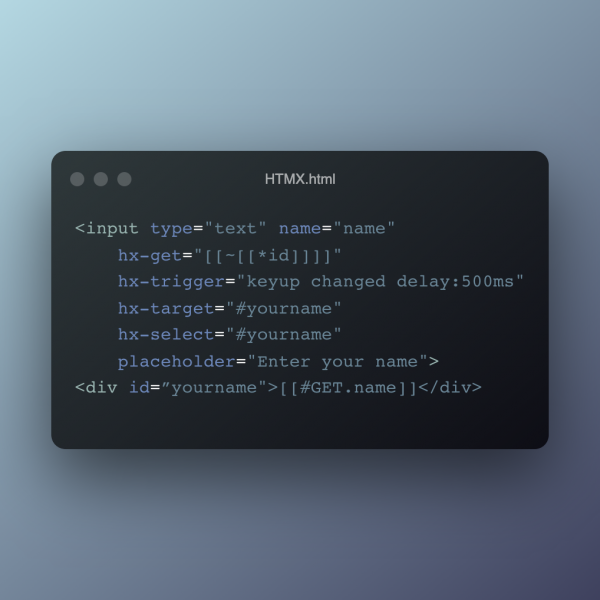
Screenshot of HTMX code snippet

What is HTMX?

Before diving into HTMX, we should appreciate the fundamental role of HTML templates in back-end frameworks, such as Laravel, Rails, and Python related solutions.

Traditionally, we create an HTML template on the back-end, with template strings derived from our programming language. These templates, like a username or profile picture URL, get translated into HTML on the back-end.

However, traditional HTML representation won't permit profound interactivity, such as a button that changes states without reloading an entire page.

Back-end engineers seeking to build an interactive UI end up being forced to learn tools like React; this is where our spicy take comes into play:

A major source of pushback against react stems from developers feeling forced to use it for basic tasks, like interactive menus.

Frustrated man

Other developers wish to focus on back-end development but end up having a React project to perform trivial tasks, leading to an involuntary venture into the front-end territory.

We are introducing HTMX as a savior in this situation.

HTMX offers developers the chance to build a robust front-end without veering away from their back-end capacities. In simpler terms, with the assistance of HTMX, you’re not compelled to adopt an entirely new mindset and set of tools.

<button hx-post="/clicked" hx-swap="outerHTML">
  Click me
</button>

The above example shows HTMX's practical use.

Instead of triggering a form or executing custom JavaScript when a button is clicked, HTMX's JavaScript sends a post request to /clicked.

Any HTML returned by this endpoint replaces the page's current content.

The goal of HTMX is to minimize the use of React for developers who find themselves toggling between back-end and front-end all too often. It's important, though, not to cast HTMX as a React competitor.

The two tools have different use cases, and they cater to different developer needs.

Paving Future Path With HTMX

The adoption of HTMX helps developers focus more on their core competencies. It's a boon for back-end engineers who, while developing complex user interfaces, had to deal with front-end technologies.

Eradicating the necessity to be proficient in languages like React, HTMX allows developers to create a decent user interface for their complex services.

While this new tool promises a smoother development process, its success heavily relies on the acceptance of the developers.

As it stands, HTMX seems to be a natural evolution of old Rails practices, embedding itself as a prominent solution to blur the line between front-end and back-end.

If you’re eager to delve deeper into the technical specifics of HTMX, I cordially invite you to explore my comprehensive dedicated article on the subject :

Conclusion

What does this mean for the future of web development? Opinions may vary, but one thing's clear: tools like HTMX will continue to shape the landscape, offering developers new ways to break boundaries and innovate.

Are you more inclined towards front-end or back-end? Does HTMX sound interesting, or are you going to stick with next? Feel free to share your thoughts!

But remember, no matter the tools we use, let's continue to push the boundaries of what we can create.

In Plain English

Thank you for being a part of our community! Before you go:

Htmx
HTML
JavaScript
Front End Development
Backend Development
Recommended from ReadMedium