
Solid State Batteries Are Coming & Musk Should Be Worried
Quantumscape & VW are unlocking the ultimate battery
Tesla has been the king of the EV game for a while now, and their upcoming 4680 battery appears to be their latest attempt to sustain that dominance. It will be lighter, cheaper, more energy-dense, and even capable of charging quicker than anything before. How can anyone come close to competing with that? Well, Quantumscape has recently unveiled their revolutionary solid-state battery, and it looks like it could embarrass Tesla. What’s more, they are planning on installing it into road cars very soon. But what is a solid-state battery? What makes Quantumscape unique? And can they really dethrone Tesla?
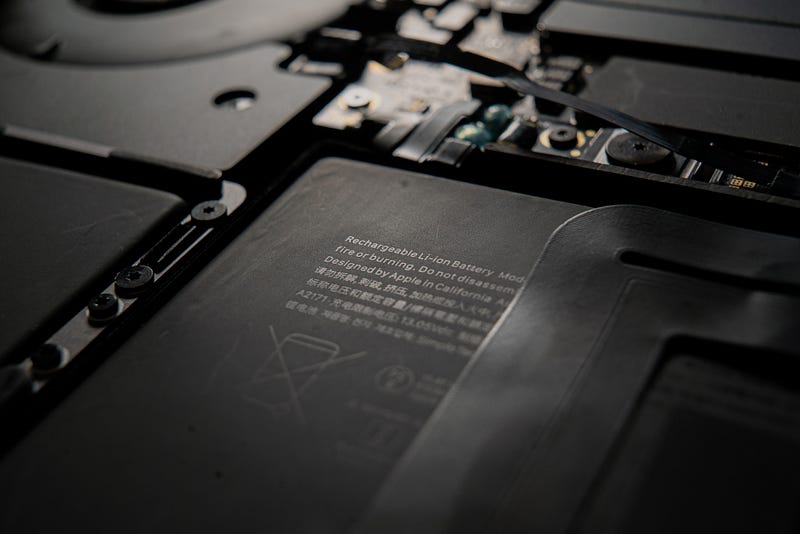
Firstly, what the hell is a solid-state battery? Well, regular batteries, such as the lithium-ion batteries in your phone and EVs, have an anode (negative side), liquid electrolyte, separator, and cathode (positive side). Ions flow through the electrolyte and between the cathode and anode during charging and discharging, giving the battery its power.
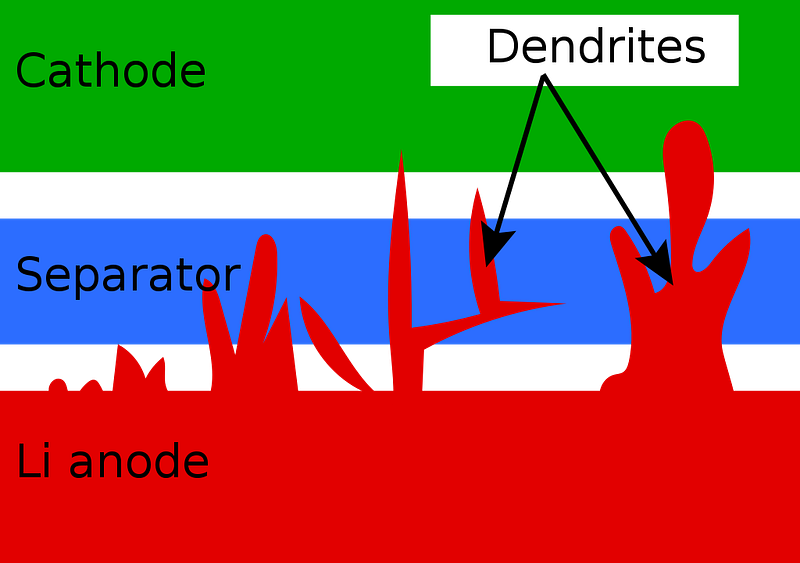
Solid-state batteries don’t use a liquid electrolyte. Instead, they use a solid one. This may sound like a simple change, but it has dramatic effects. Firstly, the battery is made lighter and significantly more compact, but it also has the potential for a longer operating lifespan and faster charging. This is because solid electrolytes are much more energy dense than liquid electrolytes. They can also restrict the growth of ‘dendrites’ which are deposits made on the anode and cathode during operation that reduce the battery’s capacity (how much energy it can store). To stop dendrite growth in lithium-ion batteries, charge and discharge speeds must be reduced and managed. This is why regularly fast charging your phone or EV can ruin its battery. But in solid-state batteries, their dendrite resistant nature means that this typically isn’t as much of an issue
What’s more, due to the lack of fluids involved, solid-state batteries could be much easier to manufacture at scale. They even deliver improved safety standards as they use far less flammable materials.
So solid-state batteries sound pretty awesome, don’t they? So why aren’t we all using them?
Well, they are damn hard to engineer. It’s relatively easy to engineer a solid state battery that is really lightweight and compact, but unfortunately, its charge speeds and lifespan would be compromised. This makes them useless in comparison to lithium-ion batteries.
However, Quantumscape has developed a way to circumvent this problem. Their anodeless design and ceramic electrolyte have let them build a solid-state battery with zero compromises.
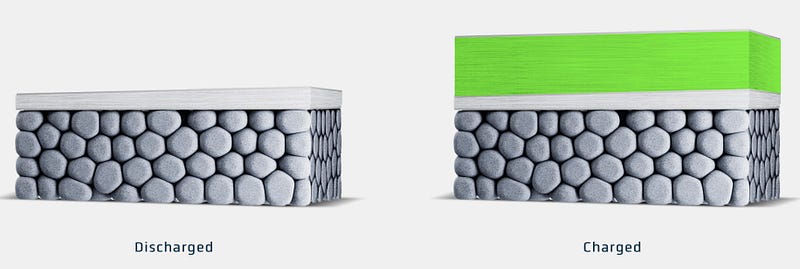
Firstly, they established the anodeless design, also known as the single-layer design. The anode is created during charging as lithium ions deposit themselves on the anode side of the electrolyte, rather than the anode being inserted during assembly like in every other battery. This negates a lithium dispersion bottleneck and allows the battery to charge at an accelerated speed without creating excess dendrites or having a limiting anode like other solid-state batteries. It also means that, when discharged, it only resembles half a battery due to its missing second layer, hence the “single-layer” name.
Their ceramic electrolyte also stops dendrites without being too large or weighty. Like most ceramics, this electrolyte is hard and temperature resistant, resulting in dendrites struggling to form as they require the electrolyte to break down under charge load or temperature.
Combined with some of the 300+ patents that Quantumscape owns, these aspects have allowed them to create the first usable solid-state battery. To show you just how impressive this battery is, let’s compare it to a Tesla Model 3 Long Range’s battery.
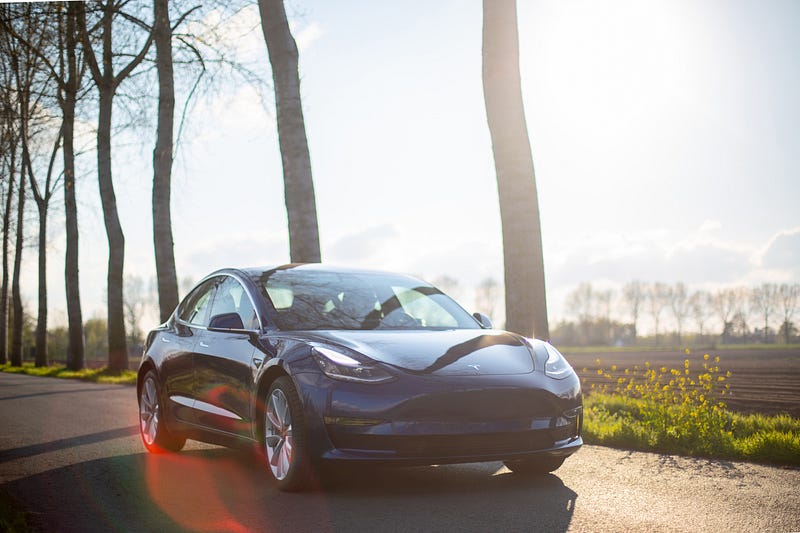
Quantumscape’s battery charges more than twice as fast as the Model 3. (I)t can go from 0% to 80% in only 15 minutes, whereas it takes the Tesla 30 minutes to go from 10% to 80% at a Tesla SuperCharger. The Tesla’s battery pack weighs 480 kg, takes up around 105 liters of space, and has a capacity of 75 kWh. If you built an equivalent pack out of a Quantumscape solid-state battery, it would weigh only 150 kg and be 75 liters in size. This incredibly small size and reduced weight will lead to a longer range, as less energy is needed to get it to move and the vehicle can be smaller, reducing drag. This reduced weight will also dramatically increase the cars’ performance, as accelerating and handling are very weight-dependent.
What’s more, Quantumscape batteries last longer. A bench test of 1,000 charges only induced a 10% loss of capacity in their battery. That is the equivalent of driving a 300-mile range EV 300,000 miles and only losing 30 miles of range. Compare that to Tesla, which claims to have 10% degradation for driving 200,000 miles.
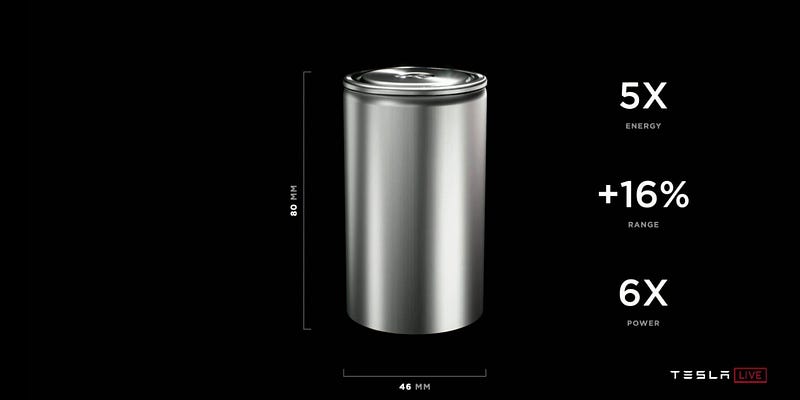
So ultimately, Quantumscape can trounce Tesla’s current battery tech. But its stats are also far superior to what Tesla predicts the 4860 battery will be capable of. The 4860 can only charge slightly quicker than its current battery, has a marginally better energy density, and likely has a comparable lifespan. You see, the main advantage of the 4860 is how easily it can be manufactured and installed into a car. There is no major leap in battery technology. Instead, this is mainly a way for Tesla to make cars cheaper and simpler.
So the question remains. When can we get our hands on a solid-state battery EV?
Well, Quantumscape wants to enter commercial production in 2024 and scale up from there. As VW has backed their technology to the tune of $3 million, they will likely be the first customers. But these batteries won’t be going into an ID.3 at first, as they will be way too expensive. Instead, it will likely go to one of the premium brands that VW owns or has a stake in, such as Lamborghini, Bentley, Audi, Porsche, Bugatti, or even Ducati.

So in the next few years, we could have a lightweight, high-performance Porsche EV sports car with solid-state batteries that can fully charge in only 15 minutes. With the weight advantage of the solid-state battery and Porsche’s reputation as a performance brand, this could be one of the best performance cars ever seen. If this comes to pass, Tesla will easily have its EV performance crown knocked off its head.
But, Quantumscape wants to scale production to the point where this battery is affordable. After all, that is the profitable business model for batteries. What’s more, the materials they use are no more rare or extreme than a lithium-ion battery. So, in time, they could become cost-comparable to current battery packs, or even potentially more affordable. Then all of the VW Group‘s cars may become equipped with this astonishing technology.
How long will it take for Quantumscape to scale itself to this level? Can Tesla keep up? These are questions only time will tell. But the fact is that Quantumscape and VW are closing the gap on Tesla quickly, and could soon dominate the EV market.
So now you know what solid-state batteries are, how Quantumscape and VW are finally turning them into reality, and how this could lead to Tesla losing its top spot. Personally, I am damn excited to see where this tech goes, and it is fantastic to see companies joining forces to challenge Tesla. We need more brilliant EVs if we are going to go carbon neutral and save the world. But now might be the time for Musk and any Tesla stockholders to start worrying, as Tesla’s headstart is being eroded away faster than you think.


