avatarKay Valley

Free AI web copilot to create summaries, insights and extended knowledge, download it at here

3566

Abstract

id="696e">It’s not only white Americans from the US who don’t know or want to know their history, Canadians suffer under a similar delusion. Slave property was protected in Canada under <a href="https://www.solon.org/Constitutions/Canada/English/PreConfederation/cap_montreal.html"><i>Article 47 of the Articles of Capitulation, Montreal September 8, 1760</i></a><i> </i>after France ceded Quebec to Great Britain. The articles specifically enshrined and protected slavery in law.</p><blockquote id="9e51"><p>The Negroes and panis <i>[Aboriginal slaves] </i>of both sexes shall remain, in their quality of slaves, in the possession of the French and Canadians to whom they belong; they shall be at liberty to keep them in their service in the.colony or to sell then; and they may also continue to bring them up in the Roman Religion. -”Granted, except those who shall have been made prisoners.”</p></blockquote><h2 id="e86e">Slavery was officially outlawed in Canada on August 1, 1834.</h2><p id="eb5e">My family celebrates this day every year because my daughter was born on August 1. Canadians throughout the country look forward to August 1 because it’s the start of the August long weekend. And all Canadians want to know is “Did you get the day off?”</p><p id="84d2">August 1 isn’t celebrated as the day Canada finally abolished slavery. It’s a Civic holiday or Heritage day which most Canadians also don’t know.</p><p id="30b7">During Sophia’s time with Mr. Hatt legislation was passed ending slavery and after long years as a slave, Sophia was finally free. Except, the noble Mr. Hatt didn’t bother to inform the enslaved woman. He ignored the legislation and continued on as before, forcing her to be his slave.</p><p id="1a76">Luckily for Sophia, she had neighbours who weren’t as wicked as Hatt. With their help, Sophia escaped up the Grand River to the region of Waterloo. During this time she married, eventually leaving a husband who ran off with a white woman.</p><h2 id="c9db">Queen’s Bush Settlement</h2><p id="e963">After a lifetime spent enslaved in Canada, a ninety-year-old Sophia Burthen Pooley moved to the Queen’s Bush Settlement in the Waterloo region.</p><blockquote id="09ef"><p><i>Then we marched right into the wilderness, where there were thousands of acres of woods, which the chain had never run around since Adam. At night we made a fire, and cut down a tree, and put up slats like a wigwam. This was in February, when the snow was two feet deep.</i></p></blockquote><blockquote id="41aa"><p><i>John Little 1842 — Black settler</i></p></blockquote><p id="0d81">Queen’s Bush wasn’t simply a large uncleared plot of land. It was a vast wilderness full of trees and brush. A land difficult to access through deep snow and sheer distance. To reach the area meant trekking through four towns on a narrow trail. Queen’s Bush was for the determined. Remarking on the journey, one traveller said they had “<a href="http://ryeandginger.ca/queens-bush-settlement-marched-wilderness/">never before travelled such a miserable road.</a></p><p id="2d2e">For a group of escaped slaves and freedpeople, the arduousness of the trek may well have been daunting yet also welcome, as it afforded them protection from whites. Finally, they could craft their own lives using their labour for their own purpose.</p><p id="d0c5">Canadian winters can be harsh. Although the land of Queen’s Bush was abundant with deer, bears, wolves and smaller animals, and the Grand river teeming with fish, few would have had the skills to hunt and gather food from the w

Options

ilds around them. Escaped slaves from the US wouldn’t have been accustomed to the blizzard of winters on land without infrastructure nor government support. The settlers were forced to live rough.</p><p id="8618">Hollowed trees were home to some, and tanned animal hides used by others for their sleep. Coarse single floor dwellings with a hole as a makeshift chimney were also home. These Black settlers had to rely on each other to survive the merciless winters.</p><p id="77dc">Nonetheless, as time passed, they prospered. Sharing with newcomers Black and white alike. Nearby towns, accessible in the warm summers helped the settlers as best they could and Mennonite farmers helped the settlers erect homes, schools and churches.</p><p id="6f4f">Until the government came to survey the land, Queens Bush thrived, sustaining the lives of some 1500 souls in a community that made it their business to care for one another. Although other accounts put the number of residents at closer to 2000.</p><p id="2d1b">It was this community that looked after Mrs. Pooley from the age of ninety, until her death.</p><blockquote id="8231"><p>Lieutenant Governor Simcoe set aside the Queen’s Bush land for the Anglican Church in 1792–93. Funds earned from these Clergy Reserve Lands — through cultivation, rental or sale — were to support the Church. Fifty years later, policy changes saw the parcel surveyed and available for purchase.</p></blockquote><blockquote id="0e94"><p>Crown land agents harassed and misled the black residents — especially the illiterate or those with little business — experience about payment terms and threatened with eviction.</p></blockquote><blockquote id="1a40"><p><a href="http://ryeandginger.ca/queens-bush-settlement-marched-wilderness/">rye & ginger</a></p></blockquote><p id="ea0f">When the Canadian government did eventually survey the land, they made the choice to favour white lives over Black. Deliberately charging the Black settlers who had cleared and improved the land, and who’d built a completely self-sustaining community, exorbitant amounts they couldn’t possibly afford. Of course, the move to hurt the Black families went further and deeper. They were cheated, by white European settlers, their goods were unfairly undervalued at market, white farmers moved the surveying markers all in an attempt to push the Black settlers out. And they succeeded.</p><p id="933e">The government’s priority being white settlers saw the schools, the churches, the roads, and the improvements made by the Black settlers taken away and given to white families. No compensation was given then or now to the families forced to scatter to the surrounding towns to start over with nothing.</p><p id="a46d">Farmland in this region today is 20,000 per acre. With the most expensive price at 37,000 per acre.</p><p id="f344">Average cost of a home in this region today is $840,000.</p><p id="7a82">But hey. Canada owes nothing to Black people, right?</p><div id="ab4b" class="link-block"> <a href="https://aninjusticemag.com"> <div> <div> <h2>An Injustice!</h2> <div><h3>A new intersectional publication, geared towards voices, values, and identities!</h3></div> <div><p>aninjusticemag.com</p></div> </div> <div> <div style="background-image: url(https://miro.readmedium.com/v2/resize:fit:320/1*suDnvWWEvtqQCxA2NEHoRA.png)"></div> </div> </div> </a> </div></article></body>

Sold into Slavery in Canada: Sophia Burthen Pooley

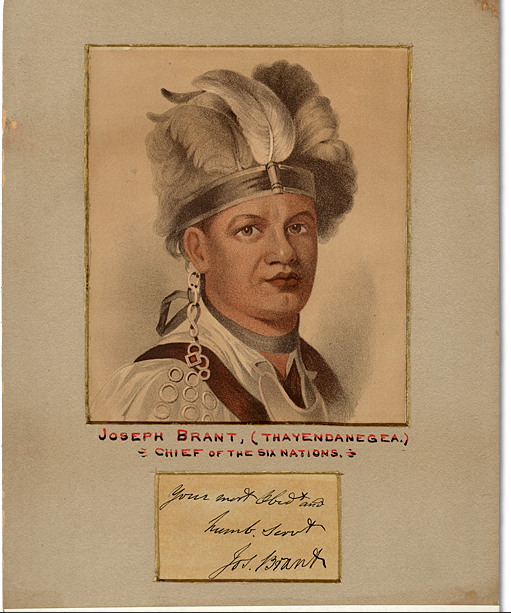
Mohawk leader Joseph Brant bought the girl to “Be Like Family”

Joseph Brant Memorial Hospital by Andrew Lynes, Public domain, via Wikimedia Commons ( Joseph Brant Memorial Hospital in Burlington, Ontario. I grew up in Burlington and my mother worked as a Registered Nurse in this facility named after the Mohawk slaver.

Sophia Burthen Pooley in her own words

I was born in Fishkill, New York State, twelve miles from North River. My father’s name was Oliver Burthen, my mother’s Dinah. I am now more than ninety years old. I was stolen from my parents when I was seven years old, and brought to Canada; that was long before the American Revolution. There were hardly any white people in Canada then — nothing here but Indians and wild beasts. Many a deer I have helped catch on the lakes in a canoe: one year we took ninety. I was a woman grown when the first governor of Canada came from England: that was Gov. Simcoe.

Former slave Sophia Burthen Pooley was stolen by the sons-in-law of Mohawk leader Joseph Brant. The Mohawk leader who already owned thirty slaves in what is today called southern Ontario, bought Sophia to be “like family.”

Archives of the government of Ontario — archives.gov.on

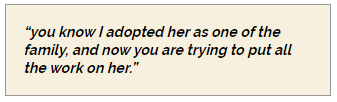
She played and hunted with the Brant children. She chased deer and when they were caught, used her own tomahawk to in her words “hit the deer on the head”. She witnessed war dances and seemed to enjoy her time as Brant’s slave. Being in no hurry for her freedom did not make her precarious situation any less problematic, nor change it from what it was. Sophia was a slave who could be bought and sold at the whim of her owner.
Archives of the government of Ontario — archives.gov.on

The fly in Sophia’s time with the Mohawk leader was Brant’s third wife (some accounts call her his mistress) who relished causing the child pain. When Brant discovered his wife’s treatment toward Sophia he punished his wife.
Archives of the government of Ontario — archives.gov.on

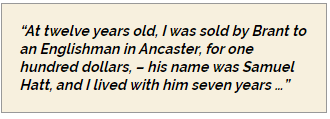
On her twelfth birthday, the young girl who’d already had her life uprooted by Brant’s family, when she was taken from her parents, was again made rootless. Joseph Brant sold the child he’d bought to be “like family” to Samuel Hatt, the co-founder of the town of Ancaster for one hundred dollars.

Apparently, those dollars were the family rate.

It’s not only white Americans from the US who don’t know or want to know their history, Canadians suffer under a similar delusion. Slave property was protected in Canada under Article 47 of the Articles of Capitulation, Montreal September 8, 1760 after France ceded Quebec to Great Britain. The articles specifically enshrined and protected slavery in law.

The Negroes and panis [Aboriginal slaves] of both sexes shall remain, in their quality of slaves, in the possession of the French and Canadians to whom they belong; they shall be at liberty to keep them in their service in the.colony or to sell then; and they may also continue to bring them up in the Roman Religion. -”Granted, except those who shall have been made prisoners.”

Slavery was officially outlawed in Canada on August 1, 1834.

My family celebrates this day every year because my daughter was born on August 1. Canadians throughout the country look forward to August 1 because it’s the start of the August long weekend. And all Canadians want to know is “Did you get the day off?”

August 1 isn’t celebrated as the day Canada finally abolished slavery. It’s a Civic holiday or Heritage day which most Canadians also don’t know.

During Sophia’s time with Mr. Hatt legislation was passed ending slavery and after long years as a slave, Sophia was finally free. Except, the noble Mr. Hatt didn’t bother to inform the enslaved woman. He ignored the legislation and continued on as before, forcing her to be his slave.

Luckily for Sophia, she had neighbours who weren’t as wicked as Hatt. With their help, Sophia escaped up the Grand River to the region of Waterloo. During this time she married, eventually leaving a husband who ran off with a white woman.

Queen’s Bush Settlement

After a lifetime spent enslaved in Canada, a ninety-year-old Sophia Burthen Pooley moved to the Queen’s Bush Settlement in the Waterloo region.

Then we marched right into the wilderness, where there were thousands of acres of woods, which the chain had never run around since Adam. At night we made a fire, and cut down a tree, and put up slats like a wigwam. This was in February, when the snow was two feet deep.

John Little 1842 — Black settler

Queen’s Bush wasn’t simply a large uncleared plot of land. It was a vast wilderness full of trees and brush. A land difficult to access through deep snow and sheer distance. To reach the area meant trekking through four towns on a narrow trail. Queen’s Bush was for the determined. Remarking on the journey, one traveller said they had “never before travelled such a miserable road.

For a group of escaped slaves and freedpeople, the arduousness of the trek may well have been daunting yet also welcome, as it afforded them protection from whites. Finally, they could craft their own lives using their labour for their own purpose.

Canadian winters can be harsh. Although the land of Queen’s Bush was abundant with deer, bears, wolves and smaller animals, and the Grand river teeming with fish, few would have had the skills to hunt and gather food from the wilds around them. Escaped slaves from the US wouldn’t have been accustomed to the blizzard of winters on land without infrastructure nor government support. The settlers were forced to live rough.

Hollowed trees were home to some, and tanned animal hides used by others for their sleep. Coarse single floor dwellings with a hole as a makeshift chimney were also home. These Black settlers had to rely on each other to survive the merciless winters.

Nonetheless, as time passed, they prospered. Sharing with newcomers Black and white alike. Nearby towns, accessible in the warm summers helped the settlers as best they could and Mennonite farmers helped the settlers erect homes, schools and churches.

Until the government came to survey the land, Queens Bush thrived, sustaining the lives of some 1500 souls in a community that made it their business to care for one another. Although other accounts put the number of residents at closer to 2000.

It was this community that looked after Mrs. Pooley from the age of ninety, until her death.

Lieutenant Governor Simcoe set aside the Queen’s Bush land for the Anglican Church in 1792–93. Funds earned from these Clergy Reserve Lands — through cultivation, rental or sale — were to support the Church. Fifty years later, policy changes saw the parcel surveyed and available for purchase.

Crown land agents harassed and misled the black residents — especially the illiterate or those with little business — experience about payment terms and threatened with eviction.

rye & ginger

When the Canadian government did eventually survey the land, they made the choice to favour white lives over Black. Deliberately charging the Black settlers who had cleared and improved the land, and who’d built a completely self-sustaining community, exorbitant amounts they couldn’t possibly afford. Of course, the move to hurt the Black families went further and deeper. They were cheated, by white European settlers, their goods were unfairly undervalued at market, white farmers moved the surveying markers all in an attempt to push the Black settlers out. And they succeeded.

The government’s priority being white settlers saw the schools, the churches, the roads, and the improvements made by the Black settlers taken away and given to white families. No compensation was given then or now to the families forced to scatter to the surrounding towns to start over with nothing.

Farmland in this region today is $20,000 per acre. With the most expensive price at $37,000 per acre.

Average cost of a home in this region today is $840,000.

But hey. Canada owes nothing to Black people, right?

Slavery
Slavery In Canada
Canadianhistory
Black Women
Injustice
Recommended from ReadMedium