
Solar Sciku for the Serious Scientist and Citizen
A response to Doctor R’s prompt for “Life-changing technology product”…
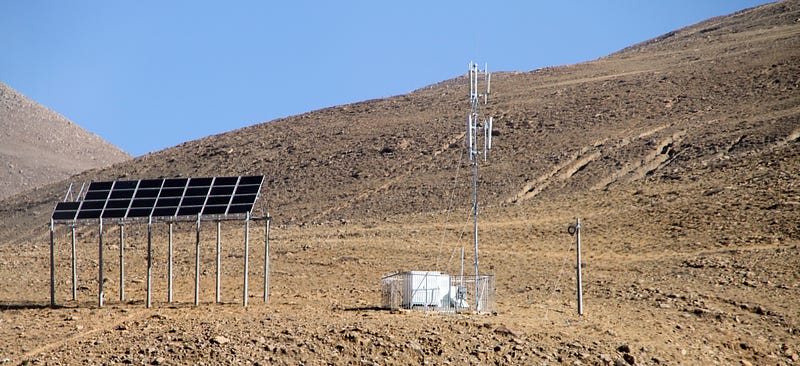
Silicon Leaves
Leaves of silicon. On lone tree or vast forest. Catch light from the sun.
Our daily activities clearly have a cumulative and detrimental effect on our environment. There are nearly 8 billion humans on earth, so our impact is inevitable. As each of us go about our daily activities, eating, drinking, driving, using energy, the waste from our efforts piles up in the ground, in the water, and in the air around us. And those harms affect all of us. Global climate change is one of those harmful effects.
But, just as our small, individual daily activities can cause unintended global harms, we can also make small but significant changes that can collectively reverse those damages.
Choosing solar power is one of those small changes that can have a huge cumulative effect to blunt and reverse climate change if we all move quickly in that direction.
Prodigy
Edmond Becquerel. Teenaged physics prodigy. Gave us solar cells.
The possibility of using solar power to directly power our daily activities came thanks to the pioneering efforts of a French physicist named Alexandre-Edmond Becquerel, who discovered a variety of physical phenomena involving light. Becquerel studied the effects of light in luminescence, phosphorescence, and, importantly for us, the photovoltaic effect.
When Becquerel was 19 years old, experimenting in his father Antoine Cesar’s laboratory, he created the first photovoltaic cell. Becquerel coated platinum electrodes with silver chloride or silver bromide, which generated voltage and current on exposure to light. This was in 1839.
Progress
We stand on shoulders. Seeing and reaching higher. So humans progress.
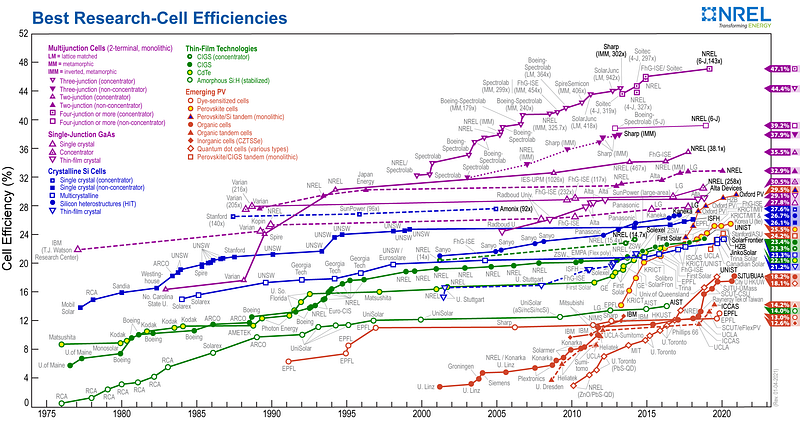
Since Becquerel’s discovery, many physicists and material scientists have built and added onto that knowledge. Collectively, they have discovered new materials and processes yielding greater efficiencies in producing electricity from light. In the chart below, you can see the general trend upward (higher efficiency) as the years and technologies progress.
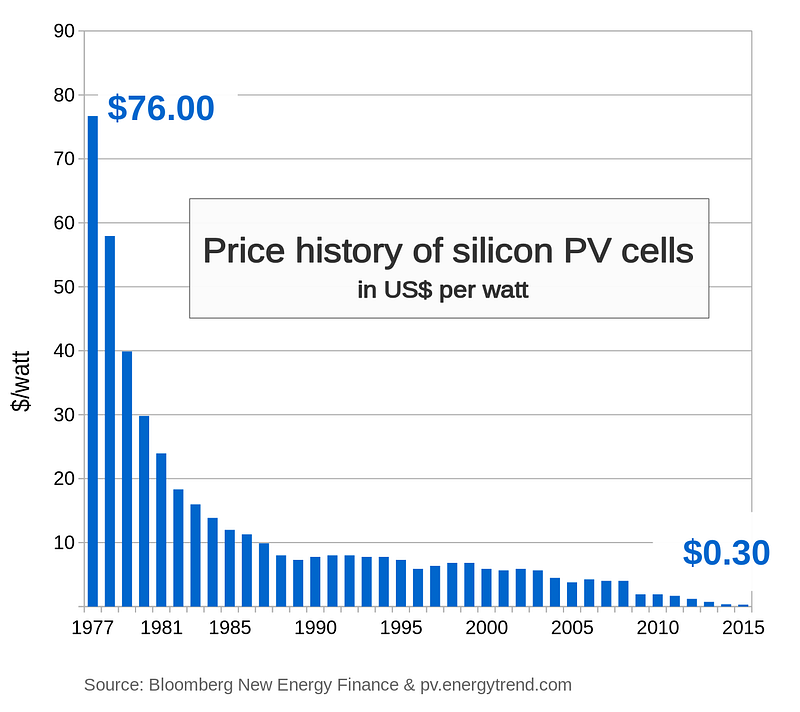
The reason solar cell efficiencies are important is that as efficiencies go up, the cost of energy from solar cells go down. Furthermore, as manufacturing processes and volumes improve, the cost of the cells go down, further reducing our energy costs. We can see the dramatic reduction in costs in the next chart, which shows the price history of photovoltaic cells in US$ per watt on the vertical scale, with year on the horizontal scale:
Most of us don’t concern ourselves with solar cell efficiencies, nor do we buy individual solar cells. We may buy installed solar systems, or electricity from utilities which install solar farms. What we want to know is how much solar energy will cost us compared to our options.
So here is the important chart for us, comparing energy from photovoltaic cells to other sources, and how that has changed recently. The most steeply sloping orange line swooping down from left to right is the solar energy cost we are interested in:
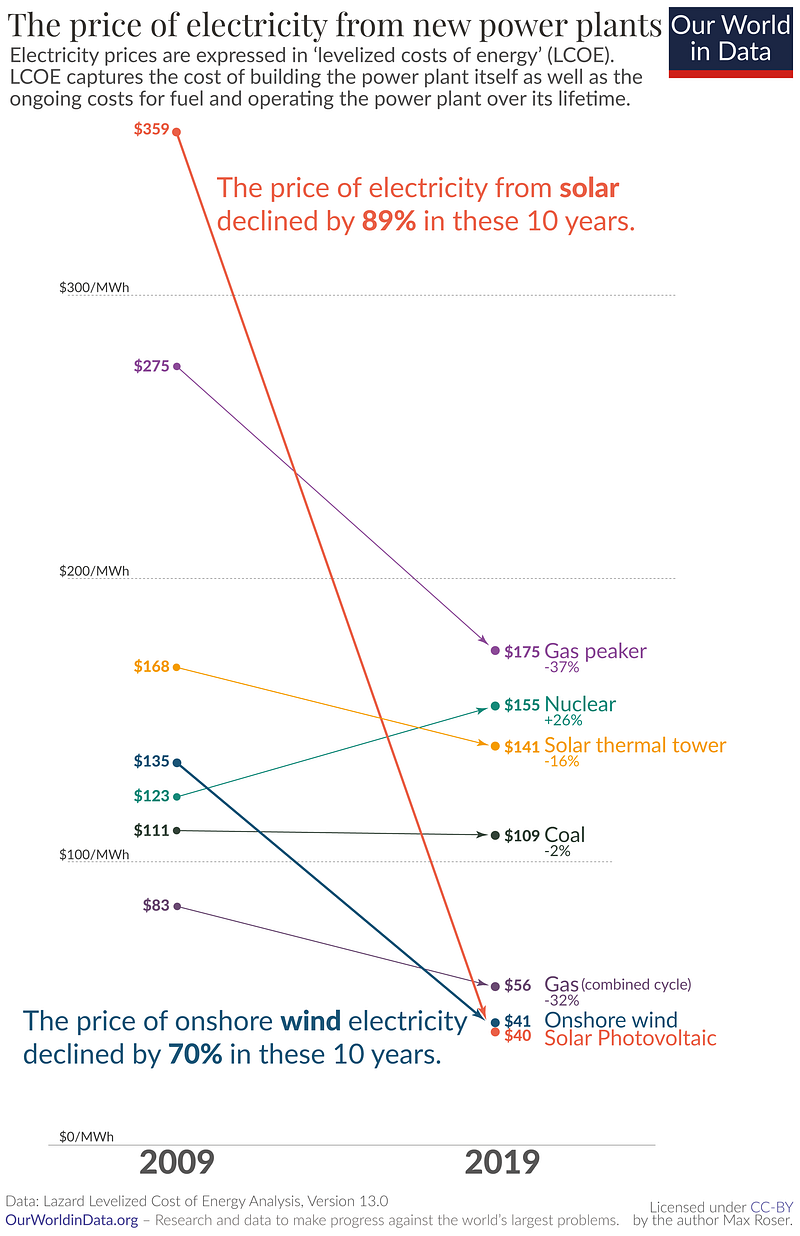
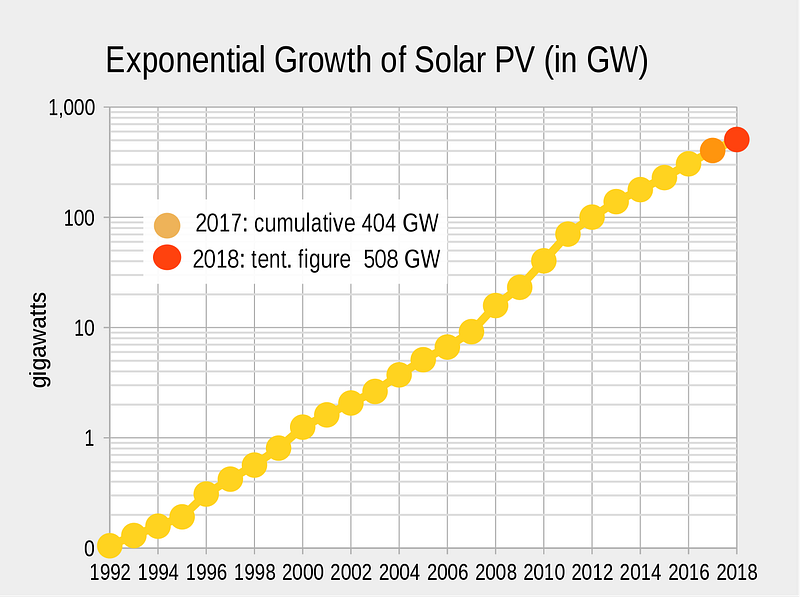
The dramatic drop in price to a level below that of conventional energy sources such as gas, coal, and nuclear, has spurred an immense growth in installed solar capacity over the recent years, as shown in the next semi-logarithmic chart (each vertical step is 10X increase):
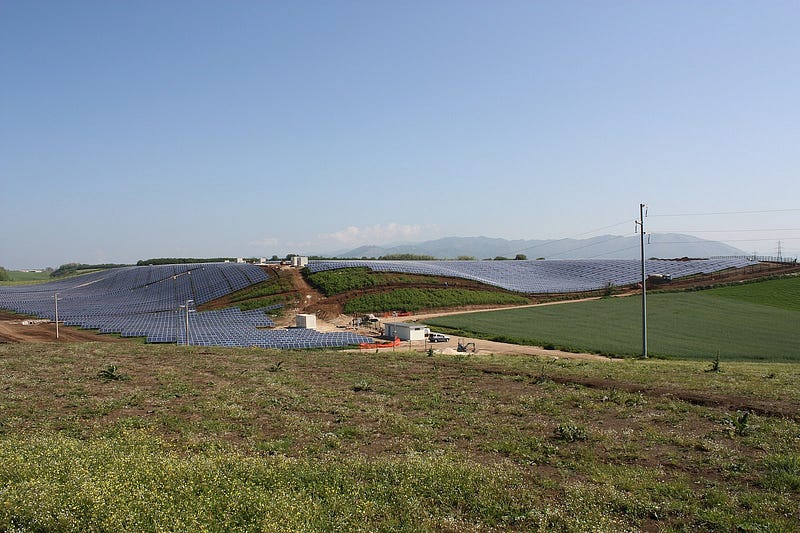
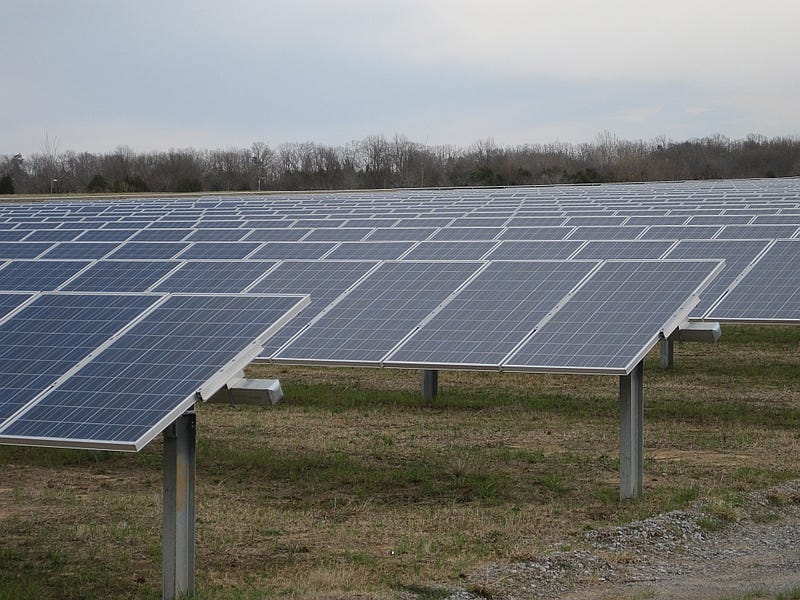
This dramatic drop in solar energy prices has led to vast forests of solar panels, as shown below. The tremendous increase in installed solar capacity has reduced energy costs for many of us, and soon, for all of us.
Individual We
Leaves in a forest. When one falls soon all follow. Choose wisely for all.
Even without a lower cost, many of us choose solar and a (temporarily) higher electric bill as our contribution to stemming global climate change. I hope many of you do so as well.
Please consider using your individual and collective influence to lobby for increased solar installations (and shuttering of conventional plants), and a broad and major reduction of energy costs (especially for those less fortunate), and choosing solar as one way to reduce our individual and collective impacts to the world, and each other.
Thank you so much to R. Rangan Ph.D. for tagging me and for the prompt, and for providing a wonderful home for such duuudely meanderings.
Also, thank you to y’all for reading, and please check out #SnSPrompt: Science related to “Life-changing Technology product” or simply a story about a technology product (e.g. news article, random facts, funny meme on social media) and its impact.


