
Software Testing Strategies: The Complete Guide

As software development has matured, so have the approaches to software testing. Automating tests has become an essential way for development teams to quickly identify and fix any issues. By doing so, teams can maintain an agile development process and continuously deliver their product with confidence. There are different testing methodologies and strategies developed over the years to ensure the code in production is reliable, and maintainable, regardless of the software architecture. In this article, we will discuss four popular testing strategies: The Testing Pyramid, The DevOps Hourglass, The Testing Honeycomb, and The Trophy.
The Testing Pyramid
Is the oldest and most popular testing strategy. It was first introduced by Mike Cohn in his book Succeeding with Agile. The original Testing Pyramid consists of three layers of tests, namely Unit Tests, Service Tests, and User Interface Tests.
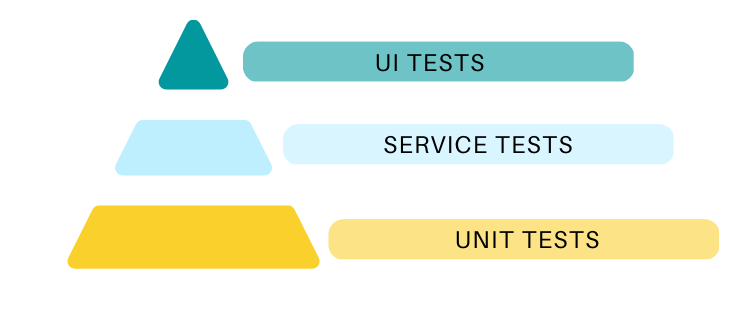
- The Unit Tests are the cheapest and fastest to run. A unit refers to a concise and self-contained portion of code that could be a function, a class, or a method within a class. The purpose of a unit test is to verify that this particular unit performs as the developer intended, and should make up the majority of the tests in the test suite.
- The Service Tests verify the communication paths and interactions between components. According to this strategy, they should be less than Unit Tests.
- The User Interface Tests ensure that the system meets external requirements and achieves its goals. Automated user interface tests are placed at the top of the test automation pyramid because they should be as little of it as possible.
Over time, other layers have been added to the Testing Pyramid, including Integration Contract Tests, Component Tests, and End-to-End (E2E) Tests. This is an example of a renovated Testing Pyramid:
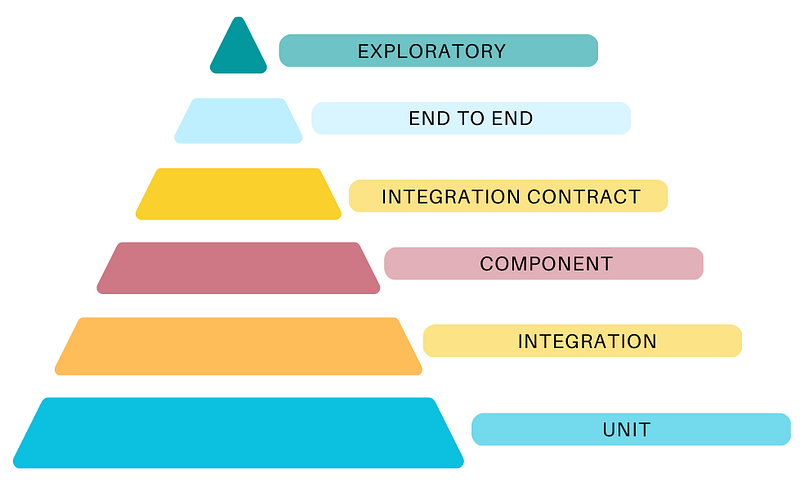
The Testing Pyramid provides a clear idea of how many tests we should have in each group and the divisions of the different testing groups.
The DevOps Hourglass
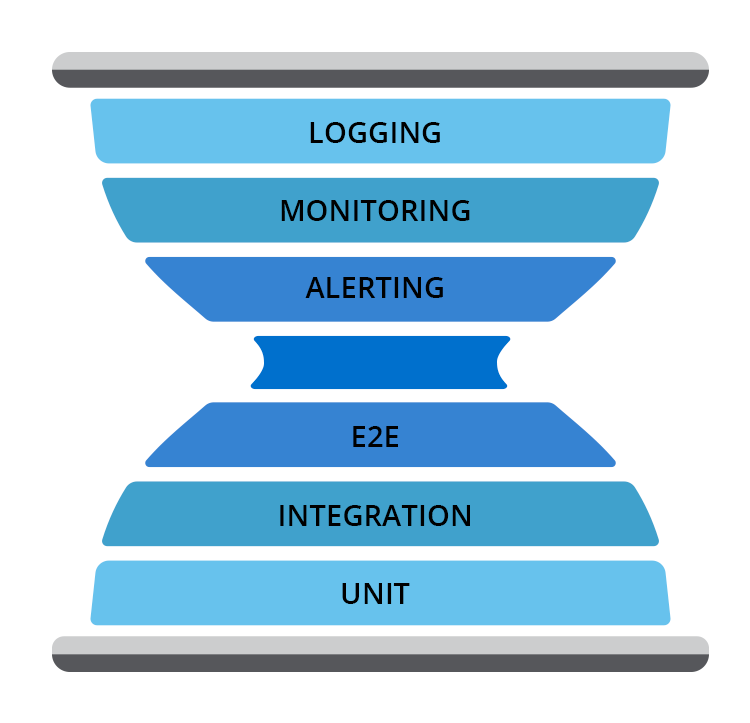
Is a testing strategy that emphasizes the importance of application monitoring. It is designed for software systems that have frequent deployments in production. This testing methodology includes three key components: Logging, Monitoring, and Alerting.
- Logging is simply recording information about what happens in an application.
- Monitoring means setting up automatic processes to watch the health of your application and the servers that run it.
- Alerting is about notifying the appropriate people so that immediate action can be taken when there is a problem.
The Testing Honeycomb
Is a testing strategy introduced by Spotify in 2018. It is designed for Microservices architectures, where the biggest complexity is not within the service itself, but in how it interacts with others. The Testing Honeycomb consists of three types of tests: Integrated tests, Integration tests, and Implementation Detail tests.
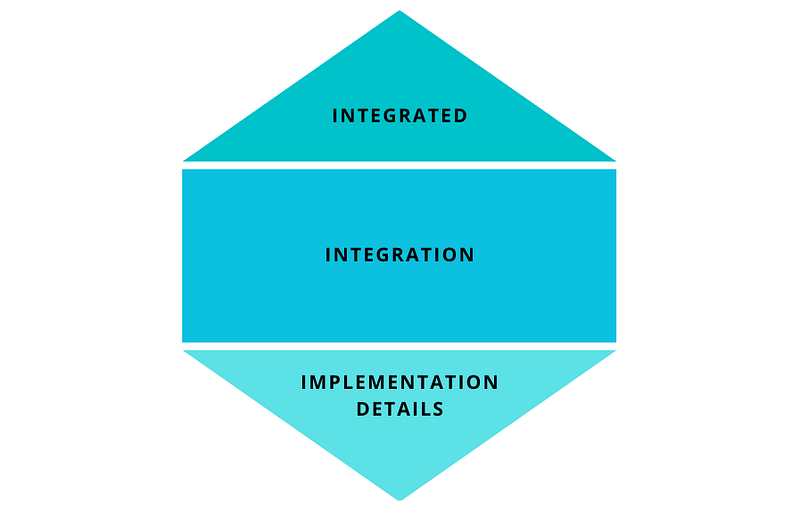
- Integrated Tests are tests that will pass or fail based on the correctness of another system.
- Integration Tests verify the correctness of our service in a more isolated fashion while focusing on the interaction points and making them very explicit.
- Implementation Detail Tests are for parts of the code that are naturally isolated and have an internal complexity of their own.
The Trophy
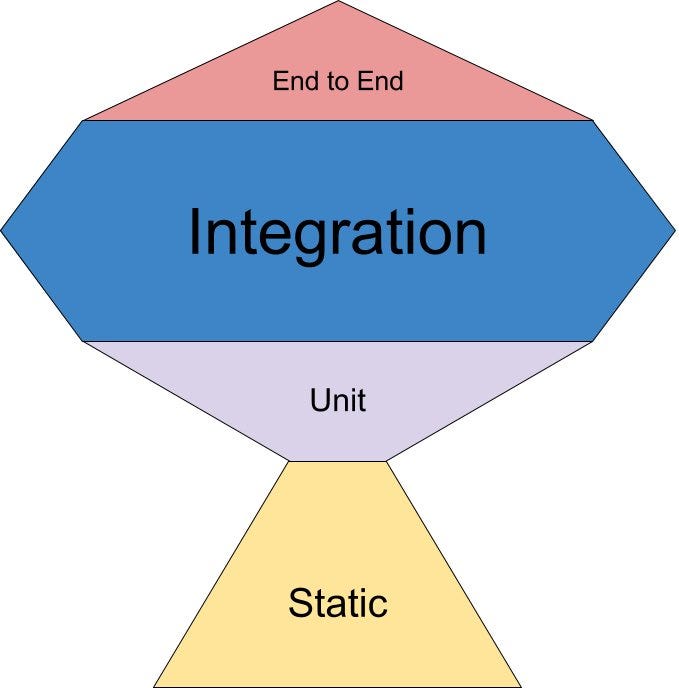
Is a testing strategy introduced by Kent C. Dodds in 2018. It suggests that the primary objective of testing is to gain confidence that your project is free of bugs. The Trophy model emphasizes that 100% code coverage is a bad idea as it provides diminishing returns on your tests as the coverage increases beyond 70%. The framework suggests that as you move up the Testing Pyramid, the confidence quotient of each form of testing increases. While having some Unit Tests to verify isolated pieces of code is useful, it is more important to verify that they work together properly. Integration tests strike a balance between confidence and speed/expense.
Conclusion
Automating tests can drastically reduce the feedback loop, allowing teams to catch bugs early and iterate faster. Remember, testing is not a one-time activity; it is an ongoing process that should be integrated into every stage of the software development life cycle. By selecting an effective software testing strategy and sticking to it, you can optimize your development process, save time and resources, and deliver better software to your customers.
If you’d like to support my writing and thousands of others, you can join Medium as a member using my referral link. Every member who signs up using my link will allow me to receive a small portion of your membership fee. Thank you!