
Software Development in 2050
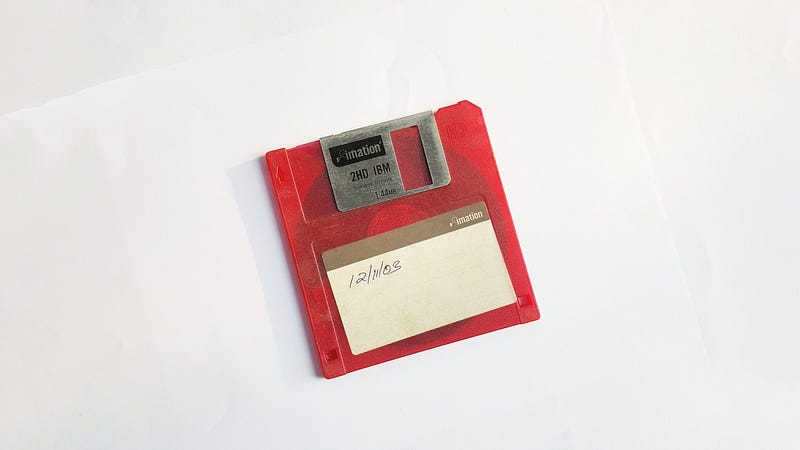
In times when Y2K was a threat, developers fantasized about a sci-fi future with all computing rendered obsolete.
A famous joke went like this:
A Cobol programmer made so much money doing Y2K remediation that he was able to have himself cryogenically frozen when he died. One day in the future, he was unexpectedly resurrected. When he asked why he was unfrozen, he was told: “It’s the year 9999 — and you know Cobol.”
If all goes well, however, 2050 will be the time when entire software landscape will be embedded within distributed chips.
Oops, species. But let’s not go that far for now.
It would be quite curious to envision Developers’ lives in 2050.
Here are top trends that will alter the way software is made, during & after the next 3 decades.
JSON is the New Love (Universal Programming Language):
JSON has been around only since 2 decades.
However the pace at which declarative programming is taking over the web and mobile, days are not far when JSON will completely define application logic.
If you think the idea is absurd, know this: Enterprise software suits like SAP, PeopleSoft and Siebel have been already using declarative business objects that could enable customers to create customized applications on the fly. Such objects can be fully defined within a separate tool driven by UI, and the tool could generate everything: models, database tables, UI screens, validation, migration policies and deployment package.
Obviously, there is an underlying application engine that is written in a lower level language. It also requires heavy maintenance. But the result is such an extensible piece of software that the engine was of insignificant magnitude compared to customization range.
That stuff, or its equivalent, could go open source any day. Odoo, for example, is open source ERP solution.
If you are still skeptical about JSON, try to recollect package.json from a node package. There, you got 90%+ code of your next web + PWA - you are relieved from writing any of it.
(Hopefully, in 2050, you won’t have to deal with npm dependency hells 😉)
React and its ilk, the latest trending SAAS making behemoths, aren’t any different. It’s more data and less code.
Oops, less code that you need to write.
But who reinvents a wheel nowadays? All a developer has to do is to define dependencies and flow of operations.
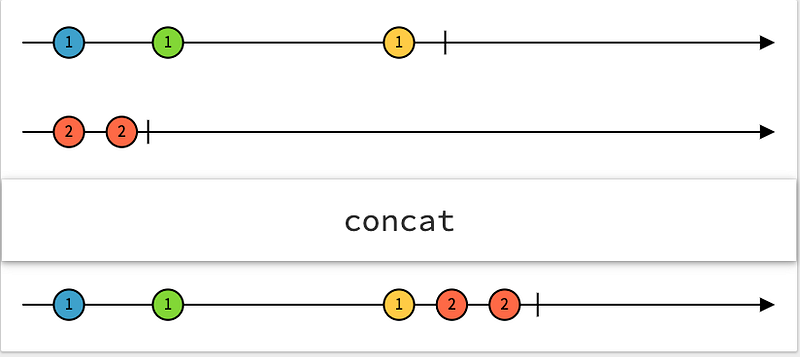
Now, Flow reminds me of Promises. But hey, anyone remembers RxMarbles? It’s getting easier every day.
Hardware is Heavier:
IOT devices are getting heavier with software.
Hardware makers are advancing their offerings with chip-hosted packages, and this is more true for IOT devices.
Instead of archaic machine codes, IOT devices will be loaded with more high-level code. With increased bandwidth, more data will go distributed, and application developers will write code just enough to issue commands to specific IOT device.
E-Mail is Dead:
Not as a messaging format, although I suspect that is likely too.
As an identity mechanism, email is slated to replaced.
By 2050, advertisers & investors would have gained some wisdom. They would have understood that:
Monthly Active Users # Unique Customers
Who will be extinct? Startups that milk advertisers and investors alike, flaunting number of users logging in with their emails.
E-mail survived so far, because there wasn’t enough Internet. Whoever was on the Internet was priceless, so much so that duplicate email accounts were OK.
E-mail as an identity mechanism has generated dummy customers, fake news and bubbling budgets.
I devised an alternative here to combat the online identity problem:
Form Factor & Platform Specs Are Extinct:
Just like carbon, software makers are getting rid of these two, to make them extinct before 2050.
For the uninitiated: Form factor defines certain hardware characteristics, mainly size and shape. In software, form factor enables developers to define area available to their applications.
Numbers such as pixel ratio and DPR (dots per inch) are closely related to form factor. Code generation tools use form factor to let developers define relative sizes of their screens and controls.
Dev-tools makers will press platform owners to make devices as much free as possible for all sorts of code. Apple, Microsoft, Google — all lines will be blurred. (some of them maybe extinct, who knows)
If you have ever tried to make a game with game engines like Unity and Unreal, you must be aware that those tools allow you to create for all platforms (Windows, Android, Mac) and all form factors -wearables, smartphones, tablets, TVs, consoles.
By the way, where have you seen this image?
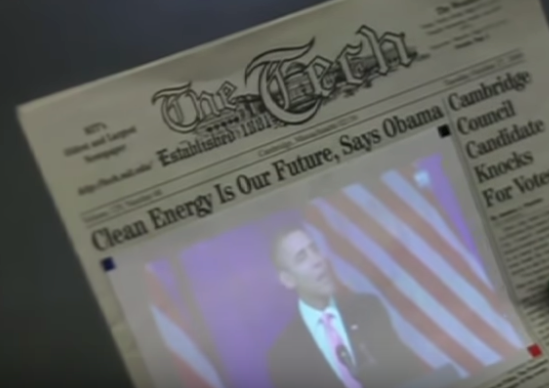
It reminded me of a still from Harry Potter movies, where dead magicians could speak from their photo frames.
It’s taken from this video, demonstration of SixthSense technology — projection of cross-referenced relevant information. It could enable one to book airline tickets, or dictating an essay simply by moving fingers in the air.
It is natural succession of XR. Game makers will be thrilled to create games for projections.
And game engine companies will happily provide it.
Not just games - apps too will get a facelift. Just like Slack provides integration with enterprise apps today, market will be replete with consumer apps that provide integrations that melt with real world in unthinkable number of combinations.
And IDE makers will run a million sprints to make that happen.
SQL with Gradient Descent:
With machine learning modules increasingly becoming part of cloud packages from AWS and Azure, a newer player in the market will have to try hard + go back to the basics.
If evolving hardware specs could boost memory + CPU performance, why should 70s robust software standard run behind? SQL along with relational model is making a comeback.
SQLFlow is gaining traction, and next decades will see interesting developments in romance between AI and databases.
Do not be surprised to see statistic functions sitting along with CREATE, ALTER, SELECT, UPDATE, and DELETE.
Conclusion:
If you have doubts about the year in the headline, feel free to change it.
However, if you are seeing it later than 2050, just realize that either you are not a programmer.
If you are, you need a refreshing look towards what software can do.
Last Word: 2200 (or 2137, for the respect to random()) will be the year when developers will be extinct. 😉 😉


