
Socks Declassified as Clothing Items, International Crisis Brews
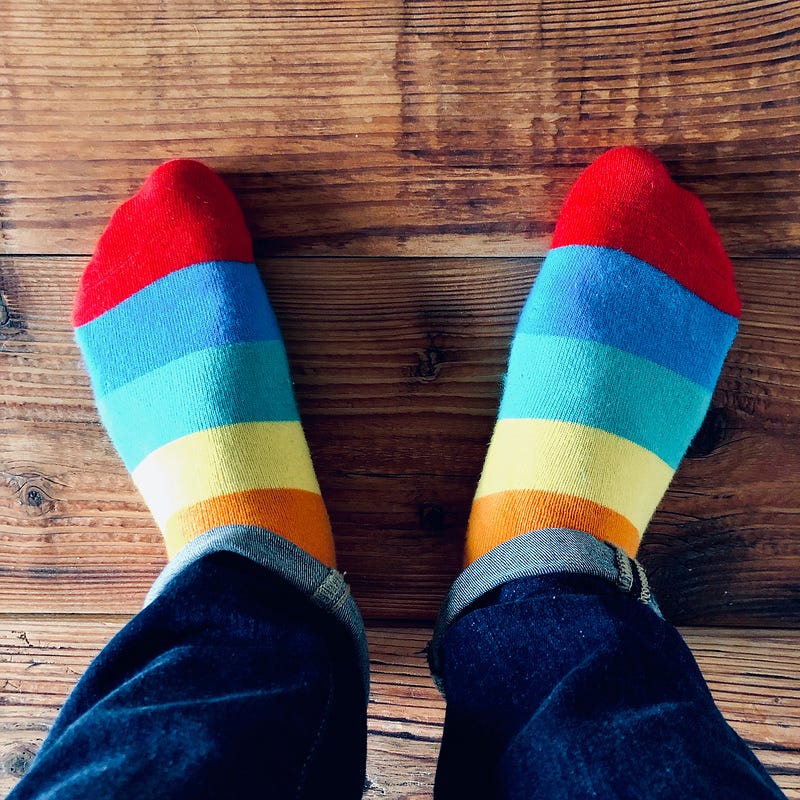
In an event that has left style enthusiasts and podiatrists worldwide in shock, the International Fashion Board (IFB) announced a dramatic amendment to the world’s sartorial rulebook: Socks, the once-ubiquitous foot garment, have been declassified as clothing items.
In a press conference held in the fashion capital of the world, Paris, IFB’s President, Madame Françoise Lefevre, declared, “The sock has been an underwhelming contributor to the fashion narrative. It is often hidden, unappreciated, and when displayed, hardly ever aesthetically pleasing. We must shift our focus towards more significant fashion elements. Thus, the sock will no longer be considered a clothing item.”
The ramifications of this shocking announcement have rippled across the globe, shaking the very foundations of countless industries and lifestyles. From the mundane — how does one keep warm toes in winter? — to the economic — what happens to the multi-billion-dollar sock industry? — questions are many, answers few.
In the United States, the citizens awoke to the bewildering news with mixed feelings. For some, it was a day of liberation. “Finally, an end to the tyranny of mismatched socks!” exclaimed Jane, a New York-based lawyer known for her impeccable power suits but notorious sock-matching struggles.
However, for others like Carl, a proud sock enthusiast from Portland, Oregon, who has dedicated an entire Instagram page to his eclectic sock collection, the news was nothing short of a personal tragedy. “I’ve spent years curating my collection, my socks speak for me. What am I supposed to do now? Go barefoot?”
The political world, too, reacted strongly to the news. In a rare moment of unity, both Democrats and Republicans, known for their contrasting red and blue ties, found themselves jointly mourning the declassification of the bipartisan grey sock. President Clark called it an “unprecedented decision” that “threatens the fabric of our society, quite literally.”
The news spread like wildfire across the Atlantic, leaving European fashion houses scrambling. Italy, known for its luxurious wool and cashmere socks, called an emergency meeting of the Fashion Council. Giorgio Bellini, Milan’s leading fashion critic, lambasted the decision, calling it “an outrageous assault on Italian craftsmanship and creativity.”
In the United Kingdom, the ruling sent shockwaves through the hallowed halls of Parliament, given that many MPs are known to sport Union Jack socks as a patriotic fashion statement. In a passionate speech, Prime Minister Edwards argued, “This is an absurdity of the highest order! How can one discount the sock, a staple of the British wardrobe?”
Meanwhile, the citizens of Russia, a country known for its harsh winters, were left puzzled by the decision. One Russian official was quoted saying, “In Siberia, we have a saying: The one who neglects socks, neglects life.”
In the corporate sphere, the stocks of sock manufacturers plummeted. World-renowned brands like Nike, Adidas, and Hanes issued statements expressing their shock and disappointment over the IFB’s decision. However, it’s not all gloom and doom. Companies that manufacture foot warming pads and thermal shoe inserts have seen a surprising surge in their stocks.
Industries across the spectrum find themselves grappling with the implications of the decision. Hollywood is in a tizzy, with costume designers wrestling with the new reality for period dramas and superhero movies, where socks have been omnipresent.
The decision also sparked a massive upheaval in the sports world. International athletes voiced their concerns over the potential impact on their performance, not to mention the substantial loss of advertising revenue from branded socks.
Despite the uproar, the IFB stands firm in its decision. “The world of fashion is always evolving,” Madame Lefevre said, sipping her espresso in a quaint Parisian café, seemingly unperturbed by the international crisis brewing around her. “Today it’s socks, tomorrow it could be hats. Who knows? That’s the beauty of fashion.”
The announcement has indeed opened a Pandora’s box of speculation. Will hats be the next victim? Or perhaps ties? The uncertainty has left fashion pundits and ordinary people alike in a state of unease. As the world navigates the tumultuous sea of post-sock fashion, only time will tell which garment will be the next to fall from grace.
Until then, the world grapples with the first winter without socks. Despite the global crisis, there’s a silver lining in the form of a boom in the carpet and rug industry, as cold-footed citizens seek out ways to keep their toes warm. Meanwhile, pedicure services are experiencing unprecedented demand, as formerly sock-shrouded feet prepare to step into the limelight. Amidst the turmoil, there’s a clear winner in all of this: the toenail art industry. After all, if socks are no longer in the picture, it’s time for the toes to shine.