
Socializing in the Age of Communication
Improving modern day human interaction
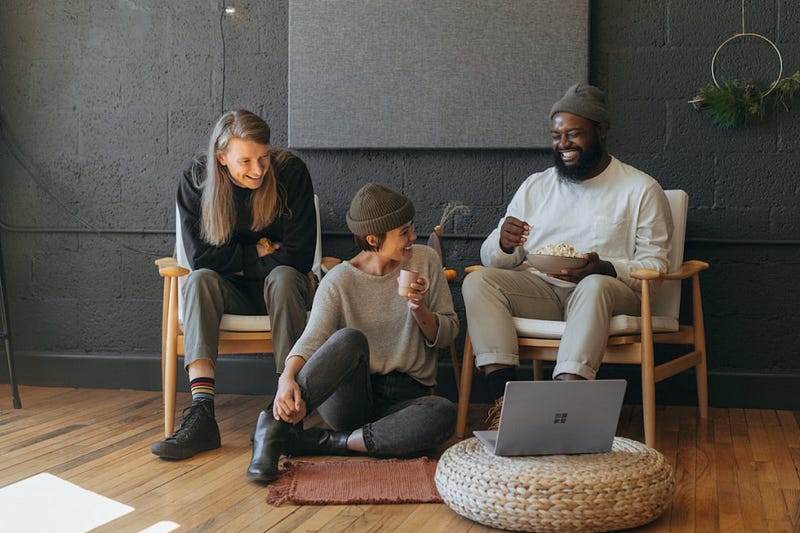
This is the age of communication. An optimized digital world in which global correspondence is at our fingertips. A world in which the potential for human interaction is ostensibly enhanced. Nevertheless, in spite of daily life being steeped in a plethora of information sharing devices and platforms, there is a spike in loneliness and social isolation.
Without a doubt the pandemic lock down measures, with directives to sequester in isolation took it’s toll. Yet when sheltering in place was lifted many, including myself still felt fatigued, insular and lonely. Of course a cyber culture characterized by volatile, aggressive bickering which has become a culturally lauded way of communicating, doesn’t help matters much.
Indeed, research indicates the rise of disrespect and incivility and one study by Portland State University underscored the idea that the more we see and experience people being disrespectful, the more likely we are to behave disrespectfully too.
What’s more, one of the many variables responsible for igniting incendiary interpersonal dynamics is the restriction of free speech. After all, censorship breeds prejudice as it is upheld through the threat of power and the inducing of fear. It inhibits our perspective and closes us off from taking in ideas that are considered socially taboo. Ironically, attempts to repress ‘dangerous ideas’ spotlight those very ideas being censored, thus igniting divisive debate and the cementing of biases.
Consequently, for the ‘greater good’ many collectively ascribe to the notion that it’s virtuous to assault those who possess views that deviate from what is considered ‘moral’ and correct. Coupled with ‘flagging content,’ a vehemently enforced PC lexicon and cancelling people and anything considered a controversial view, acrimonious communication has become standard procedure.
With intermittent lockdown measures, social isolation and suppression of speech thrown into the mix, rancor directed and displaced onto one another is a logical outcome.
Hence, even with a loving marriage sustaining me I devolved into a persistent malaise of self insulation. When in-person efforts to engage occurred, a nagging sense of awkwardness and resistance permeated my interactions. Undoubtedly, it would have been far worse if I lived alone.

This collective sense of separateness ignited by electronic engagement, along with the decline in interpersonal skills plaguing young Americans, is a legitimate cause of concern. Studies verify that there is a real gap between virtual and human interaction that has been shaped by our immersion in technology.
One study of 2000 millennials conducted by OnePoll discovered that basic social skills such as talking on the phone and face to face conversing is purposely avoided by up to 68% of the participants. Most unsettling was that eight in ten millennials reported that expressing themselves through text or online platforms felt more natural and comfortable than in person communication.
The Conversation, an independent source of news and views from the academic and research community in Canada expounded on this trend by citing a concept known as virtual distance.
“Virtual distance is a psychological and emotional sense of detachment that accumulates little by little, at the sub-conscious or unconscious level, as people trade-off time interacting with each other for time spent “screen skating” (swiping, swishing, pinching, tapping, and so on).”
Generating virtual distance by limiting ourselves to cyber communication clearly clashes with our intrinsically affiliative nature, irrespective of where we land on the introversion- extroversion spectrum. A study conducted at the Center for Research on Media, Technology and Health at the University of Pittsburgh reflects this premise. They discovered that those who predominantly engage in virtual interactions on social media were three times more likely to feel socially isolated than casual users.
Given that unmet longings for intimacy is associated with higher rates of mortality, surges in adrenal hormones, high blood pressure, alcoholism, obesity, and relational discord and familial estrangement, and can even be lethal, as Sociologist Emile Durkheim’s research on suicide reveals, we are challenged to question how being tethered to our devices is impacting our capacity for relatedness.
Most importantly, we are challenged to revive human interaction and find our way back to one another.
Social interaction, according to the American Psychological Association Dictionary of Psychology is, “any process that involves reciprocal stimulation or response between two or more individuals.” It is a dynamic exchange of ideas and feelings which promotes a sense of safety, belonging and security. Gratifying this desire for connection is as essential to our health as the air that we breath and the food that we eat.
Although compassionate interactions, commitment and generosity enhances our physical and emotional well-being it took my relocating from NYC to Montreal Canada to emerge from my shell. Pushing through psychical inertia, or what is coined ‘pandemic fatigue’ to accept and extend invitations to share dinners, to join in on an art class, attend live music and even engage in an Artist Salon, initially ignited simultaneous enthusiasm and drudgery.
Aside from a desire to establish meaningful camaraderie, the primary impetus inspiring me to push through my resistance and risk involvement was my instinctual and honest impression that the folks in Montreal, QC are simply more approachable and safe than what I encountered in NYC. Truth be told, not encountering the sort of hostile paranoia that is justifiably so prevalent in New York has prompted me to engage in more walking and socializing (in person) than post-pandemic life in New York City conferred.
Evidently, a modicum of relational safety was the pre-requisite to putting to use my under utilized social skills. Gradually, the shift from incessant cyber interactions to the inclusion of in-person socialization has awakened my dormant capabilities, along with an enhanced sense of presence and calm composure.
In general, I am simply more satisfied with life. Friendships are forming with folks willing and eager to connect face to face. A customer rep from our storage unit brought us dates from his country. Uber drivers engage in meaningful conversations, the neighborhood butchers greet us on the street, and the loquacious lady at the dry cleaners shares her love of jazz. These nuanced interactions offer a feeling of community and reminders of basic human decency.
Without question, being empathically seen and heard is indeed a reparative force.
The Greek philosopher Socrates conveyed, “we cannot live better than in seeking to become better.”
To become better we need to evaluate our capacity for healthy intimacy and seek to cultivate the capacities and life skills that encourage traditional forms of interaction. I am witnessing this undertaking in sessions with many of the clients I treat for complex trauma.
Rife with concerns over unmet dependency needs and problematic relational dynamics, folks express their eagerness to meet others, especially that significant special someone to share life with. Tired of dating apps, one client finds herself nudged towards initiating an old school social mixer.
Other clients are befuddled by dating escapades, so fearful of being direct that they needlessly ruminate over whether they actually have nailed-down plans with another, or even worse perseverate over whether they are in a committed relationship with someone they are sleeping with. The fear of reprisal, of not seeming ‘nice’ keeps them in that mushy middle of being vague and noncommittal, where conditions, standards and needs are obsolete.
Those who are steadfast with moving past monosyllabic texts and emoticons to full sentences and verbal discourse, where rules of engagement are articulated and lived by, understand the need to ditch their devices long enough to optimize social connectedness outside of the virtual world.
In this fast paced market of technology and post human possibilities replete with high tech humanoid robots and brain computer interfaces, our psychological, physical and emotional health requires us to decrease our dependency on digitized interactions and increase human contact, so that mature emotional bonds with all its daunting messiness can prevail.


