
Socialisation — the Question about Home Education that Never Goes Away
Yes, I take my daughter out of the house. She has best friends. She knows the social norms of society. Surprised?
A new acquaintance asked recently, after reading one of my articles about home education how I ensure my daughter has social opportunities. *sigh*
Often, I forget that the general mainstream public doesn’t know what it doesn’t know about home education. But truly, being asked this question in its many shapes and forms does get old. When did it become expected that the only way that children meet and form friendships with other children is through schooling them?
For that matter, is it the best way? Is it healthiest for children to only have the opportunity to interact with children who are the same age as they are? And in an institutional setting? Do schooled children have opportunities to regularly interact with and play with children of all ages? From infancy through late teen years? If not, what are they missing out on? How do they learn developmental norms for children of all ages?
Park Play with Peers
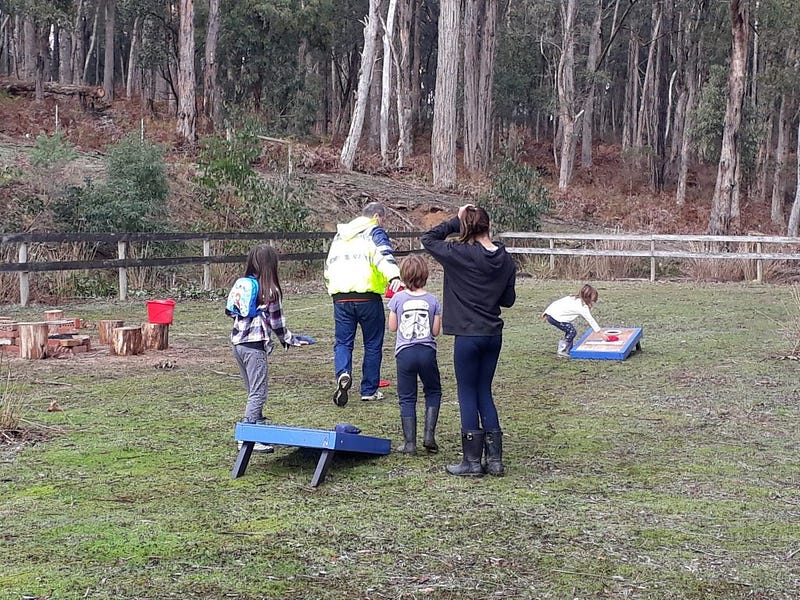
Children educated from home enjoy extended play at weekly, and sometimes daily, park days. This social meet-up typically lasts from three hours to literally all day. It may have been organised to run from 9 am to noon or 1 pm — 4 pm. But if there is interest, it may continue on through tea/supper and breaking up afterwards. Park days are social meet-ups for the children and parents. They are an opportunity for connection, support, and re-energizing. There are no hard and fast rules about when it begins and ends.
The children enjoy long hours of immersion in their play which allows them time to make the rules so the play is fair for all ages, define the boundaries, negotiate, reach consensus, and finally, to play. It takes time and repetition to learn to feel empathy for the young and the ways of the older. They all benefit from this play. And they have time to break into smaller interest-based groups. Again, they all benefit from the mixing and re-mixing of the group play. Peter Gray talks about this extensively in his book Free to Learn*.
Conversing with Adults as Peers
In the school setting, the adults run the show, but at what cost to the students? The adults are on a schedule that allows them little to no time to listen and exchange ideas with each of the children. To talk with them conversationally. The mode is for the teacher to lecture and the students to listen. This is not an exchange of ideas between equals. It is a model of childism. The system is self-perpetuated when these children grow up and treat their own children in this same way.
Home-educated children enjoy conversing with their parents about topics that interest them. They explore the topics together as the parents support the learning happening. They seek out resources for learning together. It is a partnership, not a dictatorship.
Being Friends with the Parents of my Daughter’s Friends
Parents who choose home education for their children take the emotional and social development of their children very seriously. We want them to have besties, sleep-overs, birthday parties, and social skills. And it is totally on us to ensure they have the opportunities to make friends.
When I moved to Australia from overseas, the first task after setting up the home was to get out into the home education community and make friends for myself and my daughter. I knew that for her mental health, she needed opportunities to play with children both near her own age and across all ages. So we didn’t stay home, but we were out.
An unexpected benefit of home education is that I have at least met, if not chatted with, or befriended all the mums and some of the dads of all of my daughter’s friends. We share a tribe of friends who have all been to my house and we have been to all of theirs.
Home Education is a Family Lifestyle
Home education is a defining part of our family’s lifestyle. It isn’t just an education style for her childhood, but it is an opportunity for all of us to learn and grow, to push ourselves out of our comfort zones, socially, emotionally, physically, and intellectually.
Lack of social opportunities is one of the biggest misconceptions about children who are home educated. It is past time to put it to rest.
Thank you for reading. If you enjoyed reading this article and want to support my writing, consider signing up to become a Medium member. With just $5 a month, you get access to unlimited stories on Medium. If you sign up using my link, I’ll receive a small commission at no extra cost to you.
*Affiliate link: When you purchase using this link, I receive a small commission at no extra cost to you.
Originally published at https://letstalkabout.com.au on September 12, 2021.
Previous article: Remote Learning (School at Home during Covid Lockdowns) is NOT Homeschooling
Next article: If Homeschooling is Ice Cream . . . then Unschooling is Chocolate


