
Social Media Shaming Could Sabotage the Possibility of Real and Lasting Change
We need to do the hard and humbling work of changing ourselves and helping other people change.
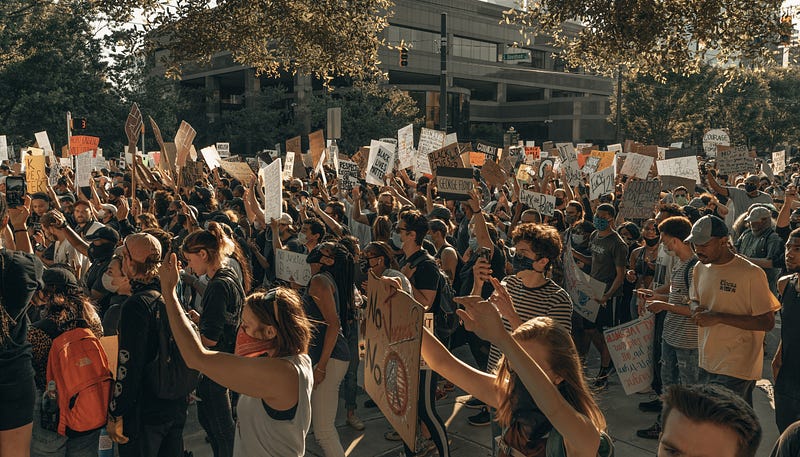
Countries don’t change, cultures don’t change, people change.
The United States (or Canada or Sweden or New Zealand, or Iceland, or you get the point) doesn’t ever change, its citizens change. One by one, hearts soften and open. Paradigms shift.
That’s just the way it happens. Sometimes it’s fast, sometimes it’s not. Either way, it still happens person by person.
Shame Does Not Change People
If we want things to change, then shouldn’t we care about how people change?
This week I saw a white person shaming others on twitter for posting things that don’t have to do with racial justice. All the while the tweet they had pinned above was an advertisement for their personal newsletter that had nothing to do with racial justice…
That’s not a good look. And I’m sure it’s not going to authentically change anyone’s heart.
That kind of shaming actually pushes people away, and further cements them in their actions. And, because they’re human, they’ll defend themselves against the shame.
I’ve also only seen white people in my social media feeds doing this kind of shaming.
What’s tragic is that although the person was, in their passion and frustration, trying to make a difference, they’ve actually sabotaged an opportunity to further the cause for which they fight. You see, when shame is used, the issue is overshadowed by a visceral emotional reaction against shame.
When people are shamed, they become defensive and react against the personal slight they feel. That rush of self-protection drowns out the actually issue ‘the speaker’ wanted to call attention to: namely, the need to keep racial justice at the forefront of the social media conversation. In this case, racial justice just becomes a proxy war for our pride and personal issues with each other.
Nothing changes. If anything, the unnecessary relational strife threatens to slow the movement.
I know this is difficult. In our passion and frustration, we want other people to get it. We want them to see what we see. But that’s not how change works. If we want people to change, we have to do the difficult, vulnerable work of helping them change.
And, like Jesus of Nazareth and many other change-makers, it means speaking truth to power and then laying down our lives for a bunch of people that just don’t get it.
Connection Changes People
Everyone is at a different place in the process of change. I’m at a different place than you. The important thing is that we all keep moving forward — and we encourage each other to do so, and at faster and faster speeds.
It’s a tragedy that Black Americans have to wait even one more day for their country to repent to them, welcome them in, make reparations, and forever change the system to be in their favour.
Influential voices must say hard things. And it’s okay to upset people. But there’s a fine line between speaking truth to power and shaming others.
People change through connection, not through alienation. You’re the same way. We all are. To change, we have to feel heard, understood, and safe.
This is precisely what we as White people should be doing with our Black brothers and sisters. We should be listening, understanding, and using our privilege to create a safe society for them, handing them our microphones, and getting out of the way.
It’s funny how we can have ‘woken up’ about 5 minutes ago and yet speak to other White people like we’re MLK. It’s not a good look. And it doesn’t help them change.
This is the question we need to ask ourselves with racial justice, climate change, women’s rights, and every other ‘controversial’ issue: are we really willing to do whatever it takes to bring about change?
Because what if what it takes is a truckload of frustrating patience, an ocean of peace, and a courageous willingness to sacrifice ourselves and our voice that our friends might take one step closer toward a just world?
So often, the issue is not what we say, but how we say it. We can say something true in a way that no one will hear us. And what’s the point of that? I’m afraid the only point is to show the world that we have something to say and we’re not racist — it’s not to change things. Otherwise, we would change our communication until it’s effective.
The Way of Radical Love
To move forward and help people change, follow the rule of love. Anytime we set ourselves up as righteous and call out the other as a sinner, we’re probably going to end up looking like an ass. What’s the better way? We listen, work hard to understand their perspective, share your own journey and where you’re slow to make progress, and challenge them to move forward with you.
Here’s what I’m not saying:
- I’m not saying that you shouldn’t speak the truth in all its offensive grittiness.
- I’m not saying Black people should have to respect racist White people’s ‘right’ to keep the system racist.
- I’m not saying I’m doing enough to change the racist system that I’ve benefited from.
I’m just saying that if we want this movement to create real and lasting change, we’ve got to think about how people change and do the hard work of helping them change.
Daryl Davis, a Black author, musician and activist, has inspired more than 200 white supremacists to change by… having conversations with them. Human beings change when they are connected with another human. Mr. Davis shows us what real courage, leadership, and security is like.
I also recently learned a lot from the patience, restraint, and (undeserved) time that Charles Barkley gave to white-supremacist Richard Spencer on Barkley’s show, American Race. Spencer might be an ‘extreme case’, but many people hold his ideas — only in subtler and quieter ways. Charles Barkley shows the kind of patience it takes to understand so that we can effectively respond.
Here’s the Point
Social media has its benefits. We know that it’s easier to change as part of a group than to change alone. Posting on social media and calling for racial justice is a positive. It’s not a waste of time. But shaming others for not doing enough will probably not make them do more, and it definitely won’t change their hearts. And changing hearts is the only way to produce real and lasting change.
What we need is a beautiful mix of the hard and heart-breaking truth mixed with humility, love, and a call to join together and make real change now.
I’m sorry for anyway, knowingly or unknowingly, that I’ve taken part in the culture of racism and the system of white supremacy. One thing’s for sure: growing up in the US and living for ten years in Canada, I’ve benefited from a system that favored me and penalized others. I’m going to focus on growing, learning, and changing. And, where I can, helping others to change as well.
For my daughter, who is a PoC, for the memory of George Floyd and his family, and for all others who have been brutalized, murdered and who don’t get to live totally free and at peace, I don’t want this moment to pass without real and lasting change. Let’s not allow shame to sabotage what’s growing. For the sake of a new and just society, let’s do the hard and humbling work of changing ourselves and helping other people change.


