
Personal Development
Social Media Can Make You Feel Superior
It doesn’t matter what we think about social inferiority because it’s all a lot of crap
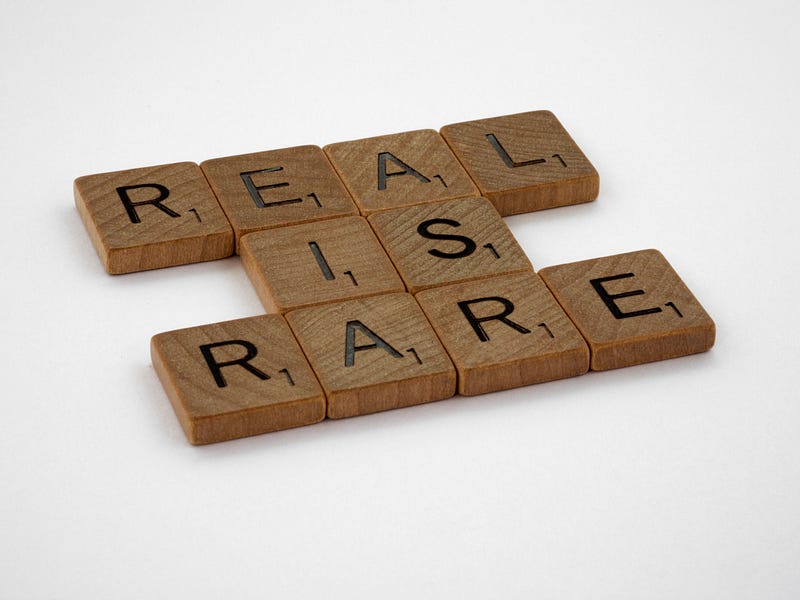
Most of us have friends who have more money and more of everything else than us. We have friends who have better jobs, better incomes, better homes, better cars, better hair, better looks, better everything else.
Sometimes we feel jealous of our friends with all the good stuff. Sometimes we feel envious of their good fortune. But what if our friends had the same amount of money, the same amount of things, like us? Maybe we wouldn’t feel so jealous, so envious. We wouldn’t be comparing our awesome friends to our regular lives.
If you’re OK with being the wealthiest person in the poorest village, then that’s fine. Just don’t go around thinking that your wealth makes you better than other people because it doesn’t; it just makes you richer.
Social Media-Induced Inferiority
Social media has now turned us into a world of inferiority addicts. We all feel inferior about something, regret the past, worry about the future, and doubt the present. And social media is often the platform where we show our inferiority to the world.
We share pictures of our vacations, our achievements, and our accomplishments. And in so doing, we show others how much better our lives are than theirs. We brag about our successes, and we rub in our triumphs. And sometimes, we even make things up just so that we can feel superior.
Yet it’s not about having; it’s about being. It’s exhausting not to be your true authentic self because we constantly compare our insides to someone else’s outside.
We think our lives should be a certain way, so we force ourselves to be someone we’re not. We spend our lives trying to be someone else instead of trying to be our best selves.
We spend our lives aiming to please everyone else instead of just being ourselves. We spend our lives trying to fit in instead of standing out. We spend our lives trying to be liked instead of being respected.
Social media has turned us into a world of inferiority addicts
The strange part about all of this is that it’s all fake. Social media has turned us into a nation of liars. We all have lives that are nowhere near as excellent as we pretend they are.
On Facebook and Instagram, we select the best moments and angles, and we filter out the bad stuff. We stay clear of airing our dirty laundry in public, and we don’t tell the world when we are unemployed, broke or when our relationship is on the rocks.
In short, we are all lying to ourselves and to each other. But we’re so addicted to the praise we get for showing only the best parts of our lives, and we don’t even see the harm we’re doing to ourselves and each other.
We’re addicted to the approval of strangers. And we’re addicted to the support of people who don’t really matter in our lives. And because of that, we are all suffering from a chronic case of social inferiority. Because we’re all pretending to be something that we’re not.
And who’s to say that we can’t be our best self right now, in front of the people who would rather be with the real us instead of the fake us; the people that don’t care if our hair is perfect or our smile is perfect. The ones who would prefer to be with us than with a picture of us.
Social Media’s Clout
Ultimately, Social media is the tool for making people feel superior or inferior. We post pictures and videos to show off our best moments, and we like and comment on the things we want to show off our worth.
We share our lives with the world, and we watch our friends’ lives to feel better about our own. We talk about our accomplishments, and we brag about our successes.
Social media is the tool for making people feel superior
And it has played an enormous role in making us feel socially inferior
We see our friends and the people we admire living their lives how they want to live them, and they’re living the life we want to live.
We see the vacations they go on, the parties they attend, the food they eat, the drinks they drink, the cars they drive, the clothes they wear, the houses they live in, and the lives they live.
And because of that, we’re convinced that our lives are inferior. We feel like we’re missing out on something, and we feel like there’s something wrong with us and that our lives are less than.
So, we try to keep up with the Joneses.
We want to create the perfect life for ourselves, and inadvertently, we generate a lot of pressure. We put expectations on ourselves that are impossible for us to achieve. We set ourselves up for failure, and when we fail, we feel even worse about ourselves, so we spiral into a severe and chronic case of social inferiority.
The Power Of Microblogging
We live our lives feeling superior in the moment when we get a lot of likes or get a lot of retweets or a lot of comments. We live our lives feeling inferior at the moment when we don’t get a lot of likes or don’t get a lot of retweets or a lot of comments.
But social media is not the cause of our social inferiority. It is the symptom, and it’s the latest in a long line of tools that have been used to make us feel socially inferior to other people.
The same phenomenon has been caused by the telephone, radio, television, the internet, and even the water cooler. The disease is the desire to be superior to other people.
The cause is our need to compare ourselves to other people.
The only way to beat social media is to refuse to let it control your life.
Social media is a tool. It’s like any tool, it can be used to do good, or it can be used to do harm. The trick is to use it to help you become a better person instead of making you feel worse about yourself.
We have allowed social media to become the only thing that matters. We think our lives are better or worse depending on how many likes we get on our pictures or videos or the number of followers.
In reality, our lives are better or worse, depending on how happy we are. And the number of likes or followers we have doesn’t have anything to do with our level of happiness. In fact, the number of likes or followers we have can harm our level of satisfaction. Finding the right balance is the key.
The Wrap-Up
We live our lives with an almost constant need for validation from other people.
We feel better when we receive validation and worse when we don’t. But the truth is that our lives are better when we feel good about ourselves regardless of whether other people validate us or not.
The only way to beat social media is to remind yourself that the only person whose opinion truly matters is your own, and the only person you need to impress is yourself.
The only way to beat social media is to stop caring about it. Because the only person you need to impress is yourself, and the only person whose opinion truly matters is your own.
Here is another story you may also like to read. It highlights twelve feel-good habits for a happier, healthier you.


