
Social Media and Fake Caring
It’s easy to be sympathetic when it doesn't require actual effort.
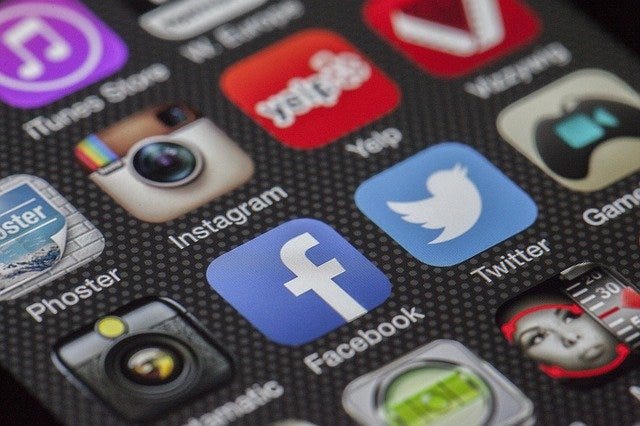
AUTHOR’S NOTE: I am currently working on writing reflections on social media: the good, the bad, and the ugly. This is my first attempt. If this sticks, there may be more to come later.
These days, with social media, it is easier than ever to unload. All you have to do is pick up a device and start typing (or photographing, or recording). You don’t even have to peel yourself off the couch. As a reward, you receive attention in the form of likes, comments, shares, and followers.
There’s no good way to say it: social media attention matters. It is interpreted as a direct reflection on success and power — and sometimes, it does translate to real-world power. There are people whose entire careers have been built on their social media popularity, from vloggers, to TikTok stars, to political commentators.
Granted, few of us will ever have the clout that major influencers have. However, we are impacted nonetheless.
We can’t help it. The effect social media has on our brains is similar to taking a chemical substance: this is because of dopamine, the chemical in our brain that motivates our sense of reward. This is the same chemical that gives us pleasure from things like having sex and eating our favorite food.
We crave social media attention because our brains enjoy how it makes us feel. Again: we can’t help it. We are human. We are driven by various chemical faculties nestled inside our skulls. We cannot simply turn this off.
It’s like one of my high school teachers used to say: “10% of the world loves you, 10% hates you, and the other 80% doesn’t care.”
The downside is the attention is not always genuine. Despite the value we place on it, social media attention does not necessarily correlate with a true connection.
Go look at your social media followers. Count how many of them are people you’d invite to your wedding. Or trust to have a key to your house to come to feed your pets while you’re out of state. Or willingly disclose your worst secrets to. Chances are, these lists are much, much smaller.
The feeling is mutual. You probably aren’t in many people’s close circles, either. It’s like one of my high school teachers used to say: “10% of the world loves you, 10% hates you, and the other 80% doesn’t care.”
In 2019, a tornado went through my neighborhood. While our home was relatively unscathed, the other side of my street was essentially wiped out. In the aftermath, it ended up on social media — as tragic circumstances are wont to do. Naturally, we received positive attention on social media in the form of likes and kind words —hundreds, actually.
Do you know how many took the time to reach out in real life, outside of social media? Outside of immediate family? Seven.
Seven people out of hundreds. Clearly, the others who claimed we were “in [their] thoughts” didn’t think about us for very long. As bluntly as I’ve been discussing all this, I’d be lying if I said it doesn’t hurt.
There were some people who we thought would care enough to reach out, but all we got beyond social media acknowledgment was silence. Although I didn’t openly talk about it, I was very upset by this. Even today, I am hesitant to trust these people; I question the sincerity of their affections for us. When the time to actually care about us came along, they failed to deliver. As petty as it sounds, that’s not something I can easily forget.
Social media attention has been given a lot more power than it can truly offer, and we are the ones who are going to ultimately suffer because of it.
In April 2020, Facebook unveiled a new “Care” reaction, claiming that it was a way to “show extra support” while in quarantine. When this was released, I mostly felt annoyed. Having just been through the aforementioned traumatic experience, to me this was yet another way for people to express fake empathy on social media. It’s performative kindness: all show, no depth.
“Care reacts don’t change the fact that you’re stuck at home worrying that we’re headed toward another 2008,” I muttered angrily as I flung my phone onto the couch.
How did we get here? How did we get to a point where our way of expressing support is a new reaction option on social media? Where low-effort acts of kindness are normalized?
I am not a doomsayer — I hate conspiracy theories and panic-bandwagons with a passion — but this is something that genuinely worries me. Social media attention has been given a lot more power than it can truly offer, and we are the ones who are going to ultimately suffer because of it.
We need to normalize putting our money where our “care reacts” are.
Thank you for reading! If you would like to comment, refer to this post first.
If you would like my work to continue, please consider becoming a Medium member using this link. It would really help me out.
If you’d like to encourage me to write more with a $2 cup of coffee, click here.


