
Social Emotional Learning and the Wide Range of Normal in Schools
By Erica Murphey and Dr. Benjamin Drury
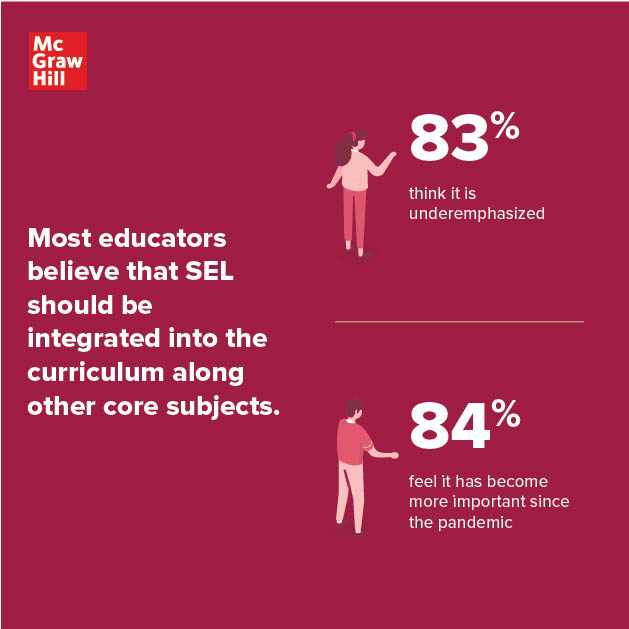
An increasingly omnipresent part of curriculum, policy, and programming discussions in schools today include some component of what is called social emotional learning or SEL. SEL can be integrated into math, reading, and physical education. SEL can also be facilitated through intentional workshops and spaces where students can reflect on past and present circumstances to learn to deal with the emotions tied to their experiences. SEL is not without controversy. Some scholars argue call SEL ‘white supremacy with a hug’ pointing out that most of the norms associated with ‘professionalism’ and ‘success’ are steeped in white culture and do not include the reality that non-white populations face when going to college, finding employment, and living a life of fulfillment. Others believe conservatives have weaponized SEL in the ‘war on critical race theory’ being fought in courtrooms and campuses across the country. For better or worse, American society relies heavily on schools and teachers and administrators for a great deal more than just teaching our children how to read and count to 100. Americans expect teachers to socialize our children. Americans rely on our teachers to communicate our messages and values and beliefs through the lessons they teach…which can vary widely geographically in the United States. Like it or not, the paradigm shift toward the importance of including SEL in K-12 school curriculum is a direct result of our fast-paced and hyper productive society. Americans who are ‘successful’ according to commonly socially accepted norms typically earn over $100,000 per year as a household and own the home they live in. To achieve that reality today, some people need to work all day, every day. They do not have time to spend with their children, so they outsource socialization to schools. As a result, SEL is here to stay. But there is a ‘wide range of normal’ when it comes to the expectations of student behavior.
We should probably define SEL at this point. We sought out expert insight from current public school teachers who agreed to be identified by name for this article. According to Sarah Mau, 32, a theater teacher based in Texas, social emotional learning can be defined as “a blanket term which refers to all instruction and activities meant to teach our students about the proper and healthy ways to treat others and ourselves. It includes learning about compassion and empathy for oneself and others, and about resilience, grit, and mental health.” Mau raises an important aspect of SEL. To be effective, students need to be prepared to handle positive and negative situations they may face in life. Volunteering and service-work makes one feel good, and self-sacrifice is no doubt an important lesson to learn. However, an ability to bounce back from being knocked down…that is a game changing personal characteristic. Acknowledging when you have been outmatched and conceding with integrity is an integral component of a civil democratic society. By incorporating such lessons through dedicated activities in the controlled environment of a school, SEL can be an effective means of increasing student emotional intelligence. Nancy Baker, 67, also a teacher, says, “The goal of social emotional learning is self-regulation.” Mau also says that society as a whole is responsible for properly socializing children. However, SEL begins as early as pre-K in an educational setting. According to her, pupils can be involved in making classroom rules while still young. That way they know why such a code of conduct is beneficial.
One major question is whether teachers or caregivers should instill social emotional learning’s values. Mau said, “Both. In fact, I would argue that ALL of society is responsible for SEL. From the moment a child begins to interact with other humans — the moment they’re born — they are engaging in social-emotional learning. The reality is, however, that for many — I would say, even most — kids, this learning is tainted from the start. Through no fault of their own, most parents (and, indeed, society at large) are mostly uneducated about SEL, and lack the skills to be good examples of it for their kids.” Mrs. Baker agrees that leading by example is especially vital for a student who does not work or play well with others, “…and sometimes, depending on what’s going on with the child, there are a lot of things going on like autism or ADHD. All kinds of neurological differences that occur in children. There’s a wide range of normal. What you can do with these kids is to show them…how to ask [for help],” she says. A wide range of normal, indeed…and a wide range of means of achieving the ideal normal for the students at that school. What is most important about instilling a strong emotional intelligence in young people is that they eventually grow up. Imagine a generation of adults who are ‘self-actualized’ and have a knowledge of what they can and cannot control in their life and, as a result, being dedicating more time to valuable and productive activities.
The main goal of SEL is to teach students how to be productive and kind members of society. Parents, teachers, counselors, and principals cooperate as they raise generations of children who grow up to reach their full potential. Truly, it continues to take a village. The truth is there is no such thing as a “normal” student and others must recognize this. What normal means for one person could be completely abnormal for someone who lives right next door. If anything, SEL opens the door for looking at our neighbors and strangers as less of a threat and more of a promise for hope. As with previous generations, students need to learn to manage strong emotions in difficult situations through lessons facilitated in schools. In our modern school system, the pathway to successfully transmitting these lessons is through SEL curriculum and instruction. When done right, meaning that SEL curriculum is culturally relevant for the intended students and informed by State standards — SEL can facilitate truly transformative learning opportunities for young people to learn about themselves and their peers…and perhaps even a vulnerable educator, or two.


