
#30DAYSOFSCIKUCHALLENGE
Social Distancing
Day 19 Prompt: A Brain Research Inspired Sciku
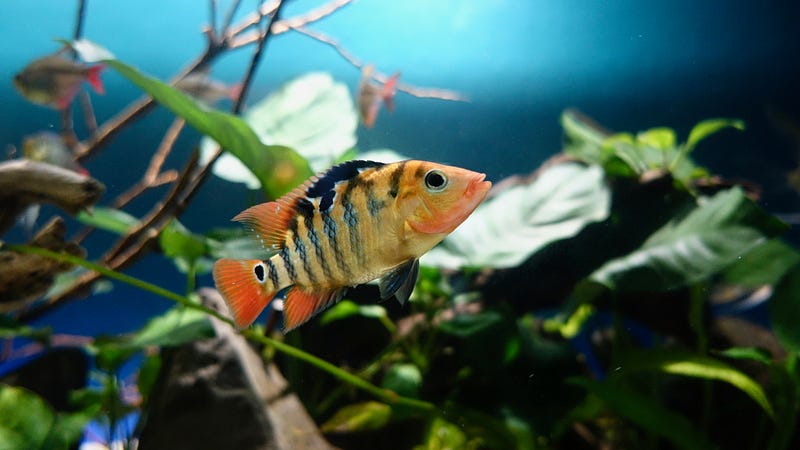
coronavirus social distancing for now changes in the brain?
The coronavirus pandemic has changed the world in many different ways, and the social distancing for the past year has been one of its hallmarks. We are social beings, and the practice of physical distancing has meant we have had to fight our very nature to take this necessary but inherently undesirable measure to keep each other safe.
Social scientists have warned of the pandemic’s psychological fallout, saying that extreme social distancing forms may deteriorate or trigger mental problems. It is easy to envision that varying social conditions will likely cause long-lasting changes in animal behavior. Have you ever wondered how social-distancing and self-isolation may be affecting your brain?
Well, research might be able to provide some clues — in fish anyways — turns out an international research team led by Erin Schuman from the Max Planck Institute for Brain Research has discovered a brain molecule that functions as a “thermometer” for the presence of others in an animal’s environment. In other words, Zebrafish “feel” the presence of others via mechanosensation and water movements — which turns a brain hormone on.
“Our data indicate a surprising role for a relatively unexplored neuropeptide, Pth2- it tracks and responds to the population density of an animal’s social environment. It is clear that the presence of others can have dramatic consequences on an animal’s access to resources and ultimate survival — it is thus likely that this neuro-hormone will regulate social brain and behavioral networks,” concludes Schuman. Source : Science Daily
It is largely understood that social isolation can have devastating effects on animals — including zebrafish and likely humans as well. However, the brain systems that sense the social environment are not well understood, and studies will continue to provide clues so as to what to look out for.
According to Robert Sapolsky, one of the world’s leading neuroscientists, hormones, social conditions, genes, your childhood, and the culture you grew up in are the key factors that shape the structure of our brain, and the interaction of all of these factors can potentially lead to changes in human behavior.
Understanding what is critical can hopefully lead us to find improved ways of supporting each other during times of crisis — socially distant perhaps but connected in our resolve to find improved ways of living for all.
Thank you for reading!
**This is Day 19 of the #sciku challenge — science-inspired haiku-like poetry( so #sciku?) prompts to get you inspired — Our dear readers — why not spend some time each day creating and having a little fun — if you do — publish it anywhere on medium, just tag it with — #30DaysOfScikuChallenge.
**Tagging Lynn E. O’Connor, Ph.D., Laura Griffith Machado, PsyD, Rita Hitching, and anyone else who feels inspired to follow and/or play along with this fun #30DaysOfScikuChallenge and today’s prompt: Brain Research
What’s next —
Perhaps this next one.


