
So Your Writing Sucks
Maybe knowing that is the first step towards improvement
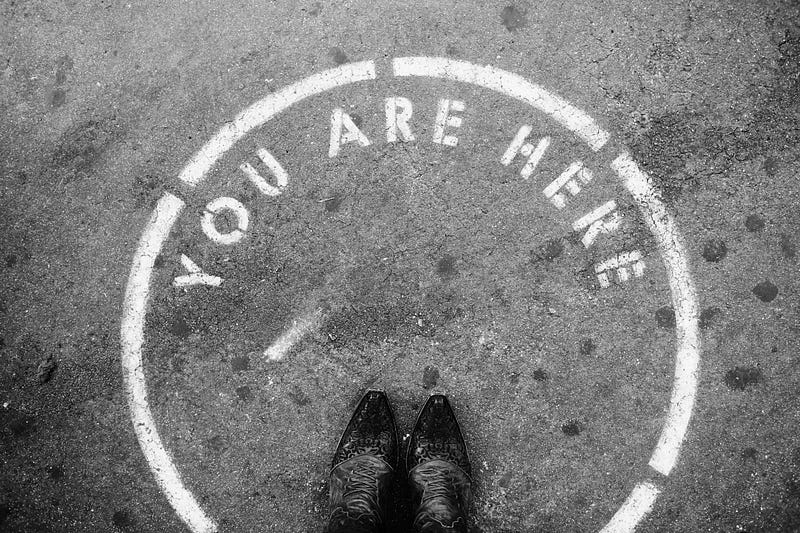
I have an unreasonable obsession when people misuse the words your and you’re. It makes me a bit nuts. There are some tricky words to confuse in the English language, and these just aren’t them.
Your indicates possession.
“Those are your Jordans sitting in the middle of the room for all to trip over.”
You’re is called a contraction. Contractions take out letters and spaces and replace them with an apostrophe. Hmmmmm….what is missing that the apostrophe is replacing?
It’s merely an “a” and space. You’re is short for “you are.” Not a lot shorter writing it, but saves a syllable when you say it.
“You’re going to pick up your Jordans, or I will make sure I never trip over them again.”
See how easy? Just replace “ you are” in your sentence, and it is simple to figure out which word to use.
Why, oh why, can’t people get this straight?
I remembered the old version of American Idol (it’s better now). I couldn’t watch until the end of the season because I cannot abide bad singers whose parents and friends have told them they are wonderful their whole life.
They sing – or they try to sing – yet they cannot carry a tune. It’s painful for me to watch. My ears bleed.
Some of you are these people with your writing. People have told you your whole life you are a great writer, but these people either love you blindly or would rather spare your feelings than tell you the truth. They’re not going to give you an accurate assessment of your ability.
They also may not be strong critics of good writing or they may have other goals in their encouragement.
This can even include your teachers in school. Sometimes teachers want to build the confidence of students instead of tearing them down. There’s a need for this at times. But if these are the only voices you hear, believe, or seek out, you are not getting a fair assessment of your ability.
In college, I took several creative writing classes where we read each other’s writing and critiqued it. Most writers should put themselves in this position at least once in their lifetime. It was brutal.
The first time my work was discussed, I was crushed. Some of the comments were scathing.
Thankfully our instructor was author Lee Smith. She has a great ability to be honest, yet amazingly encouraging. She could cut through the arrogance of youth and temper the comments so they weren’t just mean, but helpful.
She enjoyed my writing “voice,” which wasn’t quite like the others, and taught me to have confidence in it.
By the end of the course, I could listen to the critiques of my classmates and separate the wheat from the chaff. Some of the other writers were simply jerks who thought all writing stunk but their own.
These were also the same people who never considered whether some of the criticism of their work was valid. They thought we were all idiots, who like them, gave unwarranted criticism. We’d roll our eyes at them and move on.
They were in the class because they wanted to be famous writers, not good ones. By the way, I haven’t noticed any of those writers becoming the stars they thought they were.
But not all of you have this incredible arrogance and blind spot for your own work. You may even suffer from too much humility and don’t believe you have anything to say that people need to hear.
You may have read articles on the subject, considered the advice of others, reviewed your piece through an unemotional filter, believe it’s as good as you can get it, and yet are still afraid to hit publish.
Maybe it’s time to do it.
You don’t have to be a perfect writer to be a writer whose work people enjoy reading. You don’t have to hide your work until it is perfect. As you develop, however, it probably will be a good idea if you grow a thick skin and learn to separate criticism of your work from criticism of you. You also have to learn that not all criticism is true, but some criticism has merit.
I’ll never be a perfect writer, according to the standards of many. I tend to write for the ear. I was a Broadcast Journalism major in college, and it shows. I write simply, to the point (unless I forget to make one) and hopefully in a way that even the poorly educated can understand.
You’ll often find prepositions at the end of my sentence. I enjoy how they sound because it’s how people who live around me speak. Some people may notice me doing this and lift their nose. It’s OK. Perfect grammar is vital to them. It’s not to many people who love to read.
Grammarly hates my prepositions at the end of my sentences but also the way I combine a series of similar short sentences. I do it purposely. It’s part of my style. I don’t care to change it. Grammarly always tries to get me to rewrite these passages.
No, Grammarly, I’m not going to do it.
If you always take Grammarly’s advice, there is a high probability you’re going to end up with a disaster of a piece of work on your hands.
For example, we use a comma to indicate a pause. It’s a yield sign. Sometimes I want people to yield at a certain point as they read, sometimes I want them to come to a complete stop, and sometimes I want them to see green and charge on through. It’s my job as a writer to consider the signals I give them.
But often I put commas in the wrong place, or don’t include them at all, because I just can’t be bothered to think about it when I am writing. Grammarly is valuable in those situations.
A tool like Grammarly is useful because it makes you re-consider whether you’ve put in the proper signals, used the correct word, spelled it correctly, and have written in a way that is easy to understand. But you must think for yourself as you read their suggestions, or your writing may become unreadable.
Flo Gainey, my English teacher in high school, told me I had to learn the rules of grammar so later on, I could be aware when I wanted to break them. It was an excellent philosophy.
I had to pass two major spelling and grammar exams to earn my degree in college, and I am grateful for the requirement. Spelling and grammar had always been strengths, so I was a bit cocky. While I ultimately did well on both, their difficulty was humbling.
I was always a good speller, for example, but to see four spellings of a word in print and have to pick the correct one? I learned to have a plain piece of paper next to me where I wrote it, then found it in the options. It’s the same reason we often don’t catch our own mistakes — all things look correct in print.
Poor writing is like nails on the chalkboard to many of us, just as out-of-tune singers are to those of us who notice. That’s why you sometimes see writers get a bit nuts when there is a lot of poor writing on a platform.
As I automatically can discount a writer for not using your and you’re correctly, other writers view someone’s writing through their lens and have other things that offend their sensibilities. Some have a long list, and some have a short list. Regardless, they are just another human, even if they are a smart one.
You don’t have to be the best writer technically to be successful. We can show numerous examples of this — many at the top of bestseller lists.
Think of writing as music. Many of us like artists who aren’t the most gifted or trained, but they still have a certain magic to their voice or their persona that draws us.
So many amazing writers never realized success in their lifetime but were “discovered” after their deaths.
Emily Dickinson, Herman Melville, Franz Kafka — have you heard of them? We now study their writing and see their brilliance. Their contemporaries? They didn’t see it. Sometimes people didn’t notice their gift, other times the author focused on perfection to a fault, and still other times they didn’t have the courage to put their work out there.
It’s a privilege to write. There’s also some work to do if you want to be good at it.
It’s OK if your writing sucks on occasion, especially if you are humble enough to realize it at some point.
If you were to read all of the pieces I have written on Medium, you would find a few that make you cringe. I promise I cringe more when I read them. They definitely suck.
But I keep them out there. Those pieces helped me grow. As time goes on, I will grow more. I may even revise some of them and make them something I can read with pride
The problem comes when we are so arrogant that we aren’t setting the right goals at the right time. My goal now is to tell stories, make people think, try new things, become a better writer, and maybe improve a life or two.
Fame and fortune are not on my list. They may be your goals, and if so, your path will undoubtedly be different than mine.
But you still need to learn the basics of good writing. If not, be prepared for your arrogance to drown you. Many exceptional writers have been ruined by their own inflated opinion of themselves. They didn’t believe they needed to get better. They didn’t listen to the insightful critics.
Don’t be one of those writers.