avatarMatthew Maniaci

Free AI web copilot to create summaries, insights and extended knowledge, download it at here

2926

Abstract

overseas, they’d make things <i>more</i> transparent. They could start by opening up manifests from rail, truck, and air freight, which makes up the other half of American imports — and is also considered private and off-limits to public scrutiny.</p><p id="c482">They also want a heads-up whenever CBP suspects forced labor is being used — you can find the document with that suggestion <a href="https://www.cbp.gov/sites/default/files/assets/documents/2022-Jul/2022%2006%2029%2016%20term%20COAC%20June%2029%202022%20%20Recommendations%20Numbered%20537%20-581%20_%20for%20posting.pdf">here</a>, with the piece in particular at the bottom of the first page. It reads as follows:</p><blockquote id="e9d8"><p>4. COAC recommends CBP provide advanced advisory opinions and forced labor rulings related to CTPAT [Customs Trade Partnership Against Terrorism] member supply chains to facilitate fully-vetted supply chains, minimizing port disruptions and congestion, while delivering increased predictability in cross border execution.</p></blockquote><p id="f049">This also matters because it has the potential to result in corporate retaliation against whistleblowers. If a corporation is given advanced warning of a complaint, they may take that as an opportunity to silence the whistleblower in an effort to save their company’s reputation.</p><p id="4219">Currently, there is a suit in the U.S. Court of Appeals for the District of Columbia Circuit brought by a group of families of children who were killed or maimed in the Democratic Republic of Congo cobalt mines against Apple, Alphabet, Dell, Microsoft, and Tesla. They allege that those companies were responsible for the deaths of those children by using cobalt from those mines. The US Chamber of Commerce filed to encourage the court to reject corporate liability for alleged forced labor occurring outside the US. The argument put forth implies that “forced labor” is best addressed by corporations and the legislative and executive branches, not litigation.</p><p id="c13b">That being said, there is extensive reporting about corporate donations to political campaigns, extensive lobbying efforts, and the general lack of interest among many legislators for that kind of lawmaking. Many of the regulatory bodies that oversee these issues have been hobbled by the Trump policy of “fewer regulations,” which makes it more difficult to do their jobs. Add on top of that the general mandate of corporate greed and paying shareholders first and you have a recipe for corporations who will get away with whatever they can to make money and a congress that largely looks the other way.</p><p id="4793">There’s a lot of speculation in that last paragraph, but we live in a world where Nestle, with <a href="https://www.mashed.com/717227/nestles-water-controversy-explained/">all</a> <a href="https://www.business-humanrights.org/en/latest-news/child-labour-on-nestl%C3%A9-far

Options

ms-chocolate-giants-problems-continue/">of</a> <a href="https://www.reuters.com/article/us-nestle-babymilk/nestle-to-respond-to-baby-milk-criticism-in-coming-days-idUSKBN1FM18F">its</a> <a href="https://www.dailydot.com/unclick/nestle-california-bottled-water/">controversies</a>, exists. Corporate greed is a powerful thing, and things like “laws” and “ethics” have never stopped a company from doing the wrong thing to make a buck. Heck, the 2007 financial crisis was caused by corporate greed, and exactly one person went to jail over it. There were fines, sure, but within a few years, corporate America was humming along on record profits while the average consumer was still recovering.</p><p id="0312">I write a lot about corporate greed and <a href="https://readmedium.com/a-rand-study-destroyed-the-concept-of-unfettered-capitalism-and-nobody-noticed-b790fcc995ac">how it has damaged America</a>, but the fact that big corporations are proactively trying to hide their ties to <i>literal slavery</i> makes me sick. It doesn’t surprise me, though, which is incredibly sad and frustrating. Then again, <a href="https://readmedium.com/just-a-reminder-that-slavery-is-still-legal-in-america-7a45820f258f">slavery is still legal in America too</a>, so I guess there isn’t much that surprises me anymore. All we can really do is keep fighting against the people in power that push this kind of stuff and hope against hope that something comes of it.</p><p id="2095">Be well out there.</p><p id="8dc0">If you appreciate my work, <a href="https://matthewmaniaci.medium.com/membership">why not join Medium as a paying member</a>, which allows you access to unlimited stories (not just three free stories per month), using my referral link. You could also hit me up on <a href="https://ko-fi.com/matthewmaniaci">KoFi</a> if you’re feeling nice, or send a tip using the button below.</p><p id="38c5">If you liked this, <a href="https://medium.com/thing-a-day">please subscribe to my publication, Thing a Day</a>. I publish something every day on a variety of topics, so you never know what you’re going to see! You can also <a href="https://www.facebook.com/maniaci.matthew/">follow me on Facebook</a>.</p><p id="b9e2">I’m going to end this with a piece about why you should always do good:</p><div id="aac7" class="link-block"> <a href="https://readmedium.com/if-everything-is-going-to-hell-why-bother-doing-anything-good-95d060edf2a9"> <div> <div> <h2>If Everything is Going to Hell, Why Bother Doing Anything Good?</h2> <div><h3>Let me tell you why.</h3></div> <div><p>medium.com</p></div> </div> <div> <div style="background-image: url(https://miro.readmedium.com/v2/resize:fit:320/0*FGhZNeJR2Z_7iNtn)"></div> </div> </div> </a> </div></article></body>

So Hey, Big Corporations Want to Hide Their Ties to Slavery and Child Abuse

Oops, I mean “forced labor.”
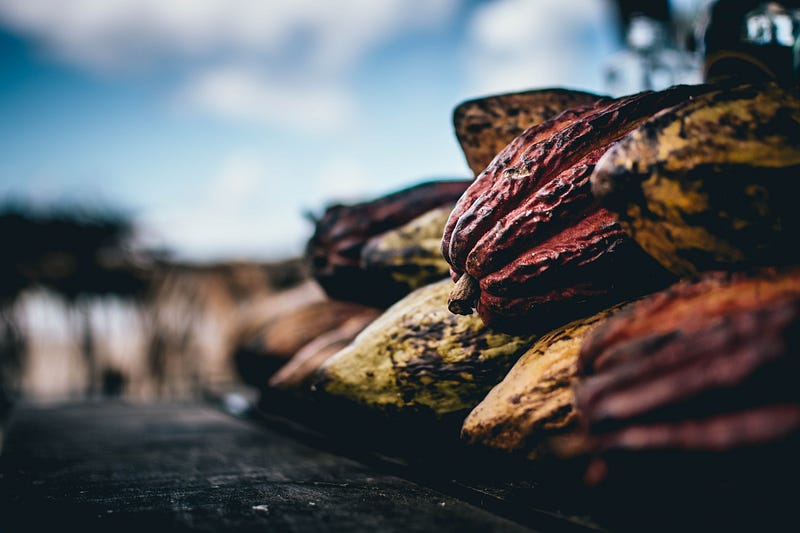
Photo by Alexandre Brondino on Unsplash

Just in case you missed it, the AP reported on a bunch of US businesses that want to restrict the data collected from cargo vessel manifests to keep it confidential. This was put forth in a proposal to US Customs and Border Protection by a collection of big businesses as a way to “streamline trade regulations.”

You can read that document here if you want — it’s three pages and the pertinent bit is toward the bottom of the third page. In case you’re not really into government documents and policy, the text reads as follows:

19 USC § 1431(c) — Automatically treat manifest and Customs declaration data of all transportation modes as private and confidential business information.

In a nutshell, this is really bad because journalists and others use these manifests to hold big corporations accountable for worker mistreatment, including forced labor, human trafficking, child labor, and general mistreatment. So basically, slavery, slavery, child slavery, and exploitation of low-wage workers in countries without adequate labor protection laws

This is kind of a big deal. Per the article, ocean freight makes up about half of the goods entering the US every year, with around $1.3-ish trillion worth of stuff coming from overseas. We’re talking clothing, cocoa, electronics, seafood — you name it and there is probably a company that makes or sells it with the help of slavery.

The people who wrote this proposal don’t really want us to know about that, though. In particular, this proposal came from the Commercial Customs Operations Advisory Committee (COAC), which includes representatives from Walmart, General Motors, Intel, Emerson, Kohler, Caterpillar, Amazon, DHL, UPS, Spectrum, and a whole bunch of others.

In reality, if these corporate representatives wanted to help address slavery overseas, they’d make things more transparent. They could start by opening up manifests from rail, truck, and air freight, which makes up the other half of American imports — and is also considered private and off-limits to public scrutiny.

They also want a heads-up whenever CBP suspects forced labor is being used — you can find the document with that suggestion here, with the piece in particular at the bottom of the first page. It reads as follows:

4. COAC recommends CBP provide advanced advisory opinions and forced labor rulings related to CTPAT [Customs Trade Partnership Against Terrorism] member supply chains to facilitate fully-vetted supply chains, minimizing port disruptions and congestion, while delivering increased predictability in cross border execution.

This also matters because it has the potential to result in corporate retaliation against whistleblowers. If a corporation is given advanced warning of a complaint, they may take that as an opportunity to silence the whistleblower in an effort to save their company’s reputation.

Currently, there is a suit in the U.S. Court of Appeals for the District of Columbia Circuit brought by a group of families of children who were killed or maimed in the Democratic Republic of Congo cobalt mines against Apple, Alphabet, Dell, Microsoft, and Tesla. They allege that those companies were responsible for the deaths of those children by using cobalt from those mines. The US Chamber of Commerce filed to encourage the court to reject corporate liability for alleged forced labor occurring outside the US. The argument put forth implies that “forced labor” is best addressed by corporations and the legislative and executive branches, not litigation.

That being said, there is extensive reporting about corporate donations to political campaigns, extensive lobbying efforts, and the general lack of interest among many legislators for that kind of lawmaking. Many of the regulatory bodies that oversee these issues have been hobbled by the Trump policy of “fewer regulations,” which makes it more difficult to do their jobs. Add on top of that the general mandate of corporate greed and paying shareholders first and you have a recipe for corporations who will get away with whatever they can to make money and a congress that largely looks the other way.

There’s a lot of speculation in that last paragraph, but we live in a world where Nestle, with all of its controversies, exists. Corporate greed is a powerful thing, and things like “laws” and “ethics” have never stopped a company from doing the wrong thing to make a buck. Heck, the 2007 financial crisis was caused by corporate greed, and exactly one person went to jail over it. There were fines, sure, but within a few years, corporate America was humming along on record profits while the average consumer was still recovering.

I write a lot about corporate greed and how it has damaged America, but the fact that big corporations are proactively trying to hide their ties to literal slavery makes me sick. It doesn’t surprise me, though, which is incredibly sad and frustrating. Then again, slavery is still legal in America too, so I guess there isn’t much that surprises me anymore. All we can really do is keep fighting against the people in power that push this kind of stuff and hope against hope that something comes of it.

Be well out there.

If you appreciate my work, why not join Medium as a paying member, which allows you access to unlimited stories (not just three free stories per month), using my referral link. You could also hit me up on KoFi if you’re feeling nice, or send a tip using the button below.

If you liked this, please subscribe to my publication, Thing a Day. I publish something every day on a variety of topics, so you never know what you’re going to see! You can also follow me on Facebook.

I’m going to end this with a piece about why you should always do good:

Slavery
Forced Labor
Child Abuse
Business
America
Recommended from ReadMedium
avatarTessa Schlesinger Global Atheist Am Yisrael Chai.
Why Do People Hate Jews?

I’ll tell you what I think…

7 min read