avatarAllisonn Church

Free AI web copilot to create summaries, insights and extended knowledge, download it at here

3530

Abstract

rozen than the sea, because the water moves so much more. I believe these ducks were swimming along the Fontanka, an offshoot of the Neva that approaches my favorite palace in St. Petersburg (and there are a lot of palaces there), the Yusupov. This was where Rasputin was poisoned and then shot, and then fell into the icy river. There’s a wonderful diorama of the poisoning scene in one of the basement rooms.</p><figure id="1df7"><img src="https://cdn-images-1.readmedium.com/v2/resize:fit:800/1*gUuoYr6JEYuYAUPUg_Ievg.png"><figcaption>Author’s photo</figcaption></figure><p id="dcf9">Everyone seems to love this photo of a Russian soldier walking at the edge of the Fontanka. I guess it’s somewhat romantic with the ships and the domes and the snow and the sunset and the fur cap. Maybe something people picture when they think of Russia.</p><figure id="39d5"><img src="https://cdn-images-1.readmedium.com/v2/resize:fit:800/1*y7boc_tLQedvtRxvSF56iA.png"><figcaption>Author’s photo</figcaption></figure><p id="41c1">Speaking of romantic, did I mention that my school was basically also a palace? Well, it looked like one anyway. The above photo shows the Smolny convent, which is now part of St. Petersburg State University. Their international studies programs are housed here.</p><figure id="e691"><img src="https://cdn-images-1.readmedium.com/v2/resize:fit:800/1*hxFLm07_gKt__TZkBGwyuQ.jpeg"><figcaption>Author’s photo</figcaption></figure><p id="3dd6">For me, St. Petersburg was confusing to navigate because it was laid out as a grid system. That probably seems straightforward to most humans, but I’m from New England. Here, we built our roads around the shape of the land, following mountains and rivers. I navigate by landmarks, including notable trees and really standout curves of the path.</p><p id="6605">In order to find my way around St. Petersburg, I either relied on a friend who grew up in Chicago and didn’t think every single flat rectangle looked and felt identical, or I looked for tall landmarks that were visible from just about anywhere, such as this huge gold spire on St. Peter and Paul cathedral.</p><figure id="87be"><img src="https://cdn-images-1.readmedium.com/v2/resize:fit:800/1*uV7vSz7NFApLUw1HElGmJA.jpeg"><figcaption>Author’s photo</figcaption></figure><p id="0323">Around the cathedral is a fortress wall, seen here dusted with snow. You can see that the river was particularly frozen and chilled on this day, but the fortress wall is actually a popular place for sunbathing. Folks don bathing suits and catch the early spring light here, even as chunks of ice still float down the river.</p><h2 id="372b">Veliky Novgorod</h2><p id="98ee">As far as snowy scenery goes, I have to give particular mention to Veliky Novgorod. Our group trekked to Novgorod on one of many guided tours and excursions, and it was a particularly memorable spot for me.</p><figure id="587d"><img src="https://cdn-images-1.readmedium.com/v2/resize:fit:800/1*h0DwlWGgAu9WSB7wDgSFoA.jpeg"><figcaption>St. George Monastery, Veliky Novgorod</figcaption></figure><p id="86fc">I’m no historian, but I can tell you that Veliky Novgorod (part of the larger Novgorod oblast, or province) is one of Russia’s oldest cities. It dates back to the mid-800s, when Prince Rurik claimed the area for Russia and the Rurik dynasty went on to rule the Russian kingdom for centuries thereafter. The name Veliky Novgorod more or less translates to “the great new city.”</p><figure id="3871"><img src="https://cdn-images-1.readmedium.com/v2/

Options

resize:fit:800/1*0XjV7RfgPoxs5iPuZv4ejQ.jpeg"><figcaption>Author’s photo</figcaption></figure><p id="96cd">I absolutely loved all of the architecture in Novgorod, from monasteries to houses and beyond. It’s not snow-specific, but take a look at the interior shot of a monastery shown below. I had the impression that it was swirling with spirits.</p><figure id="2d35"><img src="https://cdn-images-1.readmedium.com/v2/resize:fit:800/1*wGEJSGUrtnosUrz5NJNDww.jpeg"><figcaption>Author’s photo</figcaption></figure><p id="e36f">On this trip, we visited the Vitoslavlitsy Museum of Wooden Architecture. Aside from having the most hilarious and expressive tour guide ever, it was memorable also for the intricacy and beauty of the buildings.</p><figure id="e750"><img src="https://cdn-images-1.readmedium.com/v2/resize:fit:800/1*OLGeh8T_mufF6L7gsAOxYg.jpeg"><figcaption>Author’s photo</figcaption></figure><p id="d407">This living museum showcases the fascinating craftsmanship of old style wooden churches, mills, and huts (called izbas).</p><figure id="a6bb"><img src="https://cdn-images-1.readmedium.com/v2/resize:fit:800/1*Dwrj1Ceq5vk0X1QUpBWV8g.jpeg"><figcaption>Author’s photo</figcaption></figure><p id="9a9e">It was truly remarkable. Right now, I’m reading a captivating novel about Baba Yaga called <i>The Witch and the Tsar</i>. I think I will picture Yaga in a village such as this.</p><figure id="81f8"><img src="https://cdn-images-1.readmedium.com/v2/resize:fit:800/1*n5JcrAK8NZh7PbrJ1V7F1Q.jpeg"><figcaption>Author’s photo</figcaption></figure><p id="0370">The village also included old fashioned entertainments, such as this rotating two person sledding device. Can you see the small wooden sled that the person on the left is sitting on (err, falling off of)? There is a small sled seat on either end of the wooden beam. The idea is that two people would sit on the sleds, which are tied to the beam with rope, and a third person would push the beam in a circle to get it rotating, as you can see the person in the black hat and white scarf is doing in the photo.</p><p id="4587">There was also a delightful wooden slide, but the only photo I have shows a clear shot of a classmate’s face and I wouldn’t want to share without permission. From this old village, I learned that people all throughout history and in all parts of the world and in all weather like to play and have fun, including building the most traditional snowmen.</p><figure id="abc9"><img src="https://cdn-images-1.readmedium.com/v2/resize:fit:800/1*GOfKaSeLNfWxoLf6g0qc-g.jpeg"><figcaption>A snowman seen on the outskirts of Veliky Novgorod— author’s photo</figcaption></figure><p id="acfe">Many thanks to <a href="undefined">JoAnn Ryan</a> for inviting us all to share our best stories and photos of bright lights and snowy whites:</p><div id="2361" class="link-block"> <a href="https://readmedium.com/bright-lights-or-snowy-white-a-december-challenge-on-in-living-color-0e3ffae8b063"> <div> <div> <h2>Bright Lights or Snowy White? A December Challenge on In Living Color</h2> <div><h3>Christmas, Hanukkah, Kwanza, New Year’s Eve, and the beautiful snowy landscape</h3></div> <div><p>medium.com</p></div> </div> <div> <div style="background-image: url(https://miro.readmedium.com/v2/resize:fit:320/1*cCeEBOW--Er8-dnJZwut1A.jpeg)"></div> </div> </div> </a> </div></article></body>

Snowy Whites in Russia, 2006

Photos from my time abroad
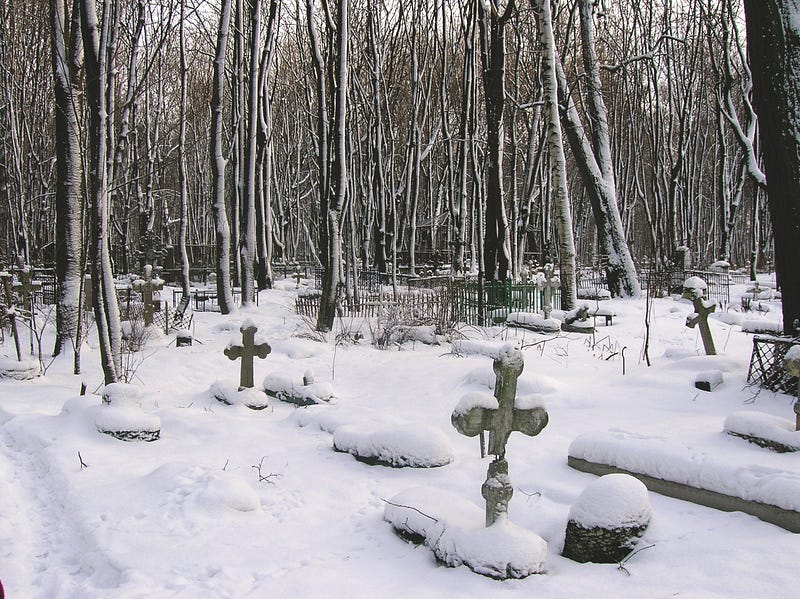
An old cemetery on Vasilievsky Ostrov, St. Petersburg— author’s photo

This is a special story. These are not my most beautiful snow photos from a technical perspective, but they are important and meaningful to me: these photos are from my semester abroad in St. Petersburg, Russia from January — May, 2006.

I took these photos on the most affordable point and shoot digital camera Walmart had to offer at the time. In fact, it was my first ever digital camera. Facebook was brand new and not the repository of experiences that it is today. I didn’t edit or share my trip photos, and they were more or less lost on an old external hard drive that is buried in my desk drawer.

Until today.

There are many more yet to sort through, but here are a few that serve to represent the snowy weather of that time, at least a little bit. For context, I want to share that I found myself in St. Petersburg during the coldest winter on record since WWII, with temperatures at times plummeting to -40— so cold that Fahrenheit and Celsius line up! When I left the warmth of the Pulkovo airport, a program co-director in a large fur coat gathered me up in a hurry, saying, “Please, get in the van— you can actually freeze to death!”

And we were off.
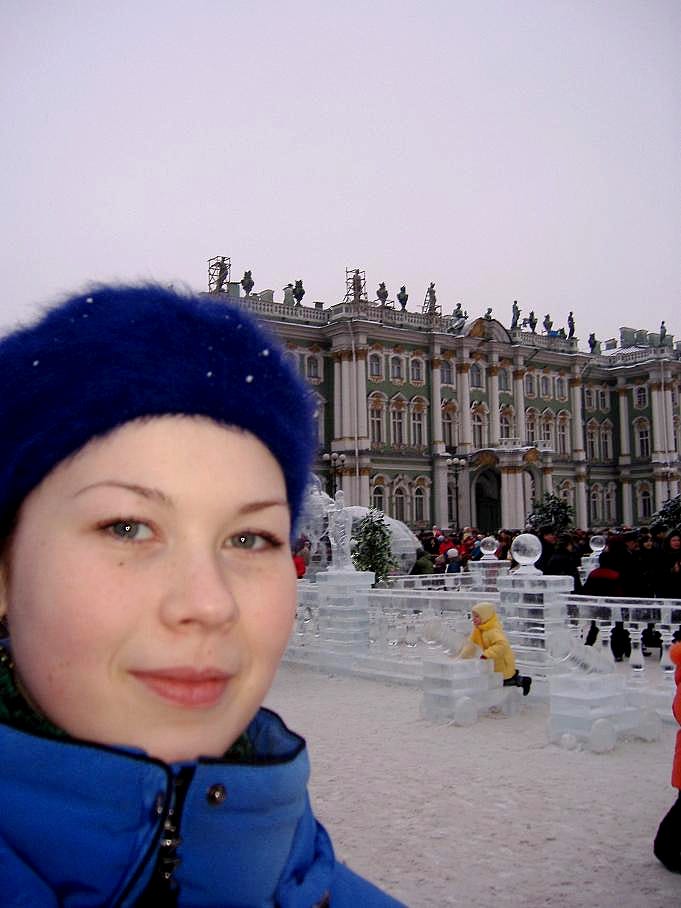
St. Petersburg

For proof that I was there, here’s a selfie. Yup, that’s me. There I am standing in front of the Hermitage (aka the Winter Palace of Peter the Great). There was a smaller replica of the Hermitage made of ice in the courtyard, with additional interactive features like ice slides for kids to play on.

By the way, the hat that I’m wearing in this photo came from my Russian conversation partner back at university. She was from Siberia and worked in our biology lab, and we helped each other practice our respective language skills. She gave me this real rabbit fur hat because she said the Russians would be appalled by my acrylic knit cap.
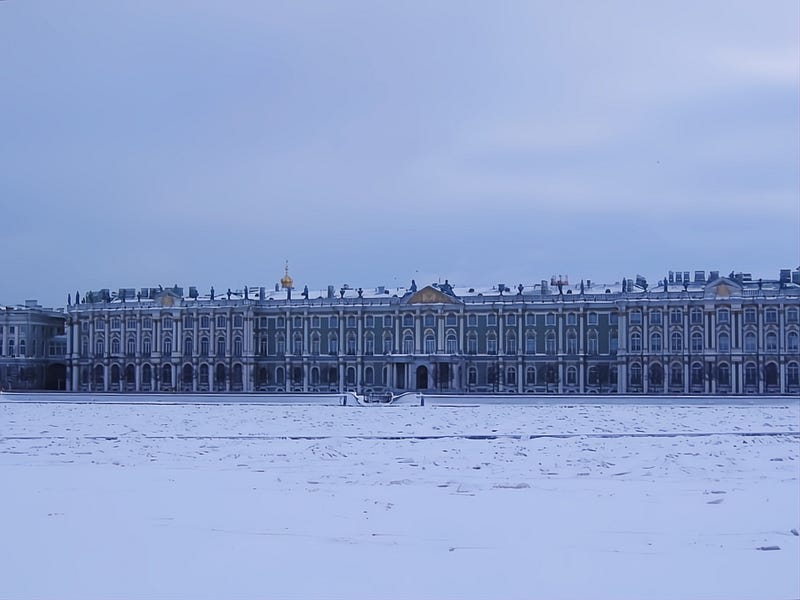
Author’s photo

Here’s a zoomed out photo of the Hermitage from across the frozen, snow-covered Neva.
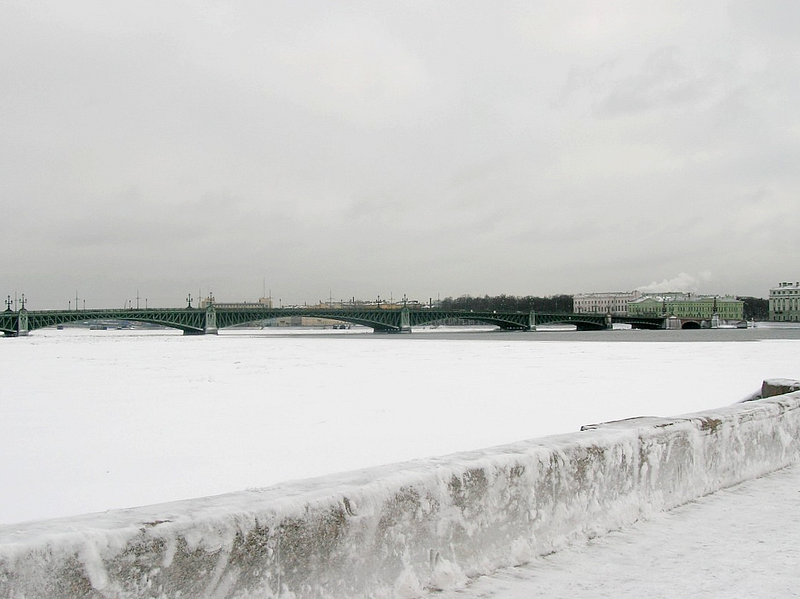
Author’s photo

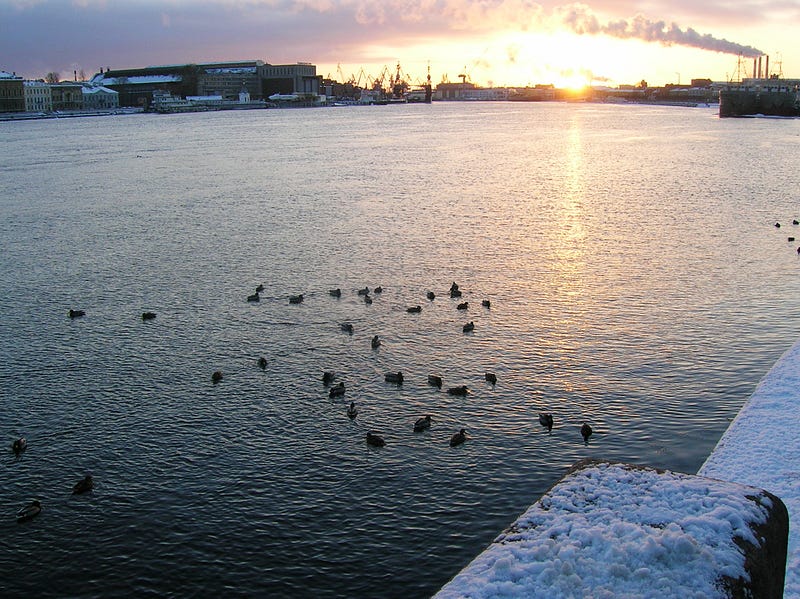
Actually, I took a number of photos of the icy Neva as well as other rivers and canals throughout the city. St. Petersburg is one of a handful of northern cities that are sometimes referred to as “Venice of the North” because of the waterways. My host family lived on the main island— Vasilievsky Ostrov— which was on the Baltic Sea in the Gulf of Finland. The sea was frozen solid, and I walked shockingly far out into the Gulf on that thick sheet of ice.
Author’s photo

The rivers and canals were less solidly frozen than the sea, because the water moves so much more. I believe these ducks were swimming along the Fontanka, an offshoot of the Neva that approaches my favorite palace in St. Petersburg (and there are a lot of palaces there), the Yusupov. This was where Rasputin was poisoned and then shot, and then fell into the icy river. There’s a wonderful diorama of the poisoning scene in one of the basement rooms.
Author’s photo

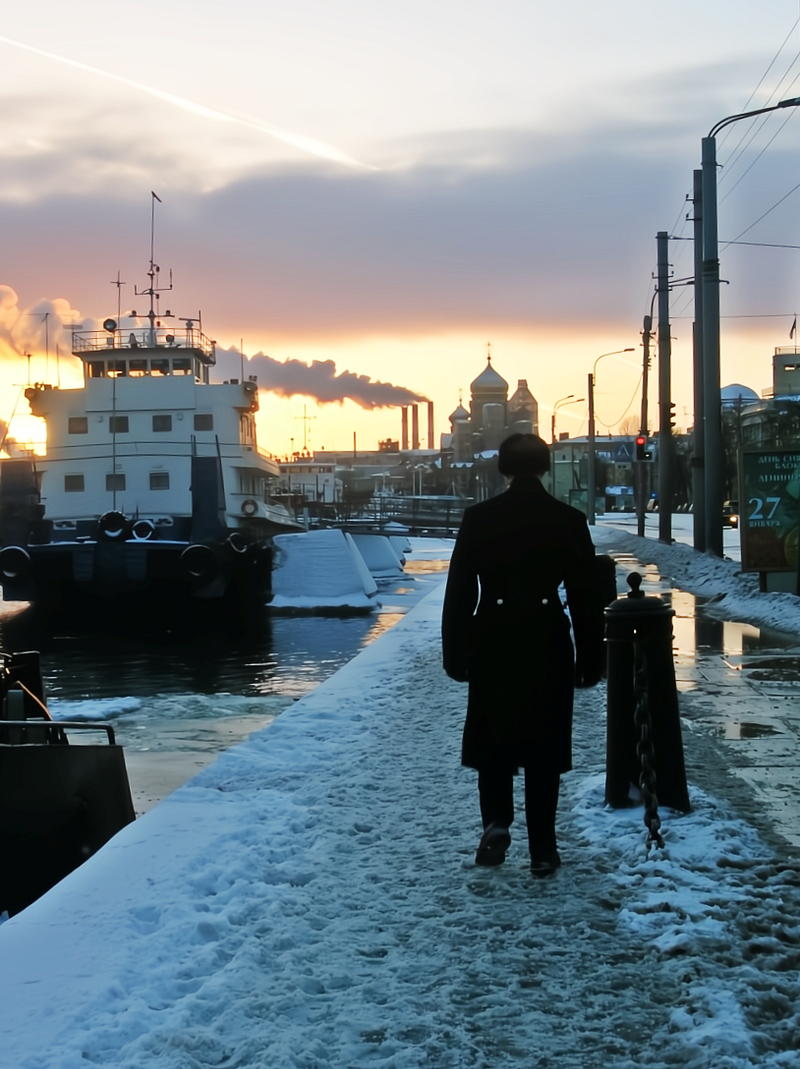
Everyone seems to love this photo of a Russian soldier walking at the edge of the Fontanka. I guess it’s somewhat romantic with the ships and the domes and the snow and the sunset and the fur cap. Maybe something people picture when they think of Russia.
Author’s photo

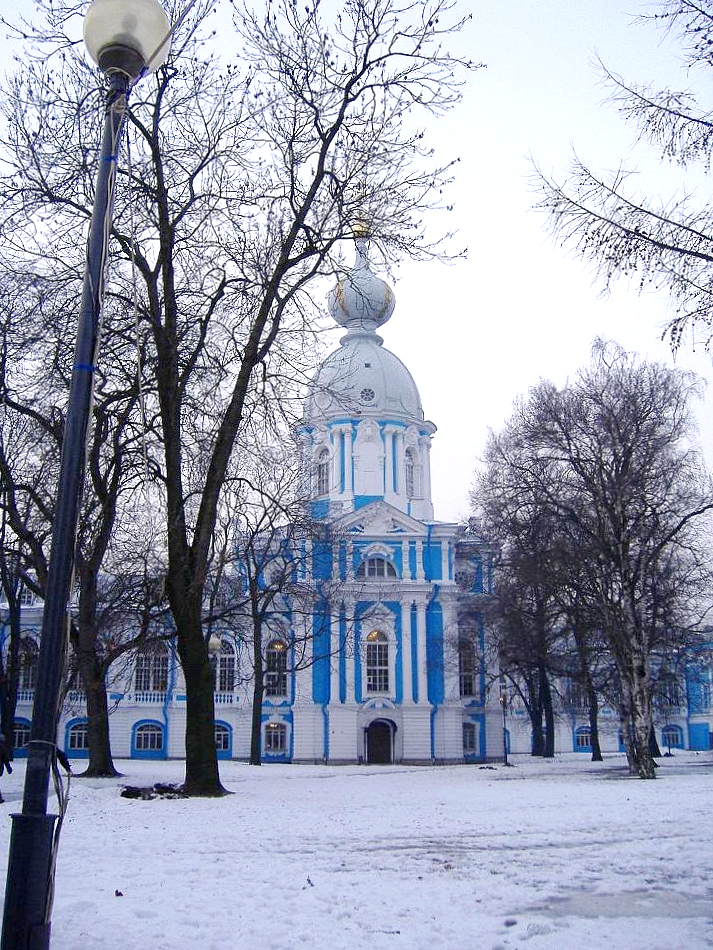
Speaking of romantic, did I mention that my school was basically also a palace? Well, it looked like one anyway. The above photo shows the Smolny convent, which is now part of St. Petersburg State University. Their international studies programs are housed here.
Author’s photo

For me, St. Petersburg was confusing to navigate because it was laid out as a grid system. That probably seems straightforward to most humans, but I’m from New England. Here, we built our roads around the shape of the land, following mountains and rivers. I navigate by landmarks, including notable trees and really standout curves of the path.

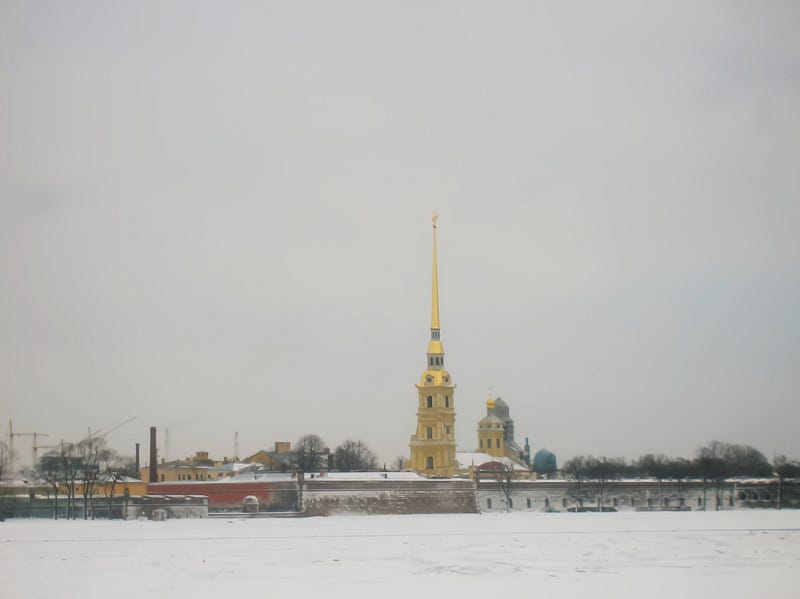
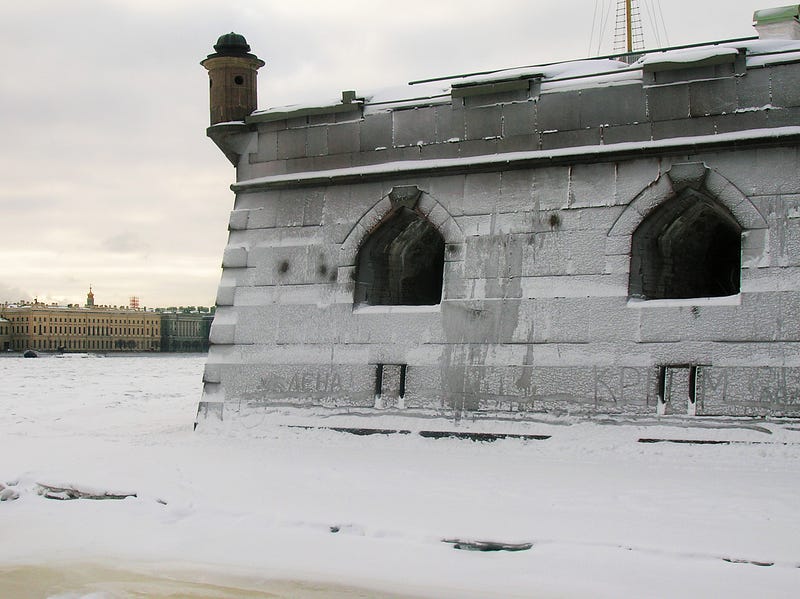
In order to find my way around St. Petersburg, I either relied on a friend who grew up in Chicago and didn’t think every single flat rectangle looked and felt identical, or I looked for tall landmarks that were visible from just about anywhere, such as this huge gold spire on St. Peter and Paul cathedral.
Author’s photo

Around the cathedral is a fortress wall, seen here dusted with snow. You can see that the river was particularly frozen and chilled on this day, but the fortress wall is actually a popular place for sunbathing. Folks don bathing suits and catch the early spring light here, even as chunks of ice still float down the river.

Veliky Novgorod

As far as snowy scenery goes, I have to give particular mention to Veliky Novgorod. Our group trekked to Novgorod on one of many guided tours and excursions, and it was a particularly memorable spot for me.
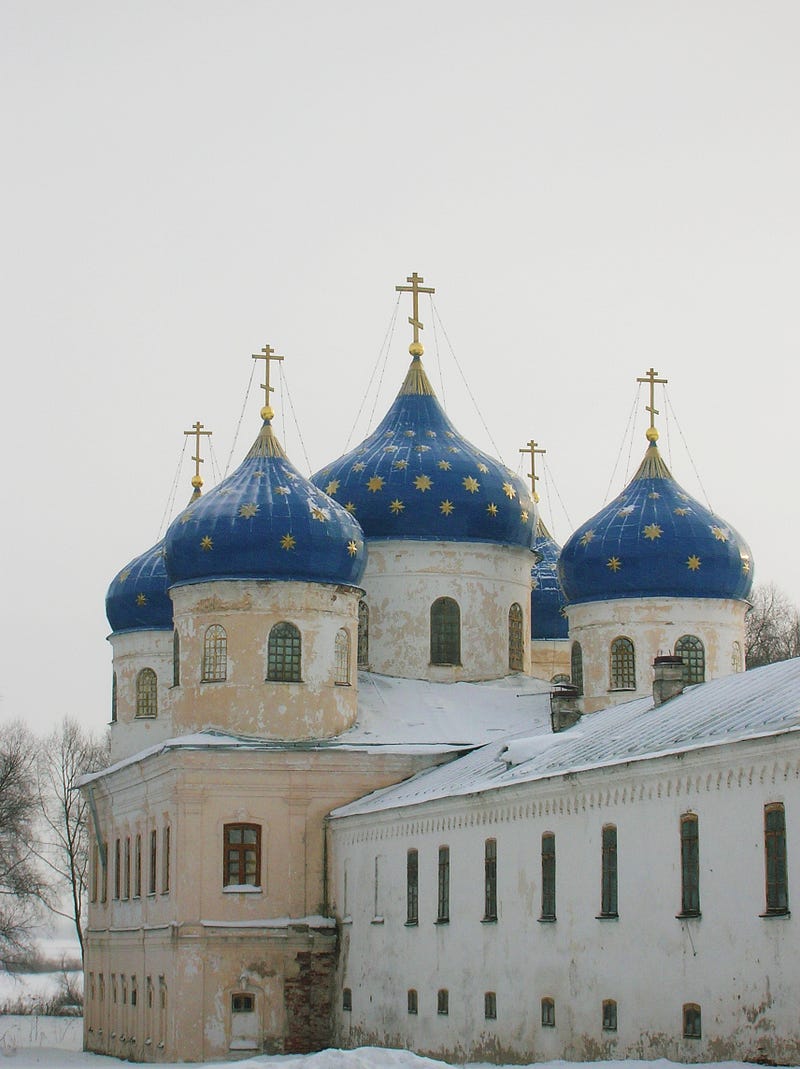
St. George Monastery, Veliky Novgorod

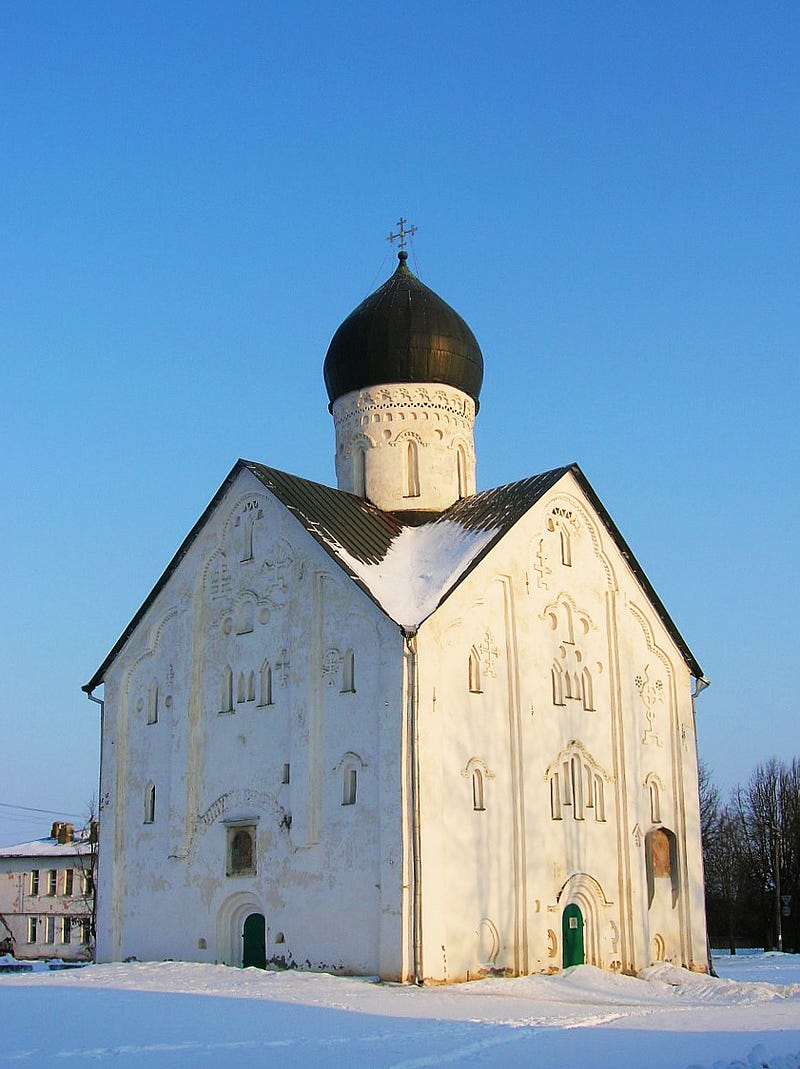
I’m no historian, but I can tell you that Veliky Novgorod (part of the larger Novgorod oblast, or province) is one of Russia’s oldest cities. It dates back to the mid-800s, when Prince Rurik claimed the area for Russia and the Rurik dynasty went on to rule the Russian kingdom for centuries thereafter. The name Veliky Novgorod more or less translates to “the great new city.”
Author’s photo

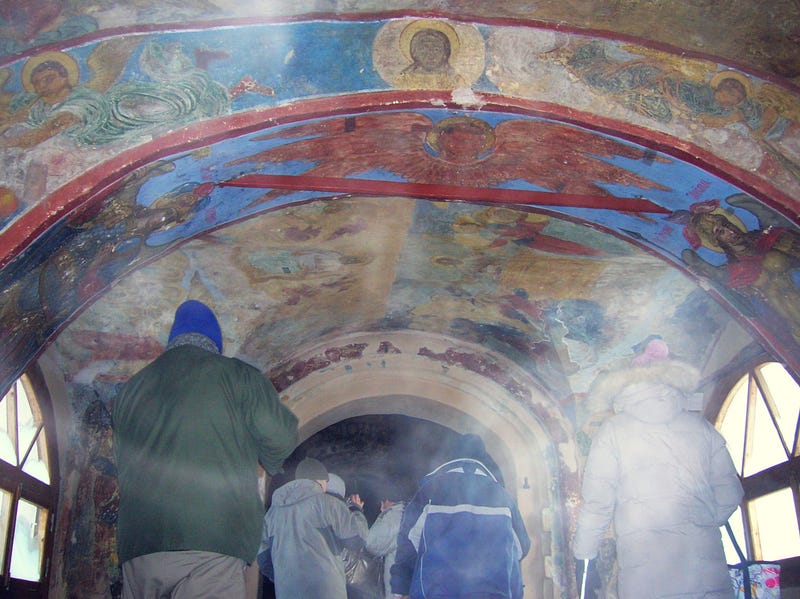
I absolutely loved all of the architecture in Novgorod, from monasteries to houses and beyond. It’s not snow-specific, but take a look at the interior shot of a monastery shown below. I had the impression that it was swirling with spirits.
Author’s photo

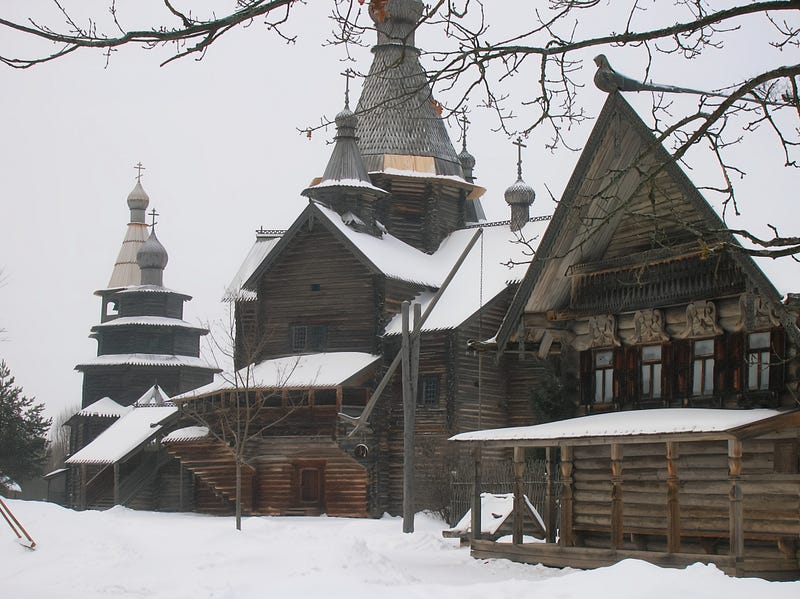
On this trip, we visited the Vitoslavlitsy Museum of Wooden Architecture. Aside from having the most hilarious and expressive tour guide ever, it was memorable also for the intricacy and beauty of the buildings.
Author’s photo

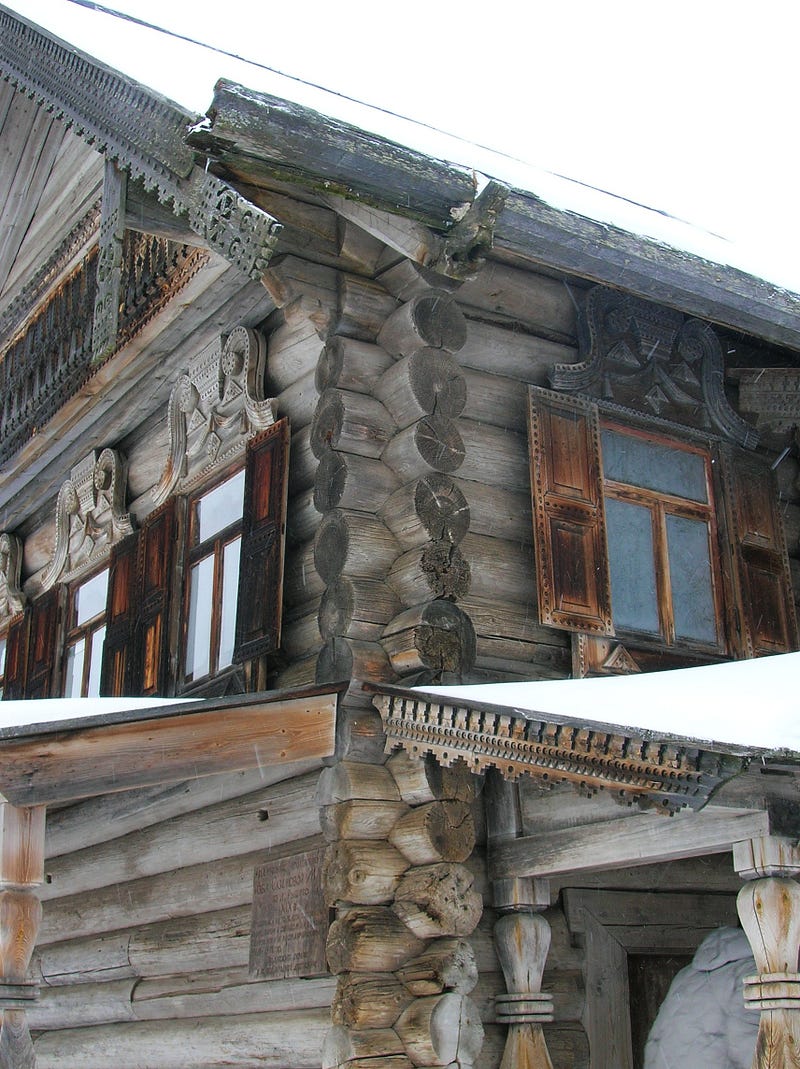
This living museum showcases the fascinating craftsmanship of old style wooden churches, mills, and huts (called izbas).
Author’s photo

It was truly remarkable. Right now, I’m reading a captivating novel about Baba Yaga called The Witch and the Tsar. I think I will picture Yaga in a village such as this.
Author’s photo

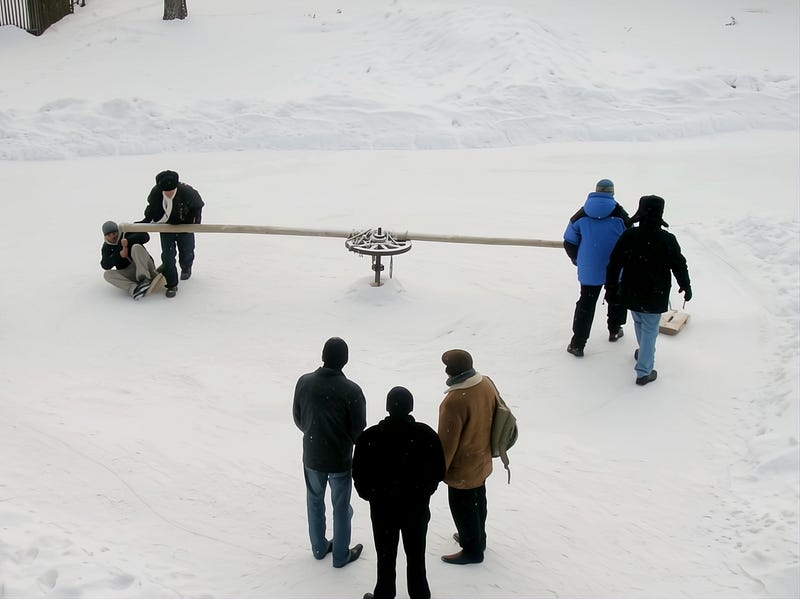
The village also included old fashioned entertainments, such as this rotating two person sledding device. Can you see the small wooden sled that the person on the left is sitting on (err, falling off of)? There is a small sled seat on either end of the wooden beam. The idea is that two people would sit on the sleds, which are tied to the beam with rope, and a third person would push the beam in a circle to get it rotating, as you can see the person in the black hat and white scarf is doing in the photo.

There was also a delightful wooden slide, but the only photo I have shows a clear shot of a classmate’s face and I wouldn’t want to share without permission. From this old village, I learned that people all throughout history and in all parts of the world and in all weather like to play and have fun, including building the most traditional snowmen.
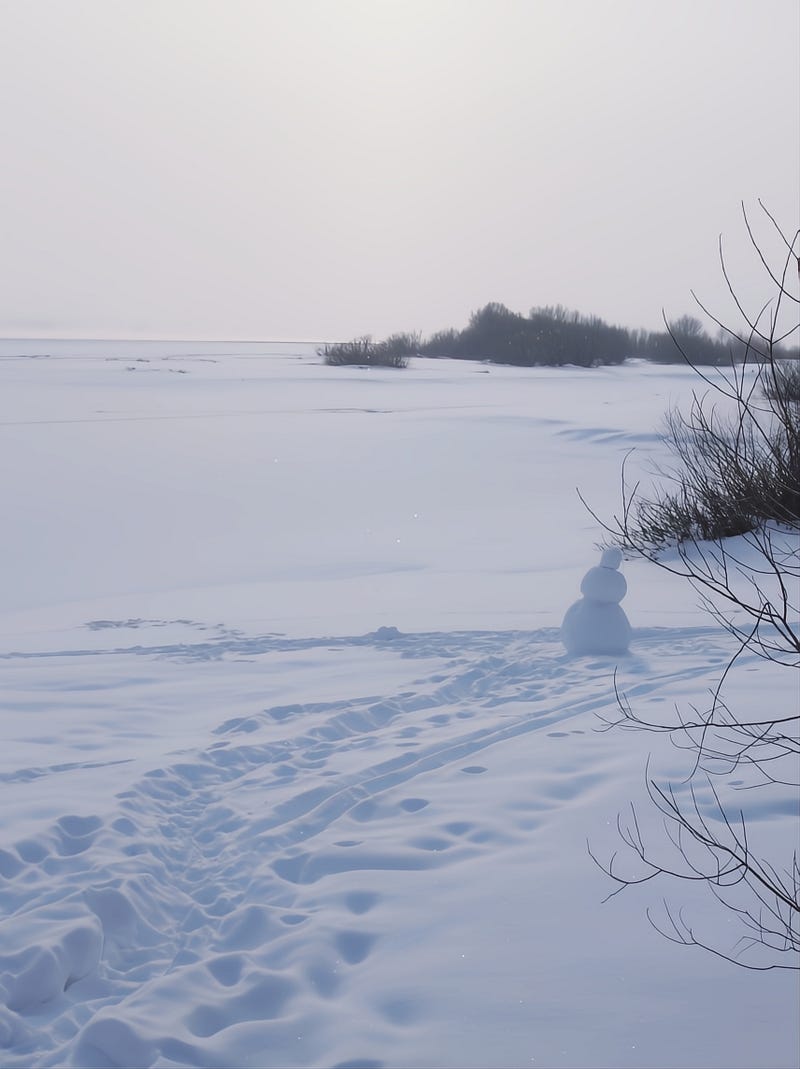
A snowman seen on the outskirts of Veliky Novgorod— author’s photo

Many thanks to JoAnn Ryan for inviting us all to share our best stories and photos of bright lights and snowy whites:

Monthly Challenge
Photography
Travel
Winter
Snow
Recommended from ReadMedium