avatarLinda Caroll

Free AI web copilot to create summaries, insights and extended knowledge, download it at here

6277

Abstract

own of Bieber, west of Lohr Castle, were copper and gem mines</b> that were owned by Snow White’s father.</p><p id="11ff">The mines were so tiny, it was not even an option to send grown adults down there, so the miners were children and dwarves who could fit in the tiny tunnels. Child labor was absolutely real in the 1700s.</p><p id="499d">Often, miners started working at the mines as children and their growth became stunted by poor nutrition and working conditions. Young and old alike, the locals called the miners “the dwarves” of the mines.</p><p id="4e8d">Every miner wore a brightly colored cap <a href="https://historycollection.com/the-real-snow-white-story-really-did-have-a-talking-mirror/">because</a> if there was ever a cave-in at the mine, the bright fabric would make their bodies easier to find.</p><p id="13ef">Most of the “dwarves” were indentured to the mines, and <a href="https://www.dailymail.co.uk/femail/article-6096039/Snow-White-fan-theory-suggests-DIES-end-Disney-classic.html">lived in</a> tiny cottages at the edge of the Spessart Forest, just outside the mines.</p><p id="24fb">Seven workers <a href="https://www.nzherald.co.nz/entertainment/devastating-snow-white-fan-theory-suggests-she-dies/QJIXYYOUMLYCVHQ3W5YMG66LNE/">per</a> cottage.</p><p id="bc50">Hi ho, hi ho.</p><p id="bc60">Even as a child, Snow White knew her father owned the mines and she befriended the “dwarves” and advocated for better working conditions. She was a little social justice warrior, really. Starting as a child.</p><p id="4719">Here’s how the local archives at Lohr a Main describe her:</p><p id="b3f5" type="7">“a girl of unusual loveliness who was charitable toward the poor and the suffering.” [Lohr a Main historical archive]</p><h1 id="0ebc">The wicked stepmother was real, too…</h1><p id="fce1">When Snow White was 10, her mother died and a dark cloud of grief settled over the castle. Four years later, her father was desperate to find a new mother for his growing children so he married a widowed countess.</p><p id="a4cd">Claudia Elisabeth von Venningen, the Imperial Countess of Reichenstein. The wicked stepmother had arrived.</p><p id="3762">She hated the children. All of them, but Maria Sophia most of all. Hated her with a passion that knew no end.</p><p id="f5a3">She hated how beautiful Snow White was, but even more…she hated how much everyone loved Maria Sophia.</p><p id="857f">The countess had two children from her previous marriage. She wanted “<i>her</i>” children to be the ones everyone adored. She wanted people to think she was the most beautiful woman in the land.</p><p id="c486">But, no. Everyone adored Maria. Everyone said Maria was most beautiful. Maria, Maria, Maria. It made her crazy with jealousy.</p><p id="2afd">And she was vain. So pathetically vain. Even Snow White’s father knew it. That’s why he gave her the mirror.</p><h1 id="f2bb">Mirror, Mirror, On the Wall…</h1><figure id="3a52"><img src="https://cdn-images-1.readmedium.com/v2/resize:fit:800/1*doO_OrFZoSUpYzdvZfbgnQ.jpeg"><figcaption></figcaption></figure><figure id="5d43"><img src="https://cdn-images-1.readmedium.com/v2/resize:fit:800/1*2S7H0BTZG7dU9wLBn2HVxg.jpeg"><figcaption>Disney’s version of the Magic Mirror [<a href="https://commons.wikimedia.org/wiki/File:Mickey%27s_Boo-To-You_Halloween_Parade_(29799120215).jpg">source</a>] // The real one still hangs in Lohr Castle, which is now the Spessart Museum [<a href="http://spessartmuseum.de/seiten/museum.html">source</a>]</figcaption></figure><h2 id="6339">Mirror, mirror on the wall, creepiest wedding gift of all.</h2><p id="a6e2">The “magic mirror” was constructed by the Mirror Manufacture of the <a href="https://en.wikipedia.org/wiki/Electorate_of_Mainz">Electorate of Mainz</a> in Lohr. It was a gift from Snow White’s father to his new bride on the occasion of their marriage.</p><p id="2905">It wasn’t really magic, but for people in the 1700’s who had no idea how it worked — it might as well have been.</p><p id="16f3">It was a <a href="https://historycollection.com/the-real-snow-white-story-really-did-have-a-talking-mirror/">trick mirror</a>. An acoustical wonder that reverberated back the voice of the person who spoke into it, in a deeper tone. Like an echo.</p><p id="1956">The Countess would stand at that mirror and muse upon her own beauty and the mirror repeated her words back to her in a deep and acoustically amazing voice. Like Disney magic. In the 1700s.</p><p id="35da">On the left side of the mirror were etched the words “a<i>mour propre</i>”, which means “<i>self love</i>” — a subtle acknowledgement of her self obsessed vanity.</p><p id="11d0">That mirror still hangs in Lohr Castle, which is now the <a href="http://spessartmuseum.de/seiten/museum.html">Spessart Museum</a>, and visitors to the museum can test out the mirror for themselves.</p><p id="b666">I don’t understand why he married her. But he did, and everything that happened to Maria Sophia after that, it’s all his fault. I’ll tell you what happened to her shortly.</p><p id="efc9">But first? A couple of things you probably didn’t know…</p><h1 id="2bae">The Brothers Grimm were not storytellers…</h1><figure id="b4e2"><img src="https://cdn-images-1.readmedium.com/v2/resize:fit:800/1*g_1-6-xPpJHFhVICHHOUYg.png"><figcaption></figcaption></figure><figure id="ccf9"><img src="https://cdn-images-1.readmedium.com/v2/resize:fit:800/1*iCJBmwJH5aBkwQj4Rv5vvQ.jpeg"><figcaption></figcaption></figure><figure id="670c"><img src="https://cdn-images-1.readmedium.com/v2/resize:fit:800/1*cVqkMxRyQLvSu3R9ue0bmw.jpeg"><figcaption>Wilhelm and Jacob Grimm, 1847 photos from <a href="https://en.wikipedia.org/wiki/Brothers_Grimm">Wikipedia</a> // The home of the Grimm brothers photo from <a href="https://en.wikipedia.org/wiki/Brothers_Grimm">Wikipedia</a></figcaption></figure><p id="7688">Snow White’s story first appeared in the first edition of a book by the brothers Grimm. It wasn’t a fairy tale. Wilhelm and Jacob Grimm were not storytellers. They did not “write” the stories in their books.</p><p id="1679">They were German scholars, researchers, and authors who collected folktales that were part of a rich oral tradition and preserved them in writing.</p><p id="5a57">We changed them over the years. T

Options

urned them into fairy tales we could tell our children. Into princesses finding the prince and living happily ever after.</p><p id="c0b2">Snow White was a story close to home for Jacob and Wilhelm. The brothers grew up in a tiny cottage less than 50 miles from Lohr Castle.</p><h1 id="09a6">Snow White’s castle is a museum today…</h1><figure id="79ba"><img src="https://cdn-images-1.readmedium.com/v2/resize:fit:800/1*548kMLpSUCJKLVVF6s0_nQ.jpeg"><figcaption></figcaption></figure><figure id="0417"><img src="https://cdn-images-1.readmedium.com/v2/resize:fit:800/1*I0l0pFZyB0czEhOkHmk7Mg.jpeg"><figcaption></figcaption></figure><figure id="5acc"><img src="https://cdn-images-1.readmedium.com/v2/resize:fit:800/1*gw-0ztFI4yDYpCV0CD1p_A.jpeg"><figcaption>Photos of the castle Snow White lived in, which is now The Spessart Museum. Photos from <a href="https://www.tripadvisor.ca/Attraction_Review-g635851-d8421385-Reviews-Lohrer_Schloss-Lohr_am_Main_Lower_Franconia_Franconia_Bavaria.html#/media-atf/8421385/154104384:p/?albumid=-160&amp;type=0&amp;category=-160">TripAdvisor</a></figcaption></figure><p id="d622">Lohr Castle, where Snow White was born, is now The Spessart Museum. On the first floor, you’ll find “Snow White’s Corner,” filled with memorabilia from her life. That’s where the magic mirror still hangs.</p><p id="2e3f">If you venture out into the Spessart Forest, you can hike Snow White’s Trail, the path she took through the forest and up and down seven hills to reach the cottages where the seven dwarves lives.</p><figure id="45f4"><img src="https://cdn-images-1.readmedium.com/v2/resize:fit:800/1*sHm-ehMMISIuV-OC-lcxjA.jpeg"><figcaption>Lohr Castle & Museum photo from <a href="https://www.lohr.de/en/tourism-and-culture/discovering-lohr/snow-white/lohrs-most-famous-daughter/">Lohr.de</a></figcaption></figure><p id="9e55">Outside the Spessart Museum, there are life sized iron cutouts of Maria Sophia and the seven dwarves. A fond tribute to her life and story.</p><p id="a835" type="7">“What the Grimm Brothers wrote about was really a documentary of sorts about our region…” — Dr Karlheinz Bartels, Lohr am Main scholar & researcher</p><h1 id="7b3d">The fairytale ending was an allegory…</h1><figure id="d8bb"><img src="https://cdn-images-1.readmedium.com/v2/resize:fit:800/1*nGlt_zlMNJRkeOJyz-Wt7w.jpeg"><figcaption></figcaption></figure><figure id="44da"><img src="https://cdn-images-1.readmedium.com/v2/resize:fit:800/1*1WUBzwi6HnRu_tDxXtgxSQ.jpeg"><figcaption></figcaption></figure><h2 id="dadf">At 16, Maria Sophia ran away from home.</h2><p id="97ff">She couldn’t take the physical and mental abuse and neglect dished out by her stepmother anymore. Not for one more day.</p><p id="6e62">So she ran, crying, into the forest.</p><p id="a47f">Through the forest, and up and down seven hills she ran, until she reached the cottages of the seven dwarves. Imagine their surprise when they came home to find her sleeping in one of their beds. Disney didn’t invent that.</p><p id="cdf7">Three years later, <a href="https://de.wikipedia.org/wiki/Philipp_Christoph_von_und_zu_Erthal">her father died</a> and the mine <a href="http://www.pcl-eu.de/virt_ex/detail.php?entry=zechstein">closures</a> began.</p><p id="79f0">Maria Sophia became a vagabond of sorts, and eventually found her way to a convent 40 miles away. She never found her prince.</p><p id="d42d">Snow White died blind and alone in a convent at age 71. It’s theorized that she ate an apple soaked in atropa belladonna, or deadly nightshade. It grew abundantly in the area around the convent. Her <a href="https://www.lonelyplanet.com/articles/snow-white-gravestone-bamberg">grave was found</a> in 1998.</p><p id="b915">Her wicked stepmother wasn’t to blame. She was already dead.</p><h1 id="0641">The prince will break your heart a little…</h1><p id="b814">In the fairy tale, a handsome prince arrives on a tall white horse and sees Snow White laying dead. He scoops her up in his arms and kisses her — and in lifting her, dislodges the apple from her throat.</p><p id="659f">It’s an allegory.</p><p id="a872">In the 1700s, death was portrayed as riding a tall white horse. A less scary version of the grim reaper.</p><p id="ab1f">The kiss was an allegory, too.</p><p id="2d04">The “kiss of death” is the way people knew someone had passed in the days before they knew about pulse and checking for one. When we die, air is expelled from our lungs. Folklore believed it was the “kiss of death” taking the breath of life from you.</p><p id="7a5e">And so the prince scooped her up and rode away to a place where they would live happily ever after. It was not a place the living could follow. Because Snow White’s prince was the prince of death.</p><h2 id="e963">Follow History of Women to see more posts like this one!</h2><h2 id="8450">More reading…</h2><div id="f806" class="link-block"> <a href="https://readmedium.com/real-dating-ads-from-the-1880s-you-couldnt-make-these-up-if-you-tried-8f0f3d3c22c1"> <div> <div> <h2>Real Dating Ads From the 1880s. You Couldn’t Make These Up if You Tried</h2> <div><h3>Money was a big deal, women must be domesticated, an old maid was 27, and a weird mechanic fetish</h3></div> <div><p>medium.com</p></div> </div> <div> <div style="background-image: url(https://miro.readmedium.com/v2/resize:fit:320/1*eEi3AXKc-CjT4VHJA87Gsg.jpeg)"></div> </div> </div> </a> </div><div id="683f" class="link-block"> <a href="https://historyofyesterday.com/cleopatra-caesar-and-antony-and-what-theyd-look-like-today-c97abefd4681"> <div> <div> <h2>Cleopatra, Caesar and Antony and What They’d Look Like Today</h2> <div><h3>Did Hollywood whitewash Cleopatra? A Pulitzer Winning historian says no.</h3></div> <div><p>historyofyesterday.com</p></div> </div> <div> <div style="background-image: url(https://miro.readmedium.com/v2/resize:fit:320/1*g4zbhFaZAMD9Cf6bKD3K2w.jpeg)"></div> </div> </div> </a> </div></article></body>

Snow White Was Real and the Magic Mirror Was Creepy and Weird

Mirror, mirror on the wall was the weirdest wedding gift of all. Plus, the prince will break your heart a little.
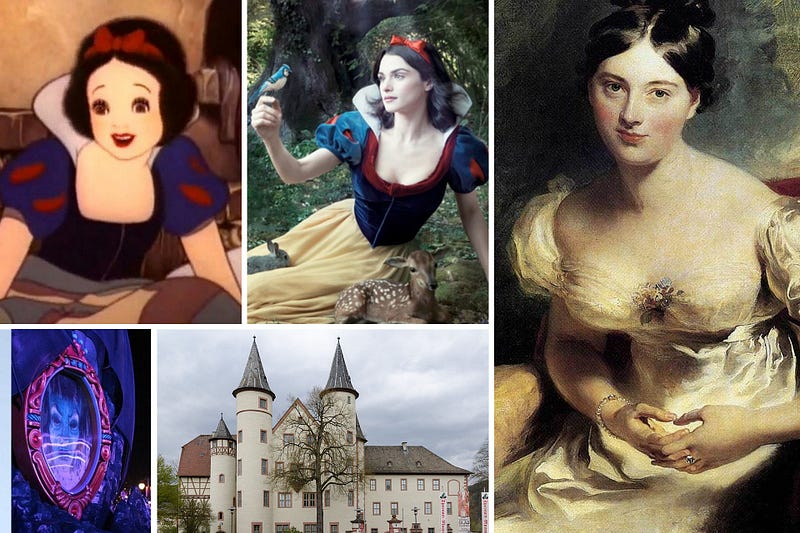
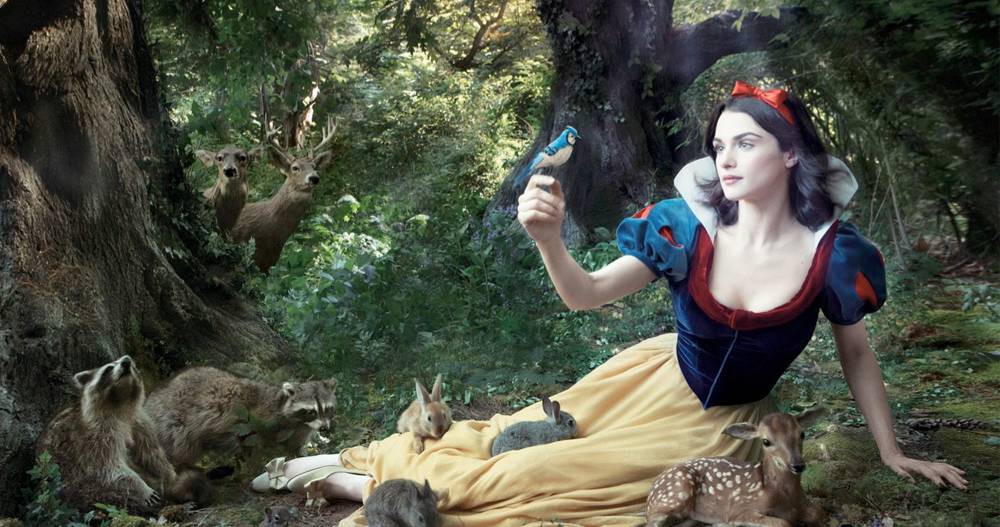
Snow white composite by author: source photos from Wikipedia and Movieweb

Once upon a time, a princess was born with hair black as ebony, skin as white as snow and lips red as a rose. You know this one? The brothers Grimm called her Snow White but that wasn’t really her name.

Of all the fairy tales, who would think Snow White was real? It sounds too bizarre.

A talking mirror, a wicked stepmother, dwarves living in cottages in the forest. Sounds like something a skilled storyteller would make up, right?

But you know what they say. Truth is stranger than fiction.

She wasn’t just a made-up fairy tale. She was as real as you and me.

The Real Snow White
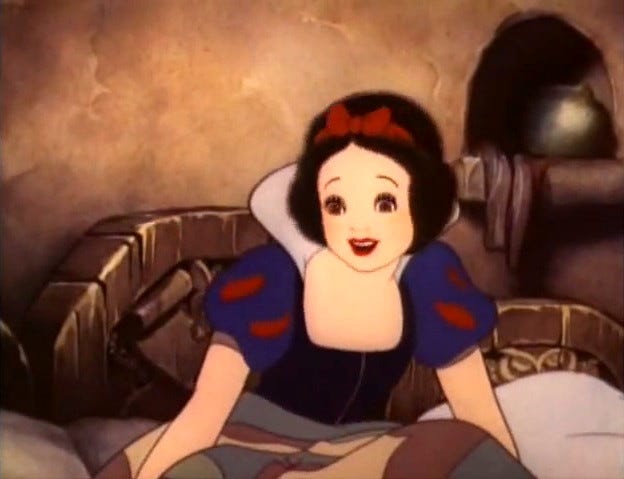
Disney’s Snow White photo from Wikipedia // The real Snow White photo from Wikipedia

She was born June 15, 1729 in Lohr Castle in Lohr am Main, Bavaria and her name was written in lovely swooping letters in the birth records at the Lohr am Main town hall. Maria Sophia Margaretha Catharina von Erthal.

Such a big name for a tiny girl. Let’s call her Maria Sophia. It rhymes so nicely.

Her parents were 18th century landowner Prince Philipp von Erthal and his wife, the lovely Baroness Eva von Bettendorf. That’s why Snow White’s mama is named Eva in the fairy tale. Because that was really her name.

She really did grow up in a castle…
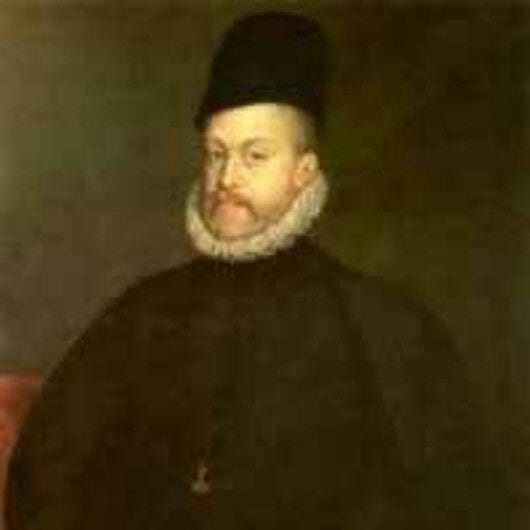
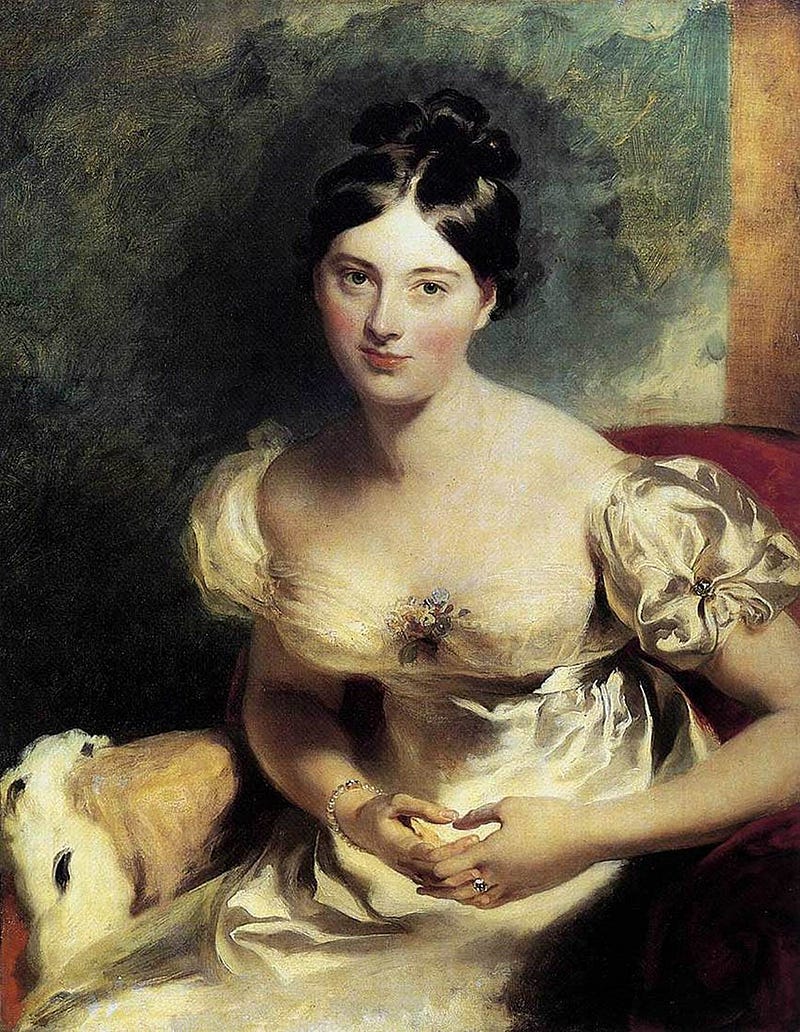
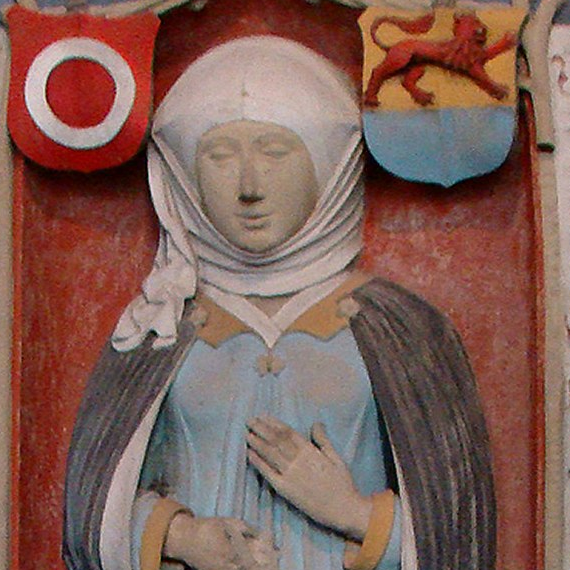
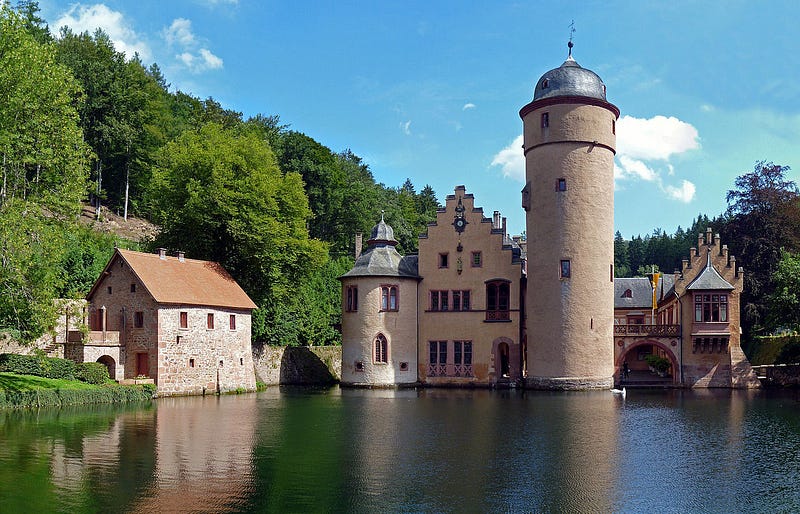
Snow White’s father (photo from Wikipedia) and mother (photo from Wikipedia) and the Lohr castle she grew up in (photo from Wikipedia)

Maria Sophia grew up in a lovely and picturesque castle with a great hall and a nursery and giant stone fireplaces to keep them warm on the chilliest winter days. Plenty of space for children to run and play between those walls.

It truly was a fairy tale castle.

Snow White was not an only child…

Fairy tales hinted at that. Maybe you’ve heard of another fairy tale called Snow White and Rose Red, or perhaps, the story of Briar Rose.

That was her sister.

After Maria Sophia, the Baroness had 6 more children. Seven children in all, born one right after the other like little stepping stones.

For ten short years, Lohr castle was filled with the sounds of love and laughter and children playing as they grew up together.

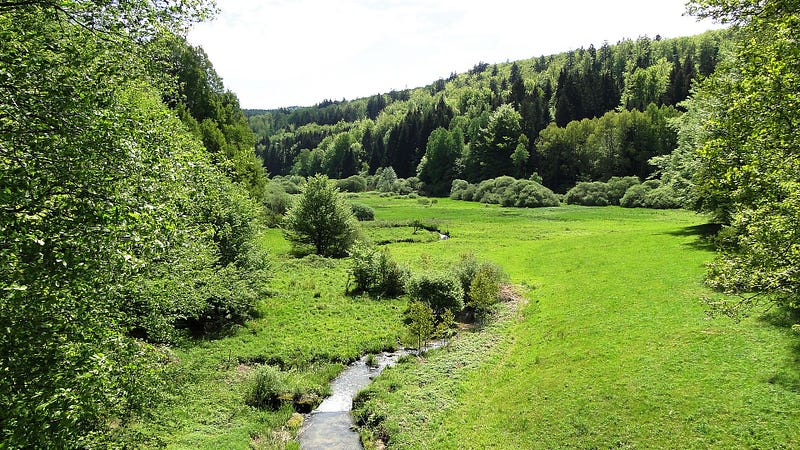
The forest was real, too…
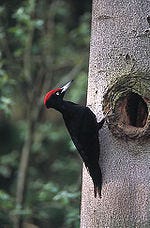
Spessart Forest photos from Wikipedia

On the west side of the Lohr castle is a forest, called Spessart Forest.

Spessart means Woodpecker, and the woods were filled with the tap, tap, tapping of woodpeckers in the trees and children laughing as they chased each other and played hide and seek among the trees.

On the other side of the forest, there were seven hills, just like in the story. If you were to run up and down all seven hills like Maria Sophia did, you’d come to a tiny little town called Bieber.

That’s where you’d find the seven dwarves. They were real, too.

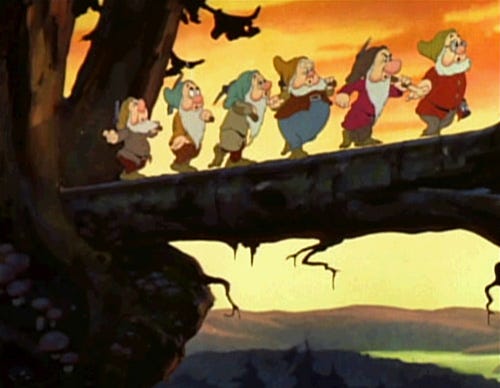
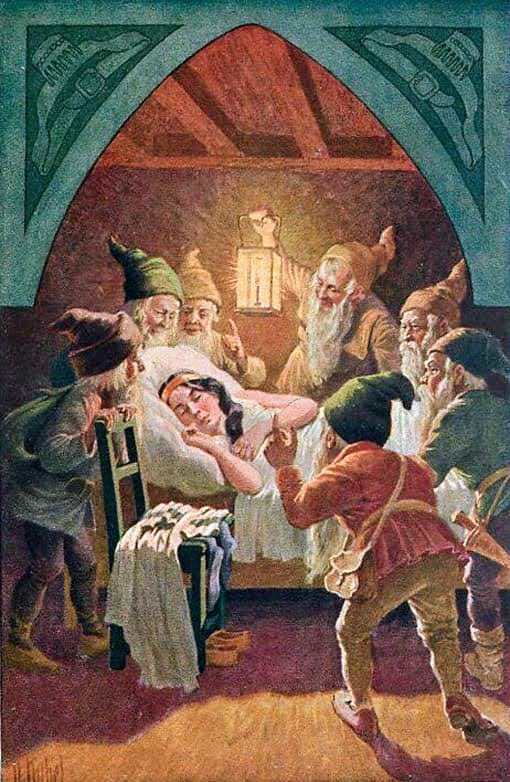
Hi ho, hi ho, it’s off to work we go…
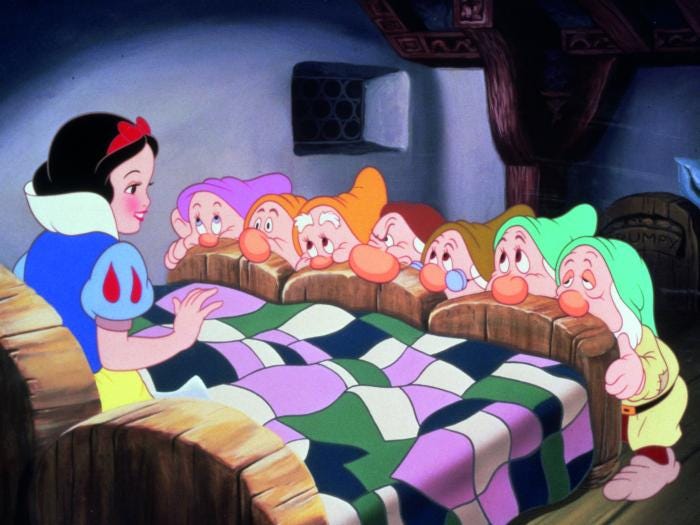
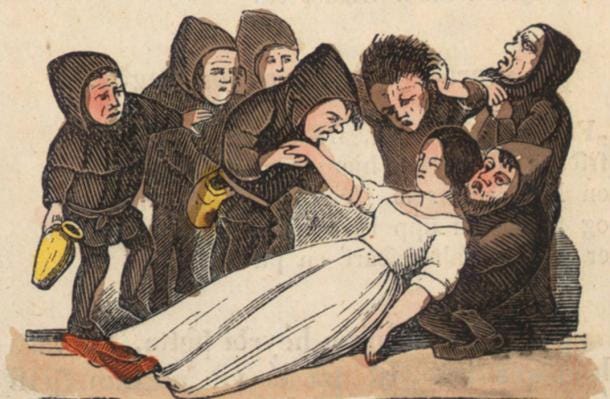
Disney versions of the dwarves (left and center) from Wikipedia // illustration of the real dwarves (right) from Wikipedia. :)

In the town of Bieber, west of Lohr Castle, were copper and gem mines that were owned by Snow White’s father.

The mines were so tiny, it was not even an option to send grown adults down there, so the miners were children and dwarves who could fit in the tiny tunnels. Child labor was absolutely real in the 1700s.

Often, miners started working at the mines as children and their growth became stunted by poor nutrition and working conditions. Young and old alike, the locals called the miners “the dwarves” of the mines.

Every miner wore a brightly colored cap because if there was ever a cave-in at the mine, the bright fabric would make their bodies easier to find.

Most of the “dwarves” were indentured to the mines, and lived in tiny cottages at the edge of the Spessart Forest, just outside the mines.

Seven workers per cottage.

Hi ho, hi ho.

Even as a child, Snow White knew her father owned the mines and she befriended the “dwarves” and advocated for better working conditions. She was a little social justice warrior, really. Starting as a child.

Here’s how the local archives at Lohr a Main describe her:

“a girl of unusual loveliness who was charitable toward the poor and the suffering.” [Lohr a Main historical archive]

The wicked stepmother was real, too…

When Snow White was 10, her mother died and a dark cloud of grief settled over the castle. Four years later, her father was desperate to find a new mother for his growing children so he married a widowed countess.

Claudia Elisabeth von Venningen, the Imperial Countess of Reichenstein. The wicked stepmother had arrived.

She hated the children. All of them, but Maria Sophia most of all. Hated her with a passion that knew no end.

She hated how beautiful Snow White was, but even more…she hated how much everyone loved Maria Sophia.

The countess had two children from her previous marriage. She wanted “her” children to be the ones everyone adored. She wanted people to think she was the most beautiful woman in the land.

But, no. Everyone adored Maria. Everyone said Maria was most beautiful. Maria, Maria, Maria. It made her crazy with jealousy.

And she was vain. So pathetically vain. Even Snow White’s father knew it. That’s why he gave her the mirror.

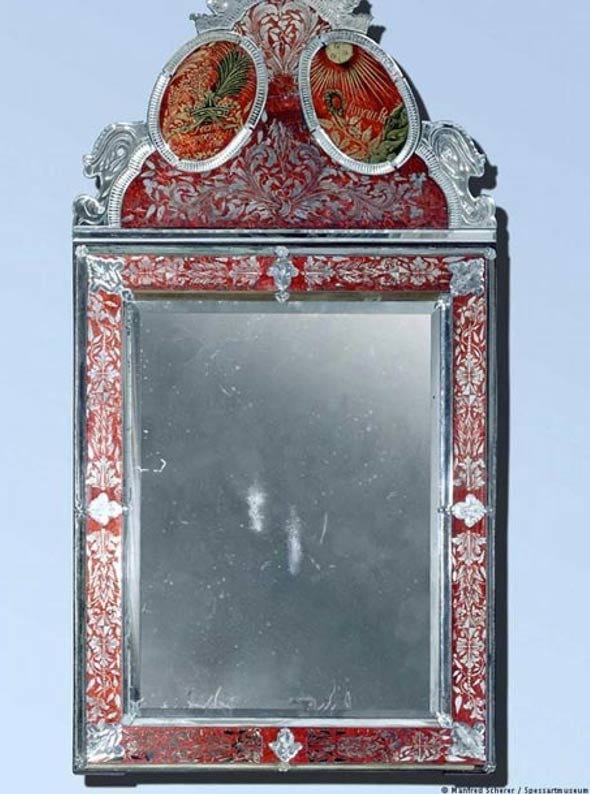
Mirror, Mirror, On the Wall…
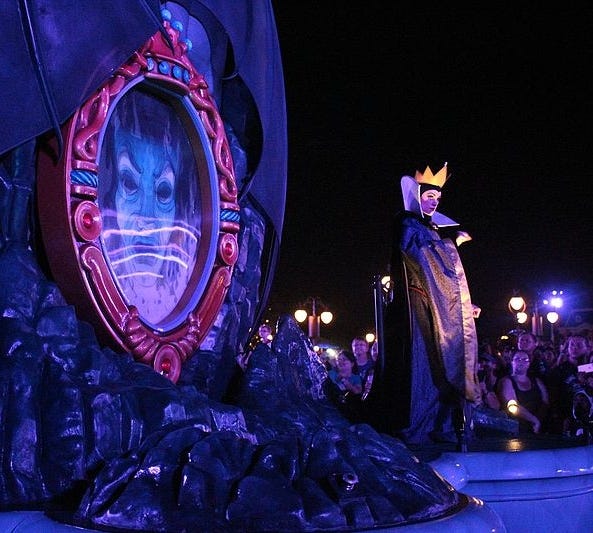
Disney’s version of the Magic Mirror [source] // The real one still hangs in Lohr Castle, which is now the Spessart Museum [source]

Mirror, mirror on the wall, creepiest wedding gift of all.

The “magic mirror” was constructed by the Mirror Manufacture of the Electorate of Mainz in Lohr. It was a gift from Snow White’s father to his new bride on the occasion of their marriage.

It wasn’t really magic, but for people in the 1700’s who had no idea how it worked — it might as well have been.

It was a trick mirror. An acoustical wonder that reverberated back the voice of the person who spoke into it, in a deeper tone. Like an echo.

The Countess would stand at that mirror and muse upon her own beauty and the mirror repeated her words back to her in a deep and acoustically amazing voice. Like Disney magic. In the 1700s.

On the left side of the mirror were etched the words “amour propre”, which means “self love” — a subtle acknowledgement of her self obsessed vanity.

That mirror still hangs in Lohr Castle, which is now the Spessart Museum, and visitors to the museum can test out the mirror for themselves.

I don’t understand why he married her. But he did, and everything that happened to Maria Sophia after that, it’s all his fault. I’ll tell you what happened to her shortly.

But first? A couple of things you probably didn’t know…

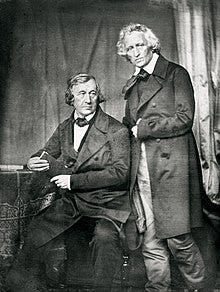
The Brothers Grimm were not storytellers…
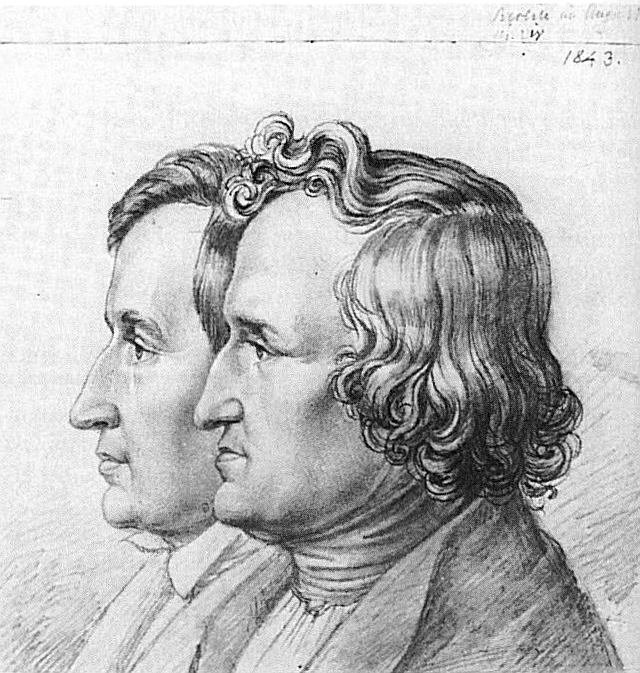
Wilhelm and Jacob Grimm, 1847 photos from Wikipedia // The home of the Grimm brothers photo from Wikipedia

Snow White’s story first appeared in the first edition of a book by the brothers Grimm. It wasn’t a fairy tale. Wilhelm and Jacob Grimm were not storytellers. They did not “write” the stories in their books.

They were German scholars, researchers, and authors who collected folktales that were part of a rich oral tradition and preserved them in writing.

We changed them over the years. Turned them into fairy tales we could tell our children. Into princesses finding the prince and living happily ever after.

Snow White was a story close to home for Jacob and Wilhelm. The brothers grew up in a tiny cottage less than 50 miles from Lohr Castle.

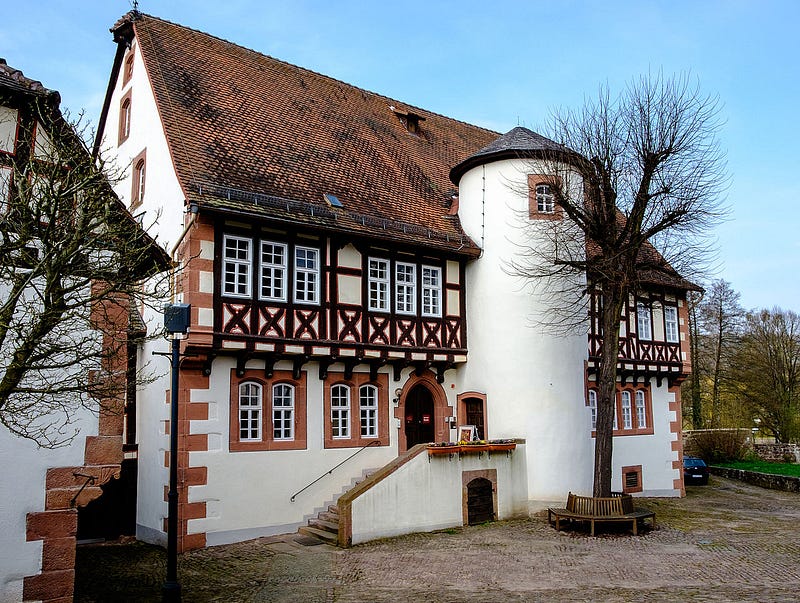
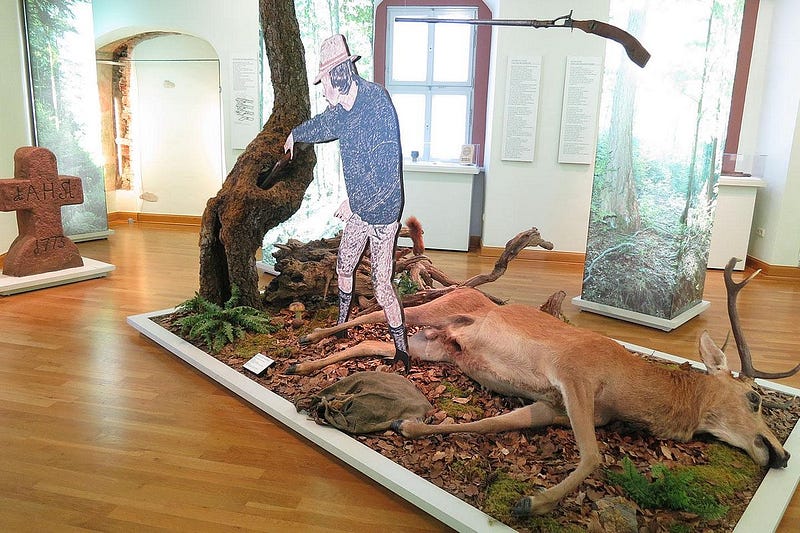
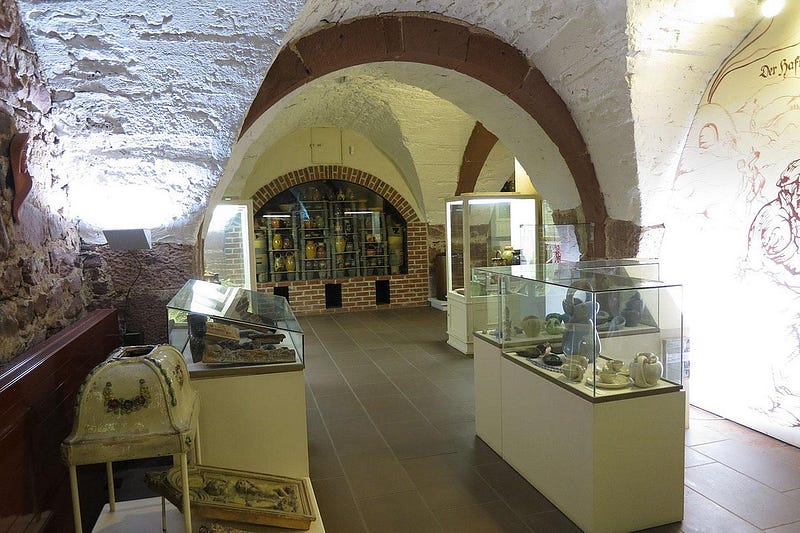
Snow White’s castle is a museum today…
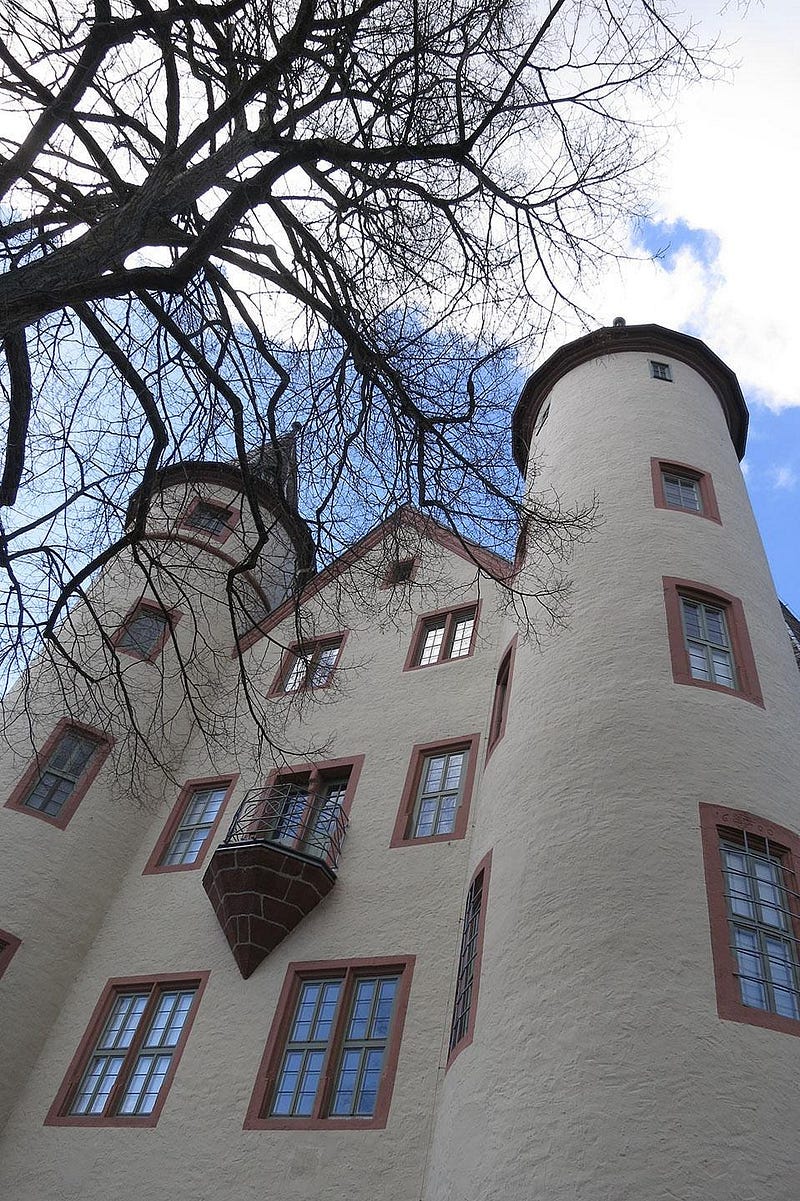
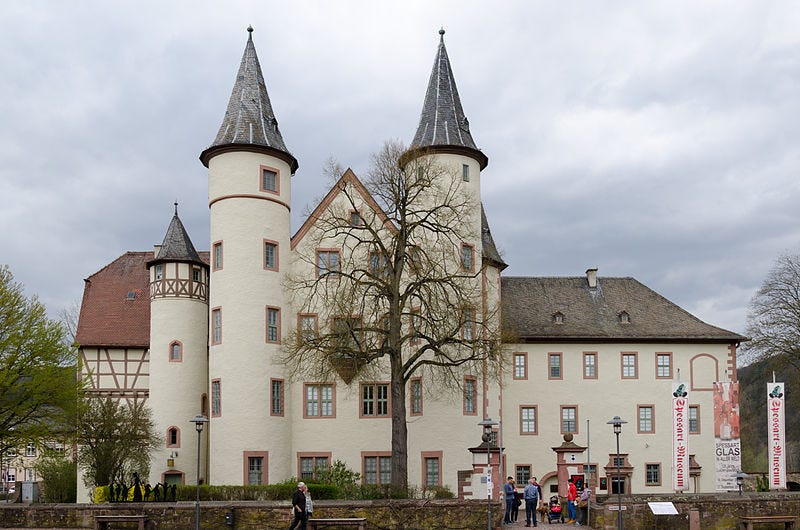
Photos of the castle Snow White lived in, which is now The Spessart Museum. Photos from TripAdvisor

Lohr Castle, where Snow White was born, is now The Spessart Museum. On the first floor, you’ll find “Snow White’s Corner,” filled with memorabilia from her life. That’s where the magic mirror still hangs.

If you venture out into the Spessart Forest, you can hike Snow White’s Trail, the path she took through the forest and up and down seven hills to reach the cottages where the seven dwarves lives.
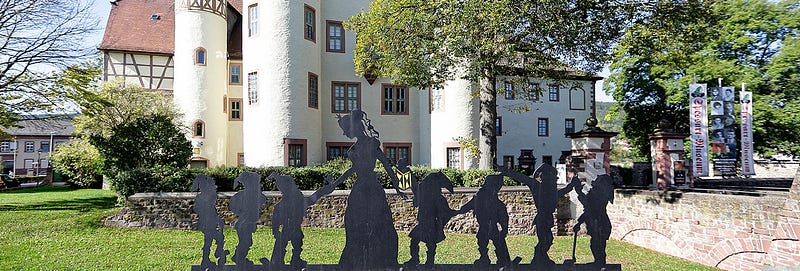
Lohr Castle & Museum photo from Lohr.de

Outside the Spessart Museum, there are life sized iron cutouts of Maria Sophia and the seven dwarves. A fond tribute to her life and story.

“What the Grimm Brothers wrote about was really a documentary of sorts about our region…” — Dr Karlheinz Bartels, Lohr am Main scholar & researcher

The fairytale ending was an allegory…
At 16, Maria Sophia ran away from home.

She couldn’t take the physical and mental abuse and neglect dished out by her stepmother anymore. Not for one more day.

So she ran, crying, into the forest.

Through the forest, and up and down seven hills she ran, until she reached the cottages of the seven dwarves. Imagine their surprise when they came home to find her sleeping in one of their beds. Disney didn’t invent that.

Three years later, her father died and the mine closures began.

Maria Sophia became a vagabond of sorts, and eventually found her way to a convent 40 miles away. She never found her prince.

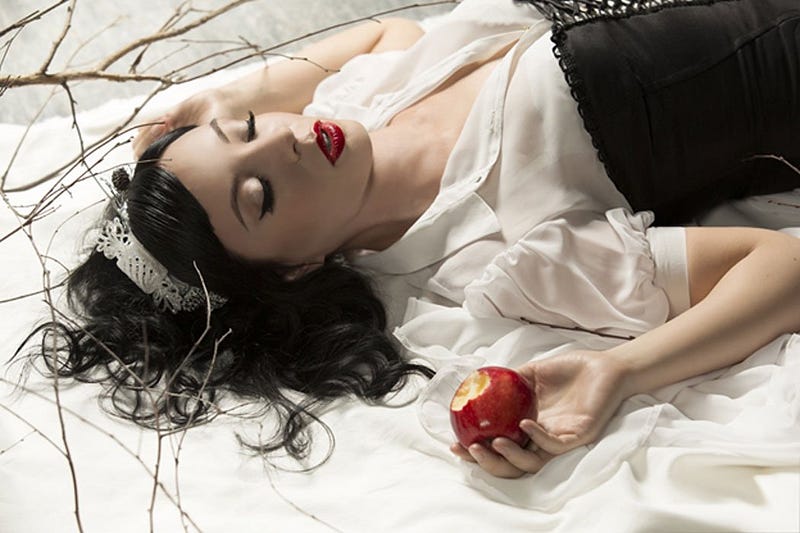
Snow White died blind and alone in a convent at age 71. It’s theorized that she ate an apple soaked in atropa belladonna, or deadly nightshade. It grew abundantly in the area around the convent. Her grave was found in 1998.

Her wicked stepmother wasn’t to blame. She was already dead.

The prince will break your heart a little…

In the fairy tale, a handsome prince arrives on a tall white horse and sees Snow White laying dead. He scoops her up in his arms and kisses her — and in lifting her, dislodges the apple from her throat.

It’s an allegory.

In the 1700s, death was portrayed as riding a tall white horse. A less scary version of the grim reaper.

The kiss was an allegory, too.

The “kiss of death” is the way people knew someone had passed in the days before they knew about pulse and checking for one. When we die, air is expelled from our lungs. Folklore believed it was the “kiss of death” taking the breath of life from you.

And so the prince scooped her up and rode away to a place where they would live happily ever after. It was not a place the living could follow. Because Snow White’s prince was the prince of death.

Follow History of Women to see more posts like this one!

More reading…

History
Women
Fairy Tale
Nonfiction
Storytelling
Recommended from ReadMedium