avatarJulia A. Keirns

Free AI web copilot to create summaries, insights and extended knowledge, download it at here

2002

Abstract

:800/1*[email protected]"><figcaption>Bull, cow, and calf. Photo by author.</figcaption></figure><p id="e460">Approximately 30,000 bison live in public and private herds in North America. These are managed for conservation reasons.</p><figure id="96d5"><img src="https://cdn-images-1.readmedium.com/v2/resize:fit:800/1*[email protected]"><figcaption>Wild bison in the National Park. Photo by author.</figcaption></figure><p id="ba40">Not many wild bison are left in the United States, but Yellowstone has most of them. Yellowstone National Park is the only place where buffalo have lived continuously since prehistory.</p><figure id="5d82"><img src="https://cdn-images-1.readmedium.com/v2/resize:fit:800/1*[email protected]"><figcaption>Bison calf. Photo by author.</figcaption></figure><p id="f566">There used to be millions.</p><blockquote id="5daf"><p>By the early 1800s, bison were eliminated west of the Rocky Mountains and east of the Mississippi River. During the 19th century, when European American settlement was expanding into the Great Plains, bison were systematically slaughtered to the brink of extinction.</p></blockquote><div id="96ef" class="link-block"> <a href="https://www.fws.gov/species/plains-bison-bison-bison-bison"> <div> <div> <h2>Plains Bison (Bison bison bison) | U.S. Fish & Wildlife Service</h2> <div><h3>The American Bison (Bison bison) is a North American species of bison. These bison once inhabited the grasslands of…</h3></div> <div><p>www.fws.gov</p></div> </div> <div> <div style="background-image: url(https://miro.readmedium.com/v2/resize:fit:320/0*1KKfV-2gdmbnEi1O)"></div> </div> </div> </a> </div><figure id="3a5d"><img src="https://cdn-images-1.readmedium.com/v2/resize:fit:800/1*[email protected]"><figcaption>Bison moving throug

Options

h the park. Photo by author.</figcaption></figure><h2 id="7d36">Don’t pet the fluffy cows!</h2><p id="d1df">These bison are used to people and cars but don’t attempt to pet them. They are extremely protective of their young calves and more than one vehicle was head-butted by an angry mother cow.</p><figure id="e79b"><img src="https://cdn-images-1.readmedium.com/v2/resize:fit:800/1*[email protected]"><figcaption>Close enough to touch. Photo by author.</figcaption></figure><p id="23e5"><i>We get exactly as much in hunting with the camera as in hunting with the rifle; and of the two, the former is the kind of sport which calls for the higher degree of skill, patience, resolution, and knowledge of the life history of the animal sought.” </i>Theodore Roosevelt, 1901</p><figure id="7909"><img src="https://cdn-images-1.readmedium.com/v2/resize:fit:800/1*[email protected]"><figcaption>Buffalo rolling in the dirt. Photo by author.</figcaption></figure><p id="6482">What an amazing experience to witness the herd during rut season. It was a wonderful drive through Theodore Roosevelt National Park South Unit.</p><p id="d667">I hope you enjoyed seeing some of the snapshots I got of the Bison herd in Theodore Roosevelt National Park.</p><div id="f5b3" class="link-block"> <a href="https://medium.com/subscribe/@jakeirns?source=publishing_settings---user_settings----------------------------------"> <div> <div> <h2>Get an email whenever Julia A. Keirns publishes.</h2> <div><h3>Get an email whenever Julia A. Keirns publishes. By signing up, you will create a Medium account if you don't already…</h3></div> <div><p>medium.com</p></div> </div> <div> <div style="background-image: url(https://miro.readmedium.com/v2/resize:fit:320/0*HrJLA_mkXfMNXr1t)"></div> </div> </div> </a> </div></article></body>

Buffalo in TRNP. Photo by author.

Snapshots of Buffalo

American Bison on the prairie

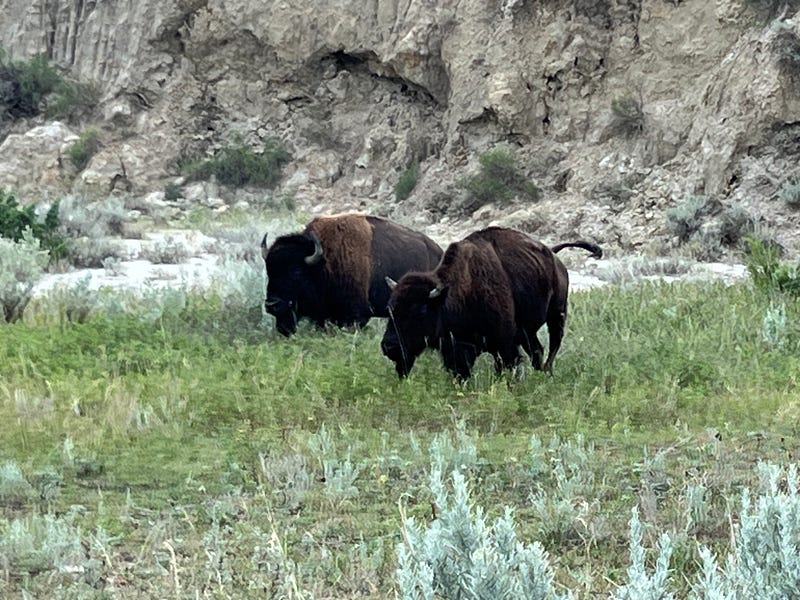
The American Bison, informally called the American Buffalo or just Buffalo, is native to North America and is still a near-threatened species. Thank goodness they are no longer actually threatened.

These amazing creatures are an iconic image of the old west and the Great Plains.
Buffalo in North Dakota. Photo by author.

These massive beasts can weigh up to 2,200 pounds and stand anywhere from 5 to 6 feet tall, although there have been larger ones. Bulls are larger than cows.
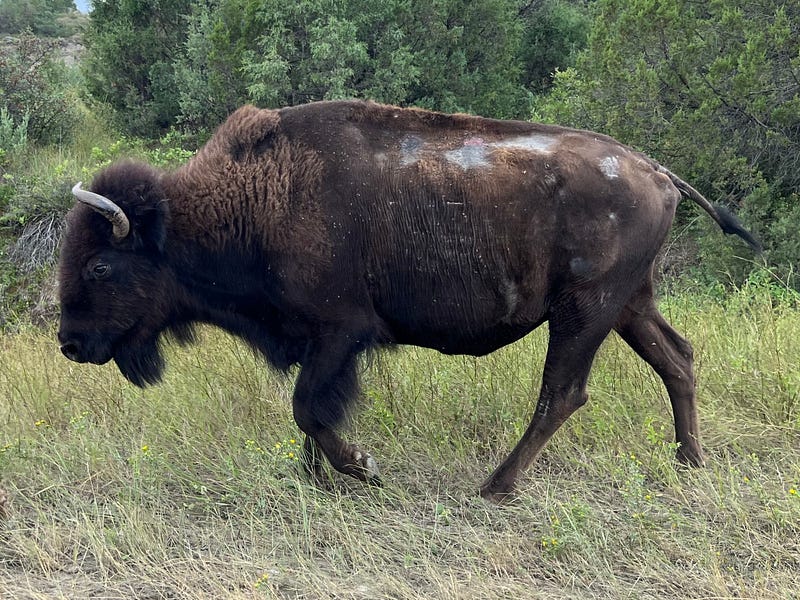
Bison in TRNP. Photo by author.

Despite their huge size, they are quite agile. They can run up to 35 miles per hour and pivot on a dime.

These mammals travel in herds and can live up to twenty years.
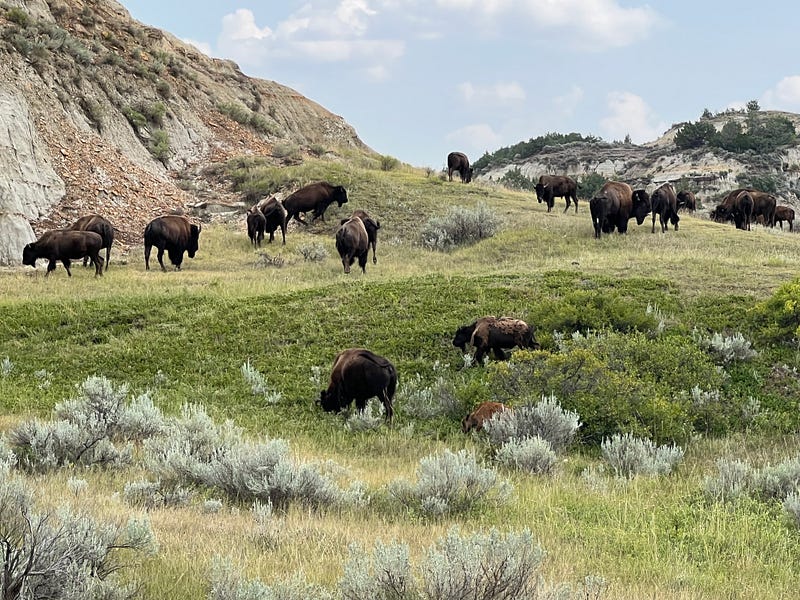
Buffalo herd in TRNP. Photo by author.

We were fortunate enough to witness the south unit herd moving through Theodore Roosevelt National Park in North Dakota a few weeks ago, and I took some wonderful photos.

July to August is rut season, and we witnessed some serious rolling and wallowing in the dirt. This is not only to remove flies but how the bulls display their strength and dominance.
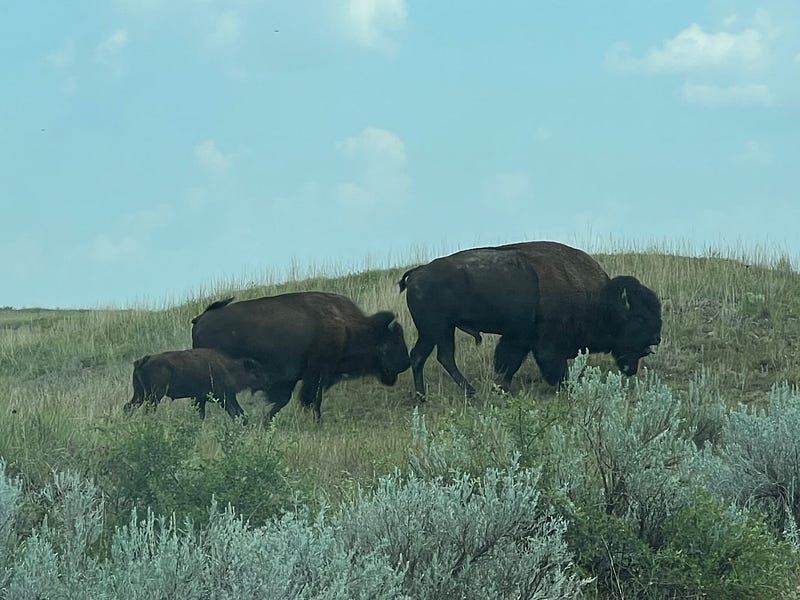
Bull, cow, and calf. Photo by author.

Approximately 30,000 bison live in public and private herds in North America. These are managed for conservation reasons.
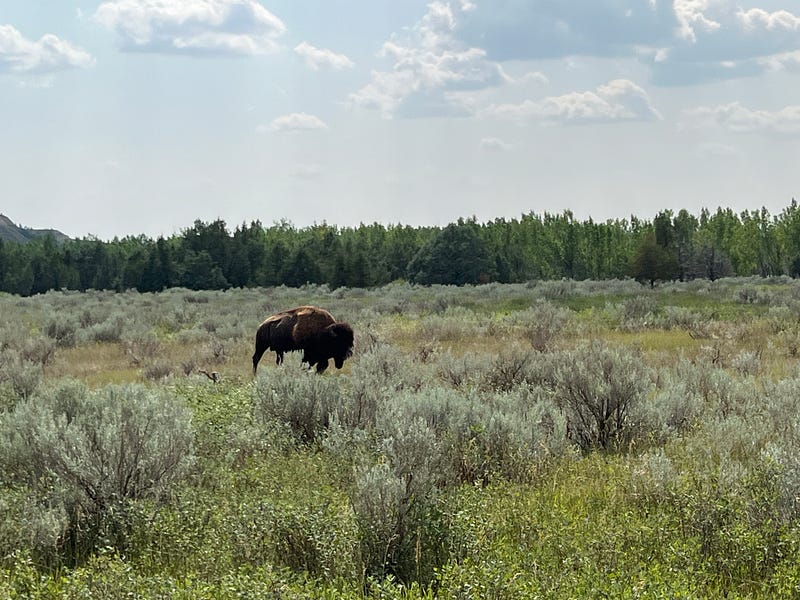
Wild bison in the National Park. Photo by author.

Not many wild bison are left in the United States, but Yellowstone has most of them. Yellowstone National Park is the only place where buffalo have lived continuously since prehistory.
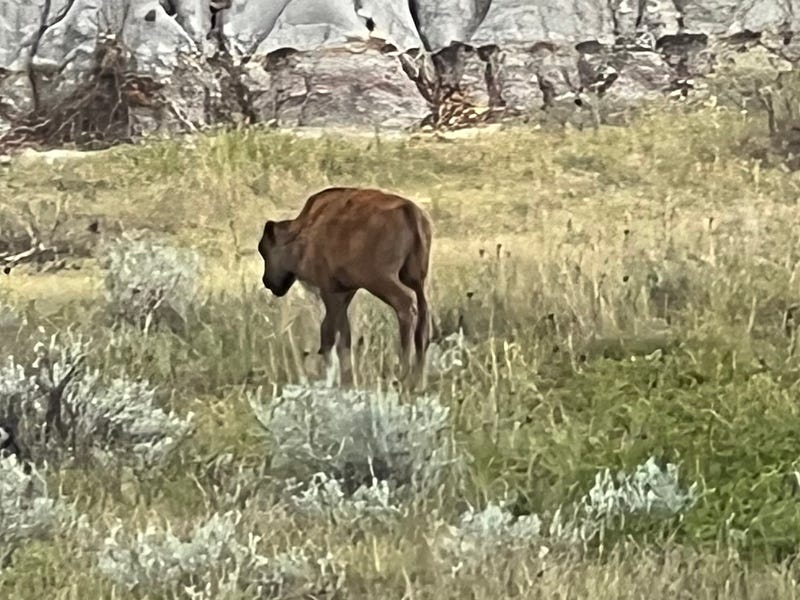
Bison calf. Photo by author.

There used to be millions.

By the early 1800s, bison were eliminated west of the Rocky Mountains and east of the Mississippi River. During the 19th century, when European American settlement was expanding into the Great Plains, bison were systematically slaughtered to the brink of extinction.
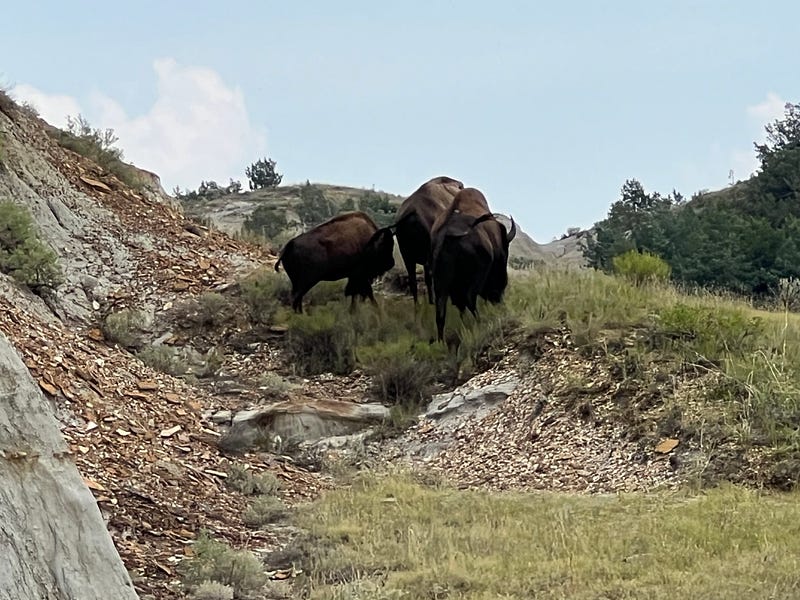
Bison moving through the park. Photo by author.

Don’t pet the fluffy cows!

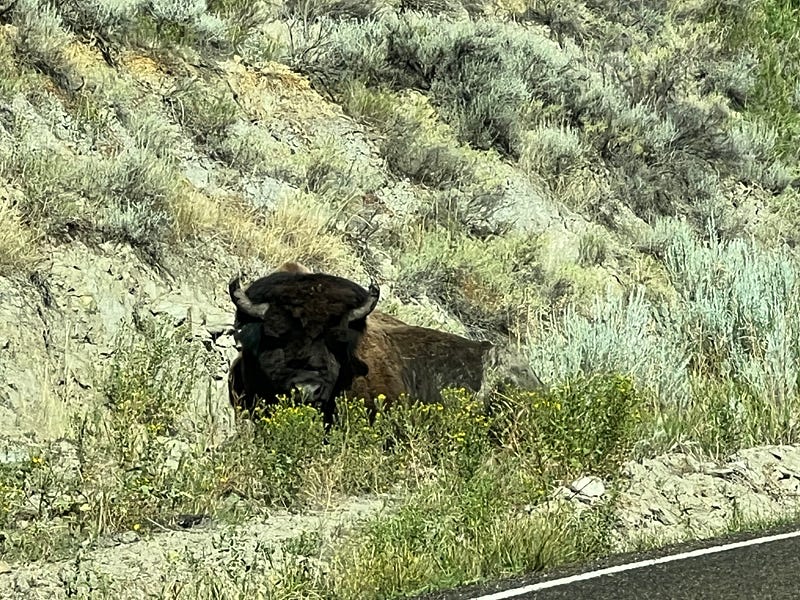
These bison are used to people and cars but don’t attempt to pet them. They are extremely protective of their young calves and more than one vehicle was head-butted by an angry mother cow.
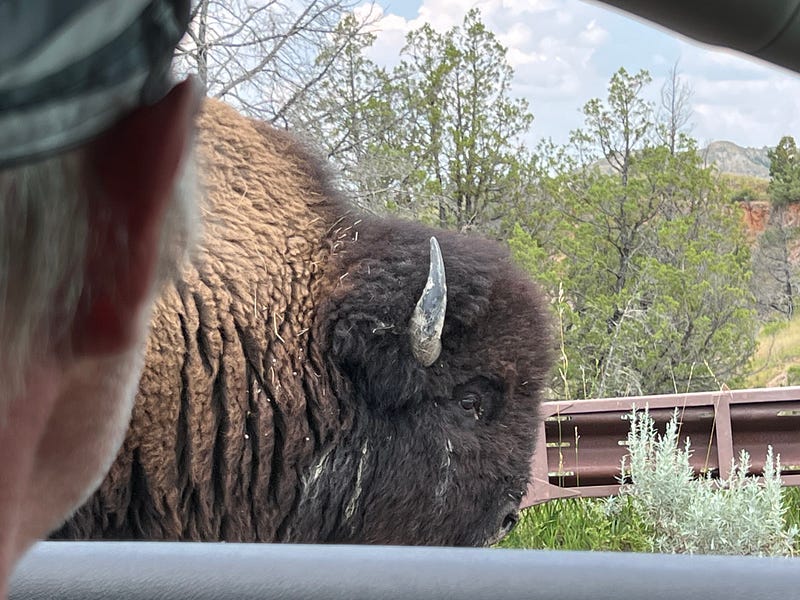
Close enough to touch. Photo by author.

We get exactly as much in hunting with the camera as in hunting with the rifle; and of the two, the former is the kind of sport which calls for the higher degree of skill, patience, resolution, and knowledge of the life history of the animal sought.” Theodore Roosevelt, 1901
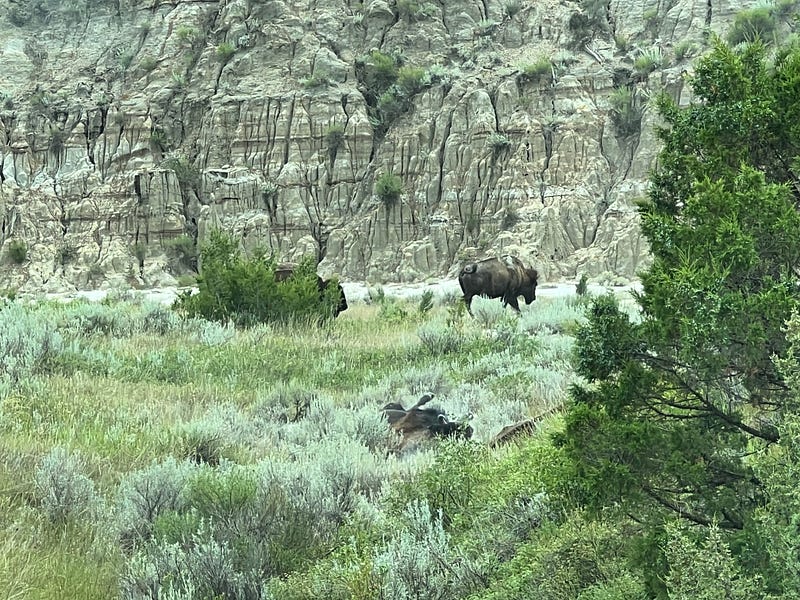
Buffalo rolling in the dirt. Photo by author.

What an amazing experience to witness the herd during rut season. It was a wonderful drive through Theodore Roosevelt National Park South Unit.

I hope you enjoyed seeing some of the snapshots I got of the Bison herd in Theodore Roosevelt National Park.

Snapshot
Photography
Nature
Animals
Nature Photography
Recommended from ReadMedium