Snapshots of a White British Kid Finding Her Feet in Tanzania
Moments from my formative years in a climate and culture far from home
My childhood wasn’t particularly run-of-the-mill. With my mother’s family in Israel, and my English father’s profession in development economics taking us to numerous exotic locations around the world, I spent more time living away from our British family home than I spent in it.
I was born during one of my dad’s long contracts abroad — in Malaysia. The next of his lengthy contracts was a project in Tanzania, where we stayed for around eighteen months from the winter after I turned four.
It was during those months in Tanzania — not a long time in the grand scheme of things but an entire quarter of my six-year-long life by the time we returned to the UK — that I ticked off a great number of early childhood milestones. Milestones that marked growth, change, and a deepening awareness of the world and the people around me.
But the thing is that all of the memories I have — of which there are many — are like isolated flashes of a life rather than a series that flow into one another to make up a coherent story.
For instance, I don’t so much remember the process of being taught to read. I do, however, remember being four-and-a-half, sitting on the carpet at our tiny school, listening intently to the story my teacher was reading, and making my mind up that I needed to learn to read quickly so I could lose myself in these stories whenever I wished.
The next flash of memory is reading a book called Bod to my parents. By all accounts, as soon as I made up my mind to learn to read, I quickly mastered it and became a voracious little reader, but the journey to reach there is lost from my memory bank.
I learnt early on about inequality and loss.
I may have lived an unusual life for an 80s child hailing from a highly modern and developed western country, but I am not about to pretend that I didn’t live a privileged life. We may not have had a TV set there in rural Tanzania, but I had a room stuffed with toys.
We also had newly-built, modern brick houses on a compound that sat directly beside a village of mud huts, with only a banana plantation dividing us.
The other people living on our compound were all British and from middle class backgrounds. They were all involved in the same project as my dad. But among these families, there were only three other young children besides my sister and me. And no one I naturally gelled with.
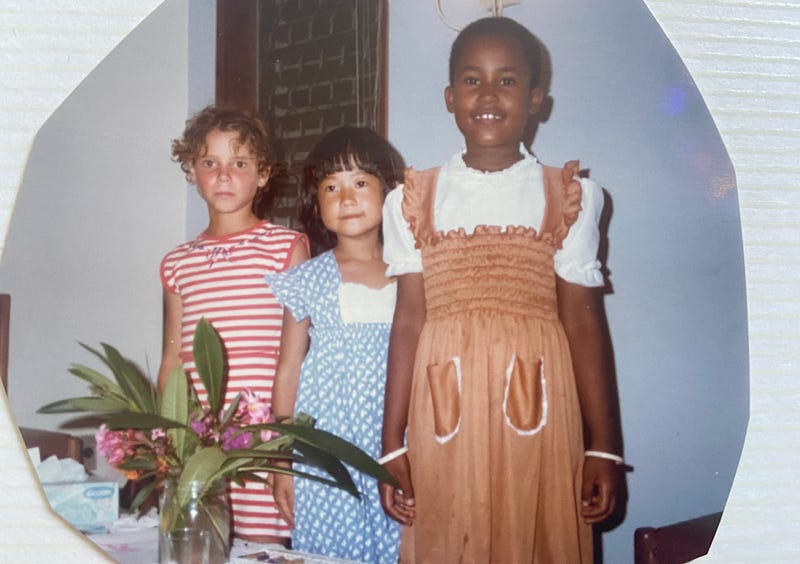
So I went searching for friends in the village beyond the banana plantation, and soon found a best friend my age. She was called Tatu — Swahili for the number three, because she was the third born. She had no English and I only had limited, broken Swahili, yet we played and enjoyed one another’s company endlessly.
To me, she was simply another child, and any race or social difference was non-existent. That was, until one evening when Tatu showed up at our house asking if we had some milk we could give her for her sick mother.
My mother was more than happy to send Tatu back with some milk, but, because Tatu carried everything on her head, she was concerned that a ceramic bowl might fall and break. So she gave her the only non-breakable vessel she could find — the dog’s bowl.
I was mortified.
As a five-year-old I suddenly became aware of something that shocked me — that something that would never be for human use among our family or white British neighbours was perfectly okay for our native Tanzanian neighbours. To this day, I am sure my mum only thought about the breakability factor, and probably sterilised the bowl beforehand, but it left me heartbroken to feel that my friend’s family may have been treated as less than our white peers.
The sudden death of someone I loved was something I experienced first there.
As the privileged child I was, we had a helper in the house, whom we referred to as our houseboy. Not so much a boy but a man with grown-up children, he was humble, kind, and good humoured.
He learnt to cook eggs just the way I liked them and would prepare lunch for my sister and me after we returned from school each day. We would come in, scream “Jambo!” at the tops of our lungs, and then run to our rooms. Before long, we would hear our houseboy call “Chakula te-ari” — food is ready — and we would come running for lunch.
He was always ready to help with anything my sister and I needed while also taking care of the house and the surrounding garden. On one occasion, when a deadly snake made its way into the house, without hesitation he ran at it with a stick and beat it until it lay lifeless, no longer a threat to us.
And then, one day, he didn’t show up for work. Instead, his son showed up to take his place.
Our houseboy had been bitten by a snake and died. In Tanzanian tradition, his son took over his duties.
I was devastated. I didn’t know people could just disappear from your life so suddenly and without warning until that point.
We attended his funeral, of which I remember little other than the immense sadness I felt for his wife and children, realising the enormity of having lost someone so central to their world, despite being only five years old at the time.
I had friends of many different nationalities.
Despite the miniscule size of our British community, we soon expanded our social circles at the local, established and very dynamic Fin Club, set up by the large, long-standing Finnish community and used by expats of all nationalities.
I don’t remember having Finnish friends, for they had their own school and way of life, but I had a good friend who was Japanese, at whose house I often played. Like all the expats in the area, they would have large freight deliveries of their favourite foods from home, and I would be fed dried seaweed from the larder, as well as Milo, a chocolate drink powder loved by the Japanese that I only discovered recently was Australian and not Japanese.
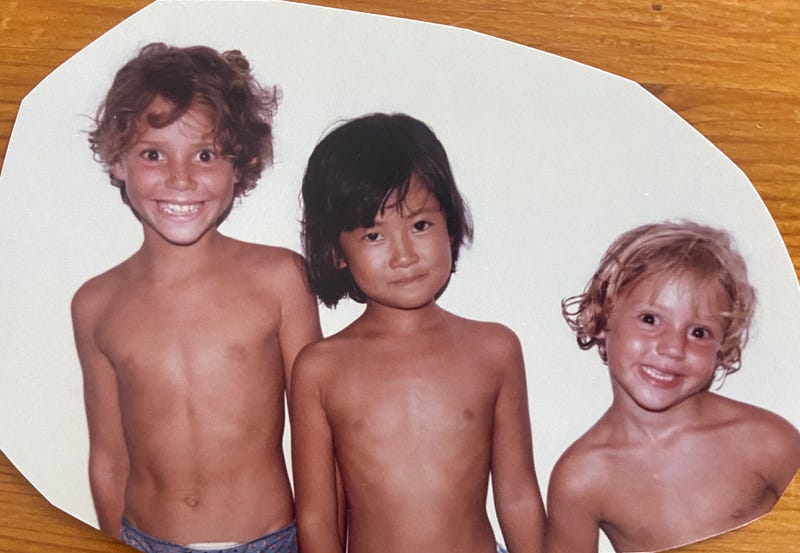
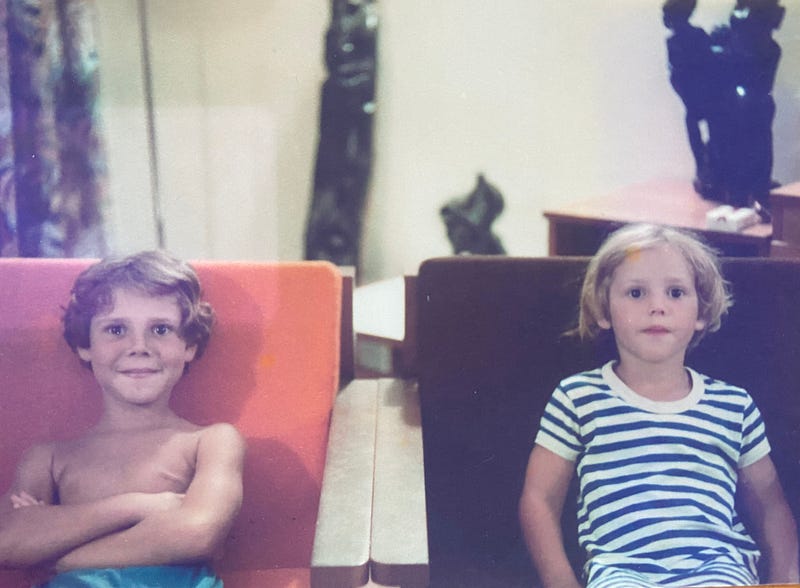
We also mixed with children from the Indian expat community, and the wealthier Tanzanians who would attend our school. My best friend for a while became a little Indian boy called Depeche. That was until we were so badly teased for playing hide and seek under the covers of my bed that, severely embarrassed, we stopped hanging out together.
When it came to the Finnish community, my parents enjoyed the social life offered, with people from all over the world enjoying the parties, tennis competitions, and weekend get-togethers in the sauna. It was here I learnt about naked bodies, and about which were the more liberal cultures and which were the prudish cultures. Spoiler— the Brits were the prudes.
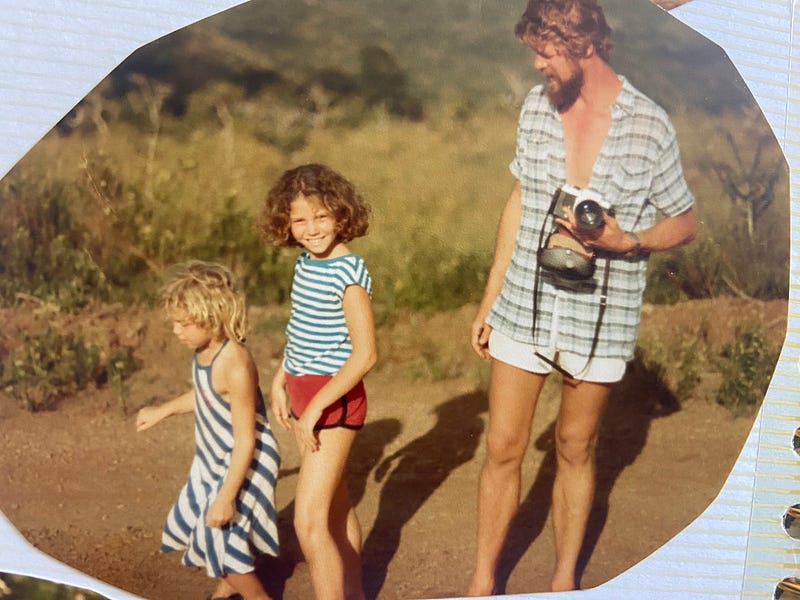
I found admiration of, and mentorship from, older girls.
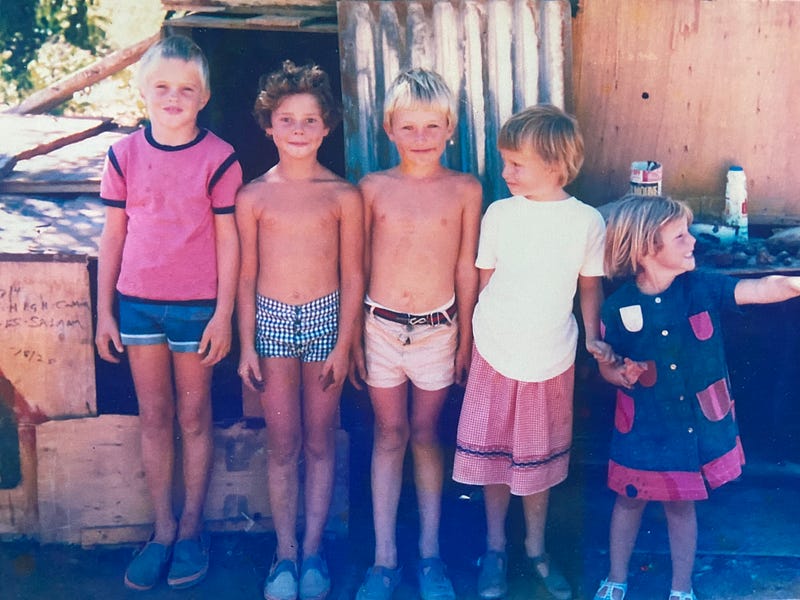
My memory of playing with other children is very broken. Snippets of memories here and there; of den-building with the other British kids, cutting feet on broken glass with my Japanese friend, and of hours of being entertained in an old, abandoned train carriage that felt like a long walk from home but, in reality, was probably only a few minutes.
But one poignant memory is of two girls who, to my mind, were like ethereal presences who came and went. They were the daughters of a couple working on the same project as my dad. Since they were older than us, the girls attended boarding school in England and only came to Tanzania during their school holidays.
There was the 16-year-old, who seemed like a princess to me — so grown up and beautiful, and something to aspire to in later life.
And then there was the 11-year-old, who also seemed so very grown up to me, yet had the playful energy that wanted to spend time with us younger children. I presume due to me being significantly smaller and younger than the other children, she was drawn to spending time with me, and she and I developed a very special connection.
She particularly loved to teach me new skills. Starting with riding a bike.
Riding my bike was something I had been trying so hard to teach myself without much luck.
We had a giant anthill out the back of our house that was big enough to climb up, pushing my bike, and then I would sit on the bike and let gravity roll me downhill. Each and every time, I hoped to keep going and keep balancing. But instead, without fail, I would come toppling off on one side or the other, and land in a heap at the bottom.
And then along came my 11-year-old angel in disguise. With patience and persistence, she held up my bike as I pushed the pedals and wobbled the handlebars, encouraging me and cheering me on, and finally letting go and running alongside me, yelling out our joint accomplishment.
I remember putting on a display for all the community to see — me on my bike and she running beside me — with everyone cheering along, and, in the distance, her elegant sister smiling her beautiful smile.
Childhood happened to me, just as it happens to others.
Despite my memories being as broken as they are, the ones that stand out are the ones that typically mark a childhood, yet with a different backdrop to most British kids.
I remember losing my first tooth while chomping on cashew nuts out of sacks from the cashew farms that my dad worked with.
I remember seeing our pet dogs in the act of making babies, which my dad decided was highly educational for kids while our very Christian neighbour and school teacher was desperately trying to shield us from it.
I remember taking care of a friend’s pet cat, who turned out to be a stray he had taken in. I learnt that wild cats do not easily make pets when I was severely scratched in the process, and still bear the scars on my foot.
I remember learning that riding motorbikes on rough African roads can be hazardous when a friend of ours came off her bike and lay bleeding heavily into our bath, as my dad picked a million stones out of her leg. Once clean, he bound it up and drove her to hospital, where she was able to receive the attention and treatment she needed.
I remember falling in love with the warm rains when they came down in torrents during the wet season. The unique smell of that rain remains with me now, as well as the feel of it as we kids stood on the veranda, taking our “showers” while our parents looked on in amusement.
Yet the broken memories don’t account for the full eighteen months we spent there. I don’t quite know where they each fit, or how we went from day one to day 547, but somehow we did.
And then I returned with my family to England, a quarter of a life taller, wiser, and with a great number of life lessons under my belt.