
Smile & Stab — Exposing The Racism Hidden Behind Shiny Happy Language
A Closer Look at Racism in Polite Disguise
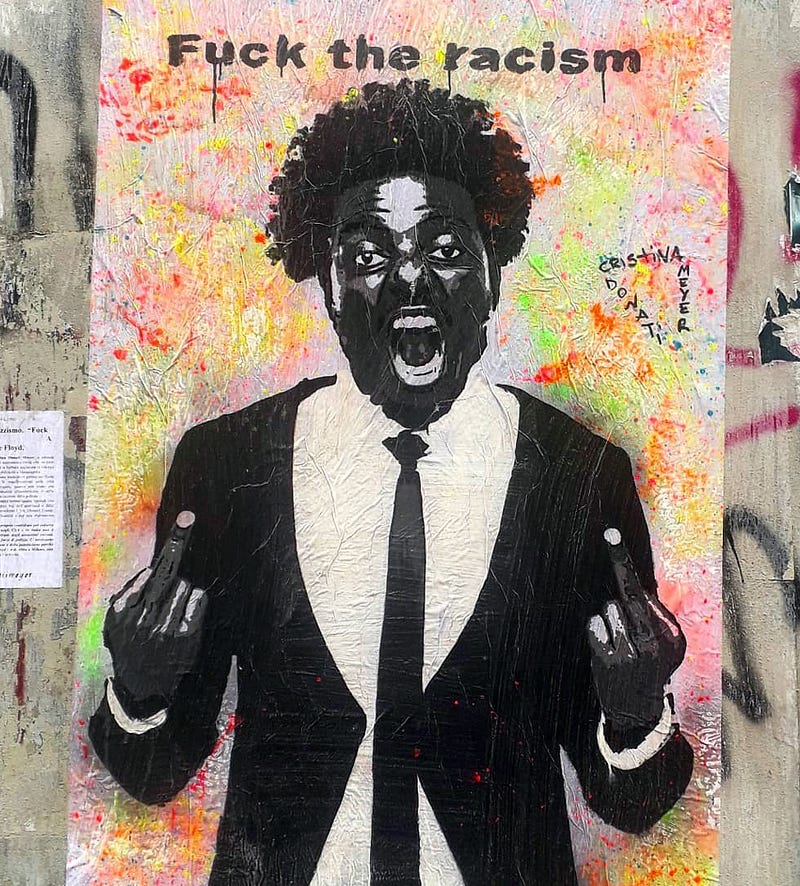
We wield words to combat, endorse, or veil racism.
Is being polite contradictory in the fight against racism? Society teaches us that creating discomfort is considered impolite. Scratch the record!! Think I was dreaming there for a minute.
We live in a racist world. We need to fight racism. And smiling while shucking and jiving like Candy Owens and her ilk is not the way to go about it. So, we need to point it out, advocate for change and make folks as uncomfortable as possible.
No matter how we bring it up, anytime we protest racism someone’s going to be discomfited. We can argue that being polite and addressing racism is not inherently contradictory. In other words, we can use that same politeness to point up racism. Politeness is often associated with respect and civility, which are values that should be upheld in any context, including discussions about racism. However, when politeness is used as a shield to avoid uncomfortable conversations about racism, it becomes problematic.
And deserves to be called out.
It’s true that addressing racism might make some people uncomfortable, but it’s important to recognize that discomfort can be a catalyst for growth and change. By pointing out racism and engaging in difficult conversations, we challenge societal norms.
So let’s ease on down the yellow brick road and see how “polite” society has weaponized la politesse.
Politeness as a Weapon
Racists can exploit the concept of politeness to deflect criticism, claiming innocence while perpetuating harmful stereotypes or so-called microaggressions. They may use seemingly innocuous phrases or jokes that, on the surface, appear harmless but carry undertones of racism. By adopting a tone of politeness, they aim to minimize backlash and avoid being held accountable for their words or actions.
You’re at a party, chitchatting with someone. They lean in, lower their voice, and with a polite smile say, “You know, I don’t have a racist bone in my body, but have you noticed how some people just naturally excel in certain areas? It’s like they’re born with it.”
WTF??!! Did I hear what I think I did? The first step down the wonderful wonderful road of being gaslit is to question yourself. Doubt yourself. Then you interrogate you — are they discussing hidden talents or implying that certain races are just naturally better at specific things? The politeness in their tone makes it feel like a game of “Guess the Racism” with a side of awkwardness. It’s as if they’re trying to smuggle prejudice into the conversation under the guise of good manners.
For those targeted by these remarks, the experience can lead to emotional distress and confusion. The victim may feel uncertain about whether they are overreacting or misinterpreting the situation, contributing to self-doubt and psychological harm.
Victims of this type of racism may hesitate to speak up against such behavior due to the veneer of politeness. Fear of appearing confrontational or of not being taken seriously can lead to the silencing of voices that would otherwise challenge discrimination.
Hit’em right back with, “Ah, the old ‘I’m not racist, but let me drop this racist bomb’ routine. Classic move.”
Remember to smile. And look them straight in the eye.
Microaggressions in Disguise
Microaggressions are subtle, often intentional, acts of discrimination that reflect deeply ingrained biases. Polite language can be the vehicle for delivering microaggressions, making it difficult for the recipient to immediately pinpoint the offense. Microaggressions are not slight. They should be seen as the serious transgressions they are. Another way to look at microaggressions is as microassaults. They can perpetuate the idea that the victim is overreacting or overly sensitive, dismissing their feelings and experiences.
In 1970, Harvard psychiatrist Chester M. Pierce PhD coined the term “microaggression” to describe the dismissive, insulting and disrespectful treatment suffered by Black individuals at the hands of non-Black individuals, and this word is often misunderstood as minor or inconsequential racist actions.
You’re at a party, and someone says, “Wow, you speak English so well! Where are you really from?” It’s like they’re trying to compliment your language skills but they’re assuming you can’t be a native English speaker because of appearance.
On the surface, this might seem like a compliment, but it actually reflects an underlying assumption that individuals who don’t look a certain way couldn’t possibly be native English speakers. This type of comment perpetuates stereotypes and reinforces the idea that only certain groups are truly “from” a particular place.
Hit’em right back with, “I’m originally from the place where people learn not to make assumptions based on appearances.”
Remember to smile. And look them straight in the eye.
Polite Denial of Racism
When confronted about racist behavior, some individuals resort to “polite denial.” They’ll claim they were misunderstood or that their comments were taken out of context. By using courteous language to downplay the incident, they attempt to avoid accountability and preserve their image as “good” individuals.
You’re at a gathering, and a friend makes a blatantly racist remark about a certain group of people. You speak up, “Hey, that’s not okay. What you said was offensive.” Your friend chuckles and responds, “Oh come on, it’s just a joke! You need to loosen up a bit.”
Examples like this are harmful because they trivialize and dismiss real issues of racism and discrimination. By using humor and absurd justifications, individuals are attempting to normalize offensive behavior and avoid taking responsibility for their actions.
It’s a dismissive attitude that undermines the experiences of those who are affected by racism and perpetuates harmful stereotypes. And it creates a hostile environment where victims of racism are made to feel like they’re overreacting or being overly sensitive. This type of behavior contributes to a culture where racism is downplayed and ignored, making it harder to address and eradicate systemic discrimination. And it leaves the victim feeling isolated.
Hit’em with “Ah, the ‘loosen up’ defense, the last refuge of those who can’t defend their bigotry with anything remotely intelligent.”
Remember to smile.
The Smile & Stab
I’ve got a problem with all so-called “micro-aggressions,” but this one I find very dangerous. It leaves you disoriented and questioning “Did that really happen?”
A common tactic is the use of a friendly demeanor while making racist remarks. The offender may wear a smile while delivering offensive comments, effectively disguising their intentions. This exploits societal norms that value civility, making it harder for the victim to react assertively against the harm inflicted.
You’re at a gathering, you strike up a conversation. They start making derogatory comments about a certain racial group while maintaining a warm smile and engaging tone. They might say something like, “You know, those people just have a certain way of doing things. It’s not like I’m being mean, I’m just stating the facts!” Their friendly demeanor masks the offensive nature of their remarks, leaving you taken aback and unsure how to respond.
The Smile & Stab effectively normalizes and legitimizes racist beliefs and attitudes. By presenting offensive comments with a smile and a pleasant tone, the offender creates an illusion that their views are acceptable and harmless.
But here is where real harm can be done to the victim.
Normalization of Racism — When offensive remarks are delivered politely, they can be perceived as socially acceptable, even by those who may not hold such views themselves.
Undermining Accountability — The friendly demeanor makes it difficult for the victim or bystanders to immediately recognize the harm in the comments. It becomes challenging to call out the offender and hold them accountable for their racism, as the delivery masks the offensive nature of the remarks.
This used to happen to me as a kid. An adult would say something rude and mean but would undercut it with a wide smile. I’d be so confused. Trying to talk about “it” with my family, just led to me being told I was making stuff up and seeing things that weren’t there. I could never clearly articulate what was so disturbing about these messes.
Psychological Impact — Victims of these tactics may experience confusion and self-doubt. They might question whether they are overreacting or misinterpreting the situation. This can lead to feelings of frustration, powerlessness, and emotional distress.
Gaslighting — Offenders who use this tactic may exploit the confusion it creates to accuse the victim of being too sensitive or misinterpreting their intentions. This gaslighting can make victims doubt their own perceptions and feelings, further disempowering them.
Silencing Voices — The friendly demeanor can discourage victims from speaking up against the racism they’ve encountered. They might fear being seen as confrontational or believe that others won’t believe them because of the seemingly pleasant presentation of the offensive remarks.
Impeding Change — By disguising racism behind a friendly facade, it becomes more challenging to create a culture of awareness, education, and change. People may not fully recognize the extent of the problem if it’s sugar-coated with politeness.
Do not hold onto this poison.
Spit it right back immediately, Back straight, smile pasted on and frozen — the key here is to drip with disgust and raise your voice slightly. “Oh, ‘not being mean,’ just a textbook example of ignorance and prejudice?”
Then wait for the spluttering to begin.
Breaking the Veil
Recognizing and dismantling this polite veil requires vigilant awareness. It involves seeing beyond the surface and understanding the subtext of language. Calling out instances of hidden racism and raising awareness about the ways politeness can be weaponized are crucial steps in dismantling racism. And to keeping hold of your power and dignity. Don’t be embarrassed because of somebody else’s rudeness and don’t hold their racism for them.
Be aware and protect yourself. Racism is a corrosive toxin, delivered through clandestine strikes. Its purpose is to smother you with the offender’s filth. Don’t harbor their poison— fling it right back where it came from.