
Small Modular Reactors — A Silver Bullet of Clean Energy
A day does not pass without seeing a heated discussion in the news, or on social media about clean energy. There isn’t a person on this planet who does not have an opinion. It is perhaps the most debated topic, constantly debated. Wind and solar create more problems than solutions, and we can’t keep burning fossil fuels forever. All things considered, the only viable alternative to fossil fuels when it comes to electric energy is nuclear energy.
By all metrics, nuclear energy is by far the best source when it comes to energy produced, greenhouse gas emissions, running cost, reliability, intermittency, and safety. No other source comes close. There is one setback, however: The Construction. Luckily, there is a solution already on the horizon: Small Modular Reactors!
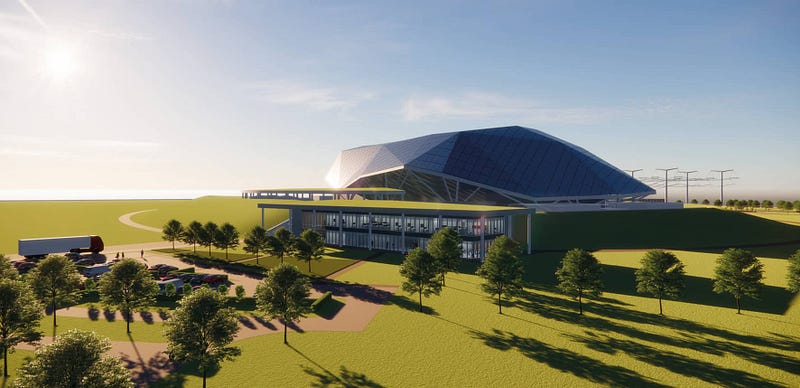
What is Small Modular Reactor?
A small modular reactor (SMR) is a type of nuclear fission reactor that is smaller in size and power output compared to traditional large-scale nuclear reactors. “Modular” in SMR means they can be mass-produced in factories and transported to their installation sites. This modular design offers several potential advantages, such as reduced construction costs, shorter construction times, enhanced safety features, and flexibility in deployment.
SMRs typically have power outputs ranging from a few megawatts to a couple of hundred megawatts (470 MW in the case of Rolls-Royce SMR), whereas traditional nuclear reactors can have power outputs in the gigawatt range. The smaller size of SMRs allows for greater flexibility in their placement, making them suitable for a wider range of applications, including remote locations, small grids, off-grid applications, or areas with limited space for larger reactors.
There are various designs and concepts for SMRs, including light water reactors, high-temperature gas-cooled reactors, and molten salt reactors, among others. These designs aim to provide safe and reliable nuclear power while addressing some of the concerns associated with large-scale nuclear reactors, such as high construction costs and the management of nuclear waste.
Why should we go nuclear?
I have already described the benefits of nuclear power in the article linked above. Nevertheless, let me provide a brief summary of why nuclear power is the absolute best alternative.
By burning 1kg of Uranium-235 (with complete combustion) in a nuclear reactor we can generate approximately 24,000 MWh of heat. For comparison, 1 kg of coal generates approx. 0.008 MWh of heat and 1 kg of mineral oil approx. 0.012 MWh.
Converted to electricity using light water reactors, 1 kg of enriched uranium can provide 45,000 kWh of electric energy. For comparison, the same amount of electric energy would be generated by 14,000 kg of coal or 10,000 kg of oil, respectively.
During its whole lifecycle, a nuclear power plant produces 12 grams of CO2 equivalent emissions per 1kWh of electricity produced. That is the same amount as wind power and four times less than solar power (48 g of CO2e).
The best metric to compare cost is the Levelised Cost of Electricity (LCOE). The best tool to compare the LCOE is https://www.iea.org/. As can be seen from the data below Nuclear Power has to lowest levelised cost among all the other energy sources:
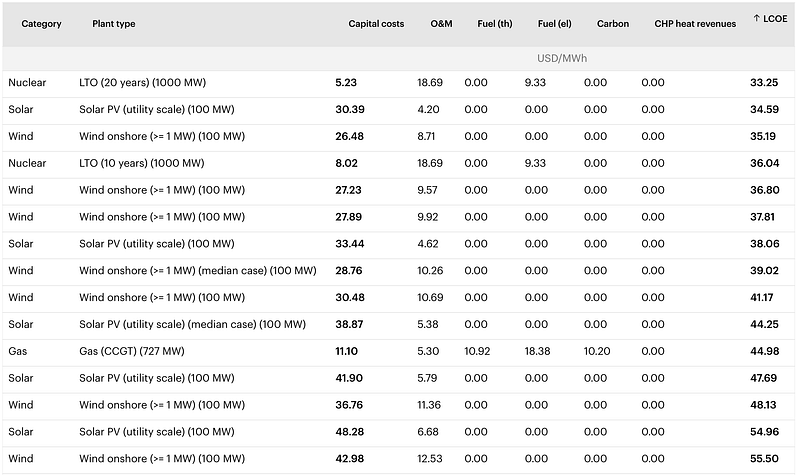
In summary, there is not a single metric in which nuclear energy is not the best, or among the best.
The State of SMR
There are several viable Small Modular Reactor (SMR) concepts currently being developed and considered for deployment. It is very difficult to pick among them, but I am going to select the three concepts I believe are closest to reality: Rolls-Royce SMR, NuScale Power Module, and SMART
The Rolls-Royce SMR design is based on a pressurized water reactor (PWR), which is a proven and widely used technology in the nuclear industry. What sets the Rolls-Royce SMR apart is its modular nature, allowing for factory fabrication and assembly of the reactor components. With a targeted power output of around 440 megawatts-electric (MWe), the Rolls-Royce SMR is designed to meet the energy needs of various applications. It can be deployed in diverse settings, such as remote locations, small grids, or areas with limited space for larger conventional nuclear power plants. The modular design also facilitates scalability, allowing for the addition of multiple units to meet increasing energy demands.
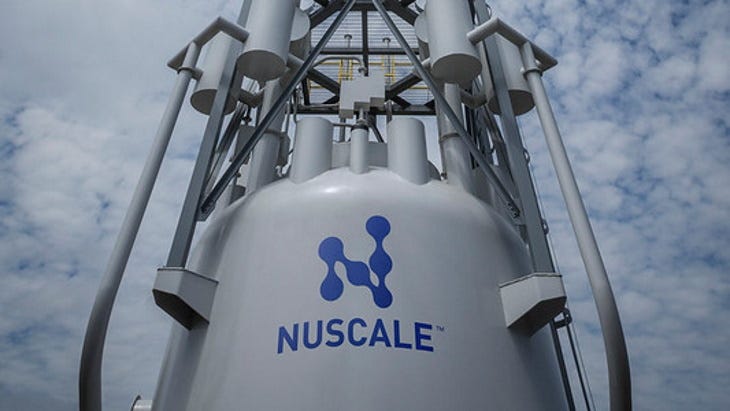
The NuScale Power Module is another promising SMR concept. Developed by NuScale Power, this design utilizes natural circulation and passive safety features. It consists of small self-contained reactor modules, each capable of producing 50 megawatts (MWe). Multiple modules can be combined to form a larger power plant. The NuScale Power Module design has received significant attention and has made progress in licensing and regulatory processes in the United States.
SMART stands for System-integrated Modular Advanced Reactor. It is an SMR design being developed by the Korea Atomic Energy Research Institute (KAERI) in South Korea. The SMART reactor is a pressurized water reactor (PWR) with a power output of around 100 MWe. It incorporates advanced safety features, including passive cooling systems and integrated design concepts. The SMART design aims to provide efficient and safe nuclear power generation suitable for both electricity production and heat supply.
The Way Forward
Of all the technologies available today, nuclear energy is the only viable alternative to fossil fuels. It does have its downsides — there are no solutions, only trade-offs after all— but the positives far outweigh the negatives.
With the introduction of Small Modular Reactors (SMRs), we are on the brink of a new nuclear revolution. There are several competing concepts already, each with its own set of challenges. However, I have no doubt that human ingenuity, combined with our technological and engineering prowess, will overcome these challenges sooner rather than later. The future is bright, and it will be powered by SMRs.


