
Small Is Still Beautiful
Doughnut economics, degrowth and the magnificent bribe

Conventional economic growth has lifted billions of people out of poverty, but at the same time has put humanity on course for an uncertain future in a rapidly warming world, with diminishing biodiversity, and doubt about the very continuation of a life-supporting environment on our Goldilicks planet.
For while we are on course for several degrees centigrade of average warming, inland where most of our staple crops are grown, that temperature increase may be as high as seven degrees.
The future of the human niche
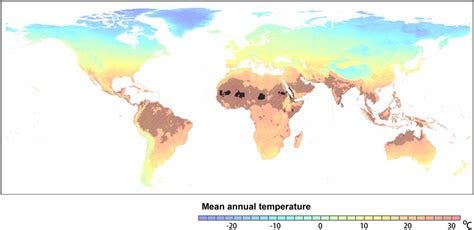
This risk is highlighted in the paper: “Future of the Human Niche”, Chi Xu, Timothy A. Kohler, Timothy M. Lenton, Jens-Christian Svenning, and Marten Scheffer, published 26th May 2020, as a research article for the National Academy of Sciences in the US.
It is therefore clear that to have a sustainable future we need to review conventional economics to find a model that continues to benefit humanity, but also respects planetary and ecological boundaries.
Doughnut economics
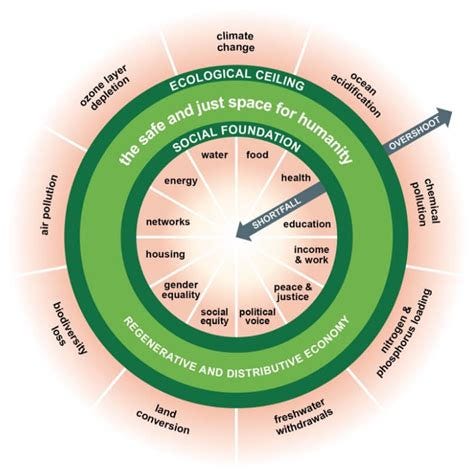
In proposing such an improved economic model, where better to start than with “Doughnut Economics — Seven ways to think like a 21st-century economist” by Kate Raworth.
Doughnut economics is based on the concept that humanity can only thrive in a circular-shaped band, with the social foundations of that health in the middle, and the environmental threats and limits as a ceiling to that health outside. It has been embraced by forward-thinking cities like Amsterdam and San Francisco.
The Doughnut model is a captivatingly simple and visual idea, but what Raworth is so effectively illustrating is far from new. The writer Leopold Kohr, in “Breakdown of Nations” claimed in 1957 that:
“wherever something is wrong, something is too big.”
The limits to growth
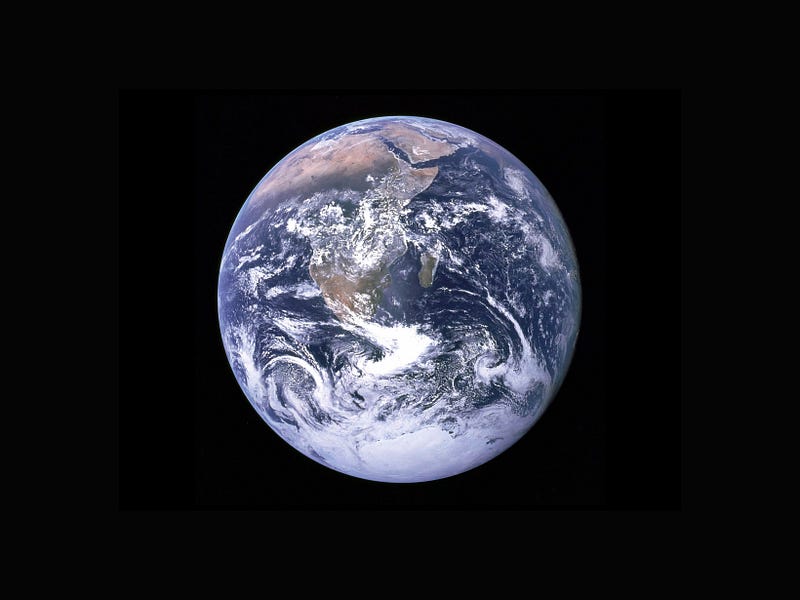
The sustainable development movement have been advocating for a wiser approach to environmental stewardship for several decades.
The concept that conventional economic growth is killing the planet came to prominence in the 1970s with the “Club of Rome” organisation of a hundred UN officials, heads of state, and academics, and a report they commissioned, published in 1972 called “The Limits to Growth”. The authors of this report used a computer simulation to look at the factors of economic and population growth, producing dire predictions about the imminent fate of humanity. While their alarm was justified, some of the worst of their forecasts did not come in the timescale they feared, in part due to the revolution in agricultural yields, however unsustainable those may be in the longer term.
Small is beautiful
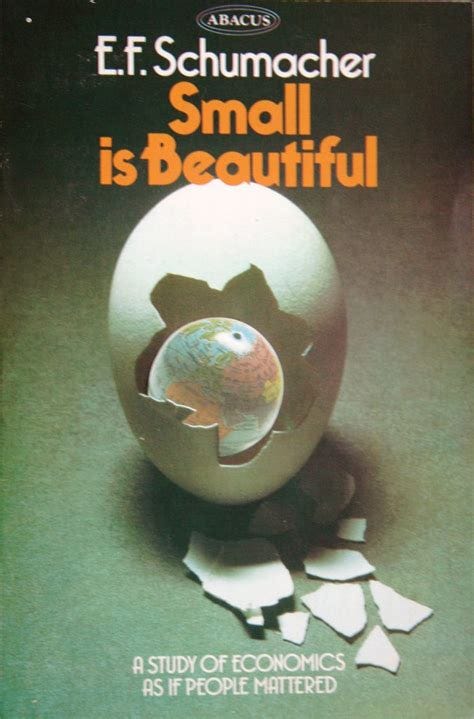
Also influential in the 1970s was E. F Schumacher’s 1973 “Small is Beautiful”, which made a powerful case for human-scale production based on villages rather than mega-cities. He is fiercely critical of the dominant paradigm: “Modern man does not experience himself as a part of nature but as an outside force destined to dominate and conquer it. He even talks of a battle with nature, forgetting that, if he won the battle, he would find himself on the losing side.”
Schumacher demolishes the myth that we have solved the problem of production, saying that we have failed to understand the distinction between income and capital. We appear to have become ever-richer in much of the developed world, but have been exploiting the finite natural capital of Spaceship Earth, such as forests, fisheries and ground-water at an unsustainable rate.
We have been treating capital as income, a basic accounting error, recklessly liquidating and squandering irreplaceable assets in a fire sale, aiming for ever faster consumption, rather than conserving, a case of
“…the bland leading the blind”.
As early as 1973 Schumacher states:
“The substance of man (sic) cannot be measured by Gross National Product”. He refers to “our inability…..to recognise that the modern industrial system…… consumes the very basis on which it has been erected…..it lives on irreplaceable capital which it cheerfully treats as income.”
Schumacher dared to ask the question “What is ‘enough’?” and introduced the notion of the impossibility of infinite growth on a finite planet. Schumacher states:
“The study of economics is too narrow and too fragmentary to lead to valid insights, unless complemented and completed by a study of meta-economics.”
He favoured Buddhist economics with its call for Right Livelihood, and advocacy for non-violence and simplicity. Buddhism favours liberation, but not in an antagonistic way:
“It is not wealth that stands in the way of liberation but the attachment to wealth; not the enjoyment of pleasurable things but the craving for them.” It favours the small scale, the middle way. Modern economics does not distinguish between renewable and non-renewable, just favours the cheapest as the most profitable. “Today, we suffer from an almost universal idolatry of giantism. It is therefore necessary to insist on the virtues of smallness.”
Schumacher championed the importance of real education and knowledge. He also emphasises the importance of land, quoting Tom Dale and Vernon Gill Carter from 1955 in “Topsoil and Civilisation”:
“Civilised man was nearly always able to become master of his environment temporarily. His chief troubles came from his delusions that his temporary mastership was permanent. He thought of himself as ‘master of the world’, while failing to understand fully the laws of nature……When he tries to circumvent the laws of nature, he usually destroys the natural environment that sustains him. And when his environment deteriorates rapidly, his civilisation declines.”
Schumacher shuddered at the idea of a world independent of nature, with food synthesised, highlighting the fact that many city dwellers already live in a virtually “azoic” environment. Schumacher also describes the folly of nuclear power, producing waste that needs guarding for tens of thousands of years.
Beyond the limits
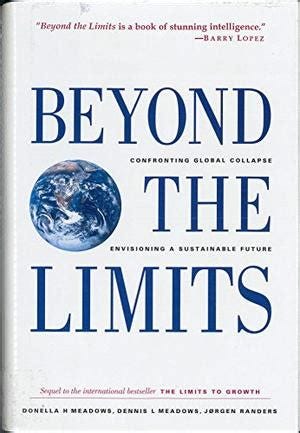
The case for limiting growth was taken up more recently in “Beyond the Limits — Global Collapse or a Sustainable Future” by Meadows, Meadows and Randers in 1992, which in a series of scary graphs, sets out the various future scenarios we face, most of them resulting in overshoot and collapse. The essential message is the impossibility of infinite growth on a finite planet, enhancing the words of Schumacher on the need for moderation:
“A man driven by greed or envy loses the power of seeing things as they really are, of seeing things in their roundness and wholeness, and his very successes become failures.”
The growth illusion
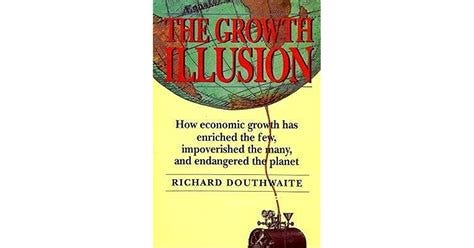
Remarkably for such a clear-thinker, in “Doughnut Economics” Kate Raworth fails to even reference Richard Douthwaite’s “The Growth Illusion — How economic growth has enriched the few, impoverished the many, and endangered the planet”, first published in 1992, which made many of the same observations, essentially that growth which destroys natural capital and communities, is a false measure of real and lasting value.
It is interesting, with the benefit of hindsight, to judge what Douthwaite got right. The planet’s natural capital and climate is indeed endangered, and there are huge wealth inequalities. However, it is important to acknowledge that growth has lifted billions of people out of absolute poverty.
In the foreword, Edward Goldsmith, founder of “The Ecologist” magazine, points out that:
“Modern industrial man regards economic growth…… synonymous with progress, and thus sacred.”
Douthwaite highlights, like many others, the need for the present financial system to constantly grow to avoid collapse. He asks the question about whether the aim is quality or quantity, and challenges the assumption that standard of living based on the level of consumption is synonymous with quality of life.
In surveys, people often rate health and family life ahead of consumer goods. Jeremy Bentham is well-known for the utilitarian phrase he borrowed: “the greatest happiness of the greatest number”. However many things we greatly value cannot easily be valued in cash terms.
Douthwaite states:
“GDP only measures things which are bought and sold for cash, it ignores clean air, pure water, silence and natural beauty, self-respect and the value of relationships between people — all of which are central to the quality of life.”
In illustrating the deficiencies of traditional measures of economic growth, Douthwaite quotes “The Economist”:
“A country that cuts down all its trees, sold them as wood chips and gambled the money away playing tiddly-winks would appear from its national accounts to have got richer in terms of GNP per person.”
As far back as 1989 David Pearce similarly proposed, in “Blueprint for a Green Economy”, that national accounts should measure changes in the stock of environmental and natural resources, and allow for welfare lost through pollution. Higher consumption does not necessarily mean a higher standard of living.
Douthwaite refers to the old analogy —
“….if everybody sitting in a theatre stands up to get a better view, nobody gets any advantage…..and there are some people who cannot stand up….”
He continues:
“If the number of flights from an airport increases, the people living near the runway might have to buy sound-deadening double-glazed windows in order to be able to live normal lives. Both the increased number of flights and the new windows will register as an increase in GNP”!
Similarly clearing up after the Exxon Valdez oil spill appeared in the US national income statistics as an increase in GNP. As Roefie Hueting pointed out, the lighthouse on which we have been taking our bearings was built in the wrong place.
Douthwaite favours transitioning to a lower energy world:
“The first casualty of a move to a lower energy world would be transport, the most energy-intensive sector of all. Higher transport costs would allow small producers to re-emerge to use local resources to supply local markets. This would, in turn, create greater local, regional, and national autonomy, reversing the concentration of economic power that has taken place in the last century. What a flowering of cultures, communities and individuals there would be!”
So if conventional metrics of economic growth are flawed, what might replace them? Contrast traditional Gross Domestic Product (GDP) with the concept of “Gross National Happiness” coined in 1972 by Sicco Mansholt, one of the founding fathers of the European Union. This approach of measuring contentment rather than just financial measures, shows that another world really is possible, and Gross National Happiness is a formal measure in the nation of Bhutan.
This changes everything
In “This Changes Everything”, Naomi Klein promotes the heretical concept of contraction of the over-developed world:
“….our economy is at war with many forms of life on earth, including human life. What the climate needs to avoid collapse is a contraction in humanity’s use of resources; what our economic model demands to avoid collapse is unfettered expansion. Only one of these sets of rules can be changed, and it’s not the laws of nature.”
However while it would in theory be possible to make changes to transform our economy, and encourage low-carbon sectors, Klein makes the case that:
“…The only kind of contraction our current system can manage is a brutal crash, in which the most vulnerable will suffer most off all.”
As we have left things so late, no gradual tweaks are possible. In the face of an unprecedented emergency, to avert a collapse of civilisation, we either change our ways to build a completely different type of economy and society, or nature will change the rules for us.
Klein states:
“This is a shift that challenges not only capitalism, but also the building blocks of materialism that preceded modern capitalism, a mentality some call extractivism.”
Conventional growth: a killing machine

Another author not keen on the neo-liberal economic model is the controversial author behind “Deep Green Resistance”, Derrick Jensen, who in typical blistering style in “A Language Older than Words” eviscerates the convention of using GNP:
“Make no mistake, our economic system can do no other than destroy everything it encounters. That’s what happens when you convert living beings to cash. That conversion, from living trees to lumber, schools of cod to fish sticks, and onward to numbers on a ledger, is the central process of our economic system. Psychologically, it is the central process of our enculturation; we are most handsomely rewarded in direct relation to the manner in which we can help increase the Gross National Product.”
Winner takes all
Piketty’s influential “Capital in the 21st Century” similarly highlights the deficiencies of neo-liberalism and its “winner takes all” approach. The book’s central thesis is that when the rate of return on capital (r) is greater than the rate of economic growth (g) over the long term, the result is a concentration of wealth, and this unequal distribution of wealth causes social and economic instability.
Piketty proposes a global system of progressive wealth taxes to help reduce inequality and avoid most of the wealth coming under the control of a tiny minority. A simplification of this argument, might be the case that we need both a minimum wage and a maximum cap on wealth, for a healthy and happy society.
A further critique of conventional economic thinking can be found in Charles Eisenstein’s “Sacred Economics” which traces the history of money from ancient gift economies to modern capitalism, revealing how the money system has contributed to alienation, competition, and scarcity, destroyed community, and necessitated endless growth.
Similarly, in “The Upside of Down”, Thomas Homer-Dixon challenges the notion that conventional economic growth is the ultimate measure of progress, and a suggests that recession, measured in traditional economic terms, can actually be a good thing for the planet, and with careful mitigation, also a positive thing for humanity.
Degrowth
The concept that scaling down can be beneficial in the right circumstances, is taken up by Jason Hickel in, “Less is More: Why Degrowth Will Save The World”. Many deep greens, like Hickel and Jensen, see even the concept of sustainable or green growth as flawed, and argue that we need “degrowth”, essentially putting more back in than we are taking out, and technological de-escalation.
Hickel argues that we need to carefully modify society in a way that removes the need for growth, while simultaneously avoiding the potential negative consequences of recession, unemployment and poverty. By way of mitigation, he proposes the fair sharing of raw materials, work, and income. To distribute resources more equitably, developed countries must limit resource and energy consumption, and gradually restrict this limit, so that poorer countries can still grow to enhance their level of welfare provision.
Hickel makes the case that wealthy nations should produce and consume less, particularly by scaling down the most environmentally harmful industries, such as oil, beef production and aviation, in an equitable way. Alongside this, he advocates that we must end the practice of deliberately manufacturing products with planned obsolescence, which may be good for economic growth, but is detrimental to planetary health. According to Hickel, advertisements which fuel unnecessary consumption and do not contribute to well-being should also be prohibited.
The consequences of producing and consuming less for employment and incomes needs to be considered. Hickel recommends sharing out work by implementing a four-day working week with the aim of producing and consuming less. A reduced working week would offer the added benefit that we would have more time for other important activities, not currently incorporated in the narrow measure of GDP, such as housework, childcare, or caring for sick or elderly people.
Hickel proposes that income should be more equitably distributed, through limiting the difference between the highest paid and the lowest paid in an organisation. For example, a CEO may currently earn 3,000 times as much as the lowest paid employee. Hickel advocates making it legally binding that this difference may not exceed a factor of ten within each organisation. For Hickel therefore, “degrowing” goes much further than simply replacing GDP with alternative indicators of wellbeing, but involves restructuring and reassessing, and greater fairness.
Examples of degrowth
Examples of attempting degrowth can be found around the world. Washington DC’s “Central Kitchen” is credited with preventing huge quantities of food from going to waste, and trains unemployed adults in preparing and delivering meals. This type of scheme demonstrates that infinite growth is not essential for achieving prosperity, while stimulating employment and optimising use of resources.
In another example of successful degrowth, the “Austin (Texas) Recovery Master Plan”, is a strategy for making Austin “the most liveable city in the country”. It focuses on sustainability and the diversion of re-usable resources to compost heaps, rather than landfills or incinerators. The Recovery Plan aims to move Austin “beyond zero waste systems to an economy based on maximising the value of goods and services while reducing the impact of our ecological footprint on the environment”. It diverts large quantities of municipal landfill waste to composting and recycling, while creating jobs in the recycling economy.
While not strictly an economic theory, “How to be Free” by Tom Hodgkinson is recommended as a guide to how to find happiness by reining in consumer urges. Hodgkinson is also editor of “The Idler” and clearly has his work cut out. He makes the case that slaving for “The Man”, and chasing dollar, has us all enchained.
Hodgkinson’s message is that freedom comes from stripping life back to what really matters: health, and quality time with family and friends. Managing to live with less, and enjoying the simple things sets you free from debt, and needing to work so much. You can only live in one home at a time. You can lie on a beach whether you have nothing or millions. It is a question of perspective, and working out what really matters. In many cases we create our own prison, by taking on financial commitments we could avoid. As Rousseau stated:
“Man was born free, and he is everywhere in chains”.
In a fascinating study, “The High Price of Materialism”, Tim Kasser, a professor of psychology at Knox College Illinois, found that it was not just the possession of wealth that made people unhappy but just aspiring to it was in the words of Girling,
“a passport to misery…..Aspiration meant stress, anxiety and damage to both physical and psychological health. And it worked both ways — unhappy people by their nature were more likely to be more materialistic…..”
No wonder the advertisers keep us unhappy and never satisfied! Girling continues:
“Kasser advocates advertising bans, and community ownership of property whose benefits might be shared — tools, for example, and books.”
The Magnificent Bribe

Lewis Mumford refers to this selling of our rich communities for the lure of consumer goods as a “magnificent bribe” in his book “Authoritarian and Democratic Technics”:
“Why has our age surrendered so easily to the controllers, the manipulators, the conditioners of an authoritarian technics? The answer to this question is both paradoxical and ironic. Present day technics differs from that of the overtly brutal, half-baked authoritarian systems of the past in one highly favourable particular: it has accepted the basic principle of democracy, that every member of society should have a share in its goods. By progressively fulfilling this part of the democratic promise, our system has achieved a hold over the whole community that threatens to wipe out every other vestige of democracy.”
“The bargain we are being asked to ratify takes the form of a magnificent bribe. Under the democratic-authoritarian social contract, each member of the community may claim every material advantage, every intellectual and emotional stimulus he may desire, in quantities hardly available hitherto even for a restricted minority: food, housing, swift transportation, instantaneous communication, medical care, entertainment, education. But on one condition: that one must not merely ask for nothing that the system does not provide, but likewise agree to take everything offered, duly processed and fabricated, homogenised and equalised, in the precise quantities that the system, rather than the person, requires. Once one opts for the system no further choice remains. In a word, if one surrenders one’s life at source, authoritarian technics will give back as much of it as can be mechanically graded, quantitatively multiplied, collectively manipulated and magnified.”
The problem is that so many of us have taken the bribe.
Derrick Jensen is harsher than terming it a bribe, calling it instead a lie. In “A language older than words” he states:
“Like the layers of an onion, under the first lie is another, and under that another, and they all make you cry.”
Jensen argues that we have badly lost our way, and makes the case for a fundamental reassessment of humanity’s role in the world, and our dominion over nature:
“A culture that values production over life values the wrong things, because it will produce things at the expense of living beings, human or otherwise.”
Confessions
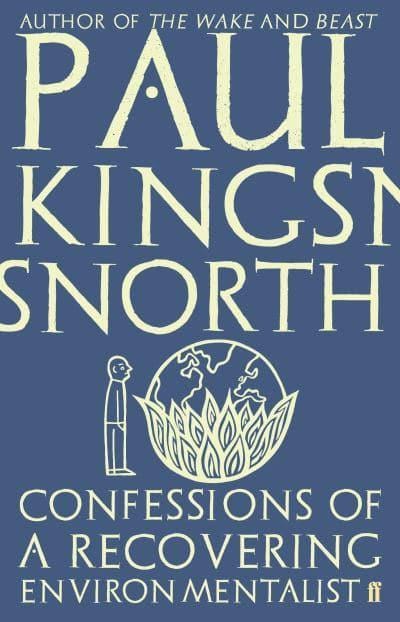
In “Confessions of a Recovering Environmentalist”, Paul Kingsnorth is rather scathing about the co-option of environmentalists into the system:
“But time has not been kind to the greens. Today’s environmentalists are more likely to be found at corporate conferences hymning the virtues of ‘sustainability’ and ‘ethical consumption’ than doing anything as naïve as questioning the intrinsic values of civilisation. Capitalism has absorbed the greens, as it absorbs so many challenges to its ascendancy. A radical challenge to the human machine has been transformed into yet another opportunity for shopping.”
It is clear now, with the benefit of hindsight, that Schumacher was correct when he took the view that small is beautiful: conventional economic growth has lifted billions out of poverty, but in the process caused grievous damage to the biosphere on which we all depend, asset-stripping the soil, forests and oceans.
The obsession with ever-greater conventional growth is eating the foundations of our only home.
The challenge now is to see if we can find an economic system that can support both humanity and the needs of our living planet.
To join a new Facebook group “Medium Matters” where writers can support each other and share articles.
Mastadon — if I ever get my head around it, you can find me here !