
Slovakia’s Oscar© 2020 Entry for Best International Feature: ‘The Auschwitz Report’ by Peter Bebjak
As of January 28, 1944: 3,000 French, 600 Dutch, 2,000 Poles were murdered bringing the death toll to 93,400. That is 3,012 every day, 125 every hour, 2 every minute. After more than two years of record-keeping and a year of meticulous planning, Auschwitz prisoners Freddy and Valér set forth on their escape.
The Auschwitz Report. All about numbers. Welcome to Auschwitz. No names. Only numbers.
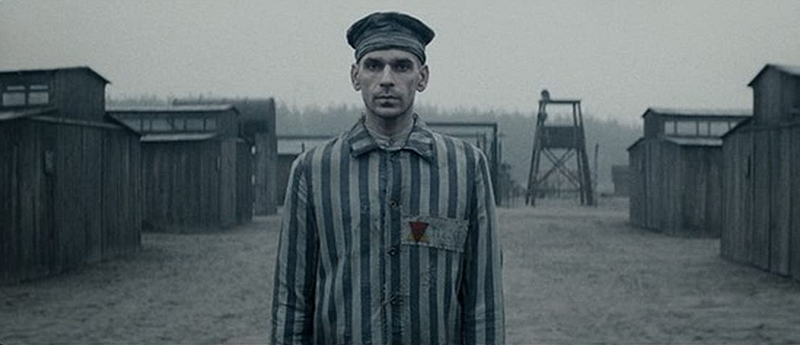
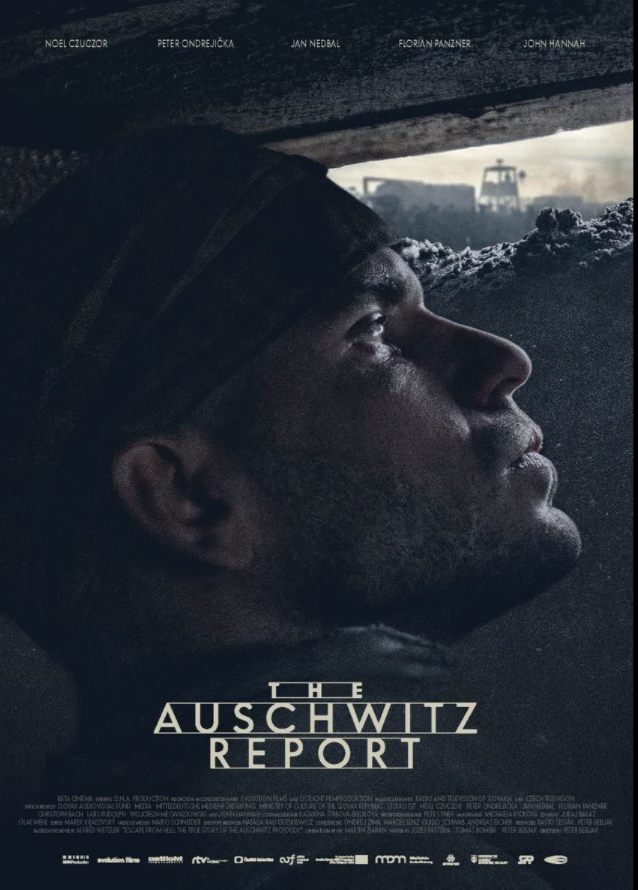
He is #20962, Barrack 9. With another one of the “scribes” who keep the records for the Nazis, two young Slovak Jews imprisoned in Auschwitz hide in a pit under a pile of wooden logs where they can observe the Nazis of Auschwitz as they led thousands of prisoners to their deaths. Making notes on the number of people in the transports and the details of the deathly operation of the camp, the men compile a priceless report which they must smuggle out of the camp.
After three days of hiding, they embark on their daring escape from the camp and face nearly impossible odds crossing the mountains to Slovakia, only to discover that the most difficult part awaited them back in civilization. They must convince a world unwilling to believe them that what they experienced was real.
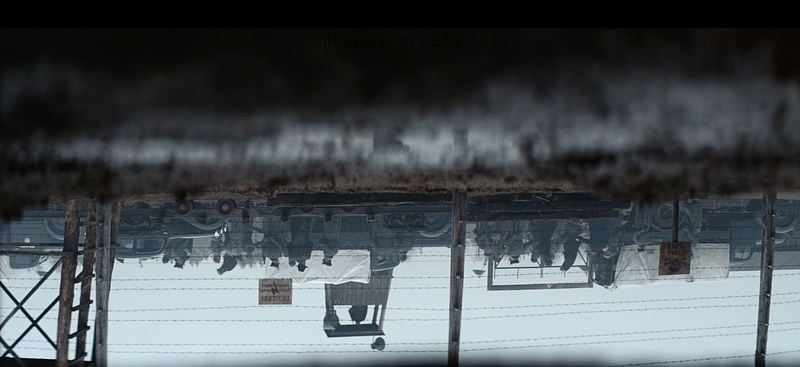
The date: April 7, 1944, the same day that Hitler suspended all laws in Berlin and made Joseph Goebbels the sole administrator of the city…and 11 days before I was born in my safe haven in California as news of cousins in Germany continued to find a way to my own parents.
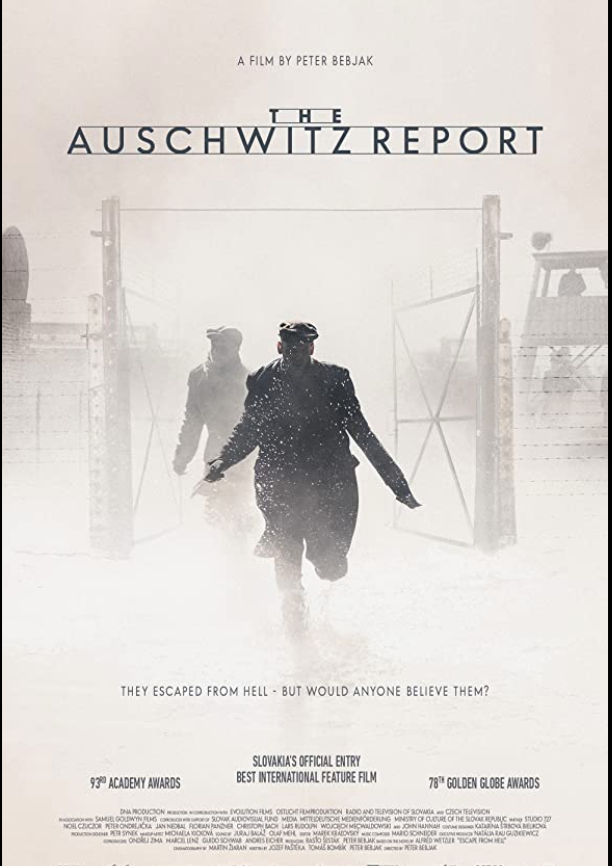
This is the second film of director Peter Bebjak’s to be officially selected as Slovakia’s Best International Feature Film Academy entry after 2017’s The Line, which also won him the Best Director Award at the Karlovy Vary Film Festival.
Peter Bebjak states here:
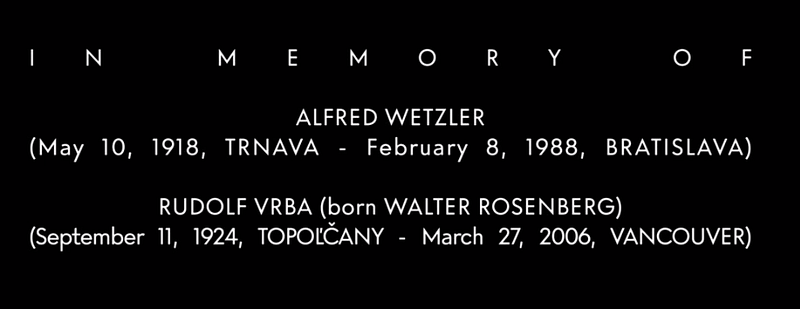
In April 1944, these two Slovak Jews, Alfred Wetzler and Walter Rosenberg (who later changed his name to Rudolf Vrba) managed to escape the Nazi extermination camp at Auschwitz-Birkenau. With the resilient aid of their fellow inmates, the pair embarks on a 22 day treacherous journey, making their way through underground tunnels and the perilous Slovakian mountains. Emaciated and hurt, they endure numerous obstacles along their way, but none greater than the realization their voices may go on unheard. However, in spite of the obstacles, even against publishing their findings, this audacious act would ultimately help to save the lives of 120,000 people.
WE WILL NOT GIVE UP. WE ARE ALREADY DEAD. WE DO IT FOR THOSE WHO LIVE.
Several years ago, the socio-political situation in Slovakia elevated extremist forces into parliament.
Unfortunately, this problem is not restricted to Slovakia. All across Europe, increasing numbers of people are either directly supporting or condoning parties with fascistic tendencies. Extremists and their sympathizers are progressively gaining traction.
To remain silent at a time when human rights are under attack is to quietly endorse the attackers. We cannot allow ourselves to repeat the sins of our forebears. That is why it is necessary to tell stories of humanity’s failures. Let there be more Sons of Saul, let there be more Schindler’s Lists, let there be more films that prevent us from forgetting.
The positive aspect of this story is heroism — the heroism of ordinary people who were sold off by their own country, which wanted to get rid of them. Wetzler and Vrba’s escape was not only an attempt to save their own lives — a mission intended to expose the planned, industrial slaughter going on at Auschwitz; a mission that ultimately helped to save the lives of 120,000 Hungarian Jews who would have otherwise been deported to their deaths.
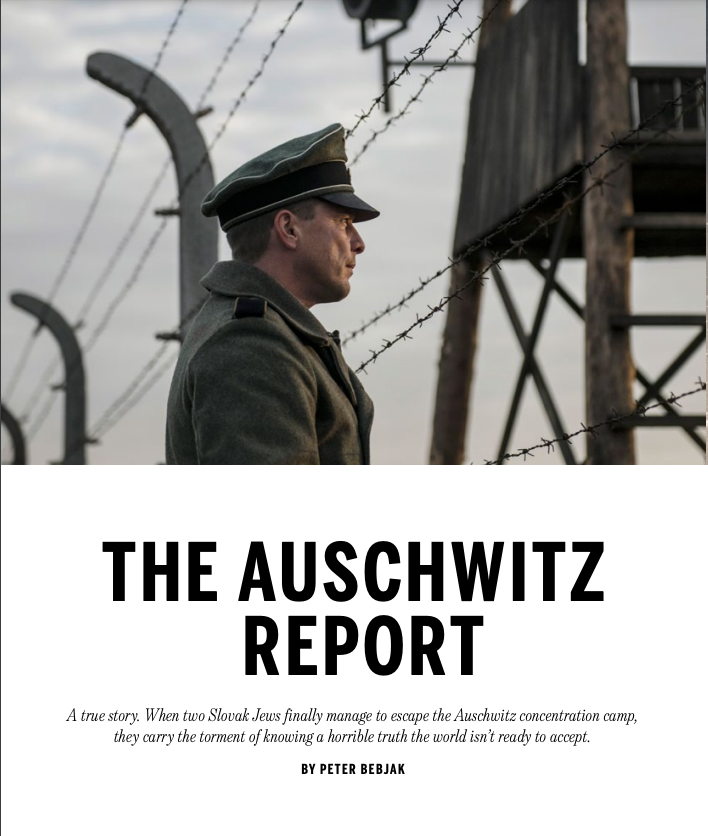
How is the story of Alfréd Wetzler and Rudolf Vrba important for the world, not just for Slovakia?
Because the world needs heroes. We need to see the stories of real people who risked their own lives to save thousands of others. It gives us hope that thanks to such people the world can become a better place.
The Auschwitz Report features actors from Germany, Poland, Slovakia, the Czech Republic, and even Great Britain, and each of them speaks in his own language.
What significance does the international cast have for the story?
It helps to paint an authentic picture of life in Auschwitz, which was a Babylon of different languages and ethnicities. Besides people of the above mentioned nationalities, there were also Greek, Dutch, French, Italian, Norwegian, Belgian, Yugoslav and Roma prisoners in the camp.
The film is shot in such a way that even audiences unfamiliar with this aspect of Second World War history can easily understand and relate to it. It portrays Vrba and Wetzler’s escape from Auschwitz as well as their heroic efforts to convince the Allies of the atrocities taking place in the camp.
Which moments in the film do you find to be the most powerful?
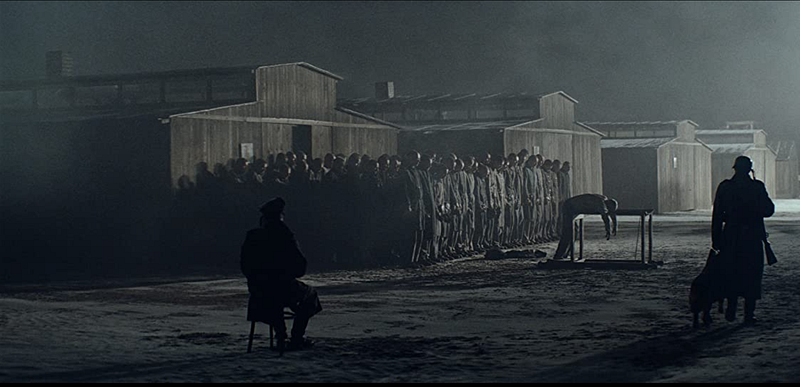
For me, it’s the scenes from the camp. I was acutely aware of the suffering that Auschwitz prisoners had to endure. Death was an absolutely ineffaceable presence in their daily lives. One minute the sun would rise, and they would briefly feel like normal people, but then the dark clouds would come rolling back in.
The Holocaust, a typical day in a concentration camp, hiding from the guards — all of that is depicted in the film, bringing out the prisoners’ suffering but also their courage and humanity.
How can you project these emotions onto the big screen?
You cannot. We can never truly capture the full extent of the pain, the fear, the anguish. All we can do is try. The most important thing is that we have a clear picture of we’re trying to achieve — we can never allow ourselves to repeat the same mistakes.
In your country and region, you are known for your outspoken views against the extremist tendencies that have lately been on the ascendance in a large part of Europe. In Slovakia, those tendencies have been especially palpable after a far-right party won a nonnegligible number of seats in parliament.
How come the world still has not fully reckoned with fascism and extremism, even 75 years after the end of WW II?
Frustration, fear, uncertainty — all of that creates fertile ground for extremism. Because we’re living in a time of peace, especially in contrast to the 20th century, we have forgotten how it feels to fear for our lives, for our loved ones’ lives, on a daily basis; to have to hide our ethnicity, religious beliefs, or sexual orientation. We have forgotten what it means to be persecuted. That’s why we need to look back at humanity’s past failures.
Their 22 days in the woods is a relentlessly difficult trek where mercifully members of the resistance find and assist them across the border where they can finally deliver their report on the numbers to the Red Cross. Unfortunately, he can only pass it on to the Americans. The two escapees, named Alfred Wetzler and Valér Vrba were hoping the message would lead to the bombing of Auschwitz itself. But that never happened.
It did not start with Auschwitz. And, unfortunately, it did not finish there either. The right-wing extremism is no exception in Europe anymore. On the contrary, it has become an acceptable part of politics.
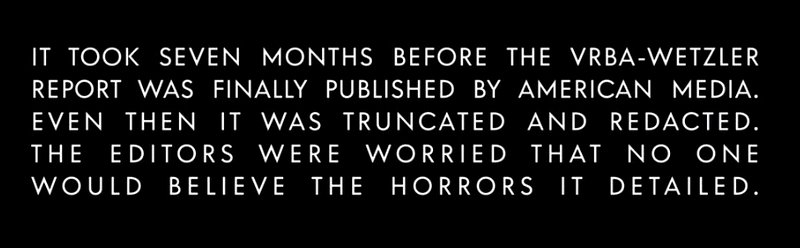
We cannot understand why the Allies could not believe in Vrba-Wetzler report. But at the same time, we are not ready to accept that what is spreading through our society is exactly like what people had been experiencing before the war.
The hatred is not hidden behind the closed door of tiny pubs anymore. Today the hatred has changed into designer suits. This is the real threat — the fact that it is turning into something normal and acceptable.
Alfréd Wetzler and Rudolf Vrba are exactly the people we should be proud of and this feeling should not end by including them into history books. Let‘s start with not allowing the things like those they had gone through to happen again.
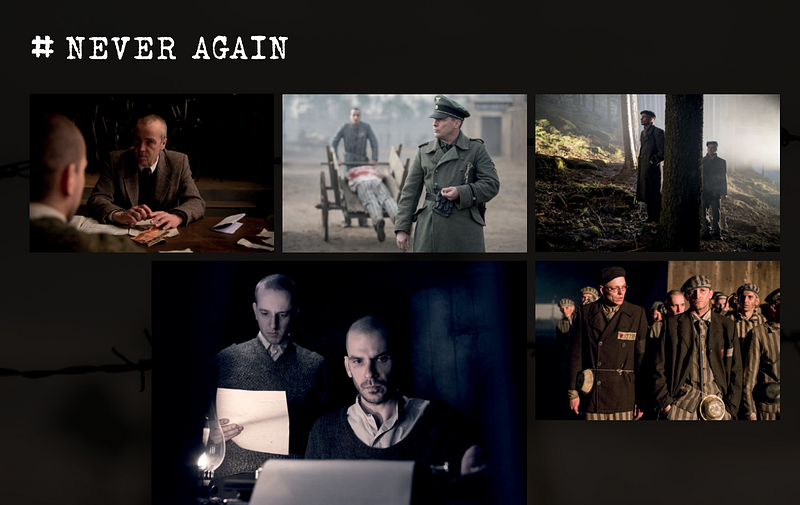
Never again.
Rasťo Šesták, producer
Watch the trailer here.
In the beginning of the film one sees “Those who do not learn from history are doomed to repeat it”.
At the end while the tiles are rolling is a powerful audio epilogue sounding like the Tower of Babbel itself, a mix tape of words in different languages and beginning with the Holocaust deniers, moving into anti-immigrants, anti-gypsies, Trump on naming immigrants rapists and killlers, anti-homosexuals and naming 79 countries where homosexuality is illegal, anti-NGOs , the voices of BLM and the words, “We cannot allow Germans to become a minority in Germany.”
Thanks went to 1,537 extras and a special thanks went to Michael Douglas.
Music inclued the Radestsky March of Strauss, Aida: Grand March by Verdi, and Schoenin blauen Danumbe by Strauss.

US Distributor: Samuel Goldwyn
International Sales Agent: BETA Cinema
93 min, drama, Slovakia, dir. Peter Bebjak