
Sleep Training Your Baby Is Not Mandatory
…just in case you couldn’t hear that one over all the din.
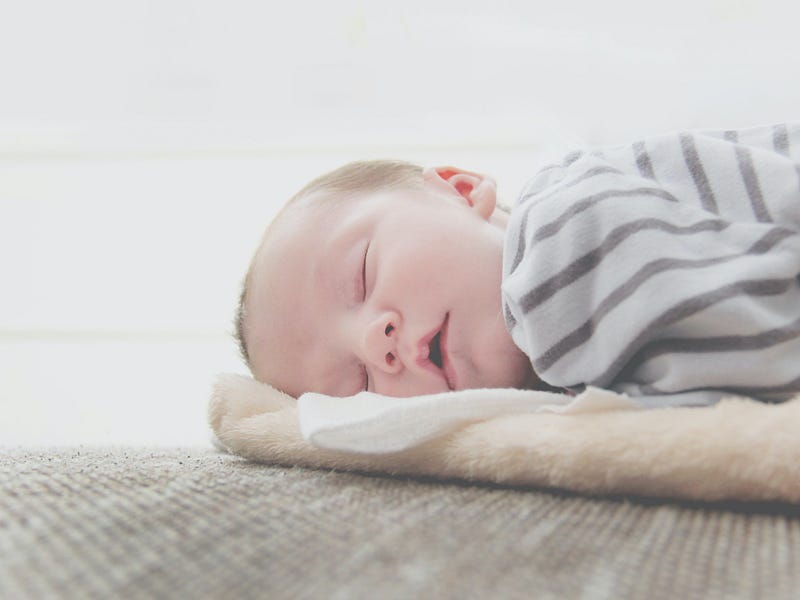
When I had my first baby, I started to hear all about “sleep training;” a term that was, until my introduction to motherhood, completely foreign to me. As I learned more, though, it seemed like this was something that everyone was doing, so I asked my mom about it — she had, after all, raised three babies. She would know.
“Sleep what?” she responded, clearly as oblivious to the idea as I was. I explained what I had learned to her and she kindly nodded in understanding, but, as I later found out, that was not the practice she had followed when raising her babies. She wanted me to raise my own baby my way, so she supported my plans to attempt this seemingly universal tactic, and kept silent about her own methods.
When the subject came up again after my second baby came along, I probed for more information. As it happens, my mother, like many mothers in the 80s, had simply responded to our cries at night and tended to our needs.
…That’s it. There was no “method,” no books, no programs, no consultants, and no multi million dollar baby sleep industry to throw her money at.
As we got older, my mother gradually stopped rushing in for every squawk from the crib, and in time we learned to fall asleep on our own, peacefully and without crying for hours on end. Without Ferberizing or any other formulaic sleep method the industry cashes in on.
These days, sleep training is often advised to sleep deprived parents in some form or another, either by well meaning moms and experienced friends — even pediatricians. But in the last few decades, it’s become something of a formula for baby sleep, and it’s practically mandatory: the question is never “will you sleep train” but rather, “when will you sleep train?”
As a second time mother, I’m finding myself stumbling over a different question: why? Do we really need to sleep train in order to “fix” our babies?
Are they broken? I don’t think so.
What is Sleep Training?

Sleep training is commonly thought to be the somewhat controversial method of letting your baby cry themselves to sleep in an effort to teach them to sleep through the night. But that’s not entirely accurate: sleep training is really just the act of teaching your baby to sleep without needing your help to do so.
There are actually several methods for sleep training your baby, all of which offer varying degrees of interference and periods of crying — or no crying at all, if you prefer. And that’s good, because there are varying degrees of sleeping troubles and temperaments.
There is no “one size fits all” solution for baby sleep.
Extinction or “Cry It Out” Method
When most people think of sleep training, they think of crying, and this is the crying-est method there is. It’s also the fastest.
That doesn’t necessarily mean it’s the right fit for you, so don’t let anyone pressure you into this method. Listening to your baby cry is not for the faint of heart.
The extinction method, or the cry it out method, is not generally recommended by sleep specialists or pediatricians, and is really barely a method at all as the idea here is that you basically …do nothing. Doing nothing is harder than it sounds, though. And for some, it’s the only thing that works.
This method is also sometimes referred to as the Weissbluth method, as Dr. Marc Weissbluth, author of Healthy Sleep Habits, Happy Child circa 1980, effectively branded himself with it in his book. Weissbluth refers to his method as “extinction,” or, essentially, leaving the child to cry themselves to sleep without parental interference. However, the idea of leaving your baby to their own devices to fall asleep was born much earlier than the days of shoulder pads and feathered bangs.
As suggested by Dr. Emmett Holt way back in 1894 in his book, The Care and Feeding of Children, when putting a child to sleep, “the room should be darkened and quiet, the child’s hunger satisfied, and the child made generally comfortable and laid in its crib while awake.” So far so good, in terms of modern day baby sleep advice. However, according to Holt, anything further is not advisable. If the baby cries:
“One should get up and see that the child is comfortable — the clothing smooth under the body, the hands and feet warm, and the napkin not wet or soiled. If all these matters are properly adjusted and the child is simply crying to be taken up, it should not be further interfered with.”
Admittedly a little cold and I’ll skip right over the repeated reference to the child as an “it” here, but leaving your baby to cry (as long as they aren’t hungry, cold, etc) is an effective, tried and true sleep training method. A strong word of caution however: there is some argument about the well being of the baby in this situation, depending on the severity and length of the crying. Many experts say that the baby learns to fall asleep on his own without any psychological damage, while other studies show that the baby simply learns not to cry because they learn that (heartbreakingly) no one is coming. This is referred to as “learned helplessness,” and can lead to the child not crying for perfectly valid reasons either, like hunger or a soiled diaper. There is not enough evidence to support the negative effects of extinction on the child’s well being, however.
Understandably, this is too harsh for many parents to handle (including yours truly, as I discovered) and is often a last ditch effort after trying all other things. But if you’re an extremely sleep deprived parent, this is quick and might be the best option for your family.
There is no shame in doing what you need to do for the well being of your family’s mental and physical health, and everyone’s need for sleep varies.
If a little crying doesn’t bother you too much but you don’t want to listen to your baby cry for an extended period of time, there are gentler alternatives to the extinction method. Most parents prefer to check on their babies in intervals in an attempt to let them know they are okay and loved, which is a method referred to as controlled crying or, most commonly, the Ferber method.
The Ferber Method (AKA Graduated Extinction; AKA Controlled Crying; AKA That Method Everyone Uses)
There are so many modified versions of this method that it could take up a whole post, so I’ll just list the main idea here: with the Ferber method, as instructed by Dr. Richard Ferber in his book, Solve Your Child’s Sleep Problems, the parent leaves the child in the crib awake, leaves the room, and returns for predetermined intervals of progressively longer periods of time to comfort the crying baby, if needed.
The Ferber method is effective over a relatively short period of time (7 days) however it can involve a fair amount of crying. If this is where your comfort level lies, have a poke around online and see if there are varying intervals being suggested — or make up your own. The nice thing about Ferber is that it’s pretty easy to modify. The book’s recommendation is 7 days of sleep training but you can stretch it out for a longer time if you like, by keeping the intervals shorter.
And that’s where most people assume sleep training stops, but there is actually a gentle method that falls under the sleep training category as well — one that promises no tears if done correctly.
FIO (Fade It Out)
There are a number of sleep experts who use some version of this no-cry method, one of whom is Elizabeth Pantley, author of The No Cry Sleep Solution, and the idea here is that you continue doing whatever it is you are doing to get your sweet babe to sleep at night, but you gradually do it for less time.
You heard right: keep doing what you’re doing, just make a slight change. If you rock your child to sleep at night, pop on the timer and see how long it takes before your little nugget conks out.
Let’s say it takes 27 minutes. The next evening, lay them down in their crib at 26 minutes. They might fuss a bit, and that’s okay, you can pick them up and soothe them — again, you can do this without any crying if that’s what you’re comfortable with. Try this for a few nights until it works, then bop it down another minute. Rinse and repeat.
This sleep training method can take weeks — even months — but if you are comfortable with your current situation and aren’t too sleep deprived, this might be the way to go.
That is, if you decide sleep training is right for you at all.
You Don’t Have To Sleep Train Your Baby
A gentle version sleep training is fantastic, and so is a quick and effective approach like the Ferber method, however there IS one more option for your baby’s sleep, and this is something I personally needed to hear:
You don’t have to sleep train your baby at all if you don’t want to.
Read that again, my fellow sensitive Momma. I’m not joking.
There is no law that says you must sleep train or bust. For some reason, with my first baby, once I heard about sleep training I felt like I had to do it, and if I didn’t, I was failing my child. So I did the extinction method, which I loathed, and I had to repeat the process every sleep regression. Which, again, I loathed. I only did this because I didn’t know there were other options.
The thing is, some babies, like my daughter, just don’t handle sleep training well AT ALL. Some will fuss for 15 or 20 minutes and then conk out, and for those babies sleep training is great. Other babies, like mine, will scream bloody murder for 45 minutes or even an hour or two before passing out, likely due to exhaustion. I genuinely doubt how much they’ve actually learned.
What’s more, for some babies, sleep training does absolutely nothing. So there’s that.
For me, it felt very unnatural to let my baby cry like that. She needed me and I felt to my core that I had failed her by not going to her. We know the difference, us Mommies, between a fussy cry and an “oh I desperately want my mommy” cry, and ignoring that cry was beyond heartbreaking. Personally, I couldn’t do it again. I didn’t want to do it again.
And that’s okay.
With this baby, I attempted some gentler methods and schedules and the whole shebang to help him sleep, and you know what? They didn’t really help. And honestly, at 6 months into this baby thing, I didn’t really mind.
(What’s even better is that since I originally wrote this article, my baby has grown into a toddler, and that big ol’ toddler sleeps so well I can hardly believe it.)
But I still enjoy those sleep baby snuggles. This is my last baby — I’m soaking up every last drop of this short, precious time.
Snuggle/Feed Your Baby to Sleep — If You Want To
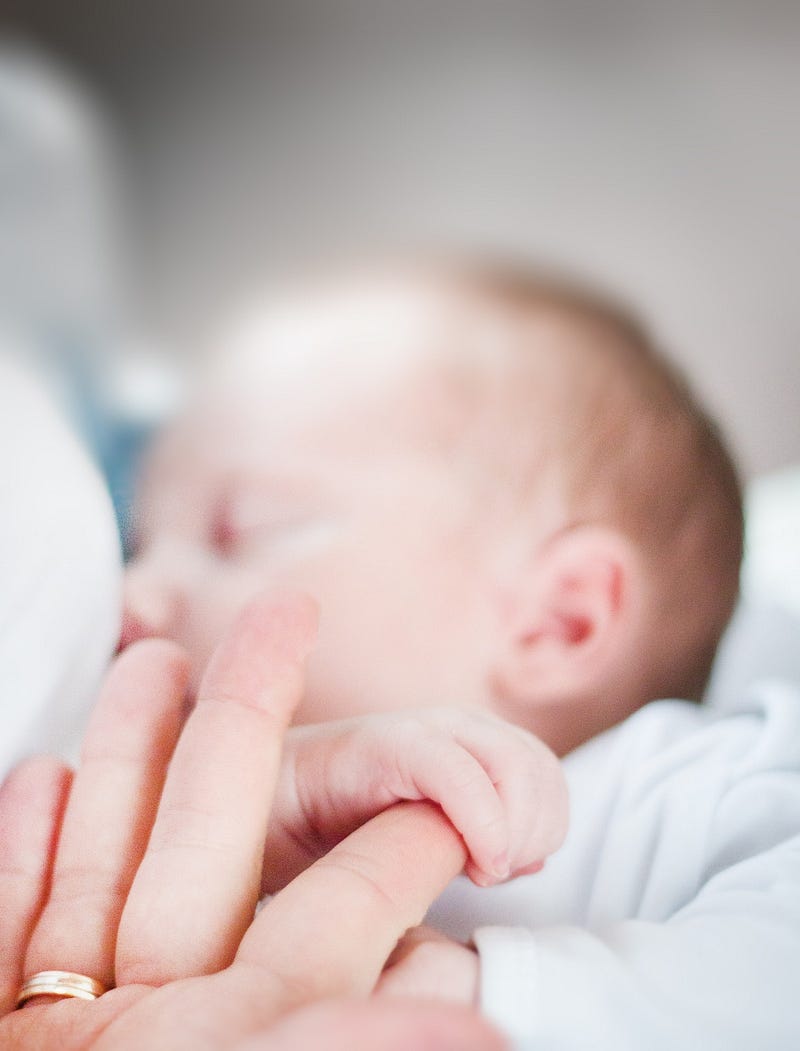
The sleep experts of the world will have you believe that snuggling or — for SHAME — feeding your baby to sleep is a major problem; that your sweet babe will need you to rock him or her to sleep through their teenage years and beyond if you don’t PUT THAT BABY DOWN RIGHT THIS DARN SECOND YOUNG LADY!
I’m here to remind you that it’s honestly going to be okay — I can’t believe it has to be said but you’re allowed to cuddle your own baby to sleep every night if you want to. In some non-westernized cultures, it’s extremely normal for babies to sleep next to their parents well into their childhood. Some babies spend every nap strapped to their mothers, snoozing peacefully to the lullaby of their mother’s heartbeat, for most of their infancy. What’s more, as a species, we’ve been having babies for a bajillion and a half years (that’s probably not an accurate number, but you get my drift) and all of these babies learned to sleep eventually.
Trust me, your 15 year old son will be sleeping just fine on his own, and you’ll probably be wishing you had spent more time snuggling him when he was a baby by the time he becomes a big, stinky teenaged garburator.
I think the best advice for new moms who are struggling with all of this outside pressure to sleep train is this: just do what feels natural. As women, we were literally born for this role; embrace that. Sometimes, it actually WILL feel natural to let your baby fuss in his crib for 5 minutes while you scarf down some grub or tend to your older child, or when your aching back simply can’t take any more rocking. And usually when that happens, unless there’s something really wrong, your baby will surprise the pants off you and actually fall asleep on their own anyway.
Sometimes, though, what feels natural is to nestle that baby deep into your chest and stroke their chubby little cheek as they fall asleep while at the breast or bottle. The feeling of that warm, snug, happy, safe baby breathing so deeply and peacefully in your chest is, hands down, the BEST part of being a mother, isn’t it?
I mean, need I remind you of these fleeting moments in motherhood? They are precious and few. I am in no rush at all to let them go.
I don’t care what the sleep experts say: sleep train or don’t sleep train. Just don’t feel pressured to do it if you don’t want to. You’re the only mother your baby needs, and you know what is best.
Follow me for more parenting and life snafus! You can read more of my work here: https://linktr.ee/laurenhallwrites


