
Sleep, or lack thereof: the key to parenting success
How good and bad parenting are often only separated by a good nights sleep.

We all have our own personal journeys with sleep and I still find it amazing how everyone can be so different. Throughout my life, until the point of having children, I always found it hard to sleep. I understood the mechanics of it, the necessity of lying down and closing my eyes, I fully comprehended the idea of having a dark and quiet space and not drinking pints of coffee before setting off for the bedroom. This much was fine, but everytime the lights went off my brain did not, it ferreted about like a badger, rootling through the events of the day, questioning me and then worrying about tomorrow. My wife, on the other hand, could sleep for England. If we were led on the sofa watching a film I would surreptitiously move my hand between her eyes and the TV, if she didn’t flinch then I knew she was asleep. It was very rare that she flinched after five minutes of the film.
Since having children I have had no problem whatsoever with sleeping, apart from, of course, not having enough time to sleep. The major positive of being forever tired is that you don’t have to fret about getting to sleep. Now, instead of worrying about my own sleep, I have to worry about my children sleeping. Yet, all new parents know that they’re going to have sleepless nights, we all go into it knowing that lie-ins and unbroken sleep are things that we will need to sacrifice to have a child. However, I was never really prepared for just how challenging sleep can be when children are involved.
When my first daughter was born I expected my sleep to be hugely disrupted, I expected tears, bad nappies, the works. These things happened and it was difficult, but this was fine because I expected it to be. Sure we were blurry eyed and my relationship with caffeine became somewhat toxic, I aged more than I biologically should and I lost my patience plenty of time. However, it was not until my first daughter was around 18 months that I really started to find things difficult because she was still really struggling to sleep. I still have horrible feelings about this time and I wish, more than anything I have done wrong as a parent, to go back and do this period again.
Since my first daughter was born she has hated sleeping. I don’t know why she hates sleeping but she bloody hates sleeping.When my wife would take her to group events for new mothers all the children would be asleep apart from our daughter who would stay awake regardless of any actions anyone could take. When she would go to sleep it was with an expression on her face of begrudging resignation. We would watch her like you would an animal, afraid to breathe in case she took flight and you had to begin the whole process again.
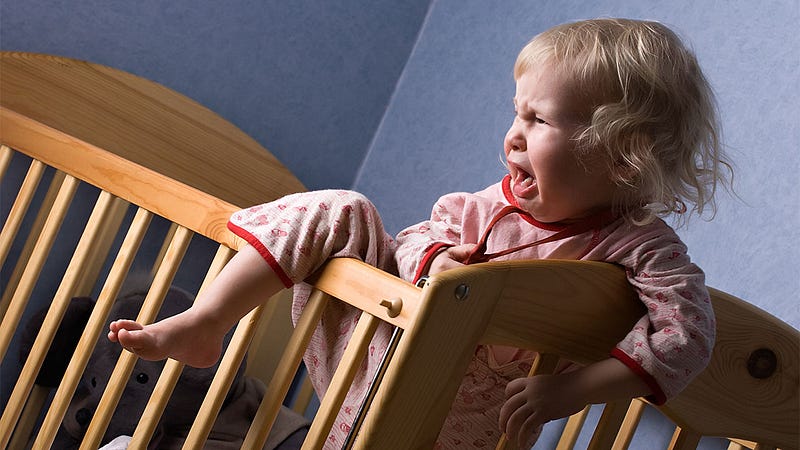
In fact, it was during this period that FOMO (Fear of Missing Out) came into popular parlance and a part of me still feels that there is no coincidence as it perfectly describes her attitude to closing her eyes. She was desperate to be awake and to be with her parents. Even now that she’s older, if we’re reading to her and you suggest that she closes her eyes to listen she will simply ask ‘how am I supposed to see the pictures if I close my eyes?’ and adamantly refuse. She has a point I suppose.
I was prepared for sleep to be difficult with our baby, I understood it would take a few months for her to get into a routine and longer for her to be able to drink enough to go a whole night without waking. However, this process of fighting to get our daughter to sleep continued past her first birthday and past the point where we expected her to grow out of it. Looking back, I don’t really know why we expected her to be sleeping through the night, why we were so confident that this would naturally happen with our first child. I suppose that we had read all the things Western people read on sleeping and sleep training. On reflection this was probably the problem.
In the Western world the term ‘co-sleeping’ is a dirty one. If you sleep with your child you will, apparently, roll over and kill your child within weeks; if you’ve so much as sniffed a glass of wine that child is done for.As young parents we bowed to the collective wisdom and we took on the importance of banishing our daughter to another room within months of birth. I never questioned this wisdom and we dutifully plonked a very small child in a cot in a dark room and followed all manner of routines to try and get her to sleep.This decision was made easier by the fact that we made it after months of sleep deprivation had battered our prefrontal cortex to the point where we were willing to try anything.

Clearly, our daughter did not want to be left in her cot and so we had to try a number of different techniques in order to help her to sleep. We tried the batman withdrawal where we moved very slowly backwards out of the room until getting to the door, this is designed to get the child used to the fact that you’re getting further away and the idea is that they go to sleep with the comfort of you being near and then gradually realise that they don’t need you so you can leave. However, what actually happens is that you stealthily move away from her, wincing at every crack in the floorboards and stifling cries as you step on toys which feel unconscionably sharp.When you get near the door you realise that your child is still irate and then you have to stand waiting, as if in purgatory. After what feels like hours of this, your every muscle aching to sooth your child, you usually give up and start the whole process again.
We tried leaving her. We tried leaving her screaming in her cot and walking away. It still doesn’t seem right to me that I did this. When she got out of her cot we picked her up and put her back in. She got out again, so we picked her up and put her back. We repeated this like the most perverse HIIT exercise training routine. We repeated it until we could not bring ourselves to do it any more. Even thinking back to it is like reliving a trauma. Holding her and then feeling her body turn to steel as she would grip you for her life. Prising her hands from us as she grabbed hold for dear life, as if you, her parents, were the one thing standing between her and an abyss.Then you’d have to put her down again and wait for her to get up and do it again. At these times Sisyphus looked like he had the easier job because at least the boulder he had to push up the hill wasn’t screaming at him.
“The cats nestle close to their kittens, The lambs have lain down with the sheep. You’re cozy and warm in your bed, my dear. Please go the fuck to sleep.” ― Adam Mansbach, Go the Fuck to Sleep
We closed the door and sat on the other side of it listening to her punch the door in fits of tears, begging to be with us. We sat praying that she would relent and simply go to sleep. If she did go to sleep by herself she would end up on the floor squashed against it as she would spend her last energy trying to see you beneath the crack in the door to see if we would come back to her. We would have to slowly push her back with the door, pick her up and put her in her cot while contemplating how easy life would be if she just went to sleep.
After the shame of not being able to get your child to sleep comes the guilt that you are not good enough as a parent and that you are hurting your child through your inadequacies. After this there is anger, the anger you feel after yet another evening was taken up with screaming fits. The anger that you never thought possible, never thought could happen. I have never felt anger like I have done and it’s the worst type of anger as it’s directed at the thing you love most in the world. It’s the worst type of anger because you know that it’s not fair, that you’re directing anger at someone too young to understand and who acts without intention to harm. This all makes it worse, adding to the shame, the guilt and then to the anger because you’re not only angry at your child, but at yourself for not being able to help. We got into this spiral of negative emotion until the point where I began to doubt my ability as a father and as a basic human being.
I don’t think that there is any way I could have coped by myself and I have no idea how single parents manage. As it was, I am not wholly sure that I coped with my wife being such a fantastic support. Then, somehow, over time, things get better and you look back on this period of sleep-battles as some kind of rite of passage, some process of earning the opportunity to progress, or perhaps it was just the final effacing of the last vestige of hope that parenting becomes easy.
In giving up hope there is a great deal of release. Once you realise that parenting involves a great deal of work, that children will always need a great deal of your time and energy, that there will always be a number of challenges, once you realise this you breathe again. Instead of a burden this is a burden lifted as you can start to unload the stress, the shame and guilt that you feel. You can unload because you feel stress, shame and guilt because you have tricked yourself into thinking that parenting should be easy and that you are not good enough.
Through accepting the common wisdom passed down through western culture and struggling I felt like a failure. Yet it wasn’t until we spent time in Asia that we saw that our frame of view of sleeping was simply a product of the commonly accepted wisdom and not something which was ‘right’ or ‘wrong’. As I spoke to parents in Thailand I realised that co-sleeping was incredibly common until much, much older. That children were allowed to share their bed with their mum, their dad, or both until they were older and truly ready to sleep independently.
My first reaction to finding out that parents co-slept was bafflement, I couldn’t understand why parents didn’t know ‘better’. As I had been culturally programmed to hear one viewpoint I initially assumed that I was right and that these parents were wrong. Then I spoke to hundreds of parents and asked them about sleep, the vast majority found that their children slept easily. Of course, many parents would still have problems and not want to share them with me and I am not naive enough to think that this is a golden bullet. For example, I’m sure that every one or two year old kids their mum in the night and disturbs their sleep; it was often common for parents to separate with one parent sleeping with the child with the other, normally dad, in another room and I am sure this made the parental relationship more challenging.
Living in Asia did not show me that there is a better way of helping our children to sleep, it simply showed me that there was another way to do things. I have never experienced co-sleeping after a few months and I completely recognise that there is a chance of suffocation, especially if parents are selfish enough to co-sleep drunk. However, so many of our problems with our first born came from the fact that we understood that we had to have them sleeping alone as soon as possible. When we couldn’t do this we felt shameful as we felt that we’d failed.
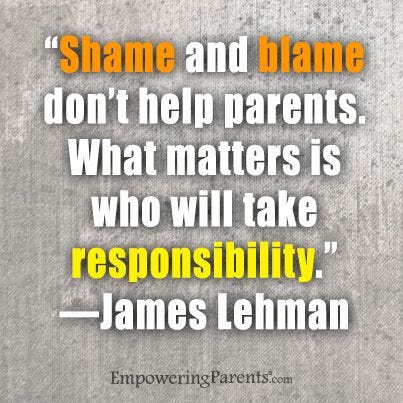
As we got older and had more children we learnt that every child is different and that some children (my first born) are harder to get to sleep than others. We learnt that there is no shame in doing whatever it takes to help your child and no guilt in not being able to live up to the expectations within your culture. In time we have been able to understand that the nightmare nights spent doubting ourselves while our daughter fought off sleep were nothing more than small bumps in the road. Inevitable downs that are needed when children give you so many ‘ups’. The best piece of parent advice I ever received was simply:
‘enjoy everything, the good times will outweigh the bad’ — former work colleague
I often think of this whenever we are having difficulties with our children (most days). Although I have a suspicion that, if I did the maths this wouldn’t be true, it certainly helps to focus on the positives. Sleep is important and the trials of getting our children to sleep are often the ‘bad times’ because we forget the times when they sleep easily. There are so many ‘strategies’ to getting children to sleep and so many ways in which you can do things, some which will be more culturally accepted than others. So what do we do now?
After having three children and a busy life we simply lie down with the kids, turn the lights off and wait. Sometimes we listen to white music, sometimes a peaceful sleep story, and sometimes we lie in silence. Many nights we’ll fall asleep, many nights we’ll be led in the dark for an hour wondering what the hell we’re doing with our life, but it works.Whether it will work next week, I have no idea.What I do know is that I have infinite empathy for those who have children whose FOMO stops them from nodding off. I also know that I need to find a way to release the guilt that I feel about our first daughter’s struggles, and I know that we should never judge parents who are finding it tough. So if I do speak to people who are struggling, I just listen and remind them that this is hard, but the good times (we hope!) will outweigh the bad.
“The eagles who soar through the sky are at rest And the creatures who crawl, run, and creep. I know you’re not thirsty. That’s bullshit. Stop lying. Lie the fuck down, my darling, and sleep.” ― Adam Mansbach, Go the Fuck to Sleep


