
Sleep anxiety was my demon until I took steps to invest in quality rest
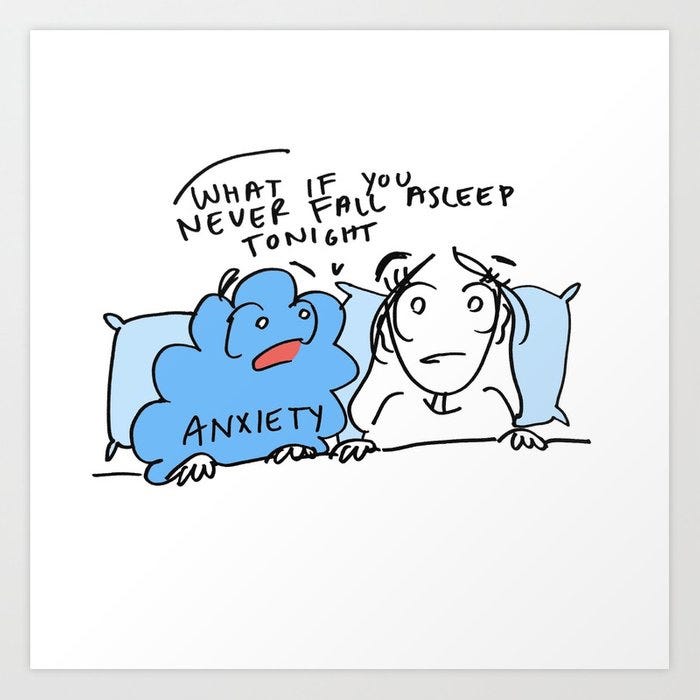
Before returning to work and firing up my energy for a new decade, I decided to take a moment to note down the essential steps I took in the past decade to wind down and get a much needed nights sleep. Because I have learned that without investing in rest there is no award-winning creative work or inspiring agency leadership, just a tired hollow wreck! These are my tips to overcome sleep anxiety…
1. Turn off ALL phone notifications — except alarms, the Nursery app and incoming calls!
Phone alerts were my sworn enemy, until I turned them of, now im free of them. Yep, that’s the simple first step towards a restful nights sleep.
We have all read about the anxiety inducing affect of dopamine hits caused by constant phone notification pings and bleeps interrupting our flow and switching our state of mind to ALERT. Most of us don’t live under constant threat of attack, so we don’t need alerts every time a friend or colleague sends us an emoji.
Doing something about it is easy and in my experience incredibly affective. Go into your settings and enjoy the freeing feeling as you swipe off, off, off, off, off for every app — starting with social media. Ironically it may give you anxiety to perform this act of freedom, that’s the pang of addiction kicking in. Continue safe in the knowledge that 99.9% of the alerts are less important to your wellbeing that the sound of crickets chirping (albeit, if, like me, you live in Northern Europe, then the sound of crickets is actually a sign you are on hols, so far better for your wellbeing!)
2. No phone in the bedroom at night — leave the devil at the door!
If it’s your alarm clock, go online and gift yourself a ‘non-SMART’ basic battery powered alarm clock. Remember them?
If you want to watch a movie in bed, use your TV or laptop — neither are ‘good for you’ but both better than sleeping with your phone.
There is no place for your phone in the bedroom — especially as ‘in the bedroom’ usually means ‘in the bed’ for most people — which is NOT OKAY in my humble opinion. That screen will keep your brain spinning (and in my case keep you wide awake) hours after bedtime. Automatic reaching for your phone as the first thing you do every morning can’t be the best way to wake up calmly, can it? If your phone needs you that badly — turn up the telephone call ringer (not alerts, phone calls!) so it can chirp, bleep, ring the living hell out of you if your mum calls or your west coast US based client pocket dials you.
Leave the devil at the door and experience the freedom of real rest.
3. No work emails after 8pm — it can wait!
Since having a baby last year I have been trying my hardest to get home in time for her dinner-time and putting her to bed. Lucky for me I live in Amsterdam where the commute is 10mins on a bike. Unlucky for me and many of us, work seldom stops when I finish my day at the office — it follows me home in my thoughts, on email, in my phone — always-on to feed the beast.
The story goes that if I’m home in time for dinner and bedtime, then if needed, I can follow up on unfinished work after she is asleep at 7–8pm. Sound familiar? It works, for work. It doesn’t work for life. By 8pm it’s adult dinner-time and quality-time with my wife. Before or after dinner I want to get in some exercise — a run, indoor climbing or a even just some press-ups! In my opinion these are all important and useful rituals for a healthy evening. Which means work needs to finish when I leave the office. In reality I usually manage to ‘check in’ and steer work in the right direction with 15mins emailing and writing my to-do list for tomorrow — but come 8pm it’s got to be phone down so that my brain can start to slow down to normal resting pace.
4. Eat dinner earlier — let ya stomach rest!
For me part of being a professional adult has been the freedom to eat dinner whenever, normally later in the evening like a true European. This in stark contrast to my childhood spent being chased into the kitchen to eat dinner at 17:30!
Turns out that like many of my ‘professional adult’ behaviors, eating dinner late is one of the key causes of my sleepless nights. Just like my brain, my stomach needs to go into rest mode before bed. So here I am a European adult working back from 10pm dinners to 8pm dinners — turns out Mum was right all a long! Nom, nom, nom, rest — ZZZZZZ.
Oh and in case it’s not brutally obvious, coffee and other caffeine super chargers are banned from my evenings. Unless I’m OUT OUT (VERY RARE!), in which case they are a perfect way to get my aging body off the couch!
5. Evening board games, Podcasts, or mind numbing TV — use your brain for other S#€T
Baby is asleep, my wife and I are fed, it’s not a sports night, what now? Natural instinct is to collapse on the couch and each drift off into our respective phones for hours of anti-social social media bliss. This I find is the beginning of a sleepless night induced by winding my anxiety up again with information overload, FOMO, concerns, rapid paced social media entertainment designed to keep me in the feed (even if my drug of choice is the banal feed of LinkedIn!)
As an alternative I find that a broad game is the best way to truely switch gears from cognitive burnout to actually using my brain to do something calming (even the competitive games are better than phones).
In reality we never play board games! Nice idea though. My real personal fav calming entertainment is the dulcet tones of This American Life NPR podcast. Not into podcasts? Then try the old fav mind numbing TV show — my fav being Better Call Saul on Netflix.
Ps. Tip: it doesn’t work if you multi-screen on your phone!
6. Regular exercise — The mind rests better when the body is tired (and healthy)
Sounds obvious but if the body is tired and has worked out the stresses of the day, then your brain will follow in its footsteps soon enough.
I can literally feel anxiety in my limbs when it’s maxing out. Irritable legs, tingly arms — it’s a horrible feeling. In stark contrast to exhausted arms and legs which I now cherish more than ever! It takes more effort to make my arms and legs truly tired, whereas it takes no effort to lay on the couch scrolling into the night. Which is why I now count press-ups, sit-ups and a walk around the block as ‘sport’ — you gotta make it work for you.
7. Weekly family meetings — schedule the week, don’t let the week schedule you!
Sunday evenings used to be my kryptonite — I would dread the pressures of the week so much that I would predict and essentially enduce my sleepless anxieties. I suffered for years from this cycle of BS. Which meant that I would often start the week tired and scared — f€£k that for a way of life!
Along with the above list of behavior changes, one of the most affective rituals for reducing this weekly problem has been family meetings with my wife.
When I was a kid my mum introduced family meetings as a way for us to all share how our week was, how we feel, get stuff off our chest and plan the week ahead. Essentially a family status meeting. When my wife and I had a baby my mum suggested this as something to try as my wife suffered from new baby anxieties and I from sleep anxieties. At first I rejected the idea (I wasn’t as massive fan of them as a child — my sister used them to grass me up!) but after the pressures of work and new fatherhood grew I reached for anything I could, including this miracle cure.
It’s pretty simple and in my experience a crucial tool. Every Sunday afternoon we sit together for 30mins. For 5mins each of us talk through our respective feelings about the past week’s work/relationships/priorities/etc while the other writes it down and visa versa. Then we spend 5mins writing goals for the week ahead and then switch to a fridge magnet family week planner and add in our respective agenda items — prioritizing family dinner menu, sport, planned nights out, our daughter’s nursery days. This process makes it much easier to navigate the week ahead and firmly plants non-work based priorities in the diary.
Once this meeting is finished I often feel truly liberated to finish the weekend with a clearer view of what my priorities are, and most importantly, having communicated them with my wife.
8. To do lists — fill it with the big, and more importantly, the small easily achieved items
All the above is all very well, but work is still a constant pressure in the back of my mind — especially as CEO of an independent business that relies on my attention 24/7 365. What to do with all the thoughts, concerns, ideas? I have gone around the houses with all sorts of apps and tools to organize my thoughts outside the office. In the end the best way is the simplest way — a todo list I can tick off.
The most effective aspect in my list making life is the ‘easy task’. My todo list is full of stuff that requires larger effort from me and probably many others in my team to achieve. These important but stressful to read through items are good to note down to get out of my head but can also be daunting. Lists like this don’t always help me sleep at night! So I balance these difficult list items with items that are easy for me to do (and often are half-done already). I love getting stuff down on paper (or apple notes or Google Keep..) then immediately ticking off lot of easy items per day to keep the anxiety at bay!
In summary
These eight things/rituals/behaviors have helped me get a handle on sleep anxiety, which has helped me get a grip on work / life balance, which has helped me live healthier.


