
Skills for the Modern Workplace
How to keep up with the pace of technology
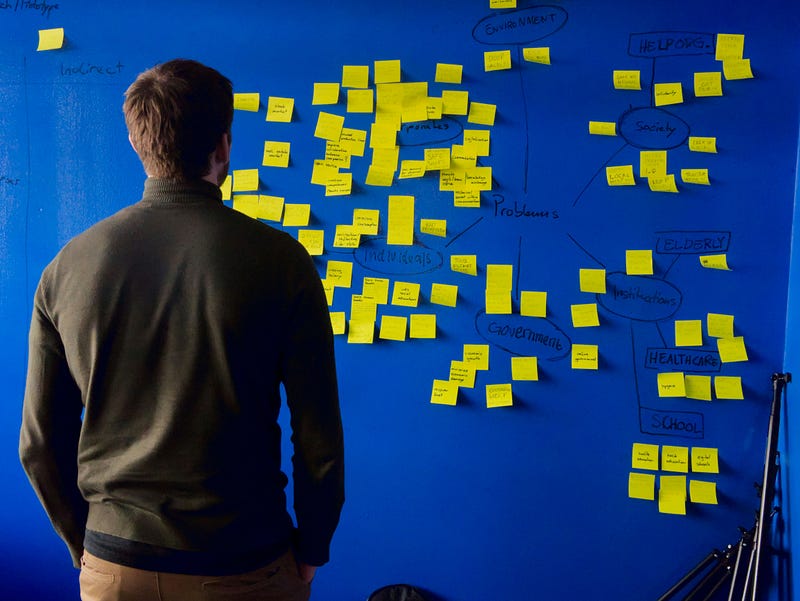
Work in the corporate environment wasn’t considered to be very varied. Each function required a specific set of skills and had an individual development path.
It didn’t matter if it was about engineering, finance, communication, human resources, or procurement, for each one of these positions specific studies were required to master the necessary tasks of the job.
Before, competencies were the prerequisite for work. However, now, through the rise of technology, work is becoming the prerequisite for competencies.
Before, processes were manual and companies were focusing mainly on operational tasks. However, now most of the processes (e.g. accounting, engineering, or procurement) can be automated leading to a big shift from operational tasks to development tasks.
Now it is less about mastering specific skills to perfectly perform specific operational processes and more about developing a wide set of competencies to use technology to further improve these processes.
Consequently, we need to reconsider the function-specific career paths and focus instead on developing a new set of skills that allows us to keep up with the fast pace of technological development.
Dealing with complexity
The more technology advances the more opportunities for improvement arise.
It is less about mastering the details and more about being able to understand the big picture to discover new insights and new connections.
We are more and more overloaded with data and information, we need to master the skill to critically analyze and use all these inputs to optimally navigate the complexity of the world we are living in.
It’s not only about understanding the complexity but also about simplifying it, creating out of it a clear and simple strategy to motivate and align all coworkers.
Being action-oriented
Having a good strategy is only the first step, what is also crucial in the modern workplace is the ability to implement it.
Irrespective of our job title, being action-oriented is a skill that always pays off.
It entails the ability to derive out of general assignments very concrete tasks that put all together lead to the required results.
For that we need to be very structured and organized, maintaining an overview of the status of each task, their dependencies, and their deadlines.
Only by doing so we can prioritize properly and make sure that the effort is put in the right places and that we can optimally manage our time.
Successful time management is also shown in the ability to always think action-oriented. We need to learn to start every meeting with a clear goal in mind and to finish it with concrete results and follow-up tasks with clear responsibilities.
Mastering communication
For successful meetings communication is key. The better we can break down complex thoughts, the clearer we can convey our ideas, the more effective we become in making information flow.
Especially now, with the advent of technology, the speed of information has increased and is therefore more challenging to master.
Technology is reducing the barriers to communication more and more.
What took long emails to be communicated can now be discussed much faster in chats. Documents that needed to be printed out can now be shared via links.
Information flow is crucial for the success of a company, and mastering this art is critical to having a successful career.
When starting a project or assignment, it is key to understand who has to be involved, how, and to what extent. It is crucial to bring all the necessary people on the same page by communicating the necessary information at the level appropriate for each person involved.
Working in a team
The more individual tasks can be automatized by technology, the more the focus shifts from operational work to project-related work.
Every project requires competencies from multiple areas and most importantly the ability to cooperate. Through the increase of complexity and the higher speed in information flow, the ability to work in a team has become key.
To successfully cooperate in a team the key rule is to remember, that even if we are in the workplace, we are still all humans and act first out of emotions and impulses before following our logic.
Consequently to be a good team player the key rule is to be a good person.
We should bring our set of values to the workplace and use them as our guiding principle when working in a team.
We should focus on listening and understanding the point of view of others before replying, we should praise and motivate others, be kind and forgiving when there are mistakes, strive for mutual growth, and give trust, responsibility, and credit instead of putting others down and ourselves under the spotlight.
If we strive to improve our emotional intelligence, it will not only benefit our private relationships but also our success in the workplace. We learn to cooperate with anyone irrespective of their mindset and character.
Becoming highly adaptable
Adaptability is not only required to work with different types of people but also to keep up with the increasing pace of technology.
More and more tools will be available automatizing tasks we were once expected to master. We need to accept that our job will change constantly and we should always be up to date with technological developments to use them in our favor.
We should learn to learn quickly because we will find ourselves dealing with completely new topics in new environments. This means developing the ability to quickly get the big picture, navigate through the many available sources, and ask the right questions to know the critical points faster.
We have no choice but to always be curious, embracing all the new changes that technology will bring to the workplace instead of fleeing from them.
Change brings new challenges, so we need to be resilient and keep on moving forward even through the most difficult times.
Change brings uncertainty, so we need to plan, choose, and act even when we are not sure if we are moving in the right direction. Learning to deal with uncertainty is a skill we need to master.
Change is the only certainty for the future, and adaptability is the only answer.
Work is changing at an unmatching pace, especially now with the advent of artificial intelligence, cloud computing, and automation.
We are more connected than ever, able to exchange and access ideas and information at an unprecedented speed. There will be more and more room for improvement of the existing processes, and the intricate level of interconnection between different topics and areas will grow.
We will be increasingly in charge of deriving and managing tasks out of general assignments, cooperating, and letting information flow properly.
It will be challenging but equally rewarding, as we will have the opportunity to constantly reinvent ourselves in the workplace, instead of being bound to the path we chose at school or university.