
Skates, Drugs, and How to Rock and Roll on When Life Knocks You Down
Turn a setback into a comeback with this story on how to rebuild your body and mind
The Trip Before the Trip
It was a cool, clear, and crisp February night here in New Brunswick Canada.
The snow crunched with every step you took and the moon was full and bright, casting a calm blue hue on the white ground below.
My wife was out of town across the border in Maine for work and our daughter was working at her part-time job at our local grocery store. So after supper, I decided to take our younger son out skating at one of our local outdoor rinks.
We arrived at the rink hearing the faint voices of families laughing and skating, as the sound of the sharp blades of steel cut through the cold solid ice.
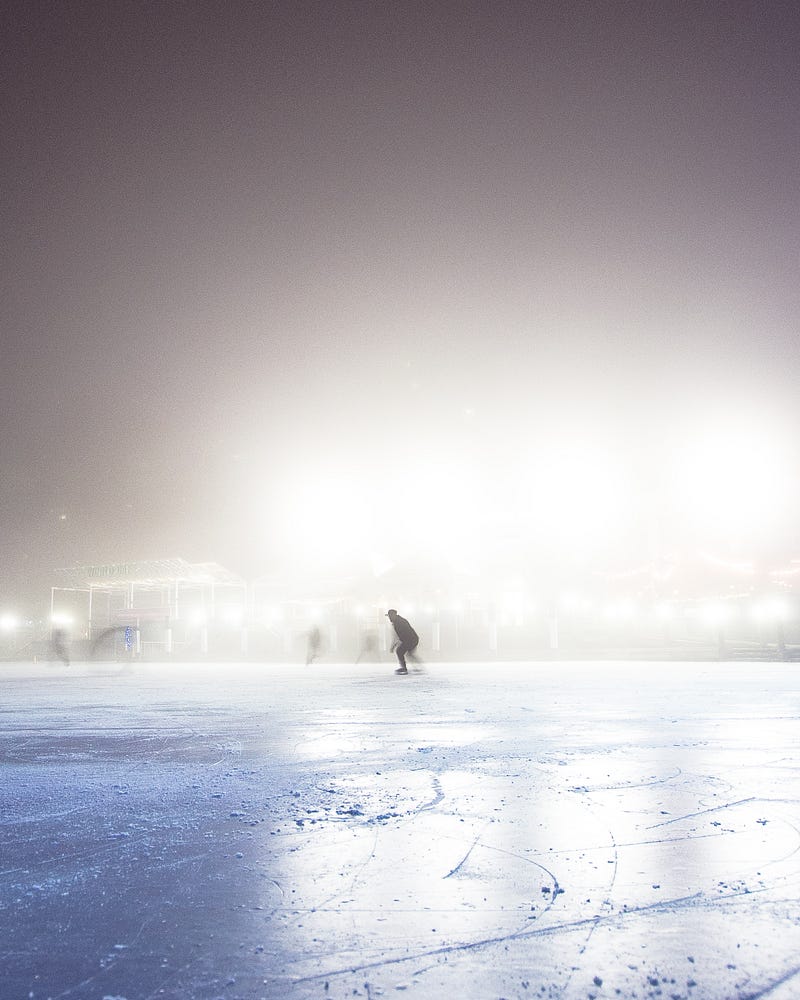
After a few minutes, we were laced up and having fun together racing around the rink and creating fast-moving shadows on the well-worn ice illuminated by the lights overhead.
But unfortunately, our fun and shadows would come to a screeching halt just 10 minutes after getting on the ice.
My son decided to take a little break on a bench so I started to skate toward him. As I reached full-stride skating across the rink, I suddenly hit a rough rut in the ice.
Instantly both of my legs were flying up in the air and my body was falling back. I instinctively reached out my arms behind me to break my fall and forcefully fell back with a bang on the unforgiving ice!
As my right hand hit the ice behind me, I heard my wrist make a sound similar to ice cracking on a frozen pond, and the sheering throbbing pain began to rush through my arm.
As I lay flat on my back and looked up at the stars in the night sky I was dazzled by what just happened. I could hear my son yell out”
“Dad, are you alright!?”
To calm his initial concerns I assured him I was, but as I slowly got up to the bench while clutching my right arm in severe pain, I was pretty sure it had to be broken.
Thankfully, a middle-aged lady skating with her friend noticed what had happened and came and sat alongside me to see if I needed help and told me she was a nurse.
She could clearly see from the impact of the fall and my escalating pain that my arm was likely broken. But now my teeth were chattering, my breathing was short and I was starting to shiver beyond control which was a sign of going into shock.
As I did my best to suck up the pain and slow down my breathing (thanks to years of meditation), we decided it was best to call an ambulance.
Within minutes the sound of the sirens sharply breaking through the cold winter air was a stark reality that this night of father-son fun was taking an unexpected and unfortunate turn.
The paramedics helped to take off my skates, put on my boots, and assisted me off the ice and into the ambulance with my son.
Besides the intense and throbbing pain in my arm, all I could think about was reassuring my 9-year-old son who was visually scared and upset, that dad, and everything would be ok.
But as I sat in the back of the ambulance, my worries started swirling in the back of my mind…
My wife is away in the US and who would pick up my daughter at work in a few hours?
“Whatta a night for this to happen!”
I said to myself a few times with some F-bombs of frustration squeezed in there as I held my crooked arm close to my body.
But I remember one of the paramedics offering some quick wisdom and saying to me
“There is never a good time for an accident. That’s why they call it an accident.”
As soon as we got in the ambulance I got my son to hold my phone to call my wife and tell her what had happened.
She quickly did what a wonderful wife and mother do and calmed our son down. Then arranged a ride for our daughter and booked a rental car to drive home early in the morning from her work trip.
After that, my drive to the hospital was a “trip” and a night I will never forget!
The Ketamine-Fueled Fast Lane
The last thing I remember is riding in the speeding and bumpy ambulance, with the paramedics having to cut off my new winter jacket in order to sling my arm.
All while I was sucking down deep breaths of nitrous oxide (laughing gas) to numb the pain in my arm. It helped take the edge off but not enough to laugh.
When that was empty, they hooked an IV into my arm to give me a stronger painkiller, known as ketamine.
Ketamine is a dissociative anesthetic and pain-killer used medically for induction and maintenance of anesthesia. It is also used been used as a treatment for depression, a pain management tool in medical settings for injury, and sometimes as a recreational drug known as called K, Special K, Super K, and Vitamin K among others. It can produce vivid dreams, hallucinations and a feeling of mind-body separation.
The rush of sensory and visual distortions from the ketamine-induced trip started within minutes, with me seeing spinning spirals full of color and light. I felt like I was blacking out and falling into an endless bucket of rainbow-colored paint.

The euphoric unreality was matrix-like, mind-bending, and terrifying!
It came with intermittent glimpses of melting paramedic faces, faint voices, and the feeling of floating out of my body totally out of control, and into the infinity of deep space.
At some points during my terrifying but then thankfully painless “trip” to the hospital, I literally thought I was dying. I remember repeatedly asking the paramedics:
“Am I ok?” “Where am I?” and “Am I dying?”
I was seeing snapshots of my life and bright lights flash before my eyes as I began what felt like an uncontrollable spin through the final tunnel of life.
Thankfully it was all drug-induced, as the effects started to dissipate within an hour and I regained semiconsciousness while realizing I was being wheeled into the hospital for X-rays.
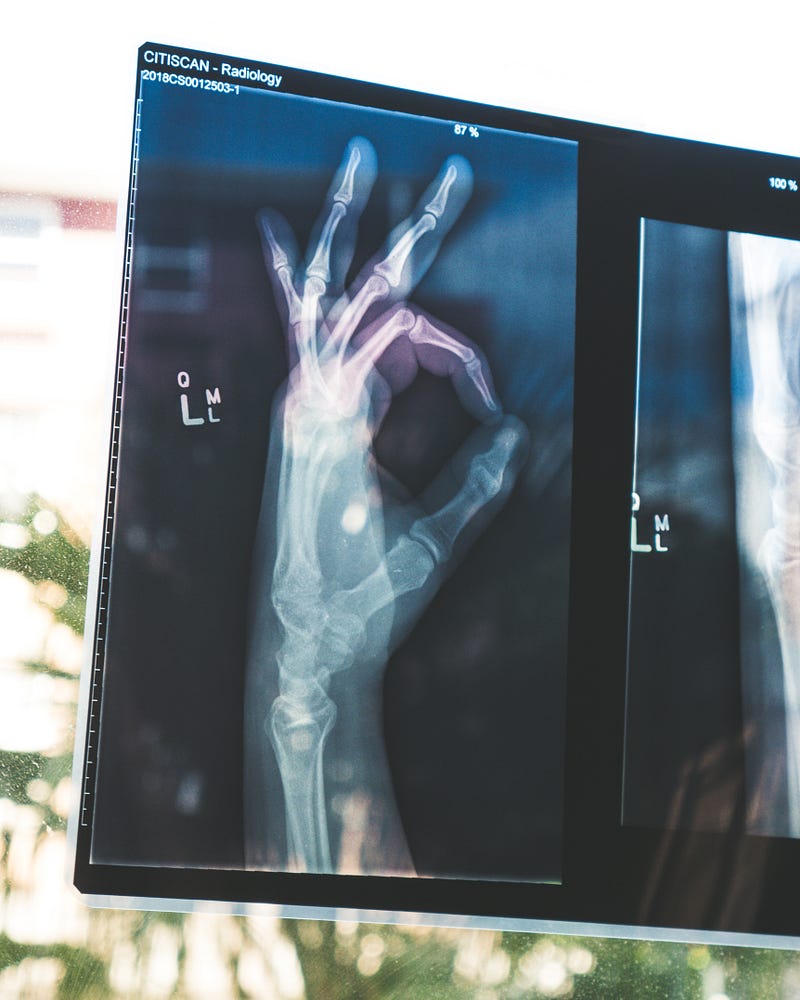
Which quickly revealed that I had broken my wrist in two places…
The main distal radius bone in my lower forearm, and “smashed up” (the Doctor’s exact words) a small carpal pisiform bone in my wrist.
By this time a friend that my wife called came and picked up our son at the hospital and our daughter at work and brought them home to be together, so they were ok.
Then the doctor said they would need to reset the bones in my wrist and cast my arm. And this would require them to give me more anesthesia and another dose of ketamine!
It was like being on the scariest roller coaster ride of your life with your eyes closed and finally getting off. Only to be told you are going on it again.
And off I went into another scary trip through space and time, swimming in a pool of colors and spinning hospital lights.
I awoke to the feeling of my arm floating to the ceiling but while I was “coming down” I realized it was wrapped in a rock-solid cast of reality.
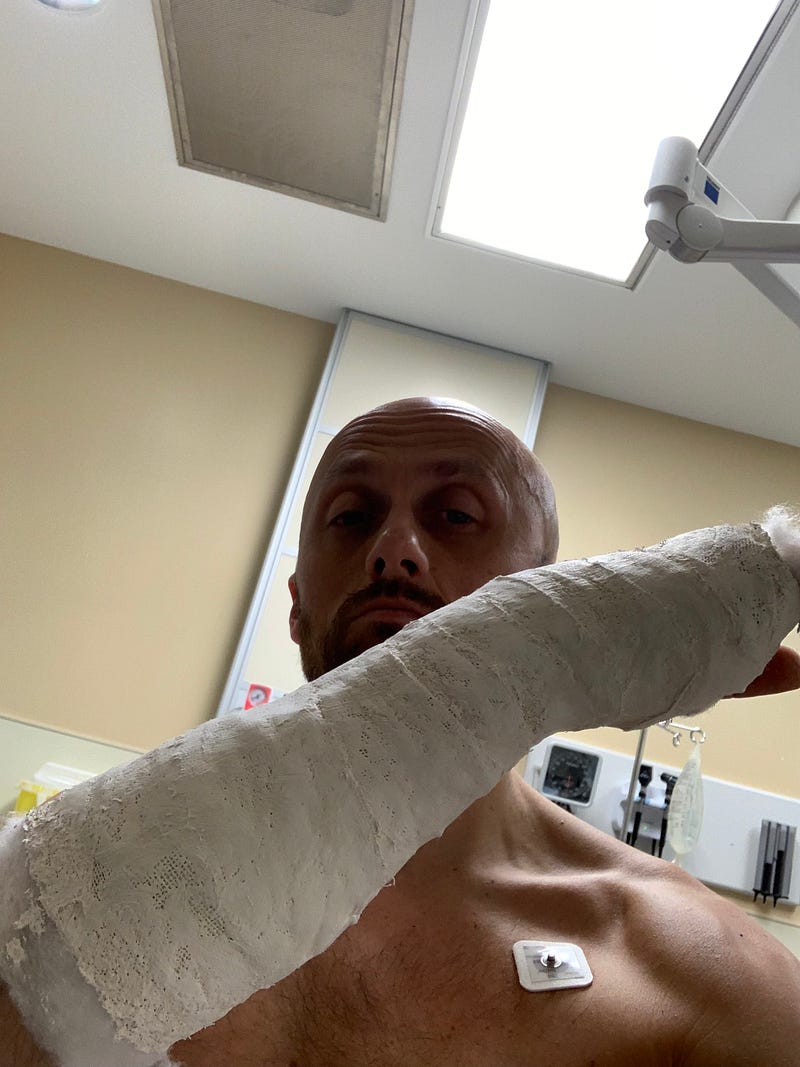
“You’ll need at least 6 weeks in the cast and we want to see you next week for X-rays to see if the bones are set properly and if not you might need surgery.” the Doctor said.
By this time it was 1 am. So when my head cleared and I was able to get up and move around safely, the hospital called me a cab home.
My daughter was still up waiting for me when I arrived and I gave her half a hug with my full heart. I assured her that I was ok and that accidents like this suck, but they happen.
Sitting up on the couch I eventually drifted off to sleep and put the crazy night to rest…
The Road to Recovery
My wife arrived home early the next morning from her work trip and my road to recovery began with my dominant right arm in a cast.
The pain was constant day and night and I hesitantly used a rotation of Advil and Tylenol for that first week only to get by. Relying too much on NSAIDS (Non-steroidal anti-inflammatory drugs) for pain management for too long can cause more harm than good.
It was so uncomfortable to lie down in bed to sleep that I spent the first week trying to sleep lying upright on the couch.
During the day I quickly came to realize how much you need your hand and especially your wrist for doing almost every little task!
- From eating to drinking to getting dressed and driving.
- To showering, shaving, self-care, or anything in the bathroom
- Cooking, chopping, cleaning, and using a computer, or phone.
- Opening doors, jars, cans, and bottles of wine.
- And of course, working out!
I felt useless and like a burden to everyone around the house not being able to do all the little things a supportive husband and father takes pride in doing for his family.
Plus as someone who has the flexibility to work from home, I am also the main cook in our house and chauffeur for driving our kids to school and sports. Which any parent will understand, is a full-time job in itself!
But this was all now left to my wife on top of everything else around the house, which made things very difficult for her as she works a demanding corporate 9–5 job.
That and much more was all an annoying struggle and in most cases, I needed to go as slow as a sloth, use my left hand or lean on my family for help.
It was a mental as well as a physical struggle as I’ve been a health and fitness coach for over 25 years now and a big part of my identity and lifestyle is around strength, fitness, and food.
But there would be no lifting anything on my right side or chopping and cooking with my right arm for a good while.
My daily joys of fitness and food were instantly taken away from me or at least very limited for the next 6–8 weeks.
Perspective and Positivity
Despite having many frustrating days, it was important I kept an attitude of gratitude and a proper perspective on what had happened.
Having a broken arm in a cast sucks, but it is minor compared to some disease diagnoses or life-altering injuries some people have to suddenly deal with.
I am grateful for working from home now for the last 3 years. Being able to run my own online fitness coaching company and not teach multiple fitness classes a day in the gym that I previously owned for 12 years. So my physical demands for making a living only require me to sit at a computer.
But my other professional passion for writing was also put on the side burner.
Writing is the first thing I do every day at 5 am. It was how I wrote my two books, and thousands of articles, including this one.
Even using a keyboard and mouse was next to impossible with my dominant arm in a full cast.
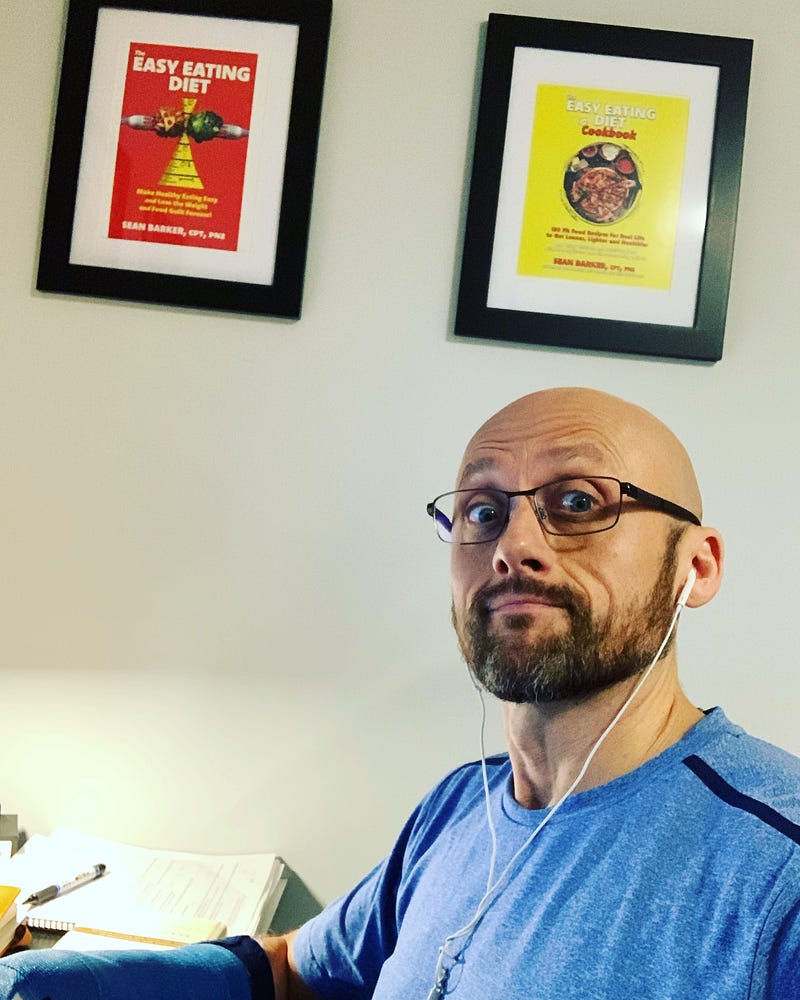
But with lots of online clients to coach and a burning desire to create, I quickly started to learn to use my mouse and two-finger type with my left hand. Which was slow and awkward AF!
But like I always tell my clients on their health and wellness journey.
“Practice makes progress and slow is better than standing still.”
I also took advantage of the voice dictation-to-text option on my iPhone and MacBook to quickly create content and send messages back and forth.
Rise Up and Rebuild
Week 1
It was painful just to get up and move around and I wasn’t sleeping well at night tossing and turning on the couch. So the first week was just about pain management, rest, and getting in good nutrition to support the recovery process.
I spent a lot of time on the couch watching TV (which I rarely do), keeping my arm elevated on a stack of pillows, and making sure I maintained a healthy diet high in protein and produce.
But made sure to eat a little fewer carbs and calories as my activity level was drastically reduced.
Plus adding in extra nutritional supplements to support recovery and reduce inflammation like collagen, fish oil, bromelain, and curcumin.
Week 2
I was sick of lying around and had to start leaning on my mindset and Stoic philosophy of “Control what you can” so with manageable pain I began focusing on at least maintaining my mobility and strength in all the other muscles I could move.
So for the first few days that week in the morning, afternoon, and evening, I started doing some bodyweight-only exercises.
A couple of sets of 15–20 reps of bodyweight squats, overhead shoulder stretches, and bending my right arm slowly at the elbow in order to maintain mobility in the joint and encourage blood flow around my body and the injured right arm.
As an experienced trainer, I was also aware of the muscle crossover education effect…
The muscle crossover education effect has been shown in studies to maintain some muscle and strength (15–30%) on the inactive side limb when you continue to train the other side and something you can use if one limb of your body is ever restricted to move due to injury.
Once I felt that those movements were more manageable, I started to pick up some light weights again and work the good side of my body with 1-arm squats, 1-arm shoulder presses, 1-arm curls, and 1-arm tricep extensions.
Along with some lying crunches and seated leg raises to keep my core in check.
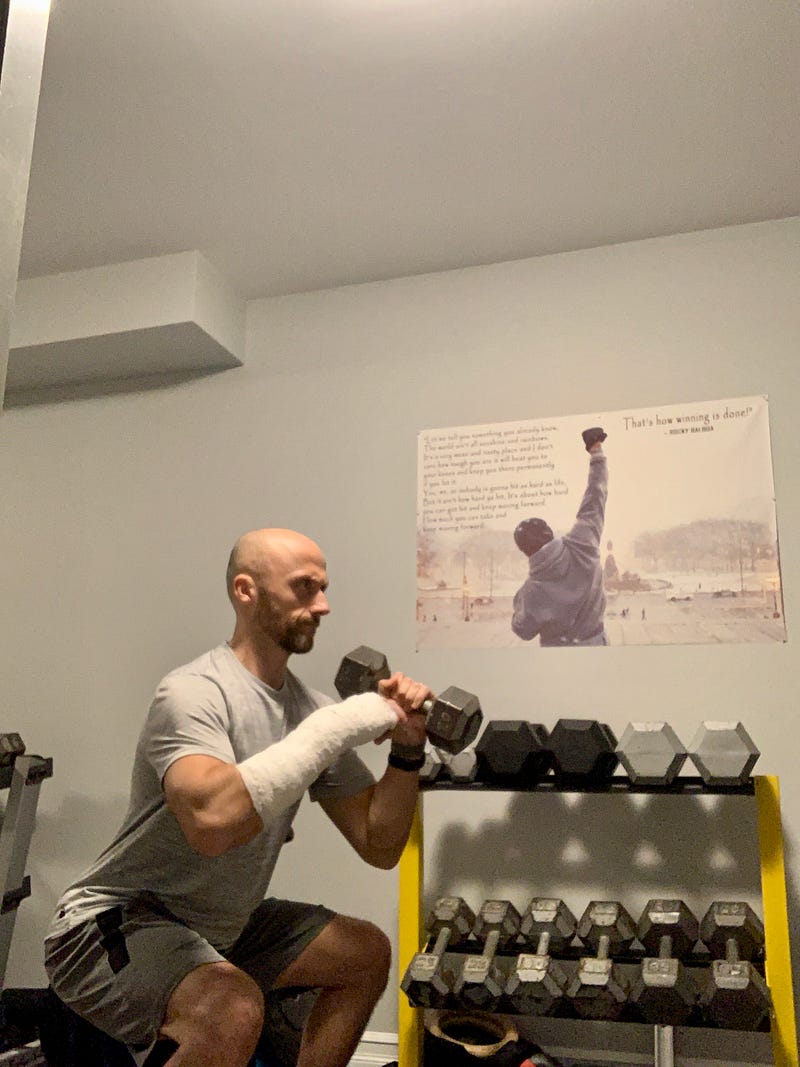
Just when I was slowly getting moving again and a little of the pain started to subside, I had another follow-up X-ray which showed the bones were set good to heal and they removed my original plaster cast.
This is a common procedure after a broken bone to adjust the cast after the first week once the initial swelling reduces. They then put on a new synthetic cast that at least gave my elbow and fingers a little more freedom.
But in order to do that they had to twist and torque my arm again to put me in a new cast, so the pain came back in full force! I had to stop all intentional exercise again for the rest of the week and I felt like I was starting all over on day 1.
Step by Step
Week 3
It was time to move more and I missed the fresh air and outdoor walks I take after lunch each day. When I also listen to a podcast or an audiobook to keep learning and break up my day.
So I asked my wife to replace the laces in my hiking boots with no-tie elastic laces.
Yep! Not being able to tie my shoes was another annoying daily task that made me feel useless and incapable.
So off I went for my walk, slow and steady with my cement-like cast drawn up into my coat. Being late February in Canada, I had to be extra careful of my steps on the snow and ice.
But I was just glad to get outside and move again!
Week 4
This week started off with an uplifting surprise.
My wife knew how upset I was that the new winter coat that I just got for Christmas was destroyed the night of the fall when the paramedics had to cut it off of me.
So she surprised me with a brand new one!
It put a much-needed big smile on my face and a spring in my step as I felt like I got a little joy back from before that night. A night that took some of my mobility and freedom away.
Plus I would stay warm and cozy on my walks again :)
Week 5
I was back doing a little more with my workouts.
And putting that muscle crossover education effect to the test working my legs and the left side of my upper body hard. And using mostly bands and very light dumbbells on my right side and doing any movements that didn’t cause pain.
Week 6
My final week in the cast and I was feeling a lot better mentally as well as physically. I even did my first (but slow) run back on the treadmill.
It felt great to get my heart rate up and break a little sweat.
Week 7
It was now March 21st and I was looking forward to this day for 6 long weeks. Today was the day I was scheduled to get my cast off!
Everything went smoothly as the final X-rays looked good and the nurse cut off my cast and helped clean up my flaky cruddy arm.
The doctor told me that all was healed in the bones but not to be too eager and that my wrist and the surrounding soft tissue would be very stiff and sore for at least a few more weeks.
My hand was now free and I could feel the fresh air and warm sunshine on my skin again. But as the doctor warned me, it felt like my wrist was still caked in the hardened plaster of the cast and I could barely rotate my wrist or upper arm without a lot of pain.
But with my exercise background, the doctor was confident that I would take it slow performing my own physio rehab exercises and be back to 100% in a few months.
So I added twice daily wrist and forearm physio exercises to my workout routine, such as wrist rotations and upper arm supination to get a range of motion also back in my bicep. Along with performing slow forearm extensor stretches, and forearm flexor squeezes with a soft stress ball.
I was especially happy to be able to get back into using my hot tub again, which I regularly enjoy each day after my morning home workout.
The warm water and massage jets felt so good on my sore stiff arm and allowed me to increase my range of motion slowly during these rehab exercises and stretches when done in the water.
Lessons Learned
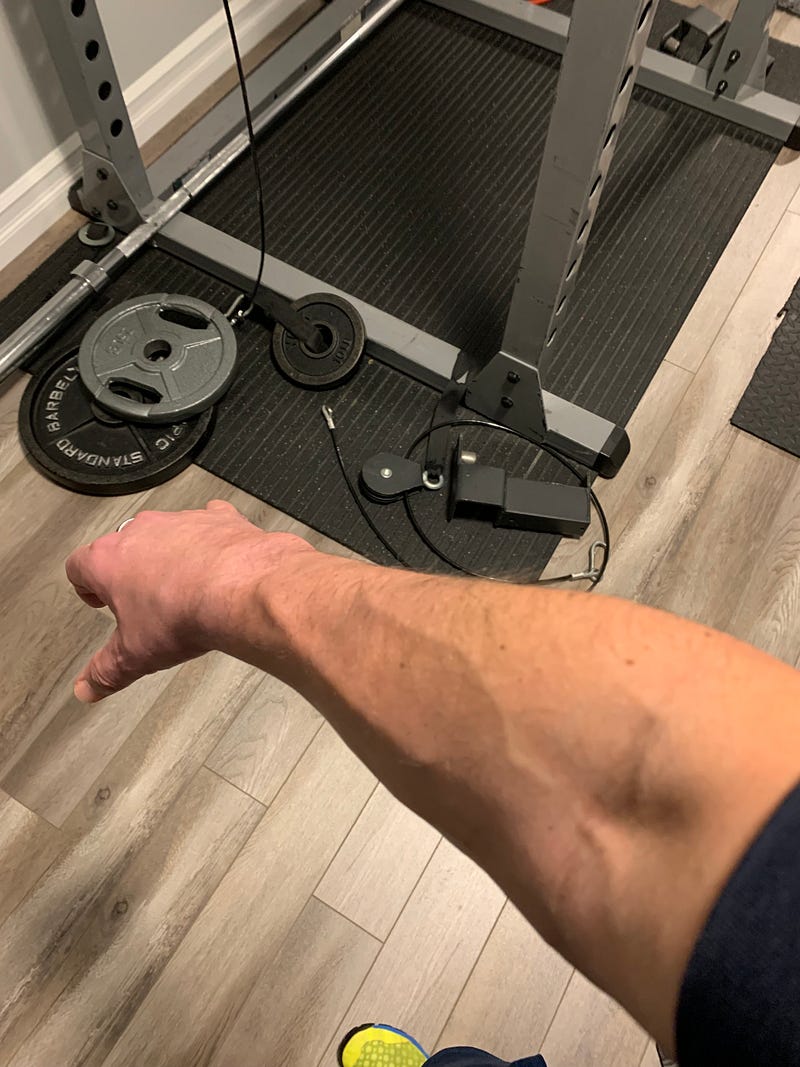
It’s now been two months since getting my cast off and I’m making slow but steady progress in my wrist and arm rehab with about 80% of my mobility, strength, and rotation returned.
I started by picking up a 2.5 lb plate, then a 5lb dumbbell, and can now hold onto a 40-pound dumbbell again.
And that muscle crossover education effect seemed to work!
Despite my right arm being locked in a cast for 6 weeks, it surprisingly didn’t atrophy as much as I thought it would due to all the other unilateral training I did.
I want to wrap up this long story (thank you for reading!) by saying that although I believe I became stronger mentally and physically by going through this journey, I am not the hero of this story.
The true heroes in this story are the healthcare workers that helped me that night.
The paramedics, doctors, and nurses. Along with my wife and kids for putting up with me and patiently helping me these last 6 weeks.
But I hope this story inspired and empowered you to get back up when life unexpectedly knocks you down and tries to break your body and spirit.
Because it’s not brute strength, an iron will, or wishing it away that will move you forward.
It is being able to accept your new reality and get help from others.
Being able to quickly adapt (but have patience), and stand strong and stoic in times of pain and uncertainty in order to rise back up.
That’s how getting broken can make you stronger.
Sean Barker is an award-winning fitness coach and best-selling author of the Easy Eating Diet and The Easy Eating Diet Cookbook on Amazon. Online he helps busy parents and professionals get fit in less time while still enjoying pizza and wine. You can apply for his Online Custom FIT Coaching here: https://bit.ly/3wzBhH


