
Size matters, but being big isn’t always a plus
(Introduction to Economics, Lesson 16)
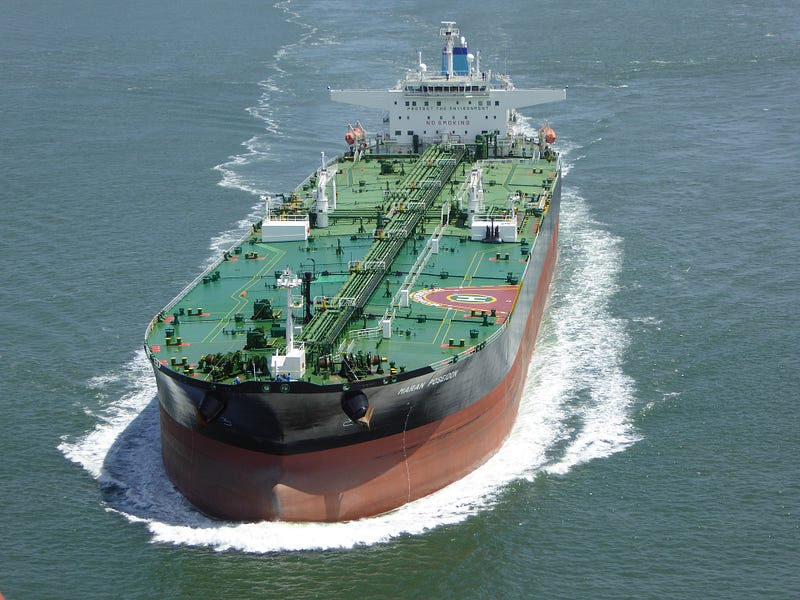
Over the past couple of centuries in particular, mankind has been conducting a huge and ambitious, but also very risky and dangerous experiment — a grand experiment to see what can be gained if you do things on a huge scale.
What if, instead of each family having a small farm on which they can provide enough food for themselves and a small surplus, we have enormous farms capable of feeding thousands of people? What if, instead of people spinning cloth and making clothes in their own backrooms, we have huge factories producing cotton products on a vast scale?
Towns, then larger towns, then cities were built to supply the workers needed in our huge factory complexes and their associated supply industries. We built huge factories, then chains of factories, then massive production ecosystems spanning the globe, involving hundreds of thousands of people cooperating to make and distribute a particular product.
The result of this experiment has been huge increases in our productive capabilities — but alongside such advantages, our strategy has brought considerable disadvantages and even bigger risks!
The advantages gained from working on a large scale, are often referred to as The Economies of Scale. Cars, for example, may be able to be produced more cheaply and more efficiently in a large factory using an assembly line with thousands of workers or robots, than they can be produced by a few people working in a small garage. Furthermore, a large multinational company with dozens of factories and hundreds of specialist suppliers may be able to produce cars particularly efficiently.
However, it is important to understand that there is no general rule that says that big is better. Some products can be most effectively produced on a small scale. Most of the best novels, the best paintings, the best pieces of music were each produced by a single artist.
And the disadvantages of working on a huge scale can be very considerable.
When an entire product is made from scratch in a single place using locally-produced materials and finally sold to a local customer, there is very little need for transport of raw materials, part-finished goods or finished goods.
Many modern goods, however, are produced using a large-scale operation that is heavily dependent on transport. Raw materials may need to be transported thousands of miles to hundreds of parts-producing factories around the world. These parts then need to be transported to a final assembly line. The finished products are often then transported to countries all around the world. Due to transport costs, this can often seem to be a deeply inefficient and wasteful system — and, in many ways, it is.
One of the problems is that many modern manufacturing systems were developed in times when fuel was extremely cheap. Cheap oil from the Middle-East made transport ridiculously cheap. Furthermore, few people were worried about the environmental impact of burning fossil fuels. Not many people were aware of the greenhouse effect and even fewer cared.
With fuel costs many, many times greater than they were a few decades ago and increasing concerns about the dire environmental consequences of burning fossil fuels, our globalised manufacturing systems don’t seem such a good idea as they once did.