
Six Tips on Building a Creative Writing Bonfire

Photo by Hans Isaacson on Unsplash
By JANET STILSON
It seems to me that desire to tell stories is universal among humans — almost as necessary as it is for a bird to sing. The urge must be written into the DNA of who we are. There are tales we want to blurt out to our friends in casual conversations. Or maybe we dream about getting our stories produced or published, wowing much larger audiences.
When bigger goals are at play, many people don’t know how to begin. It’s a fantasy they keep tucked away for their retirement years, or when they can cajole someone else to write a story for them.
I understand. The prospect of putting down words on a page can seem overwhelming. But there are ways to do it, one word at a time.
Over the last several decades, I’ve worked as a journalist, writing stories based on what people tell me. I’ve had a lot of fun doing that and met a lot of fascinating people. But my deepest passion is creative writing. My screenplays have been recognized with awards and my sci-fi novel, The Juice, was published last year to rave reviews. The book relates to my specialty as a journalist: big media companies, and how they may increasingly shape our thoughts and behaviors.
While I’m not a bestselling author by any stretch, I’ve learned many lessons from those who are. And I’ve come to some conclusions, through passion and persistence, about how one goes from scratching out the first line of a story to the end point, when one can finally (thankfully) write “The End.”
If you are someone who has always wanted to write a fictional story, but don’t know how to go about it, here are six tips.
1. Writing courses and writing consultants can “up” your game to a tremendous extent, or totally miss the mark. The funny thing about storytelling is, sometimes a piece of writing that impresses one reader (or teacher) seems totally uninteresting to someone else. This doesn’t mean the critic is necessarily bad at what they do. Instead, it may be that they’re the wrong person to read what you’re writing.
Chances are, you’ve experienced something like this yourself. Have you ever gushed about a TV show to a friend, only to discover they thought it was a snooze? Everyone processes stories differently.
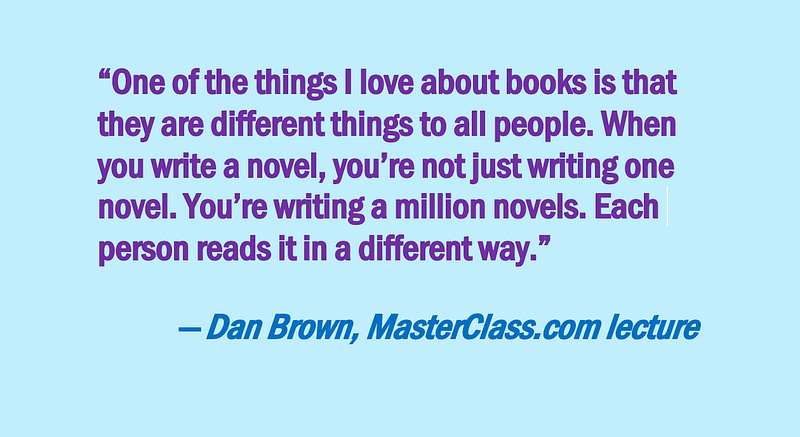
The trick is to find professionals to give you insights into the craft of writing who are on your same wavelength. Do research to discover if a certain pro leans in certain directions. Perhaps they just don’t like romantic comedies, and that’s what you’re writing. They probably aren’t going to give you the best advice.
There are tons of classes out there, many of them continuing education courses at colleges, some given independently by teachers with solid reputations. Do your research to find the ones that are right for you. And believe me, you will find them, even if you live out in some breathtakingly beautiful remote spot. (Jealous!) Lots of courses and consultancy work are done online these days. If you have broadband, you can find them.
Should you take a course that provides feedback, and after a few sessions the teacher isn’t reacting in ways that are helpful, don’t get discouraged. Just move on to someone who can give you the support you need.
2. A formal writing education isn’t the only route to follow. Recently, I heard a lecture given by Elizabeth Gilbert on the Calm app. She related that she hadn’t been formally trained as a creative writer by earning a special college degree. Instead, the author of Eat, Pray, Love said that she found many of her teachers in books — authors whose work inspired her, whose techniques she studied by herself.
While I have taken many writing courses, a lot of my education has involved reading — not only books on how to write, but fiction written by great writers. And I don’t just read their books once. The first time I read something, it’s largely for pleasure. But the real inspiration and revelations kick in when I read the books or scripts again, attempting to understand the craft, the tricks of the trade, as it were.
How was it, for example, that a certain character stole my heart? Was it the way he spoke; the bad choices he made for entirely good reasons; his small kindnesses? Was there a good reason why the author chose to write in the first person rather than third person? Looking “under the hood” of a book to try and understand techniques can be so rewarding.
3. Perseverance is your friend. Making time to write nearly every day is essential if you want to produce a fine piece of writing. Most successful professional writers devote a certain number of hours daily to their craft. This may involve sacrifices, like giving up some work if you freelance (that would be me), getting up early, staying up late. Find the time.
Maybe a writer doesn’t get as much done as they would like on a given day. Maybe they hate what they’ve written. Shouldering past the feelings of inadequacy, of failure, of despair, is essential. Just keep going.
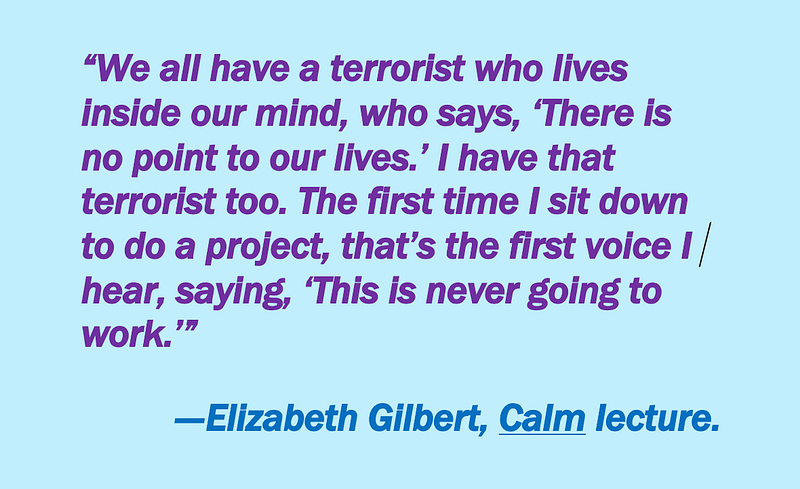
Every writer feels those emotions. It’s part of the process. To get something accomplished that’s worthwhile, put your butt in the seat, wherever you feel comfortable writing, and stay there, through thick and thin.
What happens if you don’t keep working day after day? Believe me, I know the answer to that. When I’ve let several days go by, I lose momentum. The ideas that were percolating around in my mind when I last left off grow dimmer. It takes a lot more effort to reestablish the level of immersion into the story that I need.
It’s not the end of the world. I get my mojo back. But those gaps are far from ideal.
Maybe you’ll aim for two pages a day (as my own writing mentor does), or a certain number of words. For me personally, the goal is the amount of time I spend — a minimum of two hours, nearly every day — four hours, if my schedule allows. I take one day off every week to get rid of a lot of personal chores and take that hike that I don’t have time for on a normal workday. A little time away brings me back to the laptop with renewed commitment.
4. Stretch, walk, and relax. My chiropractor and acupuncturist would tell you that one of the things about writing that I tend to forget is to stretch out my body. It doesn’t take a lot of intelligence to figure out that the average human being cannot stay in one position for a long period of time without becoming constricted. Which leads to muscle pain. This is one of my personal blind spots that I’m constantly trying to overcome.
Get out of your chair every 45 minutes or so and take a five-minute break. A few yoga stretches can do wonders for your body and give your mind a chance to release a little. Maybe you’re more of a Peloton person or love to meditate. I have a friend who thinks 10 minutes of hard jump roping is just the thing. (Definitely not my jam.)
You may find the exercising before you first sit down to write on a given day also gives you some firepower. Every morning, I do mat exercises and listen to inspiring talks by well-known writers or other people who are champions in their field, to learn from their practices. It gets me focused and in the right frame of mind.
I also find that, after the writing is done, long walks help me generate new ideas. It allows my subconscious to do its work. Questions about the directions my story could take, or what my characters are experiencing, start to take new directions. Or not. Sometimes nothing comes to mind, just happiness as I experience nature. That’s valuable too.
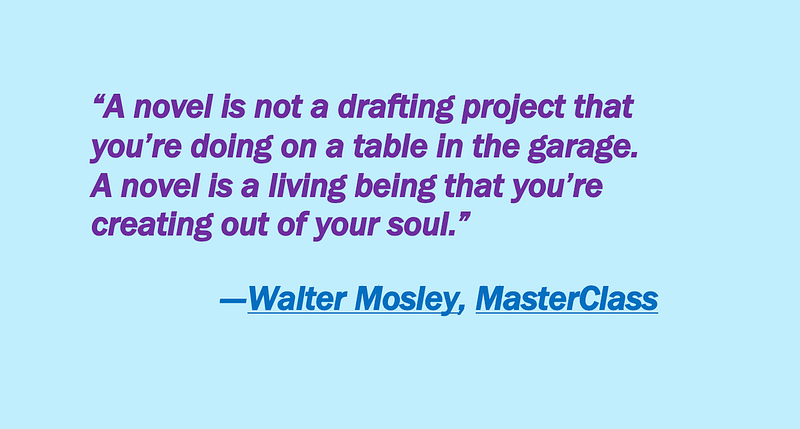
Oddly enough, I find that if I’m really tired or fatigued one morning, and I force myself to sit down and write, I actually get some good work done. I have an extremely unscientific theory about this: because parts of my brain are less energetic, it gives the other parts where the inspiration lies a chance to shine through.
Not that I make a habit out of fatigue. If I can help it.
5. Find your people. It’s extremely valuable to identify communities of colleagues to give you honest feedback on your writing, or who can empathize with what you’re experiencing in related realms. I have a few different support groups that I count on.
One is composed of people in the creative arts, not necessarily writers. Essentially, we all run our own small businesses. We meet once a month and serve as unofficial boards of directors for each other — without the financial statements.
Over the course of a couple of hours, each of us takes a turn talking about what we’ve accomplished in the last 30 days and what we hope to do moving forward. Oftentimes, as one person reviews what she’s done, she realizes she’s accomplished much more than she thought. We tend not to give ourselves enough credit.
Along the way, we talk about niggling concerns that are sometimes personal and sometimes professional. And we help each other by providing new sources of information, new networking connections or just some sympathy. Sometimes there’s an elephant in the room that hasn’t been considered — some action we can take, some darned issue that must be addressed before we can move forward.
Writing groups are also great ways of sharing work and getting feedback. The trick is to find people who are either at your same level of writing or up one notch on the scale of expertise. As with finding teachers and consultants, you need to find people who appreciate your writing, and whose writing you enjoy and admire.
There are different ways to discover these fellow writers. You may take a writing class and strike up some friendships with other students. If you’re part of a social media group that’s focused on writing or a particular genre of fiction, perhaps you can strike up “conversations” with some of the other members and get a writing group going.
Professional organizations, such as New York Women in Film & Television or RoadmapWriters, have special writing groups that members are welcome to join.
One of the groups I belong to was formed when all the members were selected to be part of the Writers’ Lab for Women, sponsored by Meryl Streep and Nicole Kidman. During a long weekend of intensive work with some top-notch writing mentors, our “class” formed close bonds. We Zoom now and again to catch up on each other’s lives, and whenever I want feedback on something I’ve written, I can email a few of them, ask for their thoughts. Nine times out of 10, they take the time to read my work and give me exceptional insights into what’s working, and what isn’t. And I always enjoy reading their work.
Believe me, with writing, you need outside opinions. You can’t write in a vacuum, because even though you may think readers will pick up on what you’re envisioning, they can miss some points that seemed obvious. Characters that you think are clear-cut and utterly hilarious may seem flat to someone else. You need outside opinions to understand how your writing will be perceived, and how you need to revise it.
6. Research and outlining. Eventually, almost inevitably, writers hit a point where they don’t know what to write next. For me, it’s not that my well has run dry. There’s just not enough water in it (and it’s a little brackish). When that happens, I start researching whatever topic is causing my mind to go blank. Perhaps I need to find out more about cutting-edge weaponry. Or more advanced ways of measuring time and space.
On those research days, I may not write a word on my manuscript. But by taking the time to understand ways that I can deepen the world I’m creating with specific details that are believable to readers, I get past the tough spots and move on.
Research is also essential, in many instances, before you even put one word on the page. This will help you build details of the world in which your characters live, and how certain elements affect the ways they behave, how they think. For masterful writers of historical fiction, like Amor Towles (A Gentleman in Moscow), this research process can take a long time.
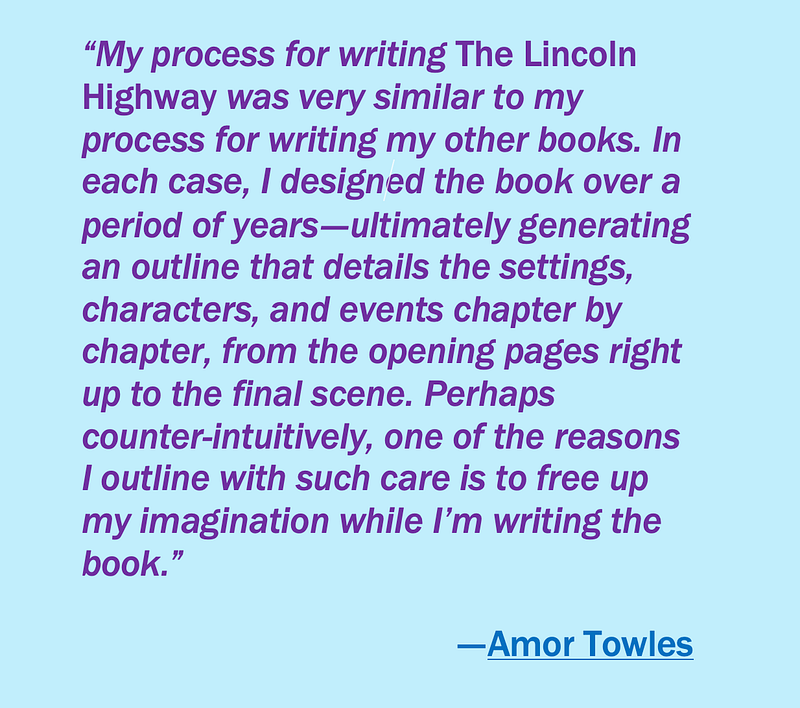
Not every writer agrees with me, but I’ve found that outlining is essential. It may seem boring to figure out bullet points for various actions that happen in each chapter of a novel — or each act of a script. But by “beating it out,” as screenwriters say, you can see the full picture of where a story is going. You can map out how a certain dropped glove on page 10 causes explosive repercussions on page 99.
That’s not to say that the story won’t change directions as a manuscript develops. In fact, I just rewrote the outline for the novel I’m working on now. By chapter 15, I’d gone waaay off the reservation from what I’d originally planned. I needed to figure out a new story map.
For some of us, writing is something that we have to do. It’s not simply the joy of telling a joke now and again or sharing old family mysteries with friends on cold winter nights. The craft of storytelling isn’t something that one learns completely in a year, or a decade or even 50 years. For many of us, there’s always some new aspect of the process, some new test of one’s imagination. That’s what makes it engrossing.
The greatest joy is not holding a book in your hands with your name on the cover. Although that’s an intoxicating experience! Regardless of whether one becomes an A-list writer (or not), by learning how to write stories that convey what we feel in our hearts, we enlarge our sense of personal achievement and add valuable meaning to our lives.