
Six Things You Need to Practice Yoga at Home
How to keep up your practice, even if your yoga studio is closed.
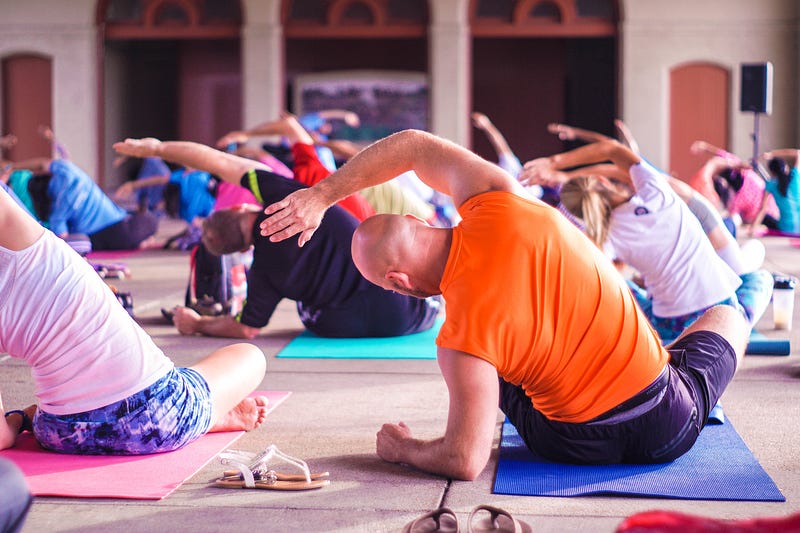
Across the country, yoga studies are going online or closing altogether. The pandemic has hit these studios hard, particularly since so many of them were already operating on a shoe-string.
If you can’t attend in-studio classes, there’s no reason to stop practicing. You can still get all the benefits of live classes from the comfort of your home — with a little flexibility.
Here are some things you will need to take a yoga class from home:
- A practice space: Most people don’t have an entire room to dedicate to yoga, but before you sign up for a class, figure out the best place in your house to set up. You’ll want to make sure there’s enough space for you to stretch out full length with your hands above your head or out to the side, both when you’re standing or laying down. Also think about the space’s proximity to things that might disturb you, like the front door or the kitchen.
- A laptop or tablet: You can watch class from your phone, but it’s better if you have a larger screen like a laptop or tablet. This will make it easier for you to see what the instructor is doing, especially since they can’t come over to you and assist you like they would do in a live class.
- A stable internet connection: Nothing interrupts the flow of your practice like freezing wi-fi. And if your internet goes out, it could log you out of the class you’re watching. Set up for your practice somewhere that you generally get a good connection.
- A class that’s right for you: There are a million options for classes. If you have a studio that you’ve visited in the past or a teacher you like, check to see if they have online offerings you can take. Choose the style of yoga you are interested in. If you want a stronger, more athletic class you might look for classes that say “flow”, “vinyasa”, “power” or “level two”. If you want a slower or more accessible class you might look for “curvy”, “gentle”, “accessible”, “yin” or “restorative”. Many studios also offer classes for people who are BIPOC or LGBTQ.
- Creative props: If you use props in class — and I hope you do — you might be hesitating to invest a lot of money right now. If you like to use a bolster for some classes, consider using a cushion, a firm foam pillow, or a thick blanket folded up to the shape you want. In place of a yoga strap you might use a belt, a dog leash, a long scarf or even a length of rope. Need blocks? Try a thick book or a wooden board. Be creative to support your body in accessing the poses in a way that is most comfortable for you.
- A sense of humor: With you and your instructor practicing from home, you never know when someone’s kid will interrupt looking for a snack, the doorbell will ring, or the dog will bark. I recently saw a hilarious video of a teacher I know whose cat and dog walked right between her and the camera and got into a loud and raucous fight. You might be interrupted, you might use a can of soup for arm lifts, you might lose your balance — it doesn’t matter. Take a deep breath and just enjoy the experience.
Now that you have everything you need, commit to starting a practice. Yoga can help be a great way to help you feel better and reduce the stress of living in the pandemic. Try it today!


