
Six Popular Places You Must See When You Visit Milan
Most of them have something to do with a guy named Leonardo
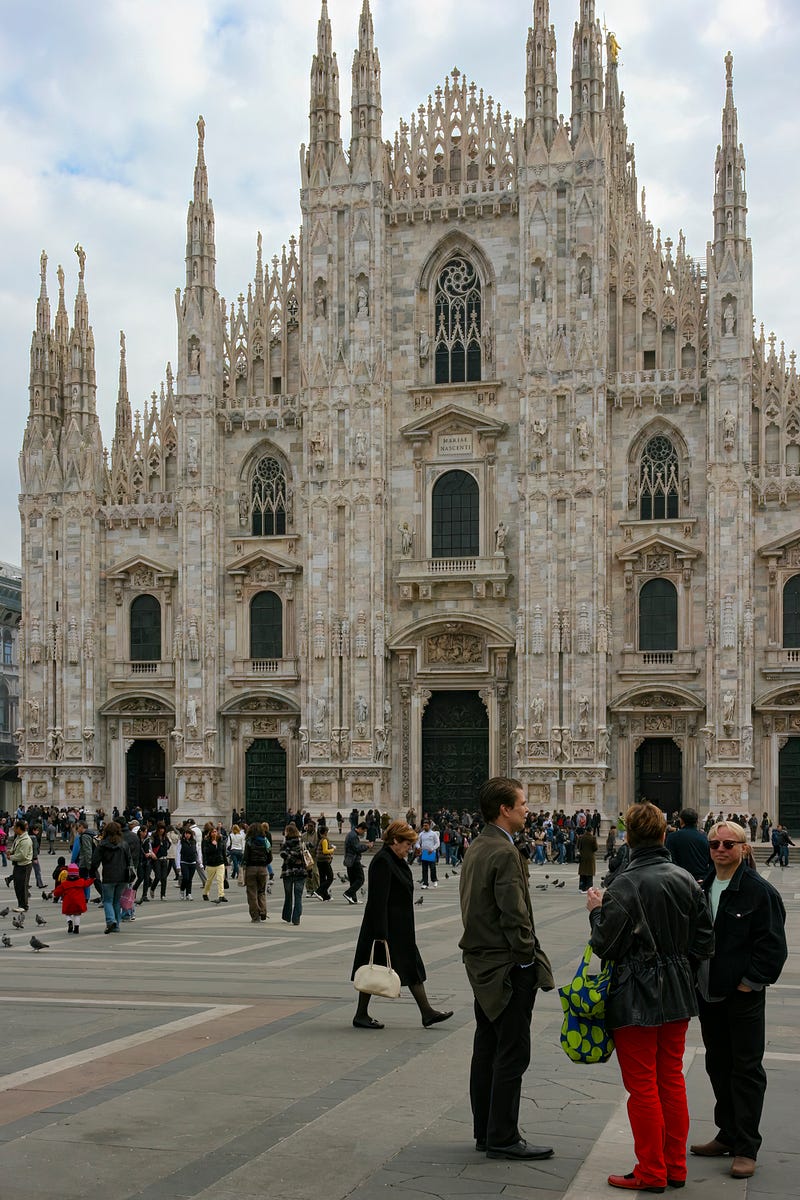
We saw all six places on one of the four days we spent in Milan during our trip to Italy in 2009. In fact, the first four are right next to each other and can be seen one right after another. The fifth is about a mile away but it’s a very pleasant walk. The sixth is a different story. We will get to that.
Milan Cathedral (Duomo di Milano)
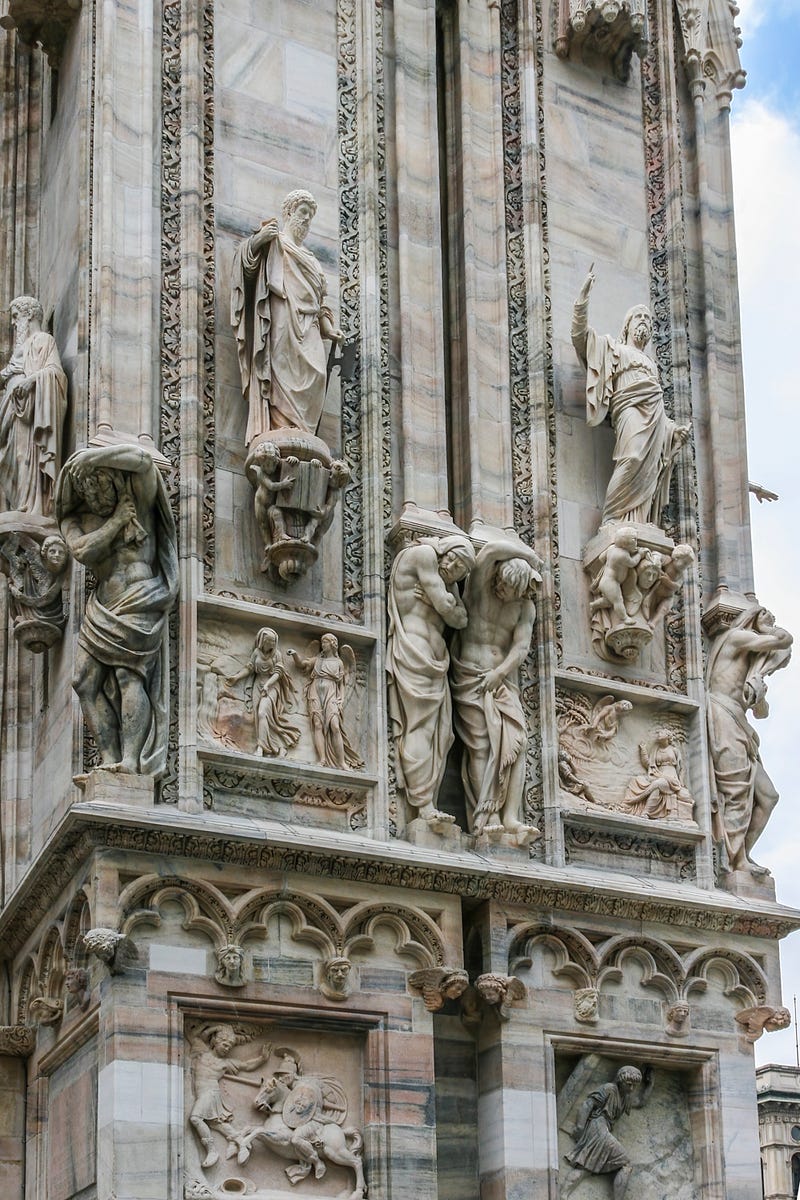
It’s one of the largest churches in the world and the largest that employs the Gothic style of architecture. It took more than 500 years to build. There are more than 3,000 statues on its walls. All the marble on its facade come from a quarry in Candoglia near Lake Maggiori. Canals were built just to transport the marble down to the city.
Leonardo submitted two designs for the cathedral’s dome, but both were rejected.
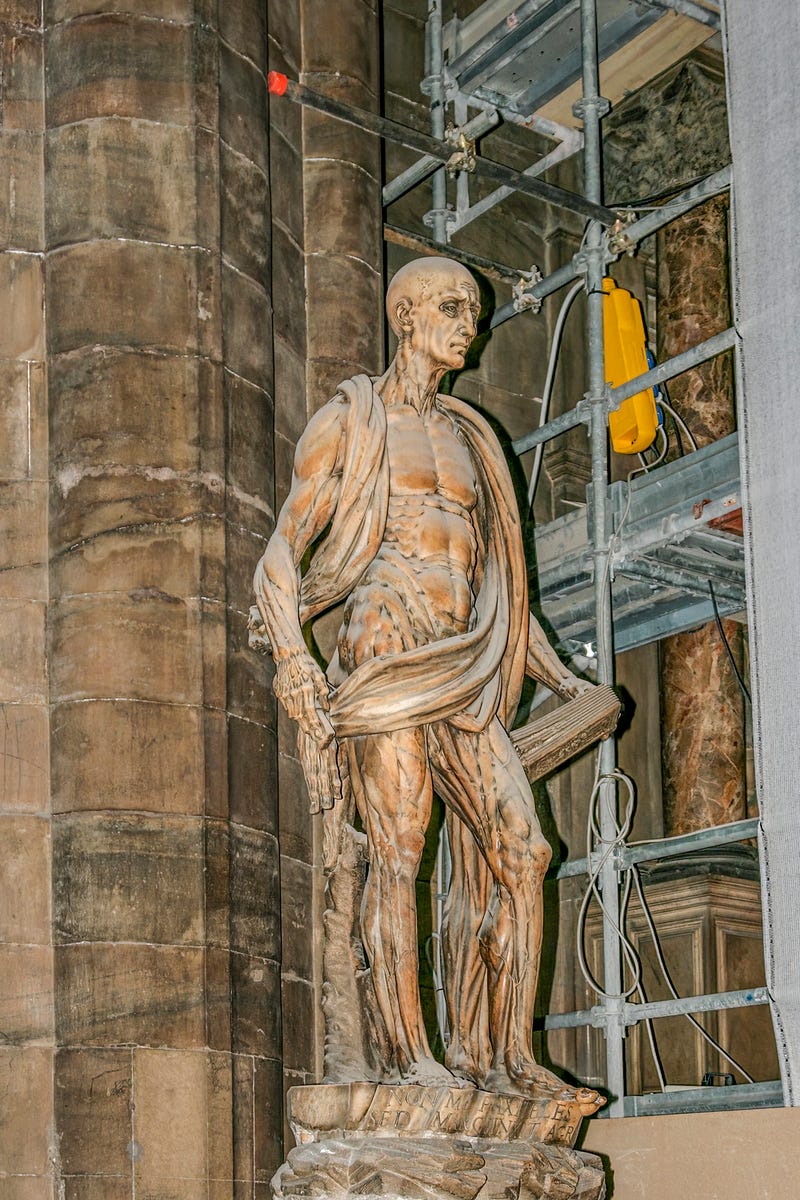
This strange statue of St Bartholomew caught my eye. He was skinned alive. Yikes!
The Galleria Vittorio Emanuele II
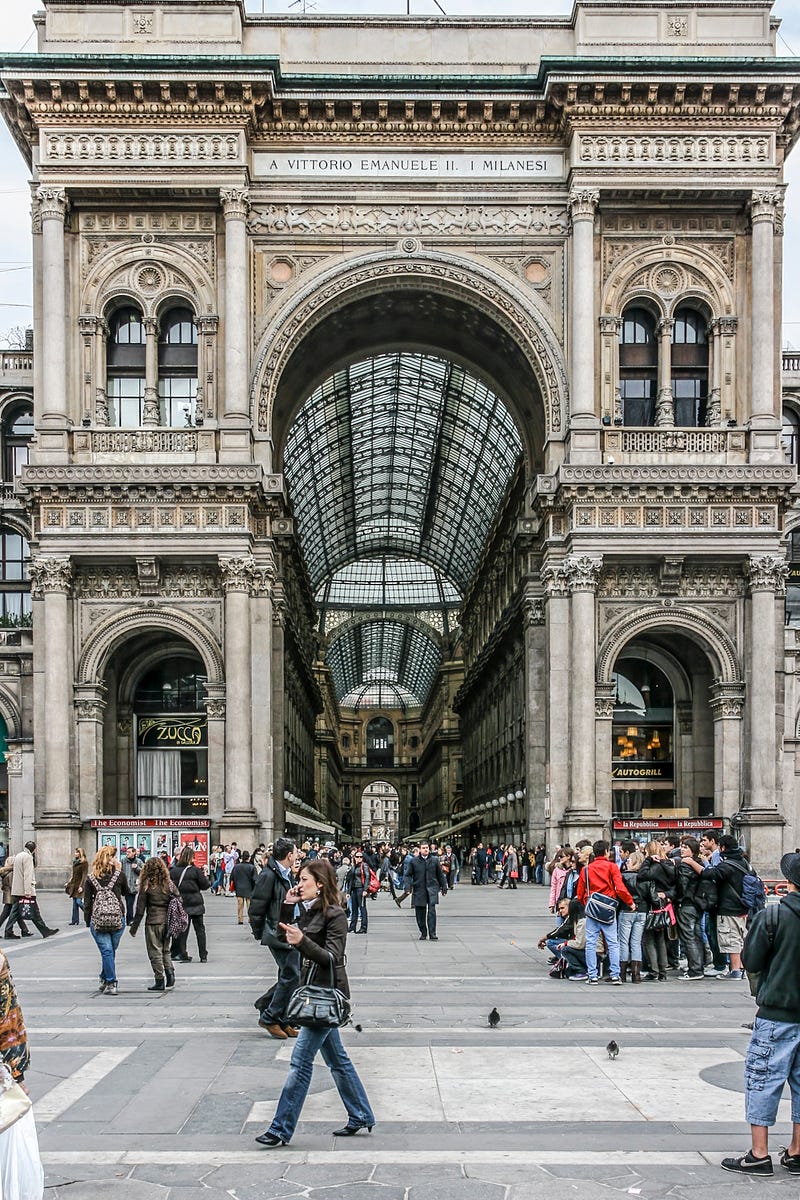
The main entrance to the Galleria Vittorio Emanuele II is off the Piazza del Duomo. The galleria is the first covered shopping arcade in the world.
There used to be a McDonald’s here on one of the four corners of the gallery’s central intersection. After about twenty years the city of Milan took it away and gave the space to Prada. McDonald’s sued the city for 31 million dollars. They settled, though, when the city gave them a spot not too far away.
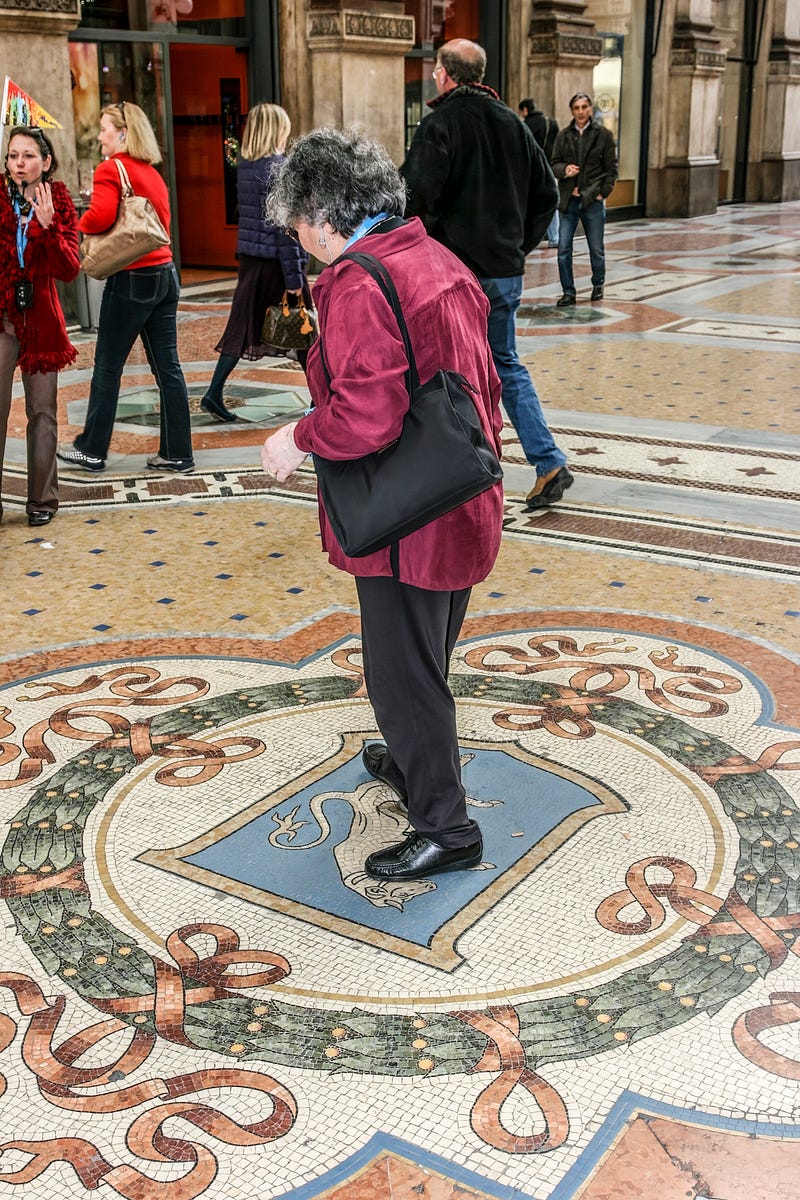
There’s an old story about the bull in the center of the intersection. It is supposed to bring you good luck if you place your heel on the bull’s testicles and spin around. My wife tried it and so did I.
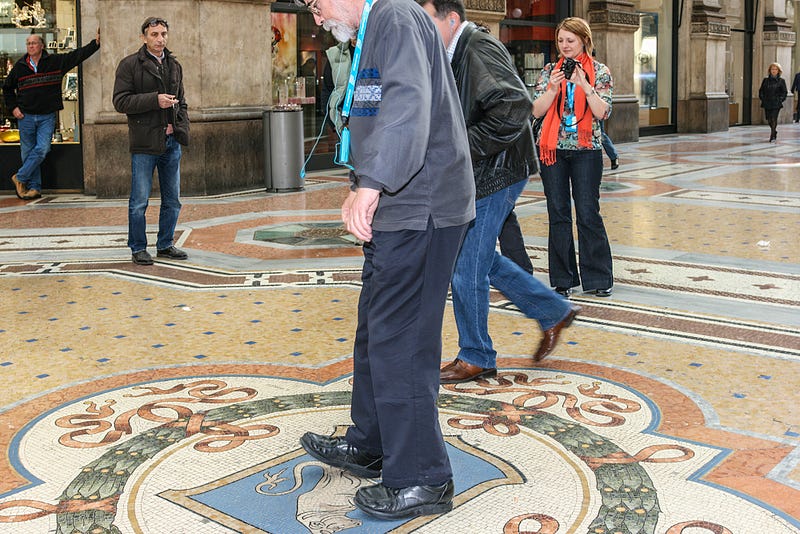
Everything in the galleria is very expensive. But the architecture will blow you away. So just walk through. And bring your camera.
The Leonardo daVinci Monument
The Piazza della Scala is adjacent to the north entrance to the Galleria. We had to walk through this square to get to the Opera House. Right in the center of the piazza is the monument to Leonardo.
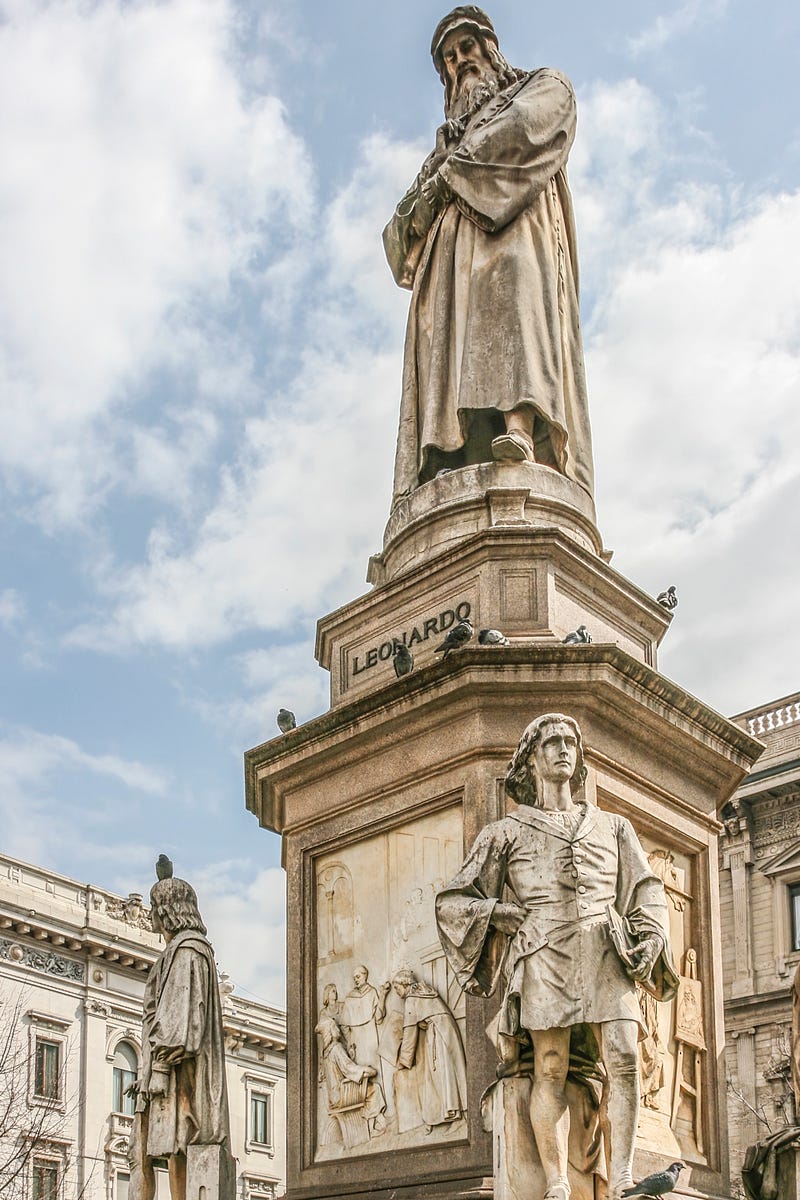
That’s Leonardo on top and two of his four students on the sides. Leonardo is wearing his engineer’s hat.
Leonardo was probably the greatest polymath in the history of western civilization. You name it and he was an expert in that field: art, architecture, anatomy, botany, hydraulic engineering, algebra, geometry, astronomy, music, drawing, painting, sculpting, optics, geology, civil engineering, medicine, writing.
He was born in a small village near Florence named Vinci and he grew up in Florence where he learned how to be an artist. He also spent more than a third of his life in Milan working for the Duke of Milan, Ludovico Sforza, and living in Sforza’s castle.
The La Scala Opera House (Teatro alla Scala)
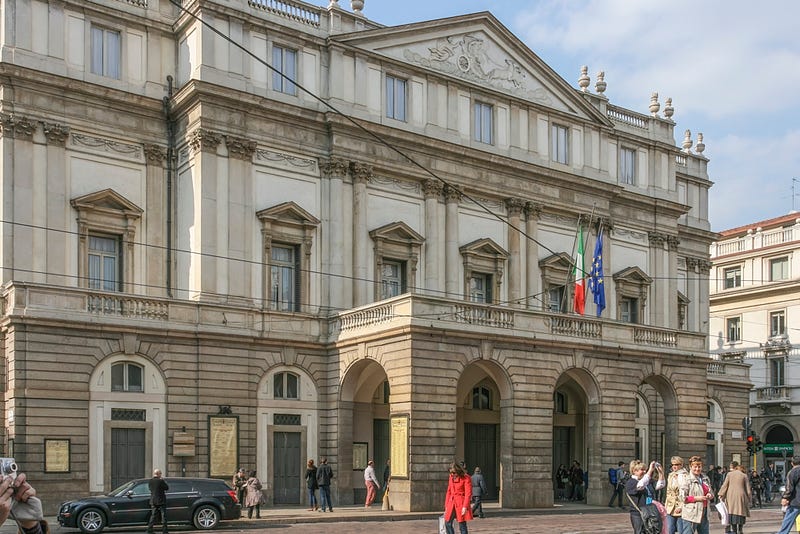
The Opera House stands directly behind the statue of Leonardo. We had a quick tour that included a hall of fame that featured some of the greatest names in Italian music.
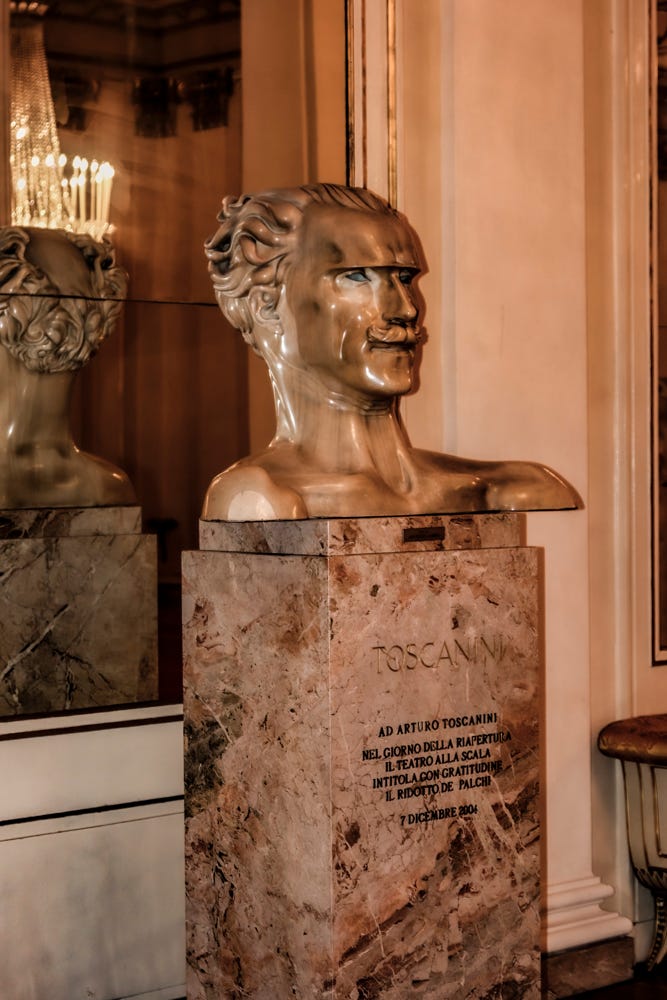
The great Arturo Toscanini directed his first opera at the age of 19. He was the Principal Conductor at La Scala from 1898 to 1908 and Music Director from 1921 to 1929. Prior to his second stint at La Scala, he worked for the New York Metropolitan Opera for seven years. He then moved back to New York where he directed the Philharmonic Orchestra from 1926 to 1936 and the NBC Symphony Orchestra from 1937 to 1954.
Sforza’s Castle (Castello Sforzesco)
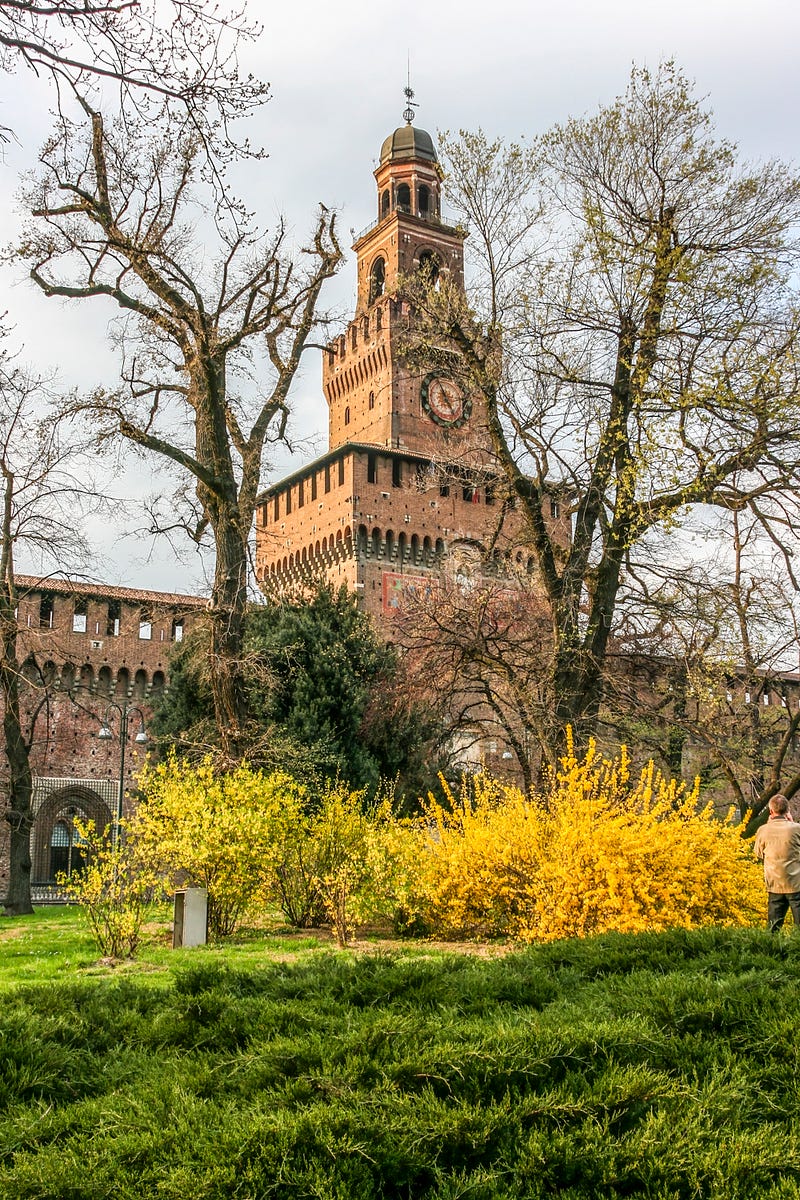
Leonardo worked for the Duke of Milan for 18 years (1482–99) and then another 7 years (1506–13). Most of the work consisted of building fortifications for the duke as well as improving the city’s canal system with locks. He also created thousands of pages of notes during his time in Milan on just about any subject imaginable.
We toured a portion of the castle’s interior and then drove off to our final destination, the monastery of Santa Maria delle Grazie, where Leonardo spent most of his time in the last few years of his first stint in Milan.
The Last Supper (Il Cenacolo)
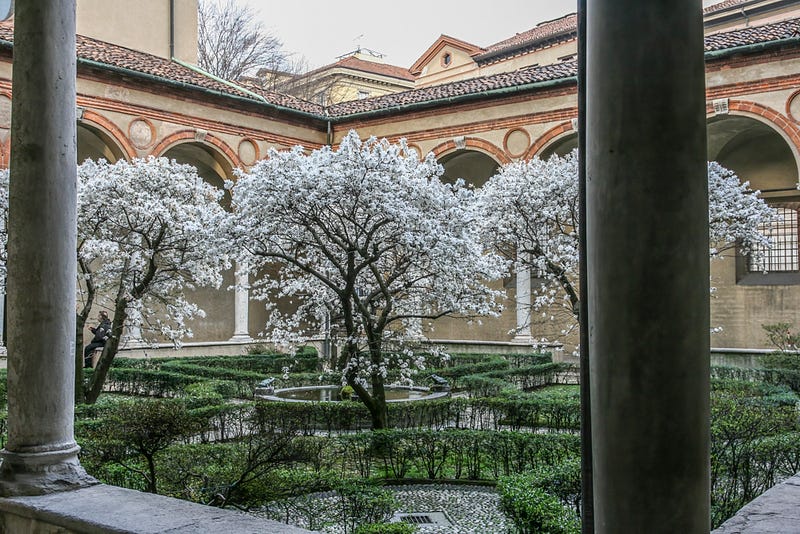
Leonardo’s mural is on the wall of a room behind the courtyard.
Leonardo painted his masterpiece on the wall of what once was the monastery’s refectory. We visited the Louvre during our stay in Paris in 2014 and I was slightly disappointed when I noticed the size of the Mona Lisa. It is only 2'6" by 1'9". The Last Supper, on the other hand, is 15'1" by 29'.
Somebody a few centuries ago decided to build a door in the wall, thereby amputating Christ’s feet. The nerve!
Leonardo’s painting is in a very precarious state. It has been crumbling for centuries and has been restored so many times that hardly any of the original paint is still visible. The temperature and humidity are closely monitored. We were placed in an interim chamber for five minutes and then given 15 minutes to view the mural.
I have heard that it is OK to take pictures without flash. But back in 2009 I was not permitted to photograph at all.
There is a high-resolution picture of The Last Supper on Wikipedia which can be found here.
Zani Viaggi
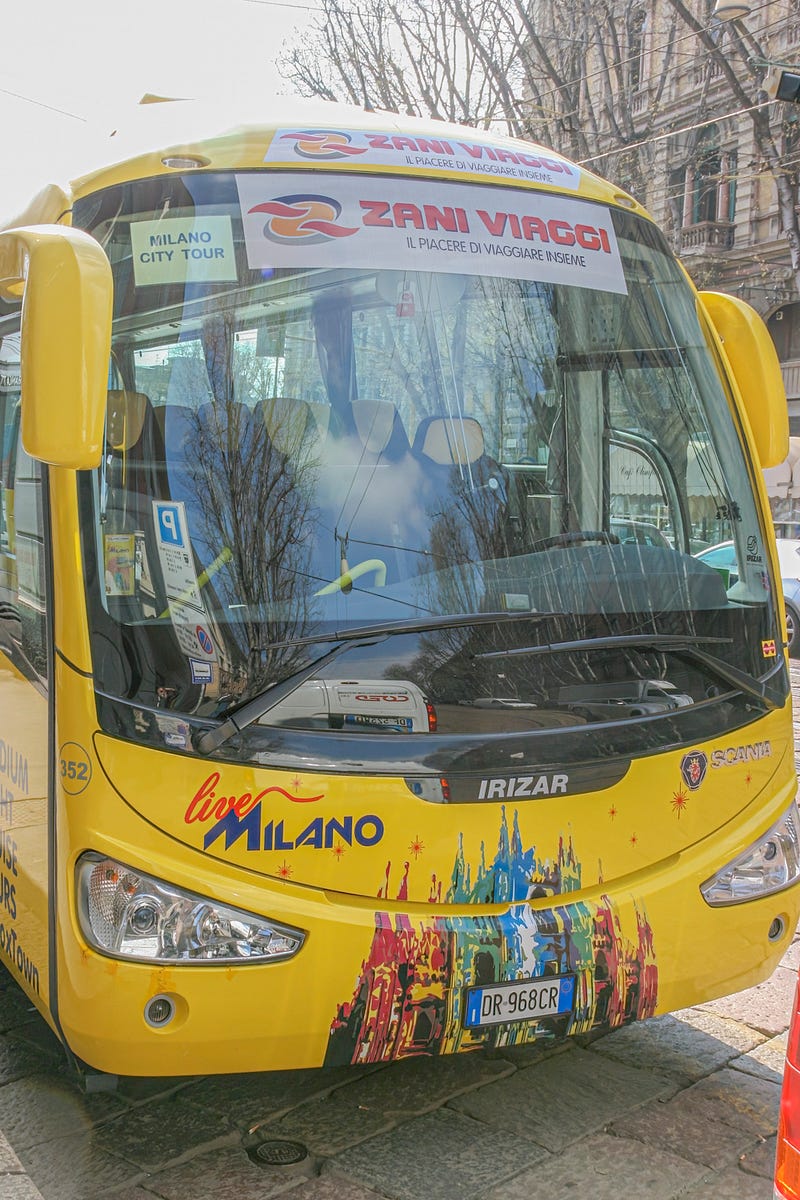
We came across this organization when we began to plan for our trip to Italy. Trip Advisor recommended that we make our reservations for The Last Supper a couple of months in advance. So, we signed up for the Zani Viaggi Milan City Tour which guarantees that we would be able to view Leonardo’s masterpiece.
We actually saw the first five of our must-see places on our own before taking the tour. But we only saw the exteriors of the Duomo, the Opera House and the Castle that morning. The Zani afternoon tour included the interiors of all these buildings plus The Last Supper viewing. And we learned a lot about Leonardo and Milan from our excellent tour guide.
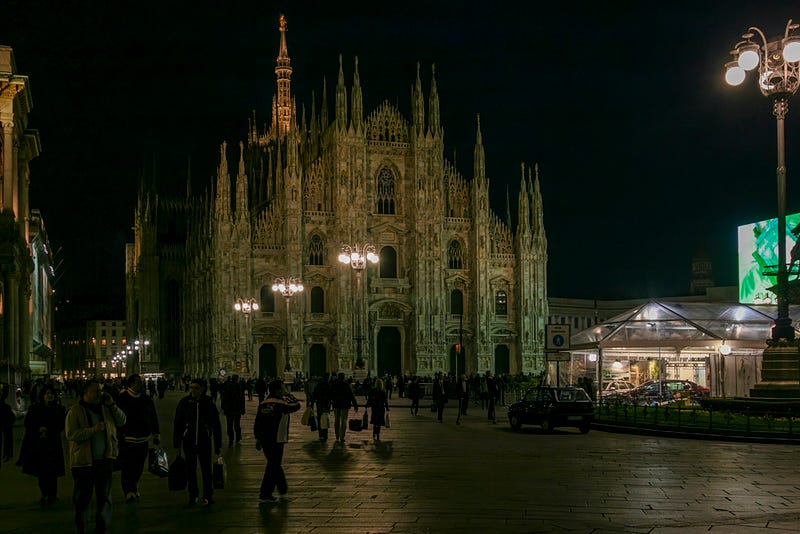
Our bus let us off a couple of blocks from the castle and we had dinner nearby. We then walked back to the Piazza del Duomo to board the Metro to get us back to our hotel. And I feel fortunate to have been able to take this somewhat magical photo of the Duomo at night.
Note: Milan was hit hard by the Covid-19 pandemic. 9.5 million fewer tourists visited Milan in 2020 than in the previous year. Most of the mandates have been removed by now but you are still required to wear a mask on public transportation, and it is still recommended that you keep that mask on when you go inside public buildings.


#/media/File:%C3%9Altima_Cena_-_Da_Vinci_5.jpg)