
Six Books That Will Impact Your Relationships for the Better
For healthy connecting.

Growing up, I didn’t witness the most functional communication skills from my parents. The model of an intimate relationship demonstrated was one of dysfunction and codependency.
My parents divorced after 25 years of marriage when I was out of the house and in college.
For the past couple of decades, I’ve been on a quest to learn how healthy people communicate — an autodidact of functional, communication skills and how to relate to others in a way that honors each person’s best self.
Becoming one’s true self in coupledom takes two people who commit to being fully realized on their own — whether in a relationship or not.
If you want to speed up your healing, get into a committed relationship. It will be the best therapy you ever give yourself. Commit to the full empowerment of those around by allowing them to be the best versions of themselves, and your life will expand.
After a ten-year marriage in which I was unhappy and unfulfilled, I doubled down on the journey to know myself.
As we age, the question of who we are, why we’re here — in this body — becomes more immediate to answer for most.
The more I know myself — why I do the things I do, what I need, what I feel, and what those feelings tell me — the more I realize that my experiences are not me, that I am the knowing behind my experiences. My experiences are what I’ve gone through and survived; they don’t define me.
Reading, especially books on psychology and relationships, helps me in this pursuit.
Here are six books to aid your journey of knowing yourself and enriching your relationships — what most people struggle with in life.
We can be with people or isolate ourselves, the latter isn’t healthy, although sometimes tempting.
The fastest way to know yourself is to be in a conscious intimate relationship. There is no quicker way to come face to face with who you are than to be cheek to jowl — side by side — relating with someone who pushes your buttons.
If you think you are enlightened, spend a week with your family — Ram Dass
Getting The Love You Want by Harville Hendrix, Ph.D.
I finally read this book, after hearing about it for decades, I felt like I had already read it because so many people recommend it, and for a good reason.
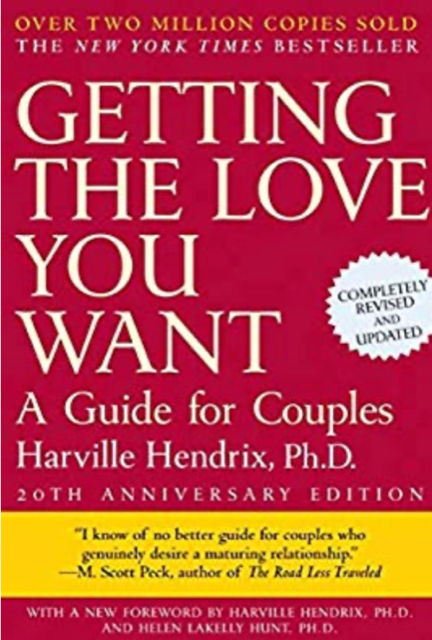
As someone who is fascinated with child development and why we choose the partner we do, only to be irritated by them after the honeymoon phase, this book explains why we make the choices we make giving real examples.
There are reasons we choose a partner whose negative traits are similar to our caregivers.
Hendrix explains why we are immediately attracted to a person who will most likely help us work out our childhood trauma. It is a lesson in self-awareness.
This book should be a requirement for anyone thinking about getting married. It will help anyone who is divorced, married, or in an intimate relationship — all of us.
Mating in Captivity: Unlocking Erotic Intelligence by Esther Perel
Esther Perel is a therapist, author, speaker and creator of the groundbreaking podcast Where Should We Begin.
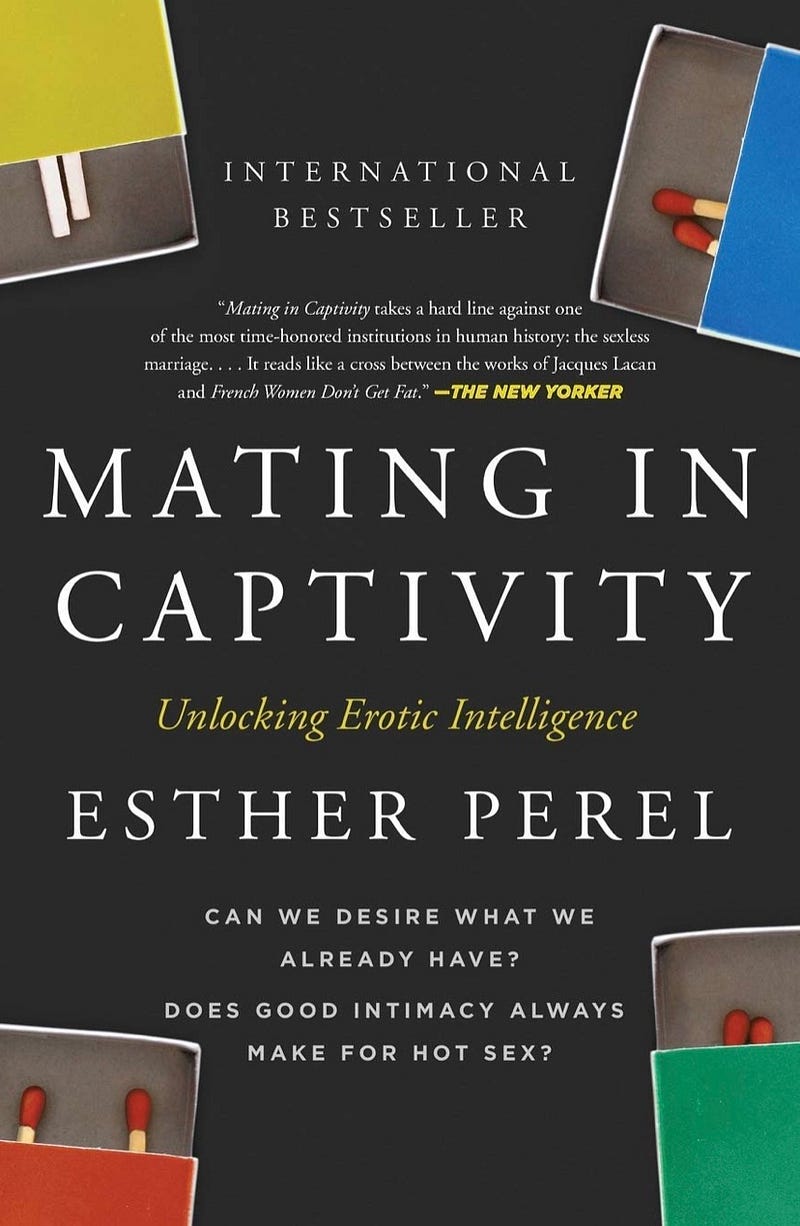
I devoured this book in one sitting.
I can’t get enough of Esther Perel’s work. She understands infidelity, why people cheat, the pain is causes and the inherent difficulty of maintaining desire in monogamous relationships. Perel gives direction in ways to navigate those opposing ideas.
One question Perel parses, again and again, is, can we desire something we already have? I love this question because it is one I’ve struggled with myself.
Perel writes from a place of non-judgment, and what I like about her work is she takes into account cultural differences in understanding monogamy.
I love reading about how other countries wrestle with infidelity and monogamy; I don’t think the American perspective is a very healthy one. She dives into the ways different cultures view infidelity.
Conscious Loving: The Journey to Co-Commitment by Gay Hendricks, Ph.D., and Kathlyn Hendricks, Ph.D.
A friend and relationship coach recommended this book to me while I was a client of his. He models most of his relationship work from Hendrick’s research and knowledge. This book has been around for decades and is still well-read and recommended by therapists.
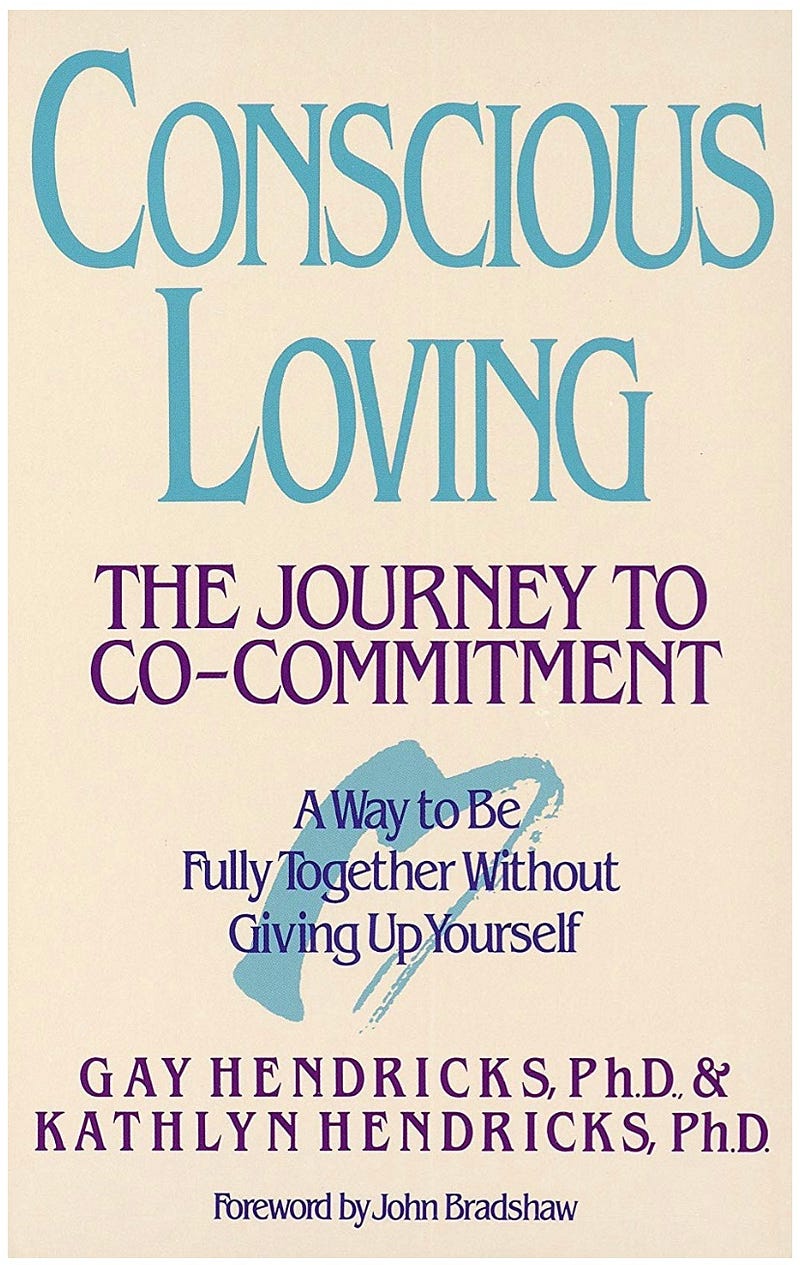
Most couples enter into a relationship without any spoken agreements.
When you don’t have a spoken understanding with your partner, your relationship ends up operating on unspoken contracts, which leads to miscommunication and disappointment.
Grown-ups know how to communicate what their needs are, and respond to their partner’s needs.
Communication is the number one factor in determining whether a relationship will work or not.
This book delves into codependency, power struggles, and why we are deathly afraid of intimacy, and how to fully commit to the other person consciously instead of running on the assumptions we are making unconsciously.
The Seven Principles for Making Marriage Work by John Gottman, PH.D.
Any book by John Gottman will help you understand your relationship with your partner and how to communicate more effectively.
I would start with The Seven Principles for Making Marriage Work.
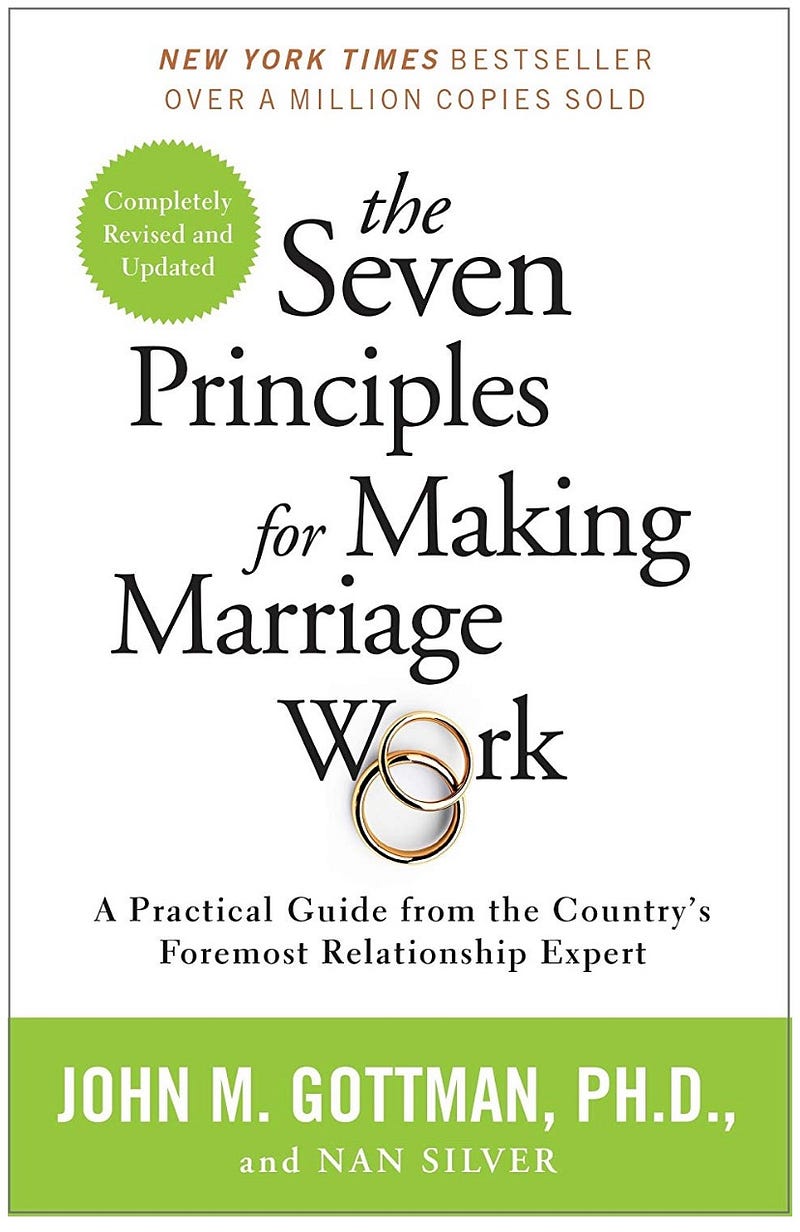
Gottman teaches how to enhance love maps, nurture fondness and admiration, turn toward each other instead of away, the importance of allowing your partner to influence you, to solve solvable problems and overcome gridlock in perpetual disagreements.
Gottman backs his techniques with years of research, working with over 3,000 couples.
Negative communication styles, or what Dr. John Gottman calls “Four Horsemen of the Apocalypse,” used as a metaphor, describe communication styles that predict, according to his research, the end of a relationship.
“The Four Horsemen” are criticism, defensiveness, stonewalling, and contempt. Gottman can predict the failure of a relationship with over 95% accuracy if these negative communication behaviors are not changed.
Esther Perel recommends The Man’s Guide to Women, by Gottman, which explains how men should approach a woman, how he should build a relationship, and how he can satisfy her in bed.
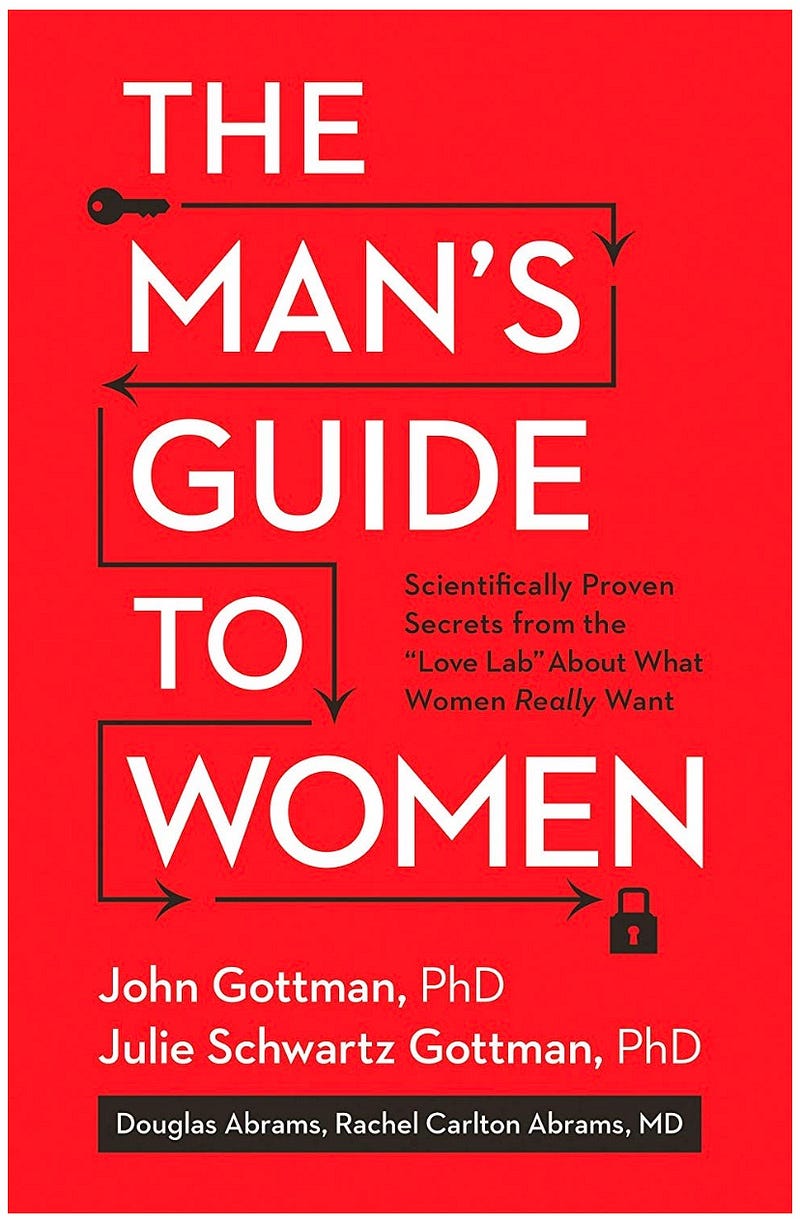
Gottman is excellent at explaining how to communicate with your partner in simple, straightforward, relatable examples. I highly recommend any of his books for couples.
We: Understanding the Psychology of Romantic Love by Robert A. Johnson
In this small book Johnson explores the origins of “romantic love” and what it is, how it has infiltrated our Western psyche, how it affects our relationships with ourselves and others.
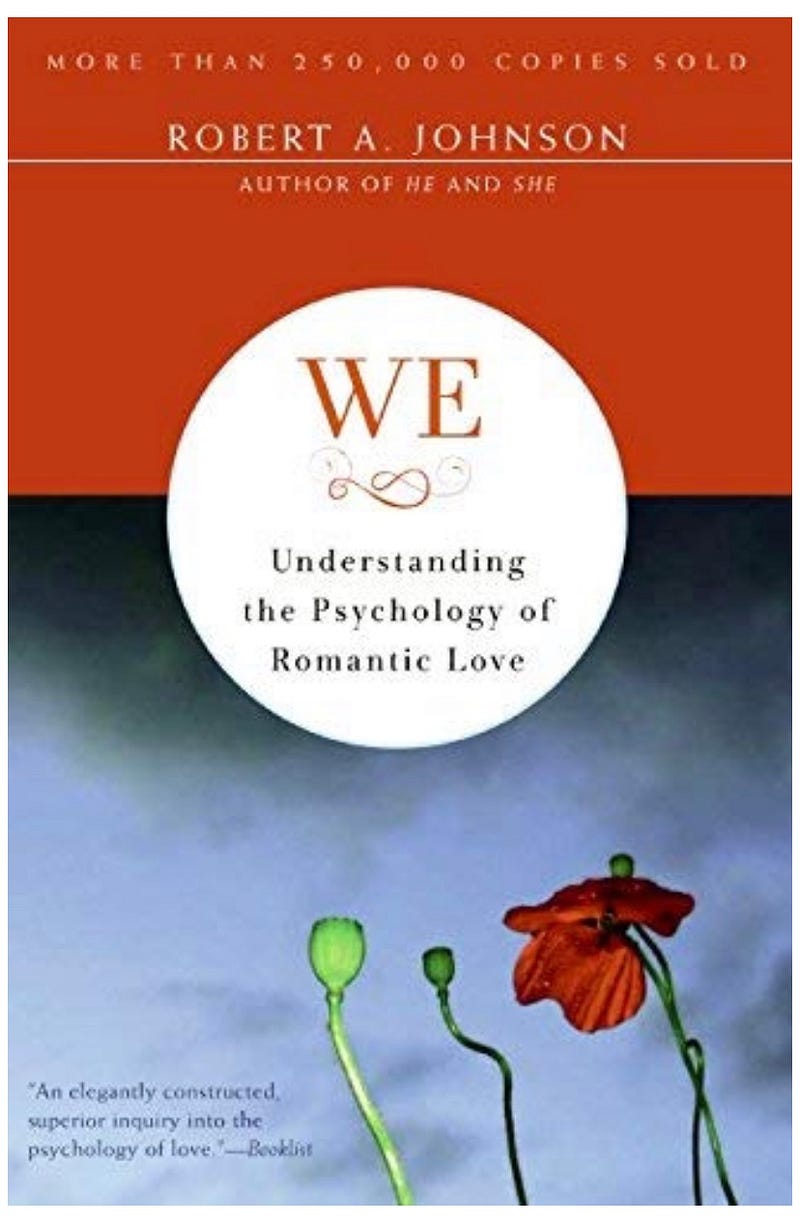
He explores these ideas by using the mythological narrative of two star-crossed lovers, Tristan and Iseult, whose story was the forerunner to not only Romeo and Juliet but the King Arthur-Gwynevere-Lancelot love triangle.
Here is a favorite passage,
“So long as we are “in love” with someone, the world takes on a brightness and meaningfulness that no mortal human being could ever bestow. But when we fall “out of love” the world suddenly seems dismal and empty, even though we are still with the same human being who had inspired such rapture before. This is why men and women put such impossible demands on each other in their relationships: We actually believe unconsciously that this mortal human being has the responsibility for making our lives whole, keeping us happy, making our lives meaningful, intense, and ecstatic!”
Healthy relationships are one of the determining factors of a successful life.
When you work on improving of your relationships, when you are in conscious loving with those you choose to spend time with, you will enjoy them more and have more energy to give to other areas of your life.
Humans want to be loved.
We search for it in everything we do; we want to know we matter to the people we spend our life with — a sense of belonging is essential to whole-hearted living, whether that is through friends, family, or romantic partners.
Anything great and worth pursuing has love at its core.
Jessica is a writer, an online entrepreneur, and a recovering type-A personality. She lives in Los Angeles with her extrovert daughter, two dogs, and two cats.


