
Is My Dog Dead or Alive?
Its hard to get closure in the face of uncertainty
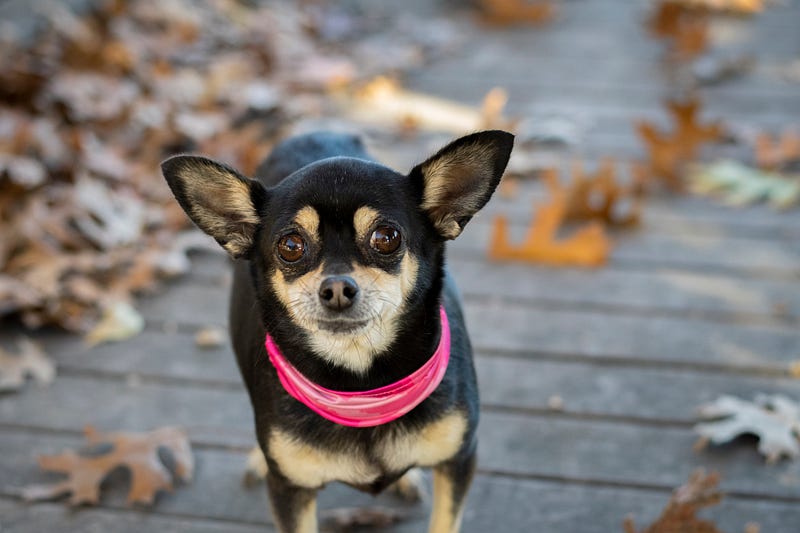
I sit in my lawn chair in the morning heat, scanning the fields around me for any sign of movement. Our little dog, Leia, adopted only four days ago, went missing yesterday.
I don’t really expect to see her. My parents, neighbors, and I spent many hours yesterday scouring this land and turned up nothing.
Also, horses have lived here for years, so clumps of manure trick my eyes into thinking they are the little black dog I seek.
In a way, it feels like I’m sitting shiva for Leia as I perch in my chair. Shiva is the beautiful Jewish tradition of seeking spiritual and emotional healing after a death.
If Leia were dead and buried, my parents and I would come together in mourning — which we have, since the situation seems hopeless. I feel myself slowly sinking from the certainty she is alive to grief.
But I am not certain about her death, either.
Grief involves closure, a finality: “I know she is dead.”
You don’t want it to be final, you may not accept it, but there it is — truth.
I don’t know the truth about Leia. I may never know. Did she die on the first day in that 100-degree heat as I staggered around the fields searching for her? Or did she hang on for weeks, finding a food and water source, maybe even getting taken in by a household miles away?
Little black dog, lost in the fields, trembling to the end of her tail.
It was my fault she went missing. It was all of our faults.
When my parents left to go swimming in a town an hour and a half away, it was on the tip of my mom’s tongue to say, “Don’t let Leia out at any cost. It’s okay if she pees on the rug, just don’t let her out.”
I didn’t know, so I did let her out. It was too hot and she kept lounging in both sun and shade. Every time I approached to try to get her to come back in, she moved away from me.
Fine, I thought. You can stay out until I’m done eating my lunch. It won’t hurt you.
“I knew that would happen,” my dad said bluntly. “You’re not persistent enough. I meant to tell you not to let her out.”
I took that cut deep in my bones. Another flaw, along with my laziness. If I didn’t have those faults, maybe Leia would still be here.
A split-second decision can change the universe.
She was just a 10-pound little beauty, so newly adopted that she didn’t know us and we didn’t know her.
Yesterday, when I was riding around as a passenger in the neighbor’s pickup truck to look for Leia, my neighbor asked, “Does she come when you whistle?”
And I had to say, embarrassed, “I honestly don’t know.”
I didn’t know my own dog. It seemed that I didn’t have the right to lose her, didn’t have the right to sentence her to a certain death, when I wasn’t even acquainted with her habits and personality.
In my mind, Leia has crossed over from the realm of the real and exists in a liminal space. Liminal spaces are the corners, the cracks. Out of these spaces shines the light — but also the darkness.
What will I see in the case of Leia, light or darkness? Right now it seems to be darkness, but it’s hard to know. Uncertainty is torture.
It might be easier to know for certain Leia is dead and be sitting in grief for her, rather than hang on tenterhooks for a month waiting for her to come home, hoping someone will spot her, all the while knowing that it’s practically impossible for a 10-pound dog to survive the heat, large dogs, fast cars, and roaming coyotes.
Rest in peace, my dear little Leia.
Or live in light. I don’t know which to tell you.
[Update: Leia came home in the dead of night two and a half days after I wrote this article, alive and well.]