
Sir, Get Away From That Baby Bison!
For some people, wild animals exist only for their entertainment and social status
I have raised free-range chickens and lived with someone who had beehives. I saw how various wild animals hunt and kill chickens, and what a bear can do to handmade, wooden bee boxes to get to honey.
I’ve been attacked by a rooster, and those talons are no joke.
I have witnessed a pack of wild dogs attack a neighbor’s peacock hen, tearing it to pieces.
I have seen and heard female alligators bellow, grunt, and hiss as I was walking near an unknown nesting sight, and it is terrifying.
I have observed, at a distance, male deer during rutting season fight, and heard them snort and bellow in the woods.
I have been attacked by a very territorial swallow at my former workplace because she had just set up a nest in the tree I parked under.
I have been made aware of a mama black bear in my neighborhood, unfortunately, put down by wildlife officers for attacking a dog she thought was a threat to her cubs.
I’ve had a Florida panther and a pair of black bears (not all at the same time) come onto my property, and while shaking in my boots, made loud noises with garbage cans and a bullhorn to scare them off.
Have you ever heard how a fox screams at night? It is truly scary and otherworldly.
And yet…
We have these people who think wild animals are not wild. They think of them as props, or somehow magically domesticated enough to pose for pictures in national parks. They think they can just randomly pick up wild animal offspring and transport them with no problem to “save” them. These same people try to pet full-grown adult wild animals because they don’t seem initially aggressive.
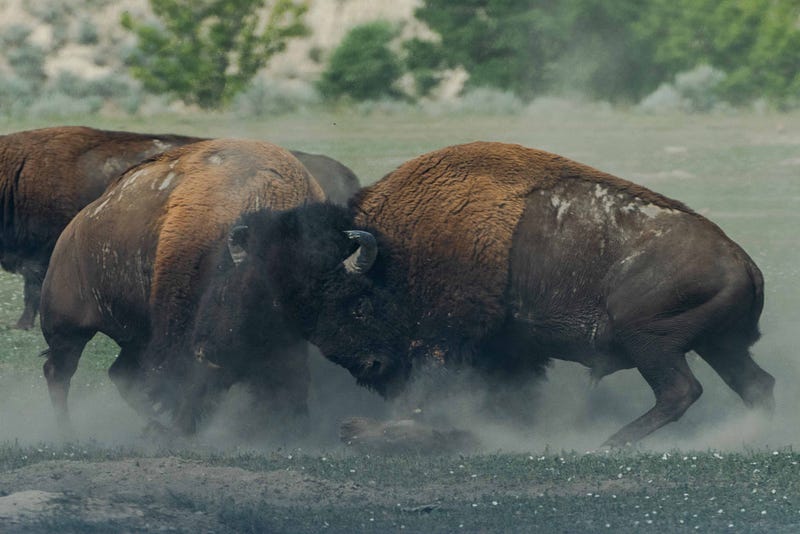
I am sure many of you saw the stories out of Yellowstone of sad, desperate people just begging to get up close and personal with the animal I have pictured at the beginning of this piece. I mean nothing screams cute and cuddly like that picture of two bison males sparring, right? These stubbornly ignorant individuals are lucky to be alive.
An adult bison weighs between 1000 to 2000 pounds. It has horns to protect itself from other cutesy wild animals like wolves, mountain lions, and bears. It gores and slashes with them. But hey, I am so desperate for likes on my social media, so I will pose in my Disney-like understanding of wild animals next to this animal that has gored others for just being six feet away to prove that wildlife is just so into me!
See, look at how I charmed the wild beast for my photo. Ok, everyone. Now you go pose or pet something in the wild, and get those likes and subscribes! Sorry about those that might get like, you know, gored, trampled, bitten, or unalived. Bummer for you. You just don’t have that charmed life like me, where I am Snow White, and the creatures of the forest come to hear me sing.
I spent part of my life in a rural area, and I still did not just stick out my hand to horses, goats, and cows that did not know me. Even with strange dogs, I don’t assume they will like a rub behind the ears from me.
Did any of these people see wild animals, especially bears in movies like, “The Revenant” or “Cocaine Bear?” No? Do they watch National Geographic, Discovery Channel, or watch any Netflix animal documentaries? I mean, the raccoon attack in the movie “Elf” is fairly accurate for wild raccoons that are threatened.
Even if you didn’t pay attention in biology classes, or you grew up in a city, you never read books, or never visited a zoo, there are still plenty of places in the world that can show you what a wild animal is capable of when provoked or threatened.
I’m trying to wrap my head around people who will walk up to a full-grown bison and want to pet it. There are many instances in the news, on YouTube, and on the internet, of tourists being gored or chased by bison. It’s not like this is new or secret knowledge. There are warning signs in the park.
I had tried to befriend squirrels and raccoons when I was a kid. With both species, everything revolved around food. This was no bond like between a dog and a human, they had figured out I was a risk-free source of food. In my 7-year-old mind, however, I thought of them as pets and friends, naming them.
One day, a squirrel named Fritz bit me on the hand after taking the peanut out of my palm. I did not understand what I had done wrong. We had done this ritual many times, with no incident.
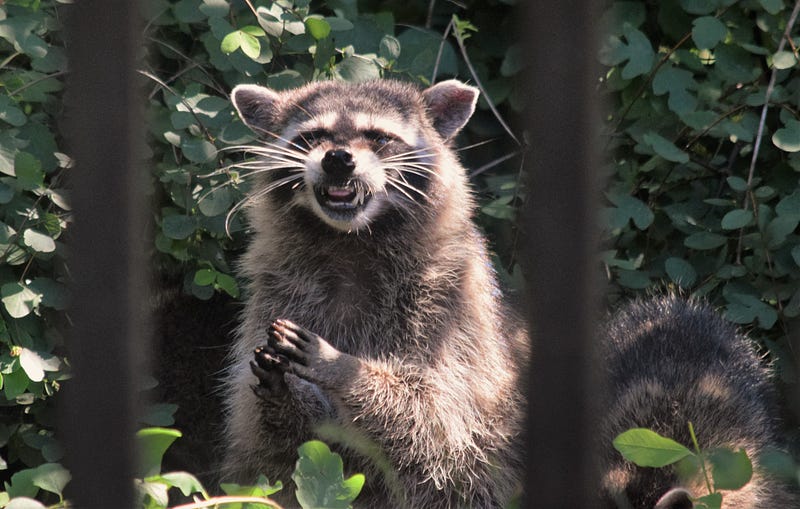
Then, a few days later, a mother raccoon I had dubbed Lulu hissed and bared her teeth at me, probably for being too close to her brood which was eating the fruit I had left out. If you have ever seen an angry raccoon, all that cuteness vanishes, and the feral is truly on display.
I thought it was my fault, that they no longer liked me. I stopped leaving them food, thinking I no longer had a magical connection to them, and that I was not worthy of having Disney princess powers over forest creatures.
My Mom found out a few days later about the squirrel bite and rushed me to the doctor thinking I was going to have rabies. (I did not, squirrels are not big carriers of rabies). No more feeding the animals for me. No more special magical friendships, like the ones I saw in Disney movies and TV shows like Grizzly Adams.
Did I stop loving and appreciating wildlife? No. I learned respect for it. I learned how to use binoculars, and observe from up in trees or from a distance. I learned how to recognize scat, feeding clues, tracks, and territories of different groups of animals, learning mating seasons for different animals. I am far from a zoologist, but I love to learn about the world around me, so I can peacefully coexist with other creatures as much as I can.
The Netflix series, “Tiger King,” besides showcasing some very interesting and awful people, brought to light how breeding and using wild animals for entertainment is problematic. Taking pictures of your child with a tiger cub basically says you think very little of the actual plight of the tiger, not to mention appreciate its enormous strength and skill as a predator. So cuddly and cute in that Facebook post, yet in the wild, everyone would be mauled by their mother for even coming near the cubs.
We anthropomorphize wild animals in our culture, from ancient times when our deities took on animal visages and indigenous people see them as spirits to learn from, to our movies, cartoons, comics, and books now. I myself am an animist. I believe there is a spirit in everything, including the very Earth itself. Yet, I do not think of a raccoon as something I will worship, but more as another type of spirit on this planet, just as a nearby spring, the trees, all have their own spiritual resonance.
Another being, just trying to live its life.
I do hold wild animals with a kind of reverence, but also know sometimes it is difficult for humankind to live alongside creatures just doing what comes instinctually. Rats are vermin, as are our squirrels, rabbits, deer, and raccoons. I would not welcome rats eating through my pantry, nor deer nibbling away all my blueberry bushes. I would not hurt them, but find ways to repel them or make it difficult for them to get to my food in the first place.
I have seen shark bites on humans where I live, and what our native coyote species can do to a small domestic dog. It’s brutal. Yet, sharks are needed in the oceans to keep other species of fish from overtaking the ecosystem. Coyotes eat vermin and other small predators, keeping the balance as well.
Wild animals have their own ways to ensure they will survive. And it can be harsh, gory, even catastrophic in some cases. There’s a reason the trope in fantasy and fairy tales of having wild animals be at a human’s beck and call is so repeated. Our ancestors had many more encounters with wild animals when they were farming, homesteading, hunting, exploring, traveling, etc. The majority of those encounters were often to defend, both humans and animals.
If we clear-cut a forest for timber or farmland where do the original inhabitants go? If we raise domesticated animals and crops in an open space unprotected, it is an easy source of food for wild animals. If we go traipsing through a territorial animal’s space, it will defend it. Why would we think they will be like us because we wish it so?
A wild animal does not see a human as an accessory to be used to get attention or social approval. Animals do not believe they have “dominion over the Earth.” They simply live in it, based on their instincts for survival. Humans are mammals. We can be cruel, murderous, and catastrophic in our own ways. But we supposedly have the ability to reason against our basest instincts.
To wild animals, we are simply another animal in their ecosystem. Why would they suddenly become more domesticated when we are visiting their spaces? Fearful of us — yes. We carry weapons that can kill them at a distance, we put them in cages, we take pieces of them to sell, we mount them on walls for sport, we take their young and sell them illegally, we run over them with our vehicles.
We also screw up the balance by feeding wild animals our food voluntarily and via our trash. They are looking for easy food sources, and we humans leave behind easy meals. Then we have the audacity to be upset when the animals are only doing what comes naturally to them. “That bear should know better than to turn over my garbage can full of half-eaten doughnuts and leftover bacon grease!”
I have no issue with indigenous tribes hunting and some hunters in rural areas of the world because many know how to hunt without destroying the population. They use the meat for food and often try not to waste any part of the animal. My father grew up in poverty, deer and rabbit hunting, and fishing were a way to supplement the family’s access to decent protein. There are food deserts in Appalachian country where my ancestors are from, other parts of the US, and other countries of the world. There was no sport or profit in it for my Dad and his brothers, only survival.
When we lose respect for the creatures around us, it is a domino effect. The bison were once endangered, because European settlers hunted them down from about 10 million to less than 500 remaining in the western US by the late 1800s. The indigenous tribes of the Western USA who relied on the bison for much of their protein and important parts of their culture, later became shorter in stature and poorer than even other tribes who were not bison dependent. The slaughter was not just reckless, it was intentional, just like smallpox blankets were.
Now we mock the magnificence of the bison which has made a huge comeback, with trying to pet it or take a selfie with it. People still buy, sell, and breed many species which they have no business owning. Wild animals are now a “product” instead of a necessary part of the health of our planet.
Iguanas are now found frequently in cities of southern Florida because people who had no business owning such a high-maintenance reptile let it loose or it ran off. Pythons are now basically a part of the southern Florida ecosystem, due to people thinking they would like to own an exotic pet that would “cuddle.” Lionfish are an invasive species due to people buying them and then no longer wanting them, dumping them into an ocean ecosystem that is not prepared to handle their appetites and venomous fins.
Nature is magnificent and it is harsh. Respect means acknowledging both. We can observe wild animals from hopefully safe and far distances, let the experts who know how to keep disturbances to wild animals to a minimum do their work, and appreciate the fragile balance of all life on this planet. But honestly, people, stop trying to get up close to a bison or to this mama bear and her cubs, just minding their business. We are supposed to be the higher-order mammals.
Personally, I think Yellowstone and other parks could perhaps show this clip before clueless tourists go skipping through a NATIONAL PARK, not a cartoon fantasy land, looking for their theme park magical encounters to share on social media.
Sir, that is not a black and white striped cat, put it down, it’s a..you know what, never mind. I’m sure it will be fine.
Thank you for reading!
I can be found at: https://jenadriftinaseaoftrees.medium.com/


