
Part II – Sir Fopling Flutter
Separation and Reprieve
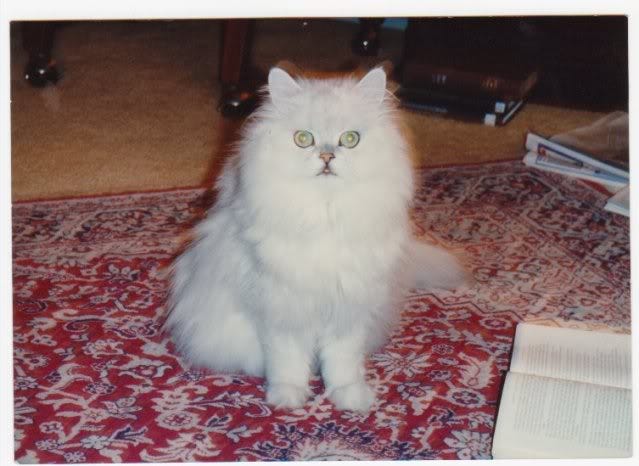
But there would be a much longer separation looming ahead. I had decided to apply to graduate school in England — positively, if not stubbornly determined to study at Oxford University. Yes, that one. Perversely, with each disappointment at other schools, I set my hopes higher and higher. I tried to steel myself for disappointment by telling myself that I would not have to leave Flutter if I got turned down.
I still recall that late afternoon in August, after a long day hauling a bag of books to renew at my university. And there it was — a depressingly small and thin envelope from Oxford. Another rejection, I thought. Too tired and fed up to write “return to sender, fuck you” in perma-ink on the envelope, I opened it up to find a surprise: I had been accepted! In the next few days came the even more thrilling news that the internationally renowned Romanticist I had longed to work with had accepted me as a new doctoral student. As I discovered later upon arrival, I was one of a very few applicants she accepted.
Not surprisingly, amidst the joy as I celebrated with my mother, I wondered about Flutter. I didn’t want to bring him to England since quarantine would have been the only solution — and I had heard too many horror stories of quarantine. We were fortunate as a relative who was in the midst of a divorce had decided to take temporary shelter in our condo.
I used to say that if it were not for Flutter, I wouldn’t have bothered to return to Chicago for any of my breaks. So over the following seven years, I made occasional visits back home — and was always relieved to see that he still loved me. He still relished belly rubs and enjoyed our nightly snuggles. There would always be inevitable sadness on my part even as my allergies returned with a vengeance since I hadn’t been around a cat for so long.
By the summer of 2001, I had returned home to Chicago for good after completing my Ph.D. and having taught undergraduates for a year. It was a mixed return: I had enjoyed some of my best years at Oxford and I knew I was going to miss the libraries, the jaunts to London, and the general atmosphere — not to mention opportunities. But I was glad to see Flutter again and know that I would probably not ever be separated from him. As it was, I felt that I had already missed the best part of his life, especially since he had just turned ten and was therefore a senior cat.
A few years later, my mother and I decided to bring him along to New York City where we planned to stay for a week–because we didn’t want him to feel lonely again. It was probably one of the highlights of the year. I still recall that wonderful, cool April evening when I gazed out the window of the hotel. The sun had just set and I stood there, admiring a fine view of the lights from the Empire State Building — a place with many fond childhood memories. And Flutter was seated right there on the window seat, as if enjoying the view too. If only this could last forever.
But by late 2004–oddly enough, not long after my father suffered a heart attack–Flutter began to suffer appetite problems. This was the first time that the prospect of cancer reared its ugly head. I still remember how I cried when the vet mentioned the possibility of liver or intestinal cancer. However, by February 2005, he seemed to rebound, eating happily again. I was relieved that I did not subject him to exploratory surgery at the age of 14. That summer, we brought him to down to Alabama for a week-long stay with one of Mom’s sisters.
His increasing age meant that more serious problems would crop up, particularly in the following year. By then, I was teaching two courses that term while working a side job grading essays for graduate school admissions. One night, I was distressed to see him look hungry yet turn away from food. I realized something must have been wrong with his teeth or jaws when he suddenly yowled while biting into his wet food.
It would be the start of numerous unsatisfactory visits to the vet and sky-high expenses. The local vet insisted that his mouth had no problems even as I emphasized his obvious pain when taking a bite into his wet food. He must be having problems with his teeth. Your cat is just being dramatic, she answered as she kept urging me to subject Flutter to more intestinal tests. After discovering that she had tried to gouge me by tripling the price of his meds while claiming that “prices had just been raised” — and which she only reluctantly refunded me after I vehemently protested, I decided to move back home temporarily with my parents in order to find another vet there. I was determined to have Flutter live.
Although the new vet proved considerably better than my local vet, not all issues were resolved. By June, Flutter had been given a feeding tube. I still recall the sense of panic I felt at the idea of a tube. Yet, in less than two weeks, he had become fully acclimated. As soon as he heard the microwave where his food was prepared before being syringed into his tube, he would run downstairs and jump onto the kitchen counter, wanting to be fed. He even resumed some regular eating as well.
But he began to deteriorate a month later when he ate less and less and had to rely entirely on tube feeding again. As I researched online, one commenter recommended that I take him to an orthodontist. It is probably some of the best advice I ever got on the internet.
A visit proved that I was right after all–and that my vets were wrong in downplaying, if not entirely dismissing his mouth problems. An X-ray revealed that he did indeed have a mass in his lower right jaw. The next day, my mother and I brought him to a radiologist who confirmed the mass. The only solution was the removal of his lower right jaw and possibly eye. We would have to wait for the surgeon to see if this was even a viable possibility since Flutter had just turned fifteen — a fairly elderly cat.
As we began to wonder if he might be better off euthanized–he had just turned fifteen, after all–Mom and I began to cry. I didn’t expect for him to leave us so soon. A half hour later, the surgeon walked up to us, telling us that surgery could extend his life. A reprieve! A genuine Deus ex Machina! Our tears of sorrow turned to tears of joy.
More miracles appeared in the next few weeks. As Flutter began eating again, we were informed that the mass was surprisingly enough not a cancer, but some form of fibrosis. Years later, I do not regret our decision for the surgery — even though it cost a whopping $3600 back then.
It is here that I am going to briefly don my political hat (which is my usual topic anyway) and advocate Medicare for All. Perhaps if healthcare prices could be driven down for human beings, those for pets could too. At the moment, only the well-off can afford to have the best care not only for themselves — but for their pets. This is not surprising since only 40% of Americans can afford a $400 emergency. No wonder that so many people reluctantly choose to bring their sick pets back to a shelter or, worse yet, have them euthanized. Some are even shamed for it, which only adds insult to injury. Let’s try to remember that not everyone can easily dish out an extra $300 here and $400 there for tests — let alone much more for ultrasounds, MRI’s, or surgery. Such a decision, needless to say, can be nerve-wracking and aggravate grief, however unwarranted. What if we allowed everyone to have the best care for themselves — and their pets? Perhaps we could all feel a little less wracked by finances when the sickness of a pet is already worrisome in itself.
But to return to the subject at hand — Flutter. He began to eat by himself and play again. However, we retained the feeding tube–just in case he still needed it. By Christmas of 2006, I felt blessed that he looked and behaved so much like his old healthy self, praying that he would be around for at least the next few years. That New Year’s Eve was a cheerful one as I sat watching the fireworks from the huge picture windows with Flutter running excitedly from one end to the other, believing he could catch a spark or two. It truly was an annus mirabilis: perhaps not as miraculous as the incidents described by John Dryden in a poem of that title, but a monumental personal one for me.

© Frances A. Chiu
Previous — Part I, Sir Fopling Flutter https://readmedium.com/sir-fopling-flutter-d45360ae0326
Next — Part III, December 31, 2007 https://readmedium.com/part-iii-sir-fopling-flutter-c152a53b08c2