avatarFenfang “Harper” Chen

Free AI web copilot to create summaries, insights and extended knowledge, download it at here

3017

Abstract

"> <div> <div> <img class="ratio" src="http://placehold.it/16x9"> <iframe class="" src="https://cdn.embedly.com/widgets/media.html?src=https%3A%2F%2Fwww.youtube.com%2Fembed%2FZyZwtKJn-Ac%3Ffeature%3Doembed&amp;display_name=YouTube&amp;url=https%3A%2F%2Fwww.youtube.com%2Fwatch%3Fv%3DZyZwtKJn-Ac&amp;image=https%3A%2F%2Fi.ytimg.com%2Fvi%2FZyZwtKJn-Ac%2Fhqdefault.jpg&amp;key=a19fcc184b9711e1b4764040d3dc5c07&amp;type=text%2Fhtml&amp;schema=youtube" allowfullscreen="" frameborder="0" height="480" width="854"> </div> </div> </figure></iframe></div></div></figure><p id="7fa1">The U.S. and Europe do not have many cases and are thus mostly worried about the impact on the global economy. Americans are more concerned about the virus’ effects on the global and U.S. economies than on their own local economies. While pockets of Asia such as Singapore, Japan, Hong Kong, Macau and Taiwan have valid pandemic worries.</p><p id="dfaa">Many experts believe the further outbreaks will be essentially impossible to prevent.</p><h1 id="84af">Singapore and Japan Vulnerable to Own Outbreaks in Early February</h1><p id="5e90">The health ministry of Japan said three new virus cases had been confirmed on the Diamond Princess cruise ship docked in Yokohama, raising the total number to 64.</p><p id="7050">The Malaysian health ministry confirmed a 16th case of coronavirus, a 67-year old female and Chinese national from Wuhan. It seems the prospects for the South-East Asia (SEA) region are not good with regards to the spread of the virus. China’s inability to contain the virus at the source is likely going to lead to a mild pandemic.</p><p id="fd1d">It is only the second time Singapore has activated Code Orange. The first was for swine flu (H1N1) in 2009. The coding system was set up after SARS (severe acute respiratory syndrome) in 2003. The outbreak then would also have been Orange, had the classification existed.</p><p id="ad63">Singapore’s media coverage is excellent so an outbreak there is well documented now more or less started in February, 2020. They have not officially called it an “outbreak” yet of course, not to raise fears about it with the public.</p><p id="d2bd">Thailand’s public health ministry reported seven new cases of the coronavirus, including three Thais and four Chinese. Thus the cases outside of China appear to be increasing in the second week of February, 2020.</p><h1 id="547e">What Does Code Orange in Singapore Mean</h1><p id="b406">With Code Orange, new precautionary measures will be in place to minimize the risk of further virus transmission to the community. It’s not clear if Singapore has the capability of tracking some of the sources such as the conference that was held in Singapore.</p><p id="6ef3">10% of cases of the Wuhan Virus presented with diarrhoea and nausea one or two days before developing fever and laboured breathing. It’s also thought that one day before showing sym

Options

ptoms, patients are contagious making it more difficult to track of super-spreaders shed the virus during that period.</p><p id="b31a">Millions of people in Asia are now taking their temperature twice a day, washing their hands on a regular basis and not attending big group functions. The panic levels are intense. The virus, called 2019-nCoV, is a novel strain of coronavirus — which can infect the nose, throat, and sinuses — that had not been seen in humans before.</p><p id="e44f">Singapore has limited ability to track it’s community transmissions. For example the Grand Hyatt Hotel spread requires significant international collaboration which has not occurred in a timely manner.</p><figure id="1ca6"><img src="https://cdn-images-1.readmedium.com/v2/resize:fit:800/1*qDUK3ZxH544eAfCgUxavoA.png"><figcaption></figcaption></figure><p id="d0e3">Many of the Japanese cases are on the cruise-ship, but Singapore is being more transparent about community transmission. It’s highly probable in reality this is also occurring in Hong Kong, Malaysia and possibly even Taiwan. We’ll know soon enough.</p><p id="2b43">All out hardliner travel bans between the West and Asia are highly likely given the current trajectory of the spread of the virus.</p><p id="88b0">However, things are always a bit slow to actually occur, also since travel bans and quarantines will have limited long-term impact to stop the virus — maybe only slow its spread (according to the experts).</p><p id="77c3">If you are interested in learning more about the new Singapore cases, you can read about them <a href="https://www.channelnewsasia.com/news/singapore/wuhan-virus-singapore-what-we-know-confirmed-cases-12324270">here</a>. CNA coverage <a href="https://www.youtube.com/channel/UC83jt4dlz1Gjl58fzQrrKZg">on YouTube</a> is also highly recommended.</p><p id="1cd7">Since the virus can be spread through direct contact with individuals as well as via contaminated surfaces (via our hands), it is critical to ensure good hygiene.</p><p id="5fc7">Since many regions of Asia are high-density and considering working conditions with dormitories and cafeterias for many companies in China, it’s <i>very difficult for China to actually contain the Wuhan virus</i>.</p><p id="856e">It appears inevitable they will get much of the blame for the backlash of fear that is accompanying this global news event. Sentiment management and consumer global sentiment are really important aspects of a world-state like the internet has implemented.</p><p id="9bc6">It’s my hypothesis that by February 10th, Singapore will reach outbreak levels of the novel coronavirus. However this might be occurring simultaneously in many regions such as Hong Kong, Malaysia, Japan, etc… There are literally thousands of epidemiologists on the planet who are thinking along similar lines, so don’t accuse me of fear-mongering (Reddit!).</p><p id="cc25">Is community spread of the novel coronavirus preventable now in Singapore? It’s frankly, unlikely.</p></article></body>

Singapore Will be the Next Outbreak of the Novel Coronavirus
Community spread of human to human transmitted Wuhan virus is now occurring in Singapore. This is a new ground zero. Singapore’s Health Ministry on Saturday confirmed seven new cases of the coronavirus (first reported by Reuters) bringing the total number of cases in the city-state up to 40.

New York city is another major city to watch for the spread as well as of February 8th, 2020 where at least 5 people are suspected.

The virus first emerged at the end of December in the central Chinese city of Wuhan, which is home to 11 million people. Spread outside of China has been extremely limited mostly to travelers from the Wuhan region. Another outbreak outside of China has not yet occurred. However Singapore upping its alert to Orange, is sort of a big deal.

Singapore does not seem well equipped to track all cases as it’s approaching a community spread level.

Five of the seven new cases in Singapore are linked to previously announced cases, according to Singapore news outlet The Straits Times.

The best live updates are from CNBC, free as opposed to the New York Times. China is upset that the world is making a big deal about their entire country being shut down, with travel bans and quarantines becoming more strict. It’s beginning to disrupt the heart of electronics manufacturing. Tesla is one of the few companies that will be still be active in Shanghai.

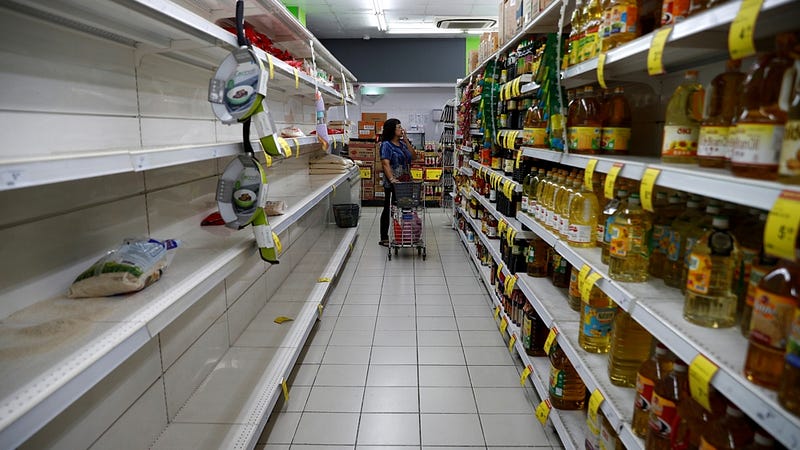
Singapore is of course urging calm but residents are stocking up on food just in case.

The U.S. and Europe do not have many cases and are thus mostly worried about the impact on the global economy. Americans are more concerned about the virus’ effects on the global and U.S. economies than on their own local economies. While pockets of Asia such as Singapore, Japan, Hong Kong, Macau and Taiwan have valid pandemic worries.

Many experts believe the further outbreaks will be essentially impossible to prevent.

Singapore and Japan Vulnerable to Own Outbreaks in Early February

The health ministry of Japan said three new virus cases had been confirmed on the Diamond Princess cruise ship docked in Yokohama, raising the total number to 64.

The Malaysian health ministry confirmed a 16th case of coronavirus, a 67-year old female and Chinese national from Wuhan. It seems the prospects for the South-East Asia (SEA) region are not good with regards to the spread of the virus. China’s inability to contain the virus at the source is likely going to lead to a mild pandemic.

It is only the second time Singapore has activated Code Orange. The first was for swine flu (H1N1) in 2009. The coding system was set up after SARS (severe acute respiratory syndrome) in 2003. The outbreak then would also have been Orange, had the classification existed.

Singapore’s media coverage is excellent so an outbreak there is well documented now more or less started in February, 2020. They have not officially called it an “outbreak” yet of course, not to raise fears about it with the public.

Thailand’s public health ministry reported seven new cases of the coronavirus, including three Thais and four Chinese. Thus the cases outside of China appear to be increasing in the second week of February, 2020.

What Does Code Orange in Singapore Mean

With Code Orange, new precautionary measures will be in place to minimize the risk of further virus transmission to the community. It’s not clear if Singapore has the capability of tracking some of the sources such as the conference that was held in Singapore.

10% of cases of the Wuhan Virus presented with diarrhoea and nausea one or two days before developing fever and laboured breathing. It’s also thought that one day before showing symptoms, patients are contagious making it more difficult to track of super-spreaders shed the virus during that period.

Millions of people in Asia are now taking their temperature twice a day, washing their hands on a regular basis and not attending big group functions. The panic levels are intense. The virus, called 2019-nCoV, is a novel strain of coronavirus — which can infect the nose, throat, and sinuses — that had not been seen in humans before.

Singapore has limited ability to track it’s community transmissions. For example the Grand Hyatt Hotel spread requires significant international collaboration which has not occurred in a timely manner.
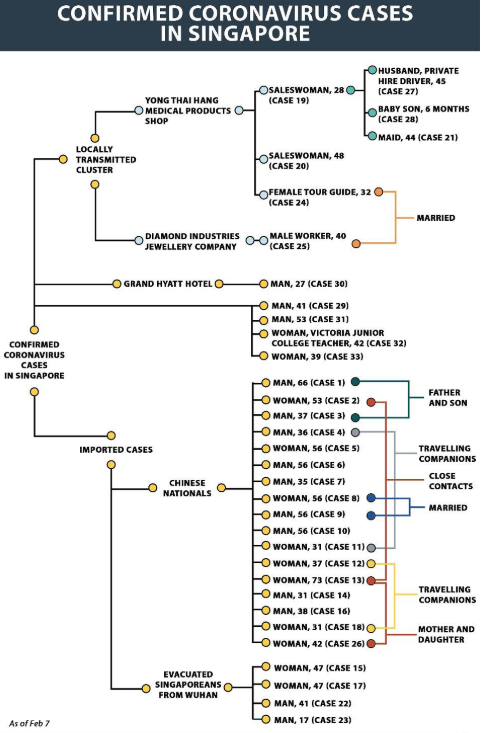
Many of the Japanese cases are on the cruise-ship, but Singapore is being more transparent about community transmission. It’s highly probable in reality this is also occurring in Hong Kong, Malaysia and possibly even Taiwan. We’ll know soon enough.

All out hardliner travel bans between the West and Asia are highly likely given the current trajectory of the spread of the virus.

However, things are always a bit slow to actually occur, also since travel bans and quarantines will have limited long-term impact to stop the virus — maybe only slow its spread (according to the experts).

If you are interested in learning more about the new Singapore cases, you can read about them here. CNA coverage on YouTube is also highly recommended.

Since the virus can be spread through direct contact with individuals as well as via contaminated surfaces (via our hands), it is critical to ensure good hygiene.

Since many regions of Asia are high-density and considering working conditions with dormitories and cafeterias for many companies in China, it’s very difficult for China to actually contain the Wuhan virus.

It appears inevitable they will get much of the blame for the backlash of fear that is accompanying this global news event. Sentiment management and consumer global sentiment are really important aspects of a world-state like the internet has implemented.

It’s my hypothesis that by February 10th, Singapore will reach outbreak levels of the novel coronavirus. However this might be occurring simultaneously in many regions such as Hong Kong, Malaysia, Japan, etc… There are literally thousands of epidemiologists on the planet who are thinking along similar lines, so don’t accuse me of fear-mongering (Reddit!).

Is community spread of the novel coronavirus preventable now in Singapore? It’s frankly, unlikely.

Health
World
Singapore
China
Coronavirus
Recommended from ReadMedium