
Singapore Botanic Gardens
Botanic Gardens Singapore
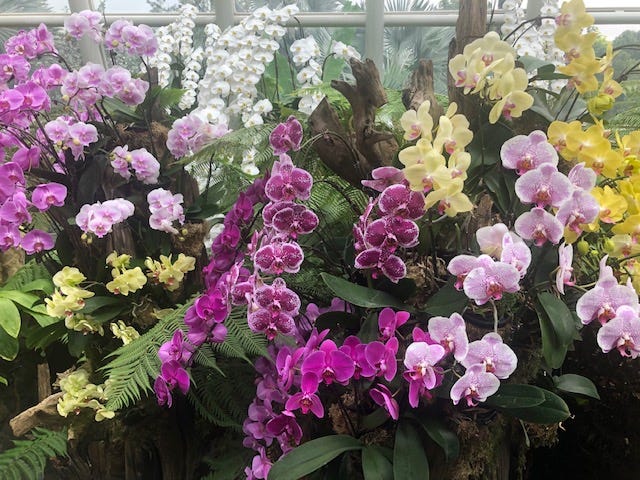
A friend took us on a six-hour walking tour of the Singapore Botanical Gardens, a UNESCO World Heritage Site. It was founded in 1859 and borders Holland and Napier Road to the south, Cluny Road to the West, Tyersall Avenue and Cluny Park Road to the west, and Bukit Timah Road to the north. It occupies approximately 82 hectares of land.
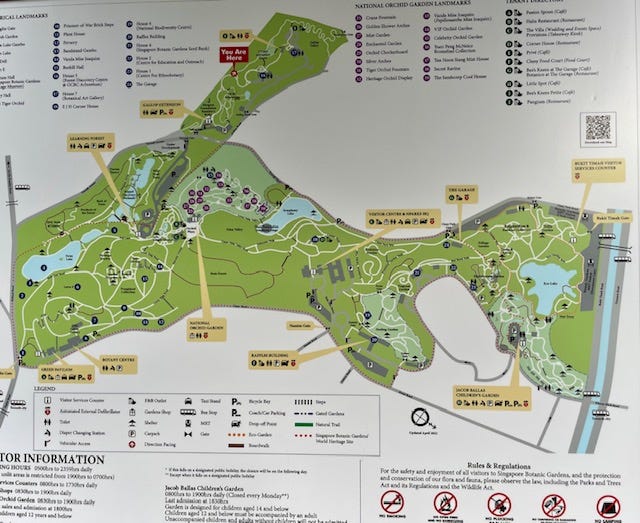
We got to the gardens at 6:30 am and began our walk in and around the gardens. We stopped often to admire the plants and scenery along the way. We had cool weather with only a light drizzle that lasted about half an hour. We just needed to whip out our lightweight crushable hooded rain jackets from a light sling bag which I wear like a backpack.
Our walk was a beautiful experience amongst green landscapes and beside lakes with swimming swans. We also saw early morning joggers and older folk doing calisthenics and tai-chi. It was really gratifying to see so many taking advantage of the gardens to exercise in the cool morning air.
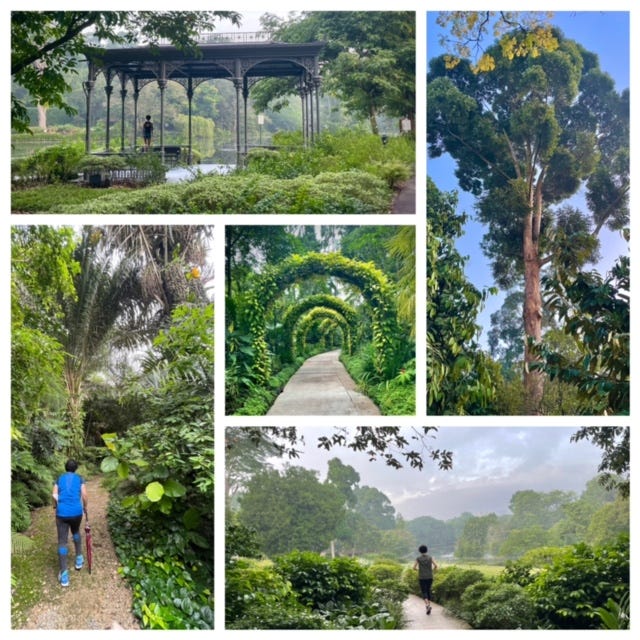
There is a lot to see walking through the gardens. Our six-hour visit was not long enough to cover all of it. There are themed gardens to visit such as the Ginger, Healing, Fragrant, Foliage, and Evolution Gardens.
The Botanic Gardens is free for all to visit and enjoy! The only charge was to the National Orchid Garden which was definitely worth more than the $3 each we were charged (a special non-resident rate during the school holidays).
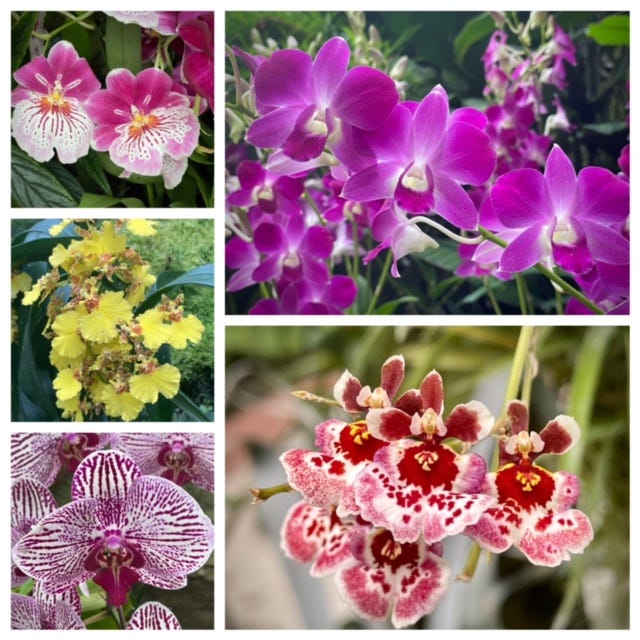
The images above although beautiful, do not reflect the rich variety and number of orchids we saw. The Orchid breeding program which began in 1928 now boasts over 1,000 species and 2,000 hybrids. This is the largest display of orchids in the world. There was also a display of the hybrid orchids that were named after visiting dignitaries to Singapore.
The Gallop Extension of the gardens is a living laboratory for forest conservation, education, and research. Along our walk on the Gallop extension, we came across two beautiful old black and white houses. The first one named Atbara, designed by architect R.A.J. Bidwell, was built in 1898 for a barrister named John Burkinshaw.
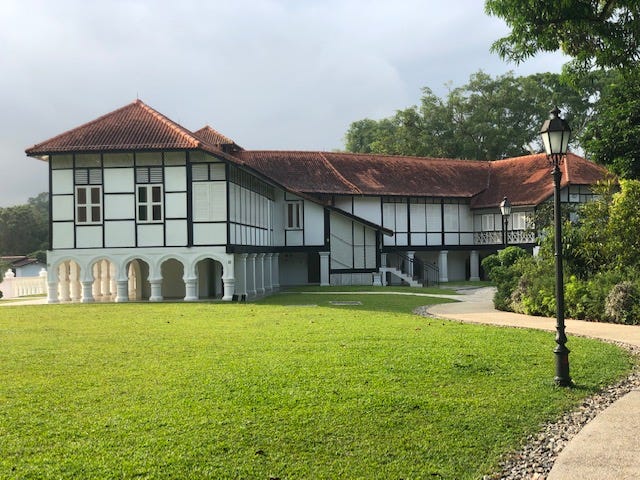
The Straits Trading Company acquired Atbara in 1924 and owned it until 1990 when it was sold to the state. Today it houses the Forest Discovery Center of the Singapore Botanic Gardens.
The second home, Inverturret, was built for a Scotsman, Charles McArthur. It was also designed by R.A.J. Bidwell who was considered the most influential architect in Singapore at the time.
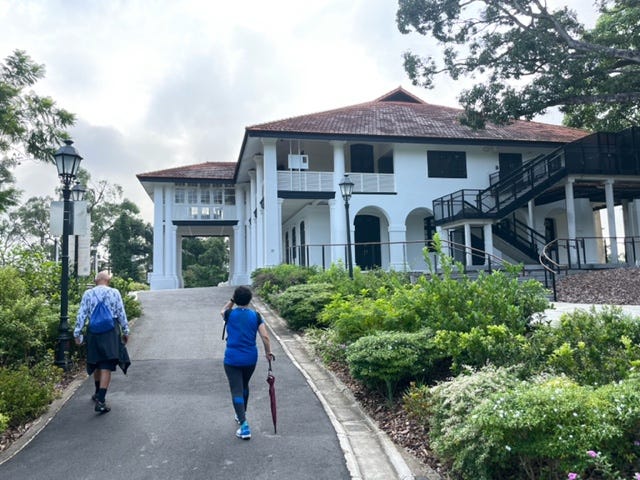
Inverturret served as the residence of the French Ambassador to Singapore from 1939 to 1999. It is now home to the Botanical Art Gallery of the Singapore Botanic Gardens.
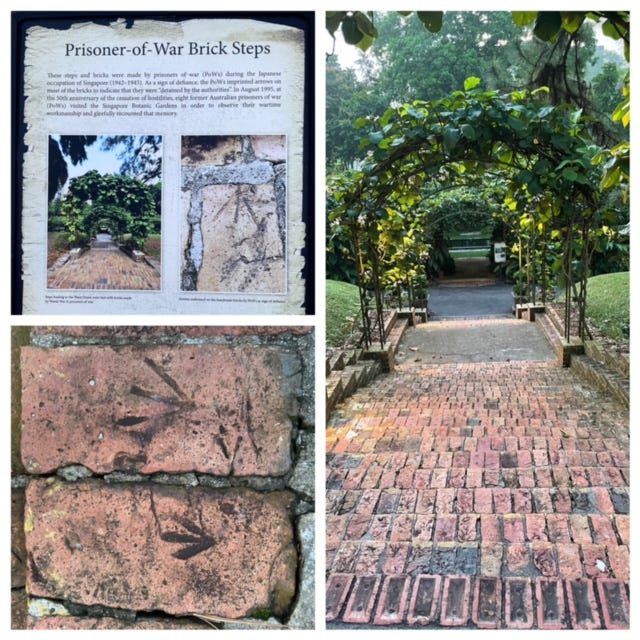
Of historical and human significance is the Prisoner of War brick steps. The steps and bricks were built by prisoners of war during the Japanese occupation of Singapore. As a gesture of defiance, the prisoners added arrows to most of the bricks.
The Botanic Gardens is a gem of a place for Singapore residents to enjoy. It really highlights the emphasis Singapore places on including a green initiative with its economic progress. For example, all of the high-rise housing estates we saw are set in lush greenery. Mature trees are valued and protected. While one cannot fail to observe the city’s skyline of towering modern skyscrapers, their presence is balanced by the rich greenery one experiences as one travels around the island.
If you enjoyed reading this and are not yet a member of Medium, please consider using this link to join. I receive a small commission which will not increase the cost of your membership and you get full access to the work of all the authors on Medium. Thank you for your support.


