
True Life Story
Sindhutai Sapkal; Mother of Over 1500 Orphans, children of lesser Gods
A journey of a poverty-stricken village girl
A young mother, hungry and tired holding an infant in her arms sits under a shadowing tree with the only thought to commit suicide.
A cool wind was breezing and varieties of birds sitting on the tree were persistently chirping melodiously. She looked up. The tree which was shadowing her a broken branch still held to the tree.
She looked up again and again, and started walking with her beautiful infant; I will never commit suicide, if a broken branch of a tree can shelter me, why not me to others?
Her destination was unknown but the determination was rock-firm.
Sindhutai was conferred with ‘Padma Shree’ in 2021, the fourth-highest civilian award of the Republic of India.
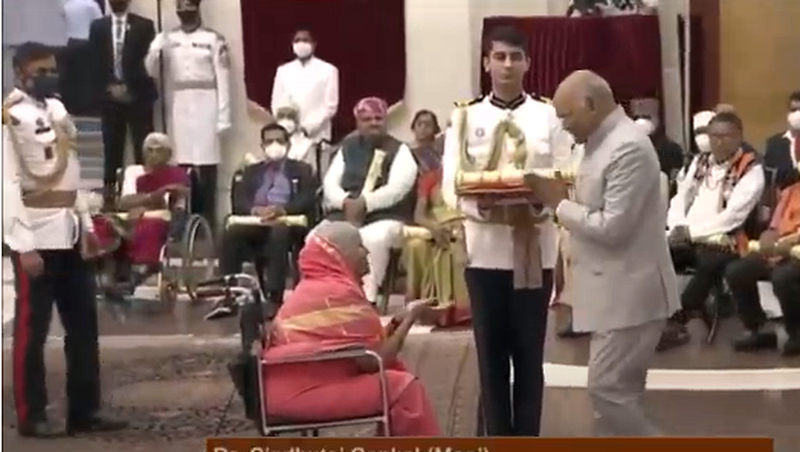
Sindhutai was born in a poverty-stricken cattle grazer family in 1948 in Maharashtra, India. As a child, she was called Chindi (worthless in local language) always faced problems, her mother never considered education was important.
However, with her father’s support, she passed the 4th standard. She was married off at the age of 12 to a person 20 years older than her.
She was bold and upright and acquired the wrath of her husband and his family. When she was 20 years old, she was the mother of two and expecting the third.
Sindhutai went to the district officer to complain about the village chief not paying the dues to the villagers. The village chief as revenge told her husband that the child his wife was carrying was not his which infuriated her husband.
To overcome his insult, her husband kicked his 9 months old pregnant wife and assuming the profusely bleeding wife to be dead, left her in the cowshed to escape the charge of murder. He wanted her death to look due to cattle trampling.
In that condition, in the cowshed, she gave birth to a baby girl. When she regained consciousness, she picked up two stones lying nearby. She cut the umbilical cord with the nearby stones and spent the entire night in front of the house with the baby. Morning, her husband’s family noticed her and forced her to leave the village.
She went to her mother for shelter who also refused (her father was already dead otherwise she would have supported her daughter).
The only future she could see was ending the life with the infant but the shadow of the branch gave an angelic message and she was determined not to commit suicide.
She sat in the temples singing the devotional songs, a sort of begging she recalls. With a meagre collection, she bought bread and came to the railway station to sit and eat. There she saw some orphans.
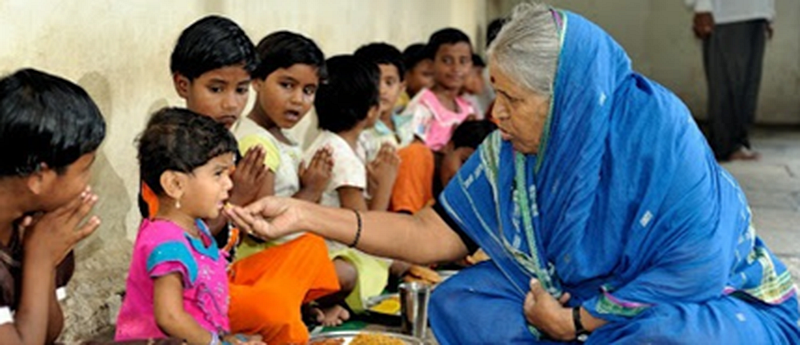
Her compassion, motherly instinct moved her to share the bread with other orphans. Then she started singing on the train, many times she was threatened to get down by the railway authorities.
She recalls her hunger made her beg and her pain made her sing. Seeing many beggars she felt, many beggars cannot sing and can’t get alms, that compassion made her help old beggars too.
With her mission in mind, she took her daughter to an orphanage in Pune and took the mission to care for the needy. She loved & served orphaned, tribals and marginalised people.
In the course of her mission to help villagers and forest dwellers, she met then Minister of Forests and Prime Minister Indira Gandhi requesting them not to displace villagers before the government had made appropriate arrangements at alternative sites.
Her sincere effort convinced many donors. She smiles; my begging is different now, through generous donors and award money.
Her selfless service to the community was recognized at the national and international levels. She conferred with ‘Padma Shree’ in 2021, the fourth-highest civilian award of the Republic of India. She is the recipient of over 100 awards including the Real Heres Award, from CNN — IBN & Reliance Foundation in 2012.
She established 9 organizations for orphaned children and the destitute. Her award amount, donations are used for constructing buildings to house and nurture those who were under her protection.
She never agreed to allow the adoption of her children. Some of them studied to become doctors and engineers who in turn support orphaned children.
Sadly, in India, when cows stop giving milk, some owners find cows a burden and leave them to survive on their own. These cows roam about in search of food. Sindhutai has started Gopika Gau Rakshan, a shelter for abandoned cows where cows are taken care of until their natural death.
‘Mee Sindhutai Sapkal’ the 2010 Marathi film is a biopic inspired by the true story of Sindhutai Sapkal. The film was selected for world premiere at the 54th London Film Festival. The film has the highest rating and bagged several awards.
This film in the Marathi language with English subtitles is available on Youtube, Prime Video — Amazon.com etc.
She died on 4th Jan. 2022 and was given full state honour.
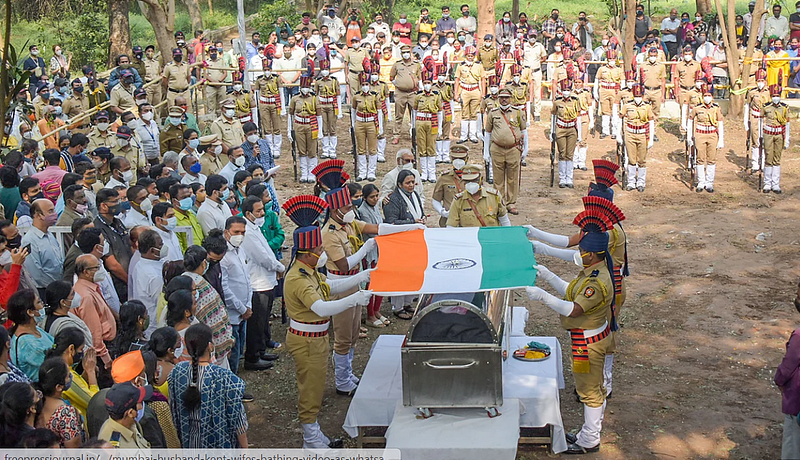
Sindhutai was a role model and asset to the society, determined in her mission, her preaching and actions were the same, generous in compassion, a loving mother to several orphans and destitute…….
Now her legacy is continued in her organization and by her biological daughter.
The night is terrifying, but without it, the day does not dawn- Sindhutai
This is the journey of a poverty-stricken girl, a symbol of willpower………living example of our time.
Let her soul rest in peace.
One of the secrets of inner peace is the practice of compassion – Dalai Lama
Globally street children are increasing in developing and developed countries. I was looking into the causes of street children; domestic violence, poverty, family disintegration, lack of education etc drive the children coming to the street or homeless. Many times, these children love their freedom and involve in gangs, drug addiction, small to big crimes etc.
Street children face abuse, neglect, exploitation by many including all types of mafia including human traffickers.
In developing or developed countries, sadly, most of the time, these street children end up without any direction for their life.
UNICEF accounts, over 190 million children are homeless worldwide in 2020. Although Africa, Asia and Latin American countries account higher rate of homeless children, no country in the world is free from homeless children, a sad situation. Several projects have been going on to educate these children.
Thanks for your attention Tara Desai


