
Since the Dawn of Civilization: Unveiling the World of Secret Societies
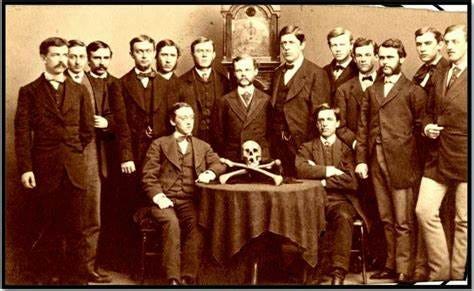
Since the dawn of civilization, the powerful have conspired to twist the course of history to suit their own designs. Like puppeteers, a few shadowy figures could still be pulling the strings of destiny for beings, those who cry conspiracy are usually mocked. Sometimes, the truth is so obvious it goes unnoticed. Are those merely paranoid fantasies cooked up to feed the appetite of people, or do they burn in relation to reality? Do we live in some perfectly executed plan, where wars, revolutions, social movements, terrorist attacks — everything is given an official explanation, but perhaps nothing is what it seems to be?
Let’s dare to unveil the incredible world of secret societies. Among them, Freemasonry stands as the mother of all secret societies, perhaps the most suspected and persecuted organization of all time. This is in spite of the fact that very few people truly know what it’s all about. Is it really, as its critics say, the hidden power behind the most important world events? Or is it, as some may see it today, a slightly decadent social club with childish rituals?
How did this ancient secret society, which still boasts more than 6 million brethren, get started? What are its real objectives? How has it influenced world events for more than 12 centuries, and more importantly, how is it influencing them today?
Freemasonry defines itself as an innocent fraternity whose primary objective is to seek the welfare of humanity through the spiritual elevation of its members. But for its critics, it’s just a gigantic pyramid of manipulators with the secret objective of world domination, with unwritten codes of silence and cooperation reminiscent of the Mafia.
So, who’s right? A swift perusal of the history of Freemasonry brings to light certain disquieting characteristics: its impenetrable secrecy, the severity of the penalties for those who break their oaths, the general public’s ignorance of its true reach and influence, and most disturbing of all, its obvious participation in many of the key events that have changed the course of history over the last few centuries.
Secret rituals, obscure symbolism, mysterious objectives — qualities that make it an easy target, mainly by its arch-enemy, the Roman Catholic Church. One wonders, are these real reasons to fear Freemasonry? Or is it all just a matter of groundless accusations, mere incomprehension, and prejudice against enlightenment?
But how did it all begin? The origins of Freemasonry go back to the 7th century when it was founded as a guild of builders, bricklayers, and stonemasons who tried to keep secret their technical knowledge in order to protect their livelihoods. These Masons were not the construction workers we might picture today but technical and artistic masters, often working on prestigious constructions at a time when building technology was limited. The original Masons built cathedrals and castles that endured for centuries, surviving wars and earthquakes.
To the common people of those times, such technical accomplishments endowed the Masons with almost magical powers — powers that had to be kept secret from outsiders. The extraordinary knowledge and skills of these men constituted the best-kept secret of all time.
The development of projects would take generations to complete, and the accompanying know-how was passed down from father to son, from teacher to apprentice. Freemasonry soon acquired a spiritual and ideological dimension that clashed with the value system of its time. This made it the perfect organization to host ideas considered dangerous, ideas that needed to be kept secret at all costs.
This earliest manifestation of Masonry is known as operative masonry, since its members were active builders. Though the society was born in the Middle Ages, Masons were inspired by much older secret societies, some dating from pre-Christian times.
Secret societies have existed since the dawn of civilization. They were formed in order to preserve and defend knowledge that afforded power and to transmit and maintain ideas that offended the powers that be — ideas whose free and open expression might have brought down a death sentence upon a person who simply dared to utter them. A good example is the Pythagoreans, who organized like a secret society. Pythagoras, a philosopher who lived in Greece in the 6th century BC, had immense influence on Masonic thought centuries later.
Pythagoras was pursued and maligned by his enemies, but his knowledge persisted, and the set square became the emblematic symbol of Freemasonry that is still used to this day. Operative Masons clearly despised what the clergy had become — a decadent bunch of sinners too busy looking after their worldly possessions to take time to shepherd the souls of their flock. The same feelings were felt towards the oppressing nobility who owned land and life.
The irony was that the Masons’ ideological antagonists, the persecutory dogmatism of Rome, had in the Catholic Church and in nobility their main clients. The old bas-reliefs and ornamentations of Europe’s most famous cathedrals still bear witness to the sharp humor through which the Masons left evidence of their disagreement with and distrust of that omnipresent power. In the Cathedral of San Civil in Nuremberg, there is a tomb showing a monk in a pretty compromising position. In the Cathedral of Warzaw, replicas of the famous Joachim and Boaz columns stood at the entrance of King Solomon’s Temple — fundamental symbols of Masonry, together with Hiram Abiff, the mythological builder of King Solomon’s Temple who was murdered because of his refusal to reveal the secret of his art — a genuine coded Masonic signature.
But the belief that Freemasonry is an atheistic movement solely because of its hatred of the Catholic Church is completely misguided. The Masons simply wanted to have the liberty to worship God in the way they chose, not in the way dictated to them by Rome. To be accepted into the Brotherhood, every Mason must believe in a unique Supreme Being, no matter who it is. To accommodate for different beliefs, and in line with their origins as builders, Masons have come to call this being “G.A.O.T.U.” or “The Great Architect of the Universe.” Its symbol, the all-seeing eye, is inspired by the Egyptian Eye of Horus.
The Feudal Age came to a close, and the Catholic Church stopped being the Masons’ major client. It was then that this original guild of spiritually free bricklayers turned into a powerful and influential secret society open to all men who wanted to accept its rules and would take an oath to keep its secrets. It was called “Freemasonry” or “Free and Accepted Masons.” Soon, it would be the key protagonist in some of the most important events in history.
Far from being an ignorant association of superstitious bricklayers, the original operative Masons were upholders of ideals of liberty that naturally brought them into conflict with those who were both their best clients and their oppressors — the Catholic Church and the European monarchies. Over time, they evolved into a powerful secret society that attracted some of the most influential figures in history and came to be known as Freemasonry or Free and Accepted Masons — a secret society that still operates today.
The name “Free and Accepted Masons” was born when the original operative masonry transformed itself into a wider secret society in a period that lasted from the end of the Middle Ages to the Renaissance. “Free” makes reference to the fact that no slave or bondsman could join, and “accepted” implies that the members were accepted despite not being builders.