avatarDharan.M

Free AI web copilot to create summaries, insights and extended knowledge, download it at here

2342

Abstract

Take a brief break and then continue for another fifteen minutes. You may repeat this and stop when you feel it is sufficient for the day.</p><p id="99bb">Enjoy the entire process of writing. Writing becomes arduous when we are asked to write about something that is boring, insensible, or lacks meaningful outcomes.</p><figure id="1d4d"><img src="https://cdn-images-1.readmedium.com/v2/resize:fit:800/0*8ZxYrnrQc_fDfRD-"><figcaption>Photo by <a href="https://unsplash.com/@soucarlosmagno?utm_source=medium&amp;utm_medium=referral">Carlos Magno</a> on <a href="https://unsplash.com?utm_source=medium&amp;utm_medium=referral">Unsplash</a></figcaption></figure><p id="26b7"><b>My Lessons About Editing: Keep It Clear and Comprehensible</b></p><p id="7de7"><b>Know The Purpose Of Editing</b></p><p id="fb2b">When we read a story for the first time, we might read it with our biases. However, subsequent readings of the same story will instill more clarity in us. In the same way, the purpose of editing is to help us structure our words more consciously and clearly. Editing helps us to ensure that we are neither writing too unconsciously nor imposing shallow, confusing, and half-baked ideas onto readers. No one will understand what we're in our thoughts and experiences unless we explain to them clearly.</p><figure id="0371"><img src="https://cdn-images-1.readmedium.com/v2/resize:fit:800/0*uAQ3CwepncsPbzWP"><figcaption>Photo by <a href="https://unsplash.com/@nate_dumlao?utm_source=medium&amp;utm_medium=referral">Nathan Dumlao</a> on <a href="https://unsplash.com?utm_source=medium&amp;utm_medium=referral">Unsplash</a></figcaption></figure><p id="3bc2"><b>How To Keep It Clear and Comprehensible?</b></p><p id="833a">Cut out unnecessary words, punctuate at right points, trim down long sentences and paragraphs. Cluttered words will disorientate the thoughts of readers. We read to give food to our thoughts and grow our knowledge and intelligence. If a story makes us perplexed and bored with cluttered words, we will “put the story aside to protect our minds from exhaustion.”</p><p id="cecf">Write the way we talk. Use simple and clear language. Avoid using jargon. It is good to use powerful words that add strength to our stories, but we should exercise intellectual rigor in using words that create too much complexity, as readers

Options

may dislike referring to the dictionary every minute when reading our stories.</p><figure id="f7b7"><img src="https://cdn-images-1.readmedium.com/v2/resize:fit:800/0*oKtp6po_B49LP-JP"><figcaption>Photo by <a href="https://unsplash.com/@oddityandgrace?utm_source=medium&amp;utm_medium=referral">hannah grace</a> on <a href="https://unsplash.com?utm_source=medium&amp;utm_medium=referral">Unsplash</a></figcaption></figure><p id="069e"><b>My Final Thoughts</b></p><p id="5e69">I have come across many professional settings where employees are demanded and expected to write “for the sake of writing.” They are encouraged to add excessive words and encapsulate them as pertinent details, to render work accomplishments and achieve key performance indicators. This way of writing may be beneficial for the organization but poses deleterious effects on a writer’s progression. This approach has caused many professionals to develop cluttered writing habits and limited their conscious writing abilities. Regardless of whether we are writing a formal academic or professional paper or an informal story, we are still reaching out to people and it is imperative to write consciously.</p><figure id="feb3"><img src="https://cdn-images-1.readmedium.com/v2/resize:fit:800/0*YDLfxMIGsPkX0wkV"><figcaption>Photo by <a href="https://unsplash.com/@randalynhill?utm_source=medium&amp;utm_medium=referral">Randalyn Hill</a> on <a href="https://unsplash.com?utm_source=medium&amp;utm_medium=referral">Unsplash</a></figcaption></figure><p id="1a34">To use the writer’s block to our advantage and write more consciously, we have to connect (passion) to our writings from our mind (know the purpose) and heart (conscious expression). Writing is an honest expression of ourselves. It is a meditation that assists us to transform our thoughts and emotions into words. Through clear and conscious crafting of these words, we can transmit radiant energies and create positive changes in the lives of people.</p><figure id="d8d6"><img src="https://cdn-images-1.readmedium.com/v2/resize:fit:800/0*USr03lyMvlF_My4R"><figcaption>Photo by <a href="https://unsplash.com/@federize?utm_source=medium&amp;utm_medium=referral">Federico Beccari</a> on <a href="https://unsplash.com?utm_source=medium&amp;utm_medium=referral">Unsplash</a></figcaption></figure></article></body>

Simple Lessons I Learned About Writer’s Block And Conscious Writing

Photo by Nick Morrison on Unsplash

A writer’s block is when a writer feels less energetic to write again. Though there are many reasons for this to happen, we know it is completely natural, and “a writer’s block is just a rest time from a writer’s creativity.” Usually, writers write better after this rest.

To release me from the writer’s block, I worked on understanding “the purpose of writing and editing.” Knowing the purpose motivated me to move forward in overcoming the writer’s block, and it made my writing and editing experiences more enjoyable.

Of course, writers possess a distinguished level of intelligence, eloquence, creativity and experience, and many other skills that drive them into writing and editing. But today I am not exploring deep into the vast areas of these skills and only covering some of my learnings that would be useful to unlock the writer’s block.

Let’s begin.

My Lessons About Writing A Draft When Overcoming A Writer’s Block

Know The Purpose Of Writing

Write about something that you wish to share as a social message. It is good to embellish your writings with a sense of meaning that would uplift the spirits of your readers.

Write down genuinely about anything that comes to your thoughts and emotions. Share your life learning experiences that you think might be beneficial for your readers.
Photo by Mark Fletcher-Brown on Unsplash

Overcoming The Block

Write spontaneously for fifteen minutes on any topic of interest. Take a brief break and then continue for another fifteen minutes. You may repeat this and stop when you feel it is sufficient for the day.

Enjoy the entire process of writing. Writing becomes arduous when we are asked to write about something that is boring, insensible, or lacks meaningful outcomes.

Photo by Carlos Magno on Unsplash

My Lessons About Editing: Keep It Clear and Comprehensible

Know The Purpose Of Editing

When we read a story for the first time, we might read it with our biases. However, subsequent readings of the same story will instill more clarity in us. In the same way, the purpose of editing is to help us structure our words more consciously and clearly. Editing helps us to ensure that we are neither writing too unconsciously nor imposing shallow, confusing, and half-baked ideas onto readers. No one will understand what we're in our thoughts and experiences unless we explain to them clearly.

Photo by Nathan Dumlao on Unsplash

How To Keep It Clear and Comprehensible?

Cut out unnecessary words, punctuate at right points, trim down long sentences and paragraphs. Cluttered words will disorientate the thoughts of readers. We read to give food to our thoughts and grow our knowledge and intelligence. If a story makes us perplexed and bored with cluttered words, we will “put the story aside to protect our minds from exhaustion.”

Write the way we talk. Use simple and clear language. Avoid using jargon. It is good to use powerful words that add strength to our stories, but we should exercise intellectual rigor in using words that create too much complexity, as readers may dislike referring to the dictionary every minute when reading our stories.
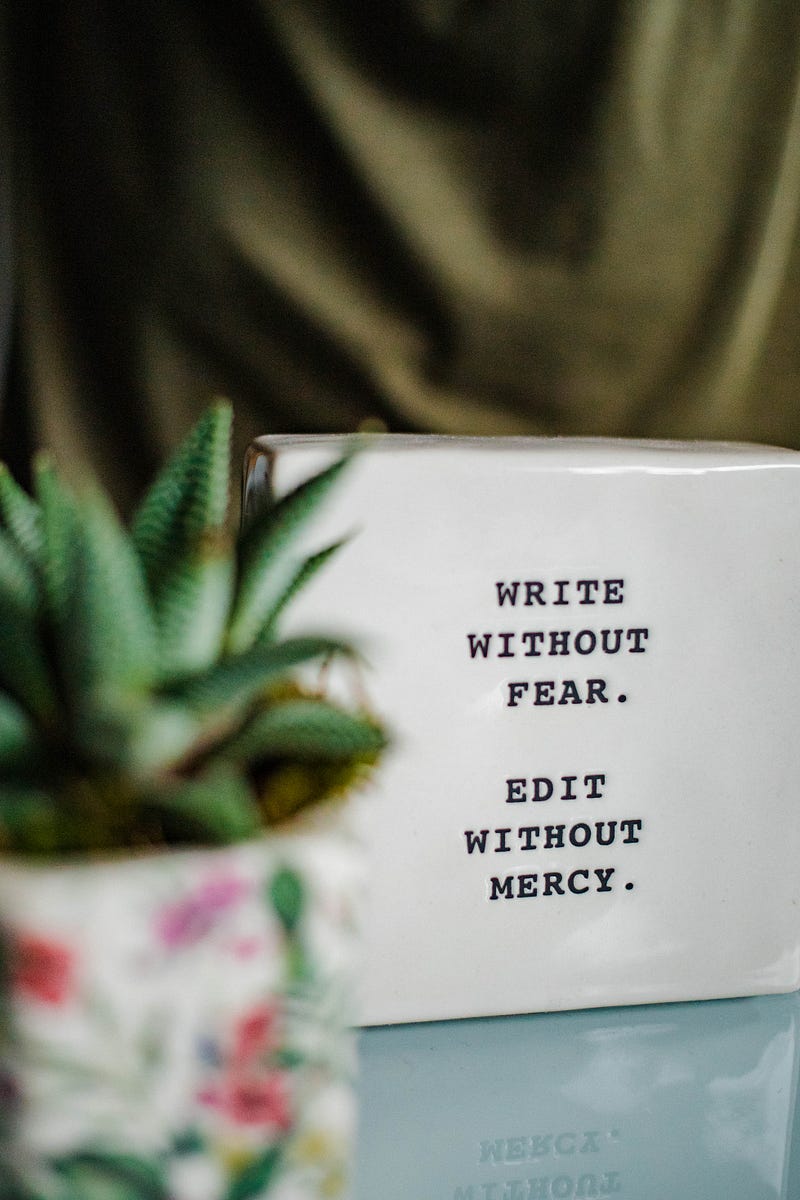
Photo by hannah grace on Unsplash

My Final Thoughts

I have come across many professional settings where employees are demanded and expected to write “for the sake of writing.” They are encouraged to add excessive words and encapsulate them as pertinent details, to render work accomplishments and achieve key performance indicators. This way of writing may be beneficial for the organization but poses deleterious effects on a writer’s progression. This approach has caused many professionals to develop cluttered writing habits and limited their conscious writing abilities. Regardless of whether we are writing a formal academic or professional paper or an informal story, we are still reaching out to people and it is imperative to write consciously.
Photo by Randalyn Hill on Unsplash

To use the writer’s block to our advantage and write more consciously, we have to connect (passion) to our writings from our mind (know the purpose) and heart (conscious expression). Writing is an honest expression of ourselves. It is a meditation that assists us to transform our thoughts and emotions into words. Through clear and conscious crafting of these words, we can transmit radiant energies and create positive changes in the lives of people.

Photo by Federico Beccari on Unsplash
Writing Tips
Writing Life
Writing
Writers On Writing
Writers Block
Recommended from ReadMedium