Simone Biles is Not a Hero
And why is she “Athlete of the Year”?
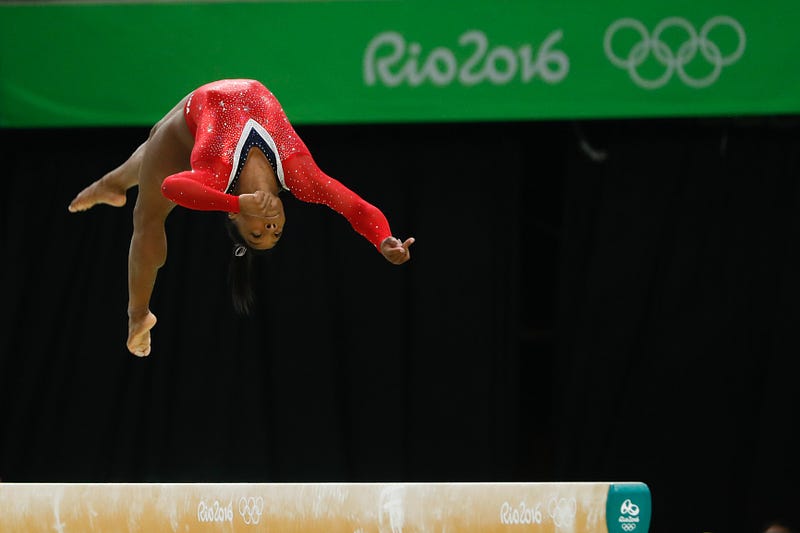
I have to admit, sometimes I am in awe of how people can successfully spin the desired narrative out of almost any story, manipulating and twirling it with the control of a talented gymnast. Speaking of gymnasts, Simone Biles is Time Magazine’s “Athlete of the Year”, although this decision is not without controversy.
When Biles stumbled on her vault back in July of 2021 during the delayed-from-last year Tokyo Olympics and then subsequently pulled herself out of the competition, she faced a little bit of criticism from a few people who were quickly shut down by the overwhelming praise and support for her decision.
Biles’ supporters widely proclaimed that the actions of the talented gymnast, the undisputed best in the world based on contemporary gymnastics judging standards, opened up a “dialogue” about mental health, indirectly attributing her decision to a sacrifice committed in the name of some greater good.
Biles’ small number of critics misguidedly lambasted her, with some comparing her departure with the gymnast Kerrie Strug who, despite an injury, still competed in a pivotal event. When Strug stuck the landing from her vault on one foot, the pained expression on her face was palpable, but she was victorious, and her team took home the gold.
Biles on the other hand did not continue to compete due to the “twisties”, an idiopathic mental phenomenon some gymnasts endure that cripples their ability to “feel” where they are in the air. Biles was originally an expert at “twisting”, so her succumbing to this condition was especially shocking to herself and the public.
So which is true? Is Biles a champion for mental health? Did she contemptuously walk away from the competition because she didn’t feel like competing?
Neither.
Simone Biles dropped out of the five events because it was too dangerous for her to continue with the routines she was required to execute. She quite literally had no choice; she could either drop out, or continue in the competition and not only fail to take home the gold, but she could also become seriously injured, paralyzed, or even killed. And make no mistake of it, the people touting Strug’s triumph would not celebrate Biles if she competed but didn’t win.
This is very different from dropping out due to “mental health” issues such as anxiety or depression because Biles would have loved to continue if she was actually functional to do so. In fact, she did continue on her last beam event because it did not involve “twisting”, therefore it was physically safe to attempt (and she had to potential to medal, which she did).
What stopped Biles from competing strictly had to do with her safety physically, and the fact that she was unlikely to medal if there were serious mistakes in the twisting elements of her routines. Continuing in the competition would ensure a lose-lose outcome for her, while stopping, with the right narrative tweaking, benefited her enormously.
Therefore, despite “only” winning silver and bronze medals at Tokyo as the “G.O.A.T”, Biles still “won”, because the public, and possibly her PR team, helped shift her decision that she had no choice but to make into a heroism narrative.
Biles has been described as having courageously “fought the stigma” by shrugging off her critics and “speaking her truth.” The Time article even tried to credit Biles’ actions with aiding the protection of the mental health of black women. The message was clear; Simone is a “role model” and a “hero” for prioritizing her mental health over winning medals.
However, in reality, Simone Biles is not a “hero”, although no athletes really are. Biles, like other athletes, made a decision that was in her best interest. It was not only the easiest and most comfortable decision, it was the most logical. Biles behaved like a normal person, not an unhinged, obsessive athlete who’d be willing to paralyze themselves in the name of “perseverance”. Might I add, that millions of us untalented non-gymnasts do this every day, and no one puts us on the cover of Time.
Sure, it is absolutely sad that sports culture reveres individuals who take sports way too seriously, such as the people who celebrated Katie Strug, but that is the nature of the beast. The absurdity of sports culture is the reason we are amazed that Biles realized she might break her neck and said “nope.”
With this stunning turn of events, Biles has shown us that she can garner the same amount of praise with or without being the “best” gymnast at the competition. The adoration she received outshone even the all-around gold winner who stepped up in her place, Sunisa Lee.
Speaking of successful PR maneuvering, after the hardened “hero” returned home in August, she claimed that her “twisties” had resolved as predicted by her coach and that she can “do everything again”. This seemed to complete the narrative that Biles was suffering from a temporary hiccup to her gymnastic brilliance.
However, in October, Biles confessed to a very different story. Fighting back tears on the Today Show, she told the interviewers that she’s still “scared to do gymnastics.” She spoke about her “Gold Over America Tour” and how she had to remove the “twisting” elements from it:
“To do something that I’ve done forever and just not be able to do it because of everything I’ve gone through is really crazy because I love this sport so much”
This begs the question, was her previous statement about being able to do everything again a lie? And if so, why? Why can’t Biles, who is being championed as an ambassador for the struggles of elite athletes, be honest about what she is going through?
My hypothesis is that either Biles or her PR advisors needed her to recover from the “twisties” as expected for fear of her appearing overly weak or vulnerable, which are traits she was receiving praise for supposedly embracing. However, when it became evident that her condition did not improve over time, she finally had to come clean.
Despite this, Bile’s gained the title of Time’s “Athlete of the Year” for supposedly ignoring the “haters”, but let’s face it, the award was hers from the get-go, although the reasoning evolved to suit her. Of course, I don’t really care who Time chooses for this unimportant accolade, I just want to understand why, when there are other athletes who did compete in their events who didn’t get it. What message does that send?
In a way, the celebration of Biles not winning to her expected level is almost like awarding her a figurative, dreaded “participation trophy”; you know, the ones us millennials are accused of holding dear to our hearts when we actually loathe them.
Again, in response to Time’s selection, a small number of critics emerged, such as Newsmax host Greg Kelly, who objected to Time’s decision because Biles “quit on her team.” Another critic, Doug Gottlieb, called Time’s employees “a bunch of idiots.”
Speaking of Time, only time will tell if more canceling and firings are on the horizon for anyone who dares make such a statement about the infallible gymnast.
As for Biles, when she was asked if she would have done anything differently at Tokyo, she responded:
“I wouldn’t change anything for the world,” she said. “I think everything happens for a reason.”
Don’t I know it.


