
Simon Sinek Says We Got Global Warming Wrong
The popular speaker will change how you think about the climate crisis.
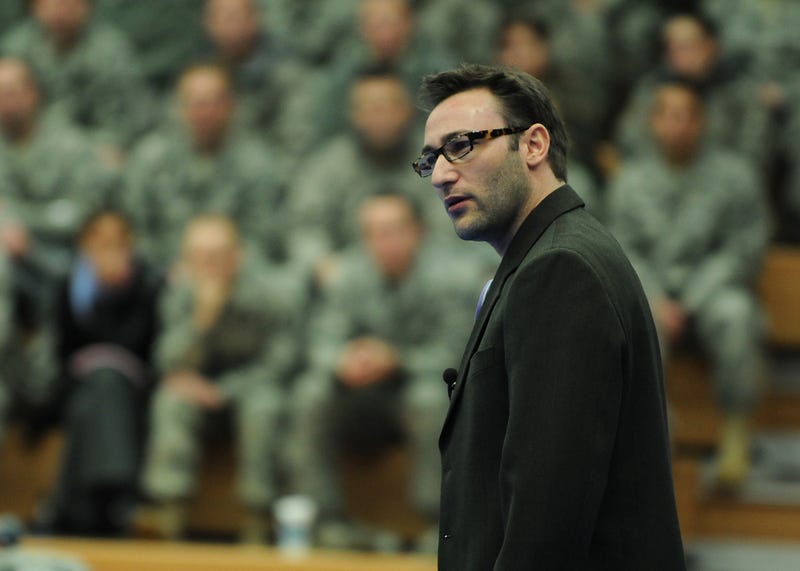
Simon Sinek has a way of seeing through an issue and communicating it in a fresh, piercing way. And this time he’s taken on global warming.
No, he hasn’t written another book or filmed a viral TED talk. So far he’s just shared a short video where he answers a question posed to him about climate change.
His brief reply is a two-point criticism of the way we’ve understood and communicated climate change, and his insight might just change the way you think about the problem.
Global warming has a marketing problem.
We’ve learned the hard way that, unfortunately, people aren’t going to just jump on the environmental bandwagon because scientists said they needed to. That’s just not human nature. People need to be convinced, inspired, sold and left to feel like they’ve decided to act out of their own free will and self-interest.
The majority of consumers care about how they’ll directly benefit from something. And social issues are no different. We’re just not that selfless — not on a global scale.
We’ve done a poor job at marketing the climate crisis to selfish human beings. We’ve confused people with poor messaging and we’ve assumed that people’s better nature would lead them to act selflessly. Wrong.
Sinek proposes two fundamental changes to our climate crisis messaging strategy:
- From global warming to climate cancer
In 1975, US Scientist, Wallace Broecker, used the term “global warming” in a scientific paper, and the rest is history. The term became part of our global lexicon, and the results were… confusing.
If it’s colder this winter than it was last winter, or if it’s unseasonably cold today, how can global warming be real?! “I’m telling you… those scientists are a bunch of liberal quacks.”
People aren’t just ignorant. We’re bad at messaging.
The problem was never just warming — it was about a disruption in the normal, habitable range of our planet’s climate. Or, as Sinek says, the problem isn’t global warming, it’s climate cancer.
We need to communicate exactly what the problem is in a way that people will immediately understand and emotionally feel. People get cancer. They understand the concept. They feel the need to act. And they understand what almost always happens to a cancer patient when they fail to act: they die.
There is a cancer in our climate. And if we don’t act, there will be death.
But whose death?
2. From save the planet to save your family
That’s Sinek’s second point. We’ve ignorantly believed that we could get humanity to act by telling them we need to save the earth, the animals, and some low-lying cities. But, by and large, people haven’t acted.
We humans generally act in our own self-interest. Especially if it will cost us something. And healing climate cancer will cost us a lot.
Instead of telling people that we need to save someone or something else, we need to warn people that they and their families are in danger. They need to know and feel the fear that failing to act will have on their own lives and those whom they love.
It’s really not about the planet. It’s about us. As Sinek says, “The planet will survive no matter what. Life will continue with us or without us. What we have to do is save our species.”
The way we’re measuring progress is all wrong.
If the first point from Sinek was about how to effectively market the need to address climate change, this point is about how to ensure ongoing action to heal climate cancer.
According to Sinek, the way we measure progress should be about momentum rather than absolutes.
“If we don’t act now, the world as we know it will be gone in 50 years.”
50 years is a long time. And, in addition to being selfish, we’re finite minded creatures. We like to see the results of the sacrifices we’re making. And we want to see them much sooner than 50 years from now.
You probably wouldn’t follow your personal trainer’s regimen if she told you that you would need to make sacrifices and work out every day for the next 50 years, and then and only then would you lose that 15 pounds.
People are overwhelmed with pressing, personal concerns. So lowering some random data point that affects something years into the future is always going to be pretty low on their list of priorities. We need to see and understand the difference we’re making in more immediate terms.
Like viewing the graphs of daily coronavirus cases, people need to understand how we can flatten the curve of climate cancer and environmental damage today, this week, this month, and this year. What actions can I take today, and what results will I see and feel tomorrow?
We need fewer absolutes that feel far off and hard to reach, and more ways to measure that we’re moving in the right direction.
The Final Word
We’ve got a lot wrong with global warming. We’ve assumed that people will just “get it” and act in line with the most altruistic aspects of human nature. But they haven’t. We haven’t.
And why haven’t we? It’s the messaging, the branding, the marketing. If you made a product you were sure was great and it didn’t end up selling at all, would you blame the consumers who didn’t buy it? Or would you step back and take a long look at your marketing strategy?
Things will only change once we help people understand the climate cancer all around them that threatens the survival of their family and give them clear actions to take with a compelling way to see the progress they’re making.


