avatarDouglas Rushkoff

Free AI web copilot to create summaries, insights and extended knowledge, download it at here

1097

Abstract

hnologies are used to teach their jobs to algorithms.</p><p id="63bc">This is what all the hoopla about “machine learning” is really about. The things we want our robots to do — like driving in traffic, translating languages, or collaborating with humans — are mind-bogglingly complex. We can’t devise a set of explicit instructions that covers every possible situation. What computers lack in improvisational logic, they must make up for with massive computational power. So computer scientists feed the algorithms reams and reams of data, and let them recognize patterns and draw conclusions themselves.</p><p id="40a4">They get this data by monitoring human workers doing their jobs. The ride-hailing app on cab drivers’ phones also serves as a recording device, detailing the way they handle various road situations. The algorithms then parse data culled from thousands of drivers to write their own autonomous vehicle programs. Online task systems pay people pennies per task to do things that computers can’t yet do, such as translate certain phrases, label the storefronts in photos, or ide

Options

ntify abusive social media posts. The companies paying for the millions of human micro-tasks may not actually need any of the answers themselves. The answers are being fed directly into machine learning routines.</p><p id="c74c">The humans’ only real job is to make themselves obsolete.</p><p id="269f"><i>This was section 53 of the new book </i>Team Human<i> by Douglas Rushkoff, which is being serialized weekly on Medium. Read the previous section <a href="https://readmedium.com/the-violence-of-growth-obsessed-capitalism-d406de28dda8">here</a> and the following section <a href="https://readmedium.com/the-rise-of-robots-should-make-us-question-why-we-need-jobs-at-all-82c73c2e8134">here</a>.</i></p><figure id="d946"><img src="https://cdn-images-1.readmedium.com/v2/resize:fit:800/1*[email protected]"><figcaption>From ‘<a href="https://books.wwnorton.com/books/Team-Human/">Team Human</a>’ by Douglas Rushkoff. Copyright © 2019 by Douglas Rushkoff. Used with permission of the publisher, W.W. Norton & Company, Inc. All rights reserved.</figcaption></figure></article></body>

Silicon Valley Is Using Our Own Intelligence to Make Us Obsolete

How workers unknowingly train their robot replacements

Photo: Donald Iain Smith/Getty Images

In the future envisioned by Wall Street and Silicon Valley alike, humans are just another externality. There are too many of us, asking for salaries and health care and meaningful work. Each victory we win for human labor, such as an increase in the minimum wage, makes us that much more expensive to employ, and supports the calculus through which checkout workers are replaced by touchscreen kiosks.

Where humans remain valuable, at least temporarily, is in training their replacements. Back in the era of outsourcing, domestic workers would cry foul when they were asked to train the lower-wage foreign workers who would shortly replace them. Today, workers are hardly aware of the way digital surveillance technologies are used to teach their jobs to algorithms.

This is what all the hoopla about “machine learning” is really about. The things we want our robots to do — like driving in traffic, translating languages, or collaborating with humans — are mind-bogglingly complex. We can’t devise a set of explicit instructions that covers every possible situation. What computers lack in improvisational logic, they must make up for with massive computational power. So computer scientists feed the algorithms reams and reams of data, and let them recognize patterns and draw conclusions themselves.

They get this data by monitoring human workers doing their jobs. The ride-hailing app on cab drivers’ phones also serves as a recording device, detailing the way they handle various road situations. The algorithms then parse data culled from thousands of drivers to write their own autonomous vehicle programs. Online task systems pay people pennies per task to do things that computers can’t yet do, such as translate certain phrases, label the storefronts in photos, or identify abusive social media posts. The companies paying for the millions of human micro-tasks may not actually need any of the answers themselves. The answers are being fed directly into machine learning routines.

The humans’ only real job is to make themselves obsolete.

This was section 53 of the new book Team Human by Douglas Rushkoff, which is being serialized weekly on Medium. Read the previous section here and the following section here.
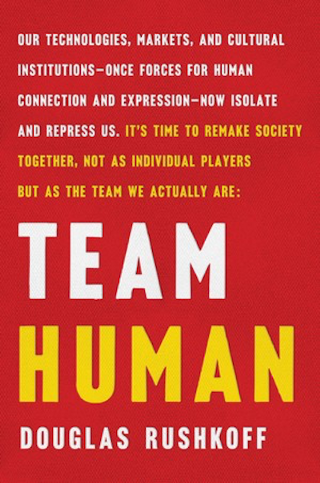
From ‘Team Human’ by Douglas Rushkoff. Copyright © 2019 by Douglas Rushkoff. Used with permission of the publisher, W.W. Norton & Company, Inc. All rights reserved.
Book Excerpt
Technology
Silicon Valley
Robots
Future
Recommended from ReadMedium