
Silicon Valley: From Fruit Orchards to Tech Giants
The Rise of Silicon Valley: From Farmland to Tech Hub
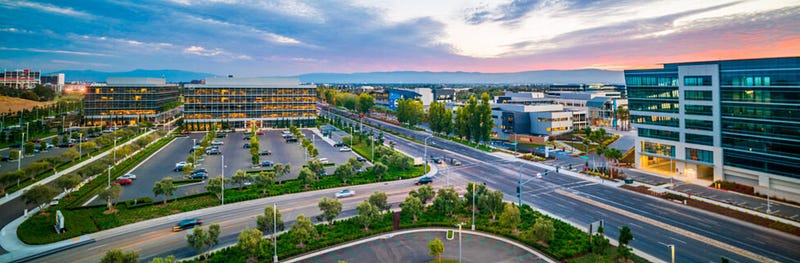
Can you imagine a place, once known for sprawling farmlands and fruit orchards, transformed into the global hub of technology and innovation? Welcome, dear reader, to Silicon Valley.
“Silicon Valley, named for the silicon needed to create semiconductor transistors found in microprocessors, is home to many technology giants and thousands of startup dreams.”
Once a humble farming region, Silicon Valley is now the epicenter of technological advancements, filled with an exciting vibrancy fueled by a constant influx of innovators and entrepreneurs. But how did this transformation occur? What catalysts contributed to the rise of this digital dominion? Let’s dive into the captivating narrative of Silicon Valley, from its humble agricultural roots to its world-renowned status as a technology hub.
Before the glittering skyline and the hustle of tech startups, Silicon Valley was just fertile land, boasting apricot blossoms and rolling farmlands. Picture a place where the quiet hum of rural life filled the air. However, the winds of change were on the horizon during the mid-twentieth century.
Stanford University, positioned in the heart of the Valley, played a pivotal role in this transformation. Frederick Terman, then Stanford’s Engineering Dean, had a vision to transform the university’s idle lands into a high-tech region. This sparked the creation of the Stanford Industrial Park, now known as Stanford Research Park, in the mid 1950s.
The Park became home to forward-thinking companies like Hewlett-Packard and Lockheed Martin, effectively planting the initial seed for the tech ecosystem. This gave birth to a symbiotic relationship between the university and tech companies, germinating unprecedented innovation and fostering tech talents from academia right into industry.
As the reputation of Silicon Valley started to grow, it attracted further technological pioneers. The influx of these visionaries marked the beginning of the digital gold rush; a potent mix of entrepreneurs and venture capitalists who were keen to stake their claim in the rapidly evolving tech landscape. Thus, the former agricultural lands began their metamorphosis into the world’s leading technology hub.
This mutually beneficial environment not only revolutionized the Valley but also gave birth to the modern concept of tech startups. Silicon Valley quickly evolved from fruit orchards to a rich tapestry of innovation, etching its mark as a beacon of progress in the global tech landscape.
Imagine strolling past verdant orchards one day, and the next, finding yourself surrounded by gleaming skyscrapers echoing with whispers of the latest tech innovations. That’s the transformative journey Silicon Valley has embarked upon. This geographical marvel, once characterized by its acres of fruit farms, has rapidly metamorphosed into the tech Valhalla — the nerve center of groundbreaking tech startups.
So, how did this happen?
The key lies in the spirit of innovation and an unyielding drive towards progress that permeates the air in the Valley. This change was not overnight, instead, it evolved symbiotically with the needs of our digital age. As the technology industry began its ascent, Silicon Valley’s foundation was laid by pioneers such as Robert Noyce and Gordon Moore, founders of Intel. Their vision provided the initial spark igniting the tech revolution in the Valley.
This burgeoning tech hub then lured in a flurry of determined dreamers and skilled innovators, forming a vibrant ecosystem teeming with intellectual prowess and resources. These brilliant minds, the valley’s most invaluable asset, began to nurture startups, turning ideas into realities that disrupted traditional industries and reshaping the world, as we know it.
But it’s not just about the technology. Silicon Valley’s transformation was also driven by its unique and dynamic culture, one that encourages risk-taking and constant learning. This culture of fearlessness in the face of failure has contributed to its evolution from an agricultural zone to the world’s technological hotspot, forever redefining our notions of progress and innovation.
And voila! What was once covered in blooms and ripening fruits is now adorned with the insignias of Apple, Google, and Facebook. The orchards may be long gone, but Silicon Valley’s fertile ground still cultivates the seeds of ingenuity, bringing us tomorrow’s tech wonders today.
- The term ‘Silicon Valley’ was coined by journalist Don Hoefler in 1971.
- Silicon Valley spans over a large area encompassing the southern part of the San Francisco Bay Area, including Santa Clara Valley, and cities such as San Jose and Palo Alto.
- In the mid-20th century, Stanford University’s role in encouraging hi-tech industry in the region was instrumental in the rise of Silicon Valley.
- The advent of Fairchild Semiconductor in 1957, a company known for developing the first practical integrated circuit, sparked the technological boom in the valley.
- Silicon Valley is home to over 2,000 tech companies, including household names like Netflix, eBay, and Intel.
- Accommodating 40% of all venture capital investment in the United States, Silicon Valley is a hotbed for startups.
- The high concentration of tech companies has led to Silicon Valley being one of the wealthiest regions in the world.
- Despite the wealth, the region is also associated with issues of income inequality, with a seeming divide between those in tech and those outside of it.
As we draw to a close, your journey through the transformative history of Silicon Valley offers an insightful understanding of its evolution from a series of agricultural fields to a globally celebrated hub for technological innovation. It’s fascinating to observe how the likes of Stanford University’s involvement and Fairchild Semiconductor’s groundbreaking inventions served as critical catalysts in orchestrating Silicon Valley’s meteoric rise.
Today, Silicon Valley stands emblematic of innovative prowess, housing numerous esteemed tech giants and ushering in a proliferation of startups, thanks to an abundance of venture capital investments. However, it’s critical not to overlook the socio-economic issues that are intertwined with its ascension, emphasizing the need for introspection and solutions as we stride boldly into our tech-driven future.
Remember, Silicon Valley is not just geographically a valley but metaphorically, as well. It serves as a crucial reminder of how a region can harness its resources and potential to ascend the lofty peaks of global recognition, yet simultaneously engender deeper troughs of disparity. As spectators in this evolving narrative, one cannot help but ponder what the next chapter holds for this technology behemoth.
If you feel like this read hit home and it’s worth a coffee for this writer, :) You can buy me a coffee here. I’m forever grateful for your support. Cheers.